
'%3e%3cpath%20fill-rule='evenodd'%20clip-rule='evenodd'%20d='M6.99935%2012.8327C10.221%2012.8327%2012.8327%2010.221%2012.8327%206.99935C12.8327%203.77769%2010.221%201.16602%206.99935%201.16602C3.77769%201.16602%201.16602%203.77769%201.16602%206.99935C1.16602%2010.221%203.77769%2012.8327%206.99935%2012.8327Z'%20stroke='%23666666'%20stroke-linecap='round'%20stroke-linejoin='round'/%3e%3cpath%20d='M1.16602%207H12.8327'%20stroke='%23666666'%20stroke-linecap='round'%20stroke-linejoin='round'/%3e%3cpath%20fill-rule='evenodd'%20clip-rule='evenodd'%20d='M6.99935%2012.8327C8.28802%2012.8327%209.33268%2010.221%209.33268%206.99935C9.33268%203.77769%208.28802%201.16602%206.99935%201.16602C5.71068%201.16602%204.66602%203.77769%204.66602%206.99935C4.66602%2010.221%205.71068%2012.8327%206.99935%2012.8327Z'%20stroke='%23666666'%20stroke-linecap='round'%20stroke-linejoin='round'/%3e%3cpath%20d='M2.875%202.95898C3.93063%204.01461%205.38896%204.66754%206.99978%204.66754C8.61062%204.66754%2010.069%204.01461%2011.1246%202.95898'%20stroke='%23666666'%20stroke-linecap='round'%20stroke-linejoin='round'/%3e%3cpath%20d='M11.1246%2011.0425C10.069%209.98691%208.61062%209.33398%206.99978%209.33398C5.38896%209.33398%203.93063%209.98691%202.875%2011.0425'%20stroke='%23666666'%20stroke-linecap='round'%20stroke-linejoin='round'/%3e%3c/g%3e%3cdefs%3e%3cclipPath%20id='clip0_1267_9109'%3e%3crect%20width='14'%20height='14'%20fill='white'/%3e%3c/clipPath%3e%3c/defs%3e%3c/svg%3e)


docusign id check cost per transaction


Understanding DocuSign ID Check Costs Per Transaction
In the evolving landscape of digital transactions, electronic signatures have become indispensable for businesses streamlining contracts, agreements, and verifications. DocuSign, a leading provider in this space, offers robust identity verification (IDV) features to enhance security and compliance. However, one of the most queried aspects for enterprises is the "DocuSign ID check cost per transaction," as it directly impacts budgeting for high-volume operations. This article delves into the pricing mechanics of DocuSign's ID verification services, drawing from official 2025 pricing data, and provides a neutral commercial analysis to help decision-makers evaluate costs effectively.
DocuSign's ID check, part of its Identity Verification add-on, ensures signer authenticity through methods like document scanning, biometric liveness checks, and SMS authentication. Unlike core eSignature plans, which are subscription-based (e.g., Personal at $10/month or Business Pro at $40/user/month annually), IDV operates on a metered, per-transaction model. This means costs accrue based on usage rather than flat fees, making it scalable but potentially unpredictable for businesses with variable volumes.
Breaking Down the Per-Transaction Pricing Structure
According to DocuSign's 2025 verified pricing for the US region, ID verification is not bundled into standard plans like Standard ($25/user/month) or Business Pro ($40/user/month). Instead, it's an optional add-on available from the Standard tier upward. The cost per transaction typically ranges from $1 to $5, depending on the verification depth:
-
Basic ID Check (Document Verification Only): Around $1–$2 per transaction. This involves uploading and scanning IDs like passports or driver's licenses via OCR technology, suitable for low-risk scenarios.
-
Advanced ID Check (With Biometrics or Liveness Detection): $2–$4 per use. Includes facial recognition or real-time biometric checks to prevent fraud, often required in regulated industries like finance or healthcare.
-
Premium ID Check (Full Suite with SMS/Email MFA): Up to $5 per transaction. Combines biometrics, document checks, and multi-factor authentication, including SMS delivery fees which vary by region (e.g., $0.10–$0.50 per message due to telecom rates).
These figures are annual billing estimates and exclude base subscription costs. For API-integrated users, the Developer plans (e.g., Intermediate at $3,600/year for ~100 envelopes/month) incorporate IDV metering, where each verified envelope counts toward quotas. Overages can add 20–50% to the base rate, emphasizing the need for volume forecasting.
From a commercial perspective, this per-transaction model aligns with DocuSign's strategy to monetize high-value security features. Businesses processing 1,000+ verifications monthly could face $1,000–$5,000 in add-on fees alone, plus the underlying plan costs. Enterprise custom pricing often negotiates volume discounts, potentially reducing per-transaction rates to $0.50–$3 for large-scale deployments. However, without public transparency on exact formulas, companies must request quotes via DocuSign sales, which can introduce variability.
Regional Variations and Compliance Considerations
While the title focuses on general per-transaction costs, DocuSign's pricing can fluctuate by region due to compliance needs. In the US and EU, where eSignature laws like ESIGN Act (US) or eIDAS (EU) mandate strong authentication for legal validity, ID checks are often essential. The ESIGN Act, for instance, requires electronic records to be reliable and verifiable, pushing adopters toward biometric options that inflate costs. No specific country is mentioned in the query, but for global operations, APAC regions like China or Singapore introduce surcharges: data residency requirements and limited local ID methods can add 10–30% to base rates, alongside higher latency and support fees.
In China, under the Electronic Signature Law (2005, amended), remote signatures need "reliable" identification, favoring biometrics but complicating cross-border use with tools like DocuSign due to data localization rules. This often results in elevated per-transaction costs for APAC users, as additional governance tools are bundled.
For API users, the Advanced plan ($5,760/year) supports bulk ID checks but caps automation sends at ~10/month per user, indirectly limiting transaction volume without upgrades. Overall, DocuSign's IDV costs reward predictability—businesses with steady, low-volume needs pay less, while high-frequency users benefit from enterprise negotiations.

Factors Affecting Total ID Check Expenses
Beyond the headline per-transaction rate, several elements influence the overall cost of DocuSign's ID verification:
-
Envelope Volume and Plan Tier: Core plans limit envelopes (e.g., 100/year/user in Business Pro), and each ID-checked envelope counts as one transaction. Exceeding quotas triggers overage fees at 1.5x the standard rate.
-
Add-On Combinations: Pairing IDV with SMS/WhatsApp delivery adds $0.10–$1 per message, region-dependent. For instance, in APAC, telecom surcharges for China or India can double this.
-
Customization and Support: Enterprise plans include premium support but start at custom pricing, often 2–3x higher for IDV-heavy setups. Compliance add-ons for sectors like finance (e.g., SOC 2 audits) further escalate costs.
-
Integration Overhead: API plans meter ID checks separately; the Starter tier ($600/year) suits small integrations but limits to 40 envelopes/month, making per-transaction economics tighter for scaling businesses.
Commercially, this structure positions DocuSign as a premium provider, ideal for US-centric firms but challenging for cost-sensitive global operations. A mid-sized team verifying 500 IDs quarterly might budget $1,500–$2,500 annually for IDV alone, excluding subscriptions.
Comparing DocuSign ID Verification with Competitors
To contextualize DocuSign's per-transaction costs, it's valuable to benchmark against key rivals like Adobe Sign, eSignGlobal, and others such as HelloSign (Dropbox) or PandaDoc. This comparison highlights trade-offs in pricing, features, and regional fit, maintaining a neutral lens on market dynamics.
DocuSign: Established Leader with Metered Flexibility
DocuSign dominates with comprehensive IDV, integrating seamlessly into workflows via APIs. Its strength lies in global compliance (e.g., eIDAS, UETA), but the $1–$5 per-transaction model, plus base plans starting at $10/month, can accumulate for high-volume users. Enterprise customization offers scalability, though APAC challenges like data residency surcharges persist.

Adobe Sign: Enterprise-Focused with Bundled Security
Adobe Sign, part of Adobe Document Cloud, bundles basic ID verification into its plans (e.g., Business at $29.99/user/month annually), with advanced biometrics as an add-on at ~$2–$4 per transaction—similar to DocuSign but often with deeper Adobe ecosystem integration (e.g., Acrobat for PDF handling). It's strong in US/EU compliance but faces criticism for higher total ownership costs in APAC, where regional adaptations lag. For businesses already using Adobe tools, the per-transaction fees feel integrated, though overages apply beyond 100 documents/month.

eSignGlobal: Regional Powerhouse with Cost Efficiency
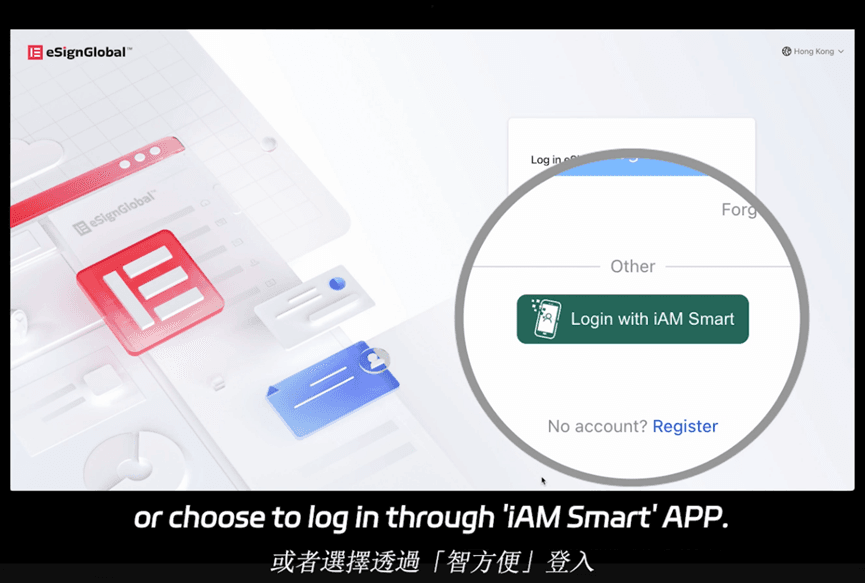
eSignGlobal emerges as a compliant alternative, supporting electronic signatures in over 100 mainstream countries globally, with particular advantages in the Asia-Pacific (APAC) region. Its ID verification is embedded in core plans without heavy per-transaction metering, emphasizing accessibility for cross-border businesses. For instance, the Essential plan costs just $16.6/month, allowing up to 100 documents for signature, unlimited user seats, and verification via access codes—all while maintaining high compliance standards. This setup delivers strong value, especially in APAC, where it integrates seamlessly with local systems like Hong Kong's iAM Smart and Singapore's SingPass, reducing friction and costs compared to global giants. Pricing details are transparent; for more, visit eSignGlobal's pricing page.
Other Competitors: HelloSign and PandaDoc
HelloSign (now Dropbox Sign) offers IDV at $1–$3 per check, bundled in its $15/user/month Essentials plan, appealing to SMBs with simple integrations. PandaDoc focuses on sales docs, with verification add-ons at ~$2/transaction in its $19/user/month Business plan, but lacks deep APAC compliance.
| Feature/Aspect | DocuSign | Adobe Sign | eSignGlobal | HelloSign | PandaDoc |
|---|---|---|---|---|---|
| Per-Transaction IDV Cost | $1–$5 (metered) | $2–$4 (add-on) | Included in plans (~$0.17 effective for Essential) | $1–$3 | ~$2 |
| Base Plan Price (Monthly, Annual Billing) | $10–$40/user | $9.99–$29.99/user | $16.6 (unlimited users) | $15/user | $19/user |
| Envelope/Document Limit | 5–100/month | 100+/custom | 100+ (Essential) | Unlimited (paid) | Unlimited |
| Global Compliance (100+ Countries) | Strong (US/EU focus) | Good (Adobe ecosystem) | Excellent (APAC optimized) | Moderate | Limited |
| APAC Integrations (e.g., SingPass) | Limited, surcharges | Basic | Seamless (iAM Smart, SingPass) | None | Minimal |
| Best For | Enterprise scale | Adobe users | Cost-effective APAC | SMB simplicity | Sales teams |
This table underscores eSignGlobal's edge in affordability and regional compliance without sacrificing core features, though DocuSign and Adobe lead in mature markets.
In summary, while DocuSign's ID check costs per transaction offer reliable security, alternatives like eSignGlobal provide a balanced, regionally compliant option for global businesses seeking efficiency. For APAC-focused operations, eSignGlobal stands out as a practical DocuSign alternative.
FAQs
