

embedded signing docusign cost


Understanding Embedded Signing and Its Role in Digital Workflows
Embedded signing has become a cornerstone for businesses integrating seamless document signing into their applications, websites, or customer portals. In the context of DocuSign, this feature allows developers to embed the signing experience directly within a user’s interface, eliminating the need for redirects to external pages. This enhances user experience by reducing friction, which is particularly valuable for high-volume or customer-facing operations like onboarding, contract approvals, or e-commerce checkouts. From a commercial perspective, embedded signing streamlines workflows but introduces specific costs tied to DocuSign’s tiered pricing model. As organizations evaluate these solutions, understanding the financial implications is crucial, especially when scaling integrations across teams or regions.

DocuSign’s Embedded Signing: Features and Cost Breakdown
What is Embedded Signing in DocuSign?
DocuSign’s embedded signing, part of its eSignature platform, enables the signing process to be hosted within an iframe or custom UI, powered by the DocuSign API. This is ideal for SaaS providers, fintech apps, or HR systems where users sign documents without leaving the native environment. Key benefits include customizable branding, real-time status updates via webhooks, and compliance with standards like ESIGN Act in the US or eIDAS in the EU. However, it requires API access, which shifts costs from basic plans to developer-oriented tiers.
Commercially, embedded signing boosts conversion rates—studies show up to 30% faster completions compared to remote signing—making it a go-to for enterprises. But the real question for buyers is cost: how much does it add to the bottom line?
Pricing Tiers for Embedded Signing
DocuSign’s costs for embedded signing are not standalone; they integrate into its broader eSignature and API plans. Based on 2025 pricing (annual billing, US region), here’s a detailed look:
For basic users dipping into embedded signing, the Personal plan starts at $120/year ($10/month) for one user, but it’s limited to 5 envelopes/month—far too restrictive for embedded use cases. This tier suits solo freelancers but lacks API depth.
Scaling up, the Standard plan at $300/user/year ($25/month/user) introduces team features like templates and ~100 envelopes/user/year. Embedded signing is possible via basic integrations, but without advanced API, it’s clunky for high-traffic apps.
The Business Pro plan ($480/user/year or $40/month/user) unlocks essentials for embedded workflows: bulk send, conditional logic, and signer attachments. Envelope limits remain ~100/user/year, but automation sends (including embedded ones) cap at ~10/month/user. This is where most mid-sized businesses start, especially for web forms tied to embedded signing.
For robust embedded signing, Advanced Solutions (Enterprise) require custom quotes, often starting above $10,000/year for 10+ users. It includes SSO, governance, and unlimited envelopes, but add-ons like Identity Verification (IDV) for secure embedded sessions add metered fees—typically $0.50–$2 per verification, depending on biometrics or SMS.
API-Specific Costs for Embedded Signing
Embedded signing heavily relies on DocuSign’s Developer API, which has dedicated plans:
-
Starter API: $600/year (~40 envelopes/month). Basic OAuth and embedding support for small integrations. Suitable for prototypes, but quotas limit production use.
-
Intermediate API: $3,600/year (~100 envelopes/month). Adds scheduled sending and collaboration, enabling smoother embedded experiences.
-
Advanced API: $5,760/year (~100 envelopes/month + features like Bulk Send API and PowerForms). This tier is optimal for embedded signing in scalable apps, supporting webhooks for real-time updates.
-
Enterprise API: Custom pricing, often $20,000+ annually, with tailored quotas and premium support.
Envelope quotas are critical: each embedded signing counts as one envelope, regardless of signers. Overages incur fees (~$1–$5/envelope), and automation caps apply—even “unlimited” plans limit bulk/embedded sends to ~100/user/year. For APAC users, cross-border latency and data residency surcharges can inflate costs by 20–50%, per regional analyses.
Add-ons amplify expenses: SMS/WhatsApp delivery for embedded notifications costs per message (region-dependent, e.g., $0.10–$0.50 in the US), while IDV for fraud prevention in embedded flows adds usage-based billing. Total cost of ownership (TCO) for a 10-user team with moderate embedded volume might range $5,000–$15,000/year, excluding custom development.
In commercial terms, DocuSign’s model rewards volume but penalizes unpredictability—businesses with variable signing needs face overage risks. This structure suits established enterprises but can strain startups.

Comparing DocuSign with Key Competitors
To assess DocuSign’s embedded signing costs objectively, it’s essential to benchmark against alternatives. Competitors vary in pricing transparency, regional compliance, and integration ease. Below, we examine Adobe Sign, eSignGlobal, and others like Dropbox Sign (formerly HelloSign) and PandaDoc, focusing on embedded capabilities.
Adobe Sign: A Robust but Premium Option
Adobe Sign offers embedded signing through its API, integrating seamlessly with Adobe’s ecosystem (e.g., Acrobat). It’s strong for enterprises needing PDF-heavy workflows, with features like conditional fields and mobile optimization. Pricing starts at $10/user/month for individuals (billed annually as $120/year), scaling to $40/user/month for teams with unlimited envelopes in higher tiers. API access requires the “Enterprise” plan (custom, often $25+/user/month), with add-ons like SMS at $0.20/message. While compliant globally, Adobe’s TCO can exceed DocuSign’s for APAC due to limited local optimizations—effective costs 15–25% higher in cross-border scenarios. It’s a solid choice for creative industries but less agile for pure eSignature volume.

eSignGlobal: Regionally Optimized for Cost-Effective Compliance
eSignGlobal positions itself as a compliant alternative, supporting electronic signatures in over 100 mainstream countries and regions worldwide. It excels in APAC with native optimizations for speed and data residency, addressing DocuSign’s latency issues in areas like China and Southeast Asia. For embedded signing, its API enables iframe integrations with webhook support, similar to DocuSign’s Advanced tier but at lower entry points.
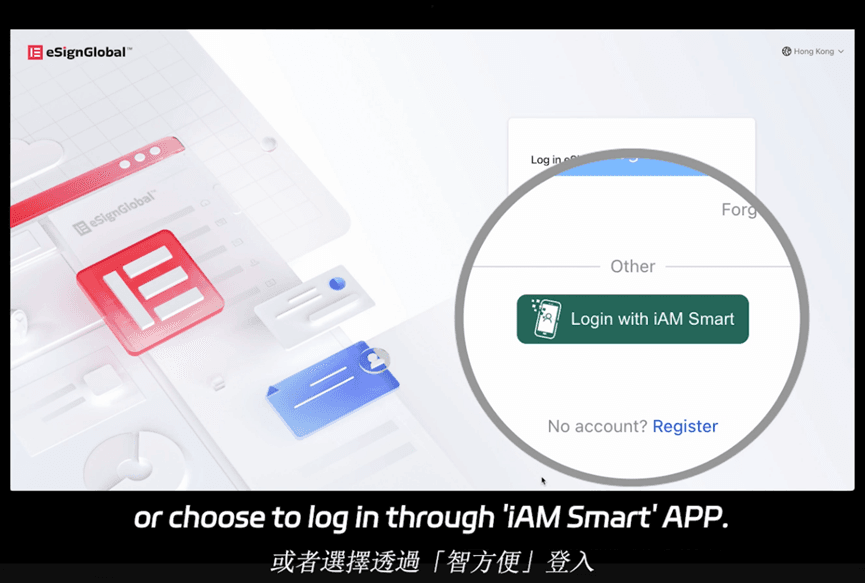
Pricing is notably transparent and affordable: the Essential plan costs just $16.6/month (annual billing), allowing up to 100 documents for electronic signature, unlimited user seats, and verification via access codes. This delivers high value on compliance without envelope caps that plague competitors. For more details, check their pricing page. In APAC, it integrates seamlessly with local systems like Hong Kong’s iAM Smart and Singapore’s Singpass, enhancing security for embedded flows at a fraction of DocuSign’s cost—often 30–50% cheaper for similar features. While not as feature-bloated for Western enterprises, its regional focus makes it a pragmatic pick for global teams prioritizing TCO and compliance.
Other Competitors: Dropbox Sign and PandaDoc
Dropbox Sign (HelloSign) offers simple embedded signing via API, starting at $15/user/month ($180/year) with 20 envelopes/month, scaling to unlimited at $25/user/month. It’s user-friendly for SMBs but lacks advanced automation, with API add-ons pushing costs toward $300/user/year.
PandaDoc combines proposals with signing, embedding via API in its $19/user/month starter plan (unlimited docs). It’s proposal-centric, ideal for sales, but API depth is mid-tier, and enterprise customizations add fees comparable to DocuSign.
| Feature/Aspect | DocuSign | Adobe Sign | eSignGlobal | Dropbox Sign | PandaDoc |
|---|---|---|---|---|---|
| Embedded Signing API | Advanced (Bulk, Webhooks) | Strong (PDF Integration) | Full (Regional Hooks) | Basic (Simple Iframe) | Proposal-Focused API |
| Starting Price (Annual, per User) | $120 (Personal) | $120 (Individual) | $199.2 (Essential, Unlimited Seats) | $180 (Essentials) | $228 (Essentials) |
| Envelope Limits | ~100/year (Pro) | Unlimited (Higher Tiers) | 100/month (Essential) | 20/month (Starter) | Unlimited (All Plans) |
| APAC Compliance | Limited (Surcharges) | Moderate | Native (100+ Regions) | Basic | Variable |
| Add-Ons (e.g., SMS/IDV) | Metered ($0.50+) | $0.20+/message | Included in Base (Access Code) | Extra ($0.10+) | Custom |
| TCO for 10 Users (Mid-Volume) | $5K–$15K/year | $6K–$18K/year | $2K–$5K/year | $3K–$8K/year | $4K–$10K/year |
| Best For | Enterprises | PDF Workflows | APAC/Global Compliance | SMB Simplicity | Sales Proposals |
This table highlights trade-offs: DocuSign leads in features but at a premium, while eSignGlobal offers balanced value for compliance-driven markets.
Regional Considerations and Legal Frameworks
While embedded signing is globally viable, costs and viability hinge on local laws. In the US, the ESIGN Act and UETA ensure enforceability, with no extra compliance fees in DocuSign. The EU’s eIDAS regulates advanced signatures, often requiring IDV add-ons (adding 10–20% to costs). APAC varies: Singapore’s ETA mandates secure authentication, favoring integrated solutions like eSignGlobal’s Singpass tie-in. China’s Electronic Signature Law demands data localization, inflating DocuSign’s effective pricing via surcharges, whereas regional players mitigate this.
Conclusion: Balancing Cost and Compliance in Embedded Signing
Embedded signing via DocuSign delivers powerful integration but demands careful budgeting around API tiers and add-ons, with TCO often exceeding $10,000 annually for scaled use. Competitors like Adobe Sign match depth at similar premiums, while options such as Dropbox Sign or PandaDoc suit lighter needs. For businesses eyeing DocuSign alternatives, especially in compliance-heavy regions, eSignGlobal emerges as a regionally attuned choice, blending affordability with global support. Evaluate based on your volume, geography, and integration goals to optimize ROI.
คำถามที่พบบ่อย

 อนุญาตให้ใช้อีเมลธุรกิจเท่านั้น

 +852-46749867
 sales@esignglobal.com
 support@esignglobal.com
 ปรึกษาออนไลน์

