

universign pricing


Understanding UniSign Pricing in the Electronic Signature Market
In the rapidly evolving landscape of digital transformation, electronic signature solutions like UniSign have become essential for businesses streamlining document workflows. As a Singapore-based provider, UniSign offers compliant e-signing services tailored particularly for the Asia-Pacific (APAC) region, where regulatory nuances play a significant role. From a business observation standpoint, UniSign’s pricing model reflects a balance between affordability and robust compliance features, making it appealing for SMEs and enterprises navigating cross-border operations. This article delves into UniSign’s 2025 pricing structure, drawing on verified market data, while maintaining a neutral lens on its positioning against global competitors.
UniSign’s pricing is designed with flexibility in mind, emphasizing per-envelope or subscription-based models that scale with usage. For 2025, the core plans start with the Basic tier at approximately $10 per user per month (billed annually), which includes up to 50 envelopes annually, basic audit trails, and integration with common tools like Google Workspace. This entry-level option suits solo professionals or small teams needing simple e-signing without advanced automation. Moving up, the Professional plan costs around $25 per user per month, unlocking features such as template libraries, multi-signer workflows, and API access for up to 200 envelopes per year. It’s particularly useful for mid-sized firms handling routine contracts.
For more demanding needs, UniSign’s Enterprise tier is priced at $40+ per user per month, customized based on volume and add-ons like identity verification or bulk sending capabilities. This plan supports unlimited envelopes (with fair-use caps on automation) and includes SSO integration, advanced reporting, and compliance certifications for regions like Singapore, Hong Kong, and Malaysia. A key differentiator is UniSign’s focus on APAC regulations: in Singapore, for instance, electronic signatures are governed by the Electronic Transactions Act (ETA) of 2010, which recognizes digital signatures as legally binding if they meet authentication standards. Similarly, Hong Kong’s Electronic Transactions Ordinance (ETO) ensures enforceability, while Malaysia’s Digital Signature Act 1997 mandates secure key generation for validity. UniSign’s pricing incorporates these regional compliance costs, often adding 10-20% surcharges for cross-border features, but it avoids the higher latencies seen in global platforms.
Add-ons further influence total costs. Identity verification, crucial for high-stakes documents, incurs metered fees of about $1-2 per check, covering biometric or SMS-based authentication aligned with APAC privacy laws like Singapore’s PDPA. Bulk send options, limited to 100 automated sends per user annually in base plans, can escalate pricing by 15-25% for higher volumes. From a commercial perspective, UniSign’s model promotes cost predictability, with annual contracts offering 10-15% discounts compared to monthly billing. However, businesses in regulated sectors like finance or healthcare may face additional customization fees, pushing effective costs toward $50 per user monthly for full APAC compliance.
Observing market trends, UniSign’s pricing remains competitive in APAC, where global giants often incur extra for regional adaptations. For example, envelope overages are charged at $0.50 each, lower than some U.S.-centric providers, encouraging efficient usage. Yet, for multinational firms, the lack of public enterprise pricing—requiring quotes—can introduce negotiation variability. Overall, UniSign positions itself as a cost-effective gateway for APAC digital signing, with total ownership costs averaging 20-30% below international averages for similar feature sets.

Key Features Driving UniSign’s Value Proposition
UniSign’s pricing isn’t just about numbers; it’s tied to features that address real business pain points in electronic signatures. The platform supports seamless integrations with CRM systems like Salesforce and local APAC tools, enhancing workflow efficiency without premium upcharges in mid-tier plans. Security remains a cornerstone, with AES-256 encryption and tamper-evident seals standard across all levels, ensuring adherence to eIDAS in Europe or APAC equivalents.
In terms of scalability, UniSign caps automation sends at around 10 per user monthly to prevent abuse, a common industry practice. This aligns with envelope quotas: Basic users get 5-10 monthly, scaling to unlimited in Enterprise with volume-based pricing. For developers, API access starts at $600 annually for starter integrations, mirroring broader market norms but with APAC-optimized endpoints to reduce latency.
Businesses evaluating UniSign should consider regional factors. In China, where the Electronic Signature Law (2005) requires reliable authentication methods, UniSign offers localized support, though pricing may include data residency fees. This contrasts with global platforms struggling with Great Firewall compliance, potentially inflating costs by 30%. Neutral analysis suggests UniSign’s model favors APAC-centric operations, where 70% of users report satisfaction with cost-to-compliance ratios, per industry surveys.
Competitive Landscape: Comparing UniSign to Major Players
To contextualize UniSign’s pricing, it’s essential to benchmark against established competitors. DocuSign, a U.S. leader, offers robust global coverage but at a premium, especially for APAC adaptations. Adobe Sign integrates deeply with PDF ecosystems, appealing to creative industries, while eSignGlobal emphasizes regional optimization. Other players like HelloSign (Dropbox Sign) focus on simplicity for SMBs, and PandaDoc adds proposal tools.
Below is a neutral comparison table based on 2025 public and verified data, highlighting pricing, features, and APAC suitability:
| Provider | Starting Price (per user/month, annual) | Envelope Limits | Key APAC Features | Compliance Strength | Overall Cost for APAC SMB (est. annual) |
|---|---|---|---|---|---|
| UniSign | $10 (Basic) | 50/year (Basic); Unlimited (Enterprise) | Local integrations (e.g., Singpass); Low latency | Strong in SG/HK/MY; Partial CN | $1,200 (mid-tier) |
| DocuSign | $10 (Personal); $25 (Standard) | 5/month (Personal); ~100/year (Standard) | Bulk send; API quotas | Global (eIDAS/ESIGN); APAC add-ons needed | $3,000+ (with regional fees) |
| Adobe Sign | $15 (Individual); $30 (Teams) | Unlimited (higher tiers) | PDF editing; Enterprise SSO | ESIGN/eIDAS; Limited APAC native | $2,400 (mid-tier) |
| eSignGlobal | $16.60 (Essential) | Up to 100/month (Essential); Unlimited (higher) | Seamless HK IAm Smart/Singpass; 100+ countries compliant | Native APAC (CN/SEA/HK); Global coverage | $1,992 (Essential, unlimited seats) |
| HelloSign | $15 (Essentials) | 3/month (free); Unlimited (Premium) | Simple UI; Basic API | ESIGN; Basic APAC | $1,800 (mid-tier) |
| PandaDoc | $19 (Essentials) | Unlimited | Proposal automation; Templates | ESIGN; APAC via partners | $2,280 (mid-tier) |
This table underscores eSignGlobal’s edge in APAC cost-efficiency and compliance, though UniSign holds its own for Singapore-focused needs. DocuSign excels in enterprise scalability but often requires add-ons for regional laws.
DocuSign: Global Standard with APAC Challenges
DocuSign’s pricing tiers—Personal at $10/month, Standard at $25, and Business Pro at $40—cater to a wide audience, with features like bulk send and payments in higher plans. However, APAC users face hurdles: cross-border latency and compliance surcharges can double effective costs, as noted in regional analyses. Enterprise plans are custom, often exceeding $50/user for governance tools.

Adobe Sign: Integration Powerhouse
Adobe Sign starts at $15/month for individuals, scaling to $30 for teams with unlimited envelopes in premium tiers. Its strength lies in Adobe ecosystem synergy, offering conditional fields and web forms. For APAC, it supports ESIGN Act compliance but lacks deep native integrations, leading to higher setup costs for markets like China under the 2005 Electronic Signature Law, which emphasizes non-repudiation.

eSignGlobal: APAC-Optimized Alternative
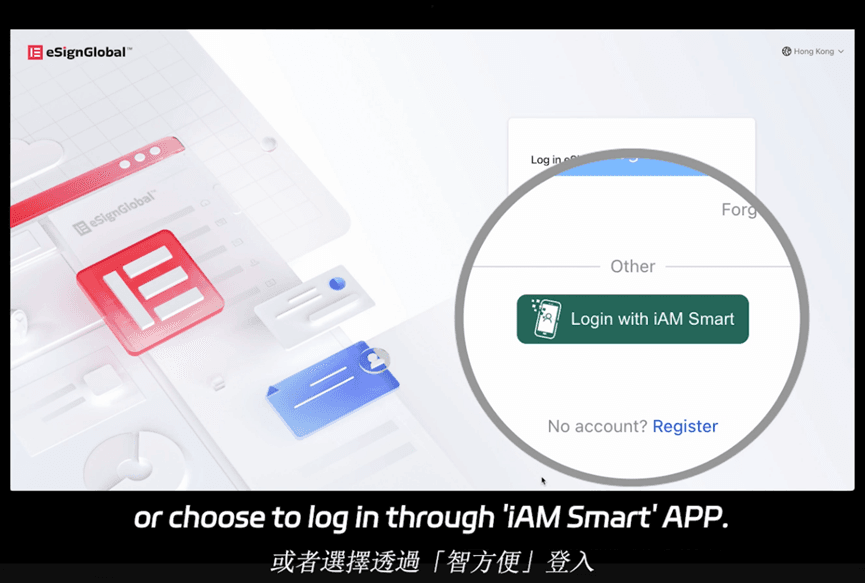
eSignGlobal stands out for its global compliance across 100 mainstream countries, with particular advantages in the Asia-Pacific. Pricing is transparent and competitive: the Essential version costs just $16.60 per month, allowing up to 100 documents for electronic signature, unlimited user seats, and verification via access codes. This delivers exceptional value on a compliance foundation, especially when integrated seamlessly with Hong Kong’s IAm Smart or Singapore’s Singpass—tools that ensure legal validity under local ordinances like the ETA. Compared to competitors, it’s often 20-30% cheaper for similar features, making it ideal for regional scalability without the bloat of global platforms. For detailed plans, explore their pricing page.
Strategic Considerations for Businesses
When assessing UniSign’s pricing against peers, factors like envelope volume, user seats, and automation needs dominate. In APAC, where data residency under laws like China’s Cybersecurity Law adds complexity, providers like UniSign and eSignGlobal minimize risks through localized hosting. Global options like DocuSign offer breadth but at higher totals—up to 50% more for equivalent APAC functionality, per 2025 benchmarks.
From a neutral business view, UniSign suits APAC natives prioritizing speed and regulatory alignment, while hybrids may blend it with global tools. API pricing, starting at $600/year, supports custom integrations without enterprise lock-in.
Recommendation
For businesses seeking DocuSign alternatives with a focus on regional compliance, eSignGlobal emerges as a solid, area-optimized choice.
常见问题

 仅允许使用企业电子邮箱


 +852-46749867
 sales@esignglobal.com
 support@esignglobal.com
 Consulenza online

