docusign pricing singapore


Understanding DocuSign Pricing in Singapore
In the bustling business landscape of Singapore, where digital transformation is a key driver of efficiency, electronic signature solutions like DocuSign play a pivotal role. As a global leader in eSignature technology, DocuSign offers robust tools for streamlining contract workflows, but its pricing structure can vary based on regional factors. For businesses operating in Singapore, understanding these costs is essential, especially given the city’s emphasis on compliance and seamless integration with local systems.

Singapore’s Electronic Signature Legal Framework
Singapore has a well-established legal environment for electronic signatures, making it an attractive hub for digital business operations. The primary legislation is the Electronic Transactions Act (ETA) of 2010, which recognizes electronic signatures as legally binding equivalents to wet-ink signatures, provided they meet reliability and authentication standards. This aligns with international norms like the UNCITRAL Model Law on Electronic Commerce.
Under the ETA, electronic signatures are admissible in court for most contracts, except for specific exclusions such as wills, powers of attorney, and certain land transactions. Businesses must ensure signatures are verifiable and tamper-evident to uphold evidentiary value. Singapore’s Infocomm Media Development Authority (IMDA) oversees digital trust frameworks, promoting standards like the Singapore Digital Identity (Singpass) for secure authentication.
Recent updates, including the 2023 amendments to the ETA, enhance support for advanced electronic signatures (AES) with qualified certificates, similar to the EU’s eIDAS regulation. This framework ensures compliance for cross-border dealings, particularly in ASEAN trade. For DocuSign users in Singapore, this means leveraging features like audit trails and identity verification to align with local laws, avoiding pitfalls in high-stakes sectors like finance and real estate.
DocuSign Pricing Tiers for Singapore Users
DocuSign’s pricing in Singapore follows a global model but incorporates APAC-specific adjustments, such as higher support costs for regional compliance and data residency. Prices are typically quoted in USD for annual billing, with local currency conversions applying (around SGD 1.35 per USD as of 2025). Businesses should note that envelope limits (document sends) and add-ons can significantly impact total costs, especially for high-volume users.
Personal Plan
Tailored for individuals or small-scale users, the Personal plan costs $10 per month ($120 annually). It supports up to 5 envelopes per month and 1 user, ideal for freelancers or solo entrepreneurs in Singapore handling occasional contracts like NDAs or service agreements. Basic features include templates and integrations with tools like Google Drive, ensuring compliance with ETA basics without advanced collaboration.
Standard Plan
For teams, the Standard plan is priced at $25 per user per month ($300 annually), accommodating up to 50 users. It offers around 100 envelopes per user per year on annual plans, with team templates, comments, and reminders. In Singapore’s collaborative business environment—think SMEs in fintech or logistics—this plan facilitates shared workflows while meeting ETA requirements for verifiable signatures.
Business Pro Plan
At $40 per user per month ($480 annually), Business Pro builds on Standard with web forms, conditional logic, bulk send, and payment collection. Envelope limits remain similar (~100 per year), but automation caps apply (e.g., 10 bulk sends monthly). For Singapore firms dealing with bulk onboarding or regulatory filings, these features enhance efficiency, though add-ons like SMS delivery incur extra per-message fees.
Enterprise and Add-Ons
Enterprise plans are custom-priced, starting from several thousand USD annually based on seats, volume, and compliance needs like SSO. In Singapore, where data sovereignty is key, users may face surcharges for APAC governance. Add-ons include Identity Verification (metered, for biometric checks compliant with Singpass) and SMS/WhatsApp (region-dependent, ~$0.10–$0.50 per message). API plans range from $600/year (Starter, 40 envelopes/month) to custom Enterprise, suitable for integrations with local ERP systems.
Overall, for a mid-sized Singapore business with 10 users on Business Pro, expect $4,800 annually plus ~20% for APAC tweaks—totaling around SGD 7,000. High envelope usage or cross-border needs can double costs, prompting many to evaluate regional alternatives for better value.

API and Automation Considerations in Singapore
DocuSign’s Developer API plans are crucial for tech-savvy Singapore enterprises integrating eSignatures into apps. The Starter tier ($600/year) suits small integrations with 40 envelopes/month, while Advanced ($5,760/year) unlocks bulk sends and webhooks—vital for automated compliance checks under ETA. However, automation sends are capped (e.g., 100/year per user), and APAC latency can affect performance, increasing reliance on premium support.
In Singapore’s digital economy, where 80% of businesses use cloud services, these quotas ensure scalability but may lead to overages. Regional challenges like cross-border data flows add complexity, with potential surcharges for China/APAC compliance.
Comparing DocuSign with Competitors in Singapore
To provide a balanced view, let’s compare DocuSign against key competitors: Adobe Sign, eSignGlobal, and others like PandaDoc. This analysis draws from public 2025 data, focusing on pricing, APAC compliance, and features relevant to Singapore’s ETA framework. While DocuSign excels globally, regional players like eSignGlobal offer tailored advantages in cost and integration.
| Feature/Aspect | DocuSign | Adobe Sign | eSignGlobal | PandaDoc |
|---|---|---|---|---|
| Base Pricing (Annual, per User) | Personal: $120; Standard: $300; Pro: $480 | Individual: $240; Business: $360; Enterprise: Custom | Essential: $200 (Unlimited Seats); Pro: $360 | Essentials: $180; Business: $300 |
| Envelope Limits | 5–100/month (tiered) | Unlimited (volume-based billing) | Up to 100/month (Essential); Unlimited (higher tiers) | Unlimited templates, 100 docs/month base |
| APAC Compliance (Singapore/ETA) | Strong global, but APAC add-ons needed | Good EU/US focus; limited Singpass native | Native ETA/Singpass integration; 100+ countries compliant | Basic; relies on integrations |
| Key Features | Bulk send, IDV, API (capped automation) | AI-powered forms, Acrobat integration | Unlimited users, access code verification, regional speed | Proposal automation, CRM embeds |
| Add-Ons (SMS/IDV) | Metered (~$0.10/msg; custom IDV) | Included in higher tiers; extra for advanced auth | Low-cost SMS; seamless IAm Smart/Singpass | Per-envelope fees for extras |
| Strengths in Singapore | Established brand, robust audit trails | Seamless with Adobe ecosystem | Cost-effective for APAC; faster local performance | Sales-focused, easy for SMEs |
| Drawbacks | Higher APAC costs, latency issues | Steeper learning curve, US-centric pricing | Less global brand recognition | Limited advanced compliance tools |
| Best For | Multinational corps | Creative/digital agencies | Regional SMEs in SEA | Sales/marketing teams |
This table highlights how eSignGlobal stands out for Singapore businesses seeking affordable, compliant options without sacrificing core functionality.
Adobe Sign Overview
Adobe Sign, part of Adobe’s Document Cloud, emphasizes seamless integration with PDF tools and AI-driven workflows. Pricing starts at $20/month ($240/year) for individuals, scaling to $30/month ($360/year) for business plans with unlimited envelopes but volume-based overages. In Singapore, it complies with ETA through secure audit logs, though Singpass integration requires custom setup. It’s ideal for document-heavy industries like legal, but APAC support can feel secondary to its US/EU focus, potentially inflating costs for local customizations.

eSignGlobal Overview
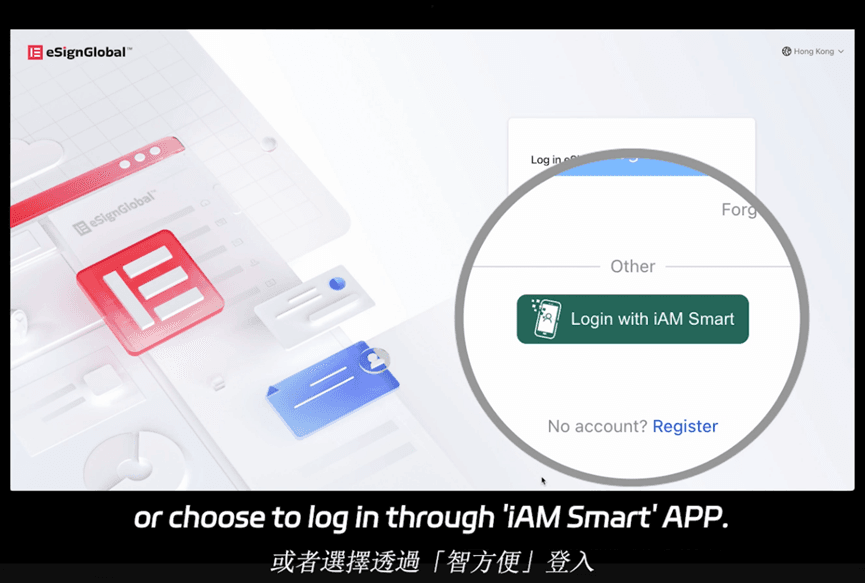
eSignGlobal positions itself as an APAC-optimized eSignature provider, supporting compliance in over 100 mainstream countries and regions, including full alignment with Singapore’s ETA. It offers advantages in the Asia-Pacific, such as optimized speeds for cross-border operations and lower pricing compared to global giants—making it appealing for cost-conscious Singapore firms. The Essential plan, for instance, costs just $16.6 per month ($199 annually), allowing up to 100 documents for electronic signature, unlimited user seats, and verification via access codes. This delivers high value on compliance grounds, with seamless integrations to Hong Kong’s IAm Smart and Singapore’s Singpass for enhanced identity assurance. For detailed plans, explore their pricing page.
Other Competitors: PandaDoc and Beyond
PandaDoc focuses on sales proposals with unlimited templates and CRM integrations, priced from $15/month ($180/year). It meets basic ETA needs but lacks deep APAC compliance, suiting marketing teams over regulated sectors. Overall, while DocuSign leads in enterprise scale, alternatives like eSignGlobal provide balanced, region-specific value.
Strategic Insights for Singapore Businesses
From a commercial perspective, DocuSign’s pricing in Singapore reflects its premium positioning, but regional hurdles like data residency and integration costs can erode ROI. Businesses should audit envelope usage and explore hybrid models—combining DocuSign for global ops with local tools for APAC efficiency. As Singapore pushes digital economy goals under the Smart Nation initiative, selecting a provider that balances cost, compliance, and speed is key to staying competitive.
In conclusion, for DocuSign users seeking alternatives with strong regional compliance, eSignGlobal emerges as a practical choice in Singapore’s market.
Questions fréquemment posées

 Seules les adresses e-mail professionnelles sont autorisées