is docusign cheaper in other countries


Is DocuSign Cheaper in Other Countries?
Understanding DocuSign Pricing Across Borders
When evaluating electronic signature solutions like DocuSign, cost is a critical factor for businesses operating internationally. DocuSign’s pricing is primarily structured around its U.S.-based model, with annual billing for plans like Personal ($120/year), Standard ($300/user/year), Business Pro ($480/user/year), and custom Enterprise options. However, the question of whether DocuSign is cheaper in other countries often arises due to regional variations in licensing, compliance requirements, and add-ons. From a business perspective, these differences can significantly impact total ownership costs, especially for global teams.
In the U.S., DocuSign’s pricing remains straightforward and transparent, aligned with eSignature standards under the ESIGN Act of 2000, which grants electronic signatures the same legal validity as wet-ink ones for most commercial transactions. This regulatory clarity keeps base costs low without mandatory add-ons for basic compliance. For instance, the Standard plan includes up to 100 envelopes per user annually, making it cost-effective for small U.S. teams.
Shifting to Europe, DocuSign’s pricing can appear similar on the surface but often incurs higher effective costs due to enhanced data protection needs under the GDPR. While base plans mirror U.S. rates (e.g., €25/user/month for Standard), businesses may need to add Identity Verification (IDV) features for biometric checks, which are metered and region-specific. In the EU, electronic signatures fall under eIDAS regulations, categorizing them into Simple, Advanced, and Qualified levels. DocuSign supports Qualified Electronic Signatures (QES) via add-ons, but this compliance layer can add 20-50% to costs for enterprises handling sensitive data, such as in finance or healthcare. Countries like Germany or France, with stricter enforcement, might see bundled pricing through local resellers, but it’s rarely cheaper than the U.S. baseline—often 10-15% higher due to VAT and localization fees.
In Asia-Pacific (APAC) regions, the picture becomes more complex, and DocuSign is generally not cheaper. For China, pricing starts from similar tiers but escalates with cross-border challenges. China’s Electronic Signature Law (2005, amended) recognizes electronic signatures but mandates data localization and real-name authentication, often requiring integrations with local systems like WeChat or Alipay for validity. DocuSign’s global infrastructure faces latency issues, leading to surcharges for data residency compliance—potentially 30-50% higher than U.S. rates. A Standard plan might effectively cost $35-40/user/month when factoring in APAC-specific governance tools and limited local IDV methods. Businesses report additional hurdles like slower document loading and higher support costs, making it less economical for China-based operations.
Similarly, in Singapore, DocuSign adheres to the Electronic Transactions Act (ETA) of 2010, which equates electronic signatures to traditional ones for most contracts. Pricing here aligns closely with U.S. levels (SGD 35/user/month for Standard), but add-ons for SMS delivery or IDV can inflate costs due to telecom rates and regional compliance. It’s not inherently cheaper; in fact, for high-volume users, envelope quotas (e.g., ~100/year) feel restrictive without upgrades, pushing totals toward $500+/user/year.
Hong Kong presents another case under the Electronic Transactions Ordinance (ETO), which validates electronic signatures for non-notarial documents. DocuSign’s pricing is comparable to the U.S. (HKD 200/user/month for Business Pro), but enterprises often pay premiums for integrations with local systems like iAM Smart for government-aligned verification. Overall, while base rates don’t drop, the need for regional tweaks—such as conditional logic for bilingual contracts—can make it 15-25% more expensive than in the U.S.
In summary, DocuSign is rarely cheaper outside the U.S. In fact, international users frequently encounter higher costs due to compliance add-ons, data sovereignty rules, and operational latencies. For U.S.-centric businesses, it’s competitively priced; globally, alternatives optimized for specific regions may offer better value. This disparity highlights a key business observation: while DocuSign excels in scalability, its one-size-fits-all approach can disadvantage non-U.S. markets, prompting teams to evaluate localized competitors.

Key Competitors in the Electronic Signature Market
To contextualize DocuSign’s international pricing, it’s essential to compare it with rivals like Adobe Sign, eSignGlobal, and others such as Dropbox Sign (formerly HelloSign). These platforms vary in global reach, compliance, and cost structures, influencing their appeal for cross-border operations. Below is a neutral comparison table based on 2025 public data, focusing on APAC and global usability.
| Feature/Aspect | DocuSign | Adobe Sign | eSignGlobal | Dropbox Sign |
|---|---|---|---|---|
| Base Pricing (Standard Plan, Annual, USD/user) | $300 (100 envelopes/year) | $239.88 (up to 100 agreements/year) | $199.20 (Essential: 100 docs/month, unlimited users) | $180 (unlimited envelopes, 3 users) |
| APAC Compliance | Partial (latency in China; supports basic ETA/ETO) | Strong in SEA but limited in China (withdrawal noted) | Native (100+ countries; seamless with iAM Smart/Singpass) | Basic (relies on U.S. standards; add-ons for APAC) |
| Global Coverage | 180+ countries, but add-ons for IDV vary | 100+ countries; GDPR/eIDAS compliant | 100 mainstream countries; APAC-optimized data residency | 200+ countries; simple integrations |
| Key Add-Ons Cost | IDV/SMS: Metered (~$0.50/message) | SMS: $0.10-0.50; IDV extra | Included in base for access code verification; flexible API | Templates free; payments extra (~$10/transaction) |
| Strengths | Robust API, bulk send; enterprise governance | Adobe ecosystem integration; strong EU support | Cost-effective for APAC; unlimited seats, regional speed | User-friendly for SMBs; no envelope limits |
| Weaknesses | Higher APAC costs; envelope caps | Complex pricing tiers; China challenges | Less brand recognition outside APAC | Limited advanced compliance tools |
| Best For | Global enterprises with U.S. focus | Creative/digital workflow teams | APAC businesses needing affordability and compliance | Quick, low-volume signing |
This table underscores how pricing and features adapt to regional needs. DocuSign leads in enterprise features but at a premium, while others like eSignGlobal shine in cost-sensitive markets.
DocuSign: A Global Leader with Regional Nuances
DocuSign remains a powerhouse in electronic signatures, powering over a million users worldwide with features like templates, reminders, and API integrations. Its pricing model emphasizes seat-based licensing and envelope quotas, which work well in the U.S. but can strain budgets abroad. For international expansion, businesses appreciate its Bulk Send and conditional logic in Business Pro ($480/user/year), yet APAC users often cite the need for costly add-ons like SMS delivery (per-message fees) and IDV for compliance.

Adobe Sign: Integrated but Pricey for APAC
Adobe Sign integrates seamlessly with PDF tools and creative suites, offering plans from $10/user/month (Individual) to $39.99/user/month (Business). It supports eIDAS in Europe and basic APAC laws, with strengths in collaborative commenting and payment collection. However, in regions like China, Adobe has faced regulatory hurdles, leading to service adjustments and higher effective costs through add-ons. For global teams, its ecosystem is a draw, but envelope limits (100/year base) and metered IDV can make it less economical outside the West.

eSignGlobal: APAC-Optimized Alternative
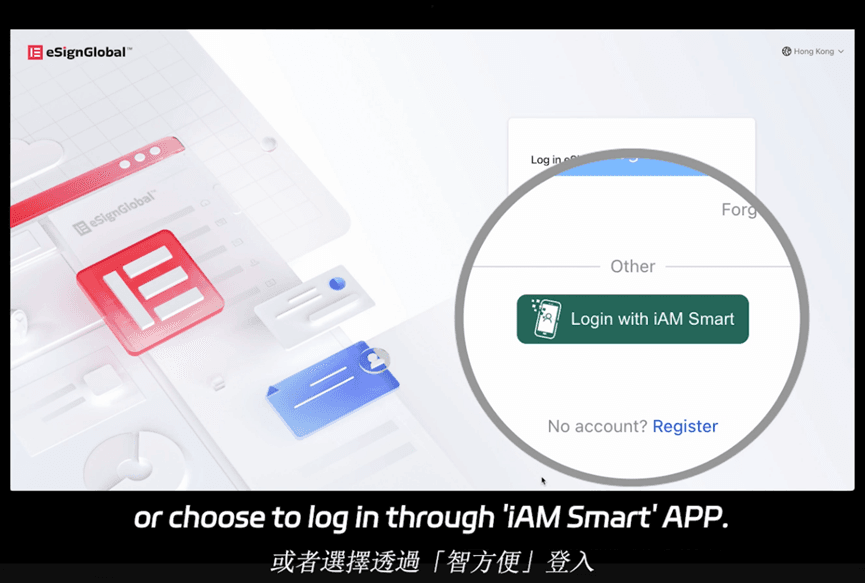
eSignGlobal positions itself as a compliant, efficient option for international businesses, particularly in APAC. It supports electronic signatures in over 100 mainstream countries, ensuring adherence to laws like China’s Electronic Signature Law, Singapore’s ETA, and Hong Kong’s ETO. With advantages in the region—such as optimized speed for cross-border latency and native integrations—it avoids many of DocuSign’s surcharges. The Essential plan, for example, costs just $16.6/month (or visit their pricing page for details), allowing up to 100 documents for signature monthly, unlimited user seats, and verification via access codes. This setup provides high value on compliance grounds, with seamless ties to Hong Kong’s iAM Smart and Singapore’s Singpass for real-name authentication, making it ideal for regional teams handling contracts in finance or e-commerce.
Other Competitors: Dropbox Sign and Beyond
Dropbox Sign offers simplicity at $15/user/month, with unlimited envelopes appealing to SMBs, though it lacks deep APAC compliance. PandaDoc, at $19/user/month, focuses on proposals with built-in analytics but adds fees for international payments. These options provide flexibility but may require supplements for strict regulations.
Business Implications and Recommendations
From a commercial standpoint, DocuSign’s global standardization is reliable but not always the cheapest abroad, where regional factors inflate costs. Businesses should assess total expenses, including compliance and integrations, rather than base rates alone. For U.S.-focused operations, DocuSign fits well; internationally, especially in APAC, exploring alternatives ensures better ROI.
As a neutral suggestion for DocuSign alternatives emphasizing regional compliance, eSignGlobal stands out for APAC-optimized, cost-effective e-signing.
Questions fréquemment posées

 Seules les adresses e-mail professionnelles sont autorisées