
'%3e%3cpath%20fill-rule='evenodd'%20clip-rule='evenodd'%20d='M6.99935%2012.8327C10.221%2012.8327%2012.8327%2010.221%2012.8327%206.99935C12.8327%203.77769%2010.221%201.16602%206.99935%201.16602C3.77769%201.16602%201.16602%203.77769%201.16602%206.99935C1.16602%2010.221%203.77769%2012.8327%206.99935%2012.8327Z'%20stroke='%23666666'%20stroke-linecap='round'%20stroke-linejoin='round'/%3e%3cpath%20d='M1.16602%207H12.8327'%20stroke='%23666666'%20stroke-linecap='round'%20stroke-linejoin='round'/%3e%3cpath%20fill-rule='evenodd'%20clip-rule='evenodd'%20d='M6.99935%2012.8327C8.28802%2012.8327%209.33268%2010.221%209.33268%206.99935C9.33268%203.77769%208.28802%201.16602%206.99935%201.16602C5.71068%201.16602%204.66602%203.77769%204.66602%206.99935C4.66602%2010.221%205.71068%2012.8327%206.99935%2012.8327Z'%20stroke='%23666666'%20stroke-linecap='round'%20stroke-linejoin='round'/%3e%3cpath%20d='M2.875%202.95898C3.93063%204.01461%205.38896%204.66754%206.99978%204.66754C8.61062%204.66754%2010.069%204.01461%2011.1246%202.95898'%20stroke='%23666666'%20stroke-linecap='round'%20stroke-linejoin='round'/%3e%3cpath%20d='M11.1246%2011.0425C10.069%209.98691%208.61062%209.33398%206.99978%209.33398C5.38896%209.33398%203.93063%209.98691%202.875%2011.0425'%20stroke='%23666666'%20stroke-linecap='round'%20stroke-linejoin='round'/%3e%3c/g%3e%3cdefs%3e%3cclipPath%20id='clip0_1267_9109'%3e%3crect%20width='14'%20height='14'%20fill='white'/%3e%3c/clipPath%3e%3c/defs%3e%3c/svg%3e)


Coût de l'intégration DocuSign Salesforce


Analyse détaillée des coûts de l'intégration de DocuSign avec Salesforce en 2025
La valeur de l'intégration de DocuSign avec Salesforce
Dans l'environnement commercial actuel, en constante évolution, une intégration transparente entre une plateforme de signature électronique et un système CRM tel que Salesforce peut rationaliser les flux de travail, réduire les erreurs manuelles et accélérer la conclusion des transactions. DocuSign, en tant que leader des solutions de signature électronique, offre une intégration native avec Salesforce, permettant aux utilisateurs d'envoyer, de signer et de suivre les accords directement depuis l'interface CRM. Cette connectivité est particulièrement intéressante pour les équipes de vente qui traitent des contrats, des propositions et des approbations. Cependant, le coût réel de cette intégration va bien au-delà du prix affiché, englobant les licences, l'utilisation de l'API, la mise en œuvre et la maintenance continue. D'un point de vue commercial, les entreprises doivent mettre ces dépenses en balance avec les gains de productivité, en particulier dans un contexte où les modèles de travail à distance et hybrides persistent.
Il est essentiel pour les entreprises qui évaluent cette configuration de comprendre la structure des coûts. L'intégration de DocuSign avec Salesforce exploite sa plateforme de signature électronique et ses fonctionnalités API, mais la tarification varie en fonction du niveau d'utilisateur, du volume d'enveloppes et des besoins de personnalisation. Décomposons les éléments clés.

Analyse détaillée de la tarification de base de l'intégration de DocuSign avec Salesforce
La tarification de l'intégration de DocuSign avec Salesforce commence avec ses plans de signature électronique standard, qui constituent la base. Le plan Personal, à 10 $ par mois (120 $ par an), convient à un seul utilisateur et comprend l'envoi d'un maximum de 5 enveloppes par mois, ce qui est adapté aux utilisateurs individuels, mais trop restrictif pour l'environnement collaboratif de Salesforce. Pour les équipes, le plan Standard s'étend à 25 $ par utilisateur et par mois (300 $ par an), prenant en charge jusqu'à 100 enveloppes par utilisateur et par an avec une facturation annuelle. Ce niveau active les modèles d'équipe et les rappels, ce qui est essentiel pour que plusieurs parties prenantes examinent les documents dans les flux de travail Salesforce.
Le plan Business Pro, au prix de 40 $ par utilisateur et par mois (480 $ par an), débloque des fonctionnalités avancées telles que l'envoi en masse, la logique conditionnelle et la collecte de paiements, ce qui est essentiel pour les utilisateurs de Salesforce qui automatisent les contrats de vente ou l'intégration. Les limites d'enveloppes restent d'environ 100 par utilisateur et par an, mais les envois automatisés (par exemple, via des déclencheurs Salesforce) sont limités à environ 10 par utilisateur et par mois. Les plans Enterprise sont personnalisés pour les grandes organisations, ajoutant SSO, un audit avancé et un support premium, mais nécessitent un contact avec le service commercial pour obtenir un devis, commençant généralement à plusieurs milliers de dollars en fonction du nombre de sièges et du volume.
Ces abonnements de base sont une condition préalable à l'intégration, car la connexion Salesforce repose sur l'application DocuSign de Salesforce AppExchange. L'installation de l'application gratuite elle-même n'entraîne pas de coûts directs, mais elle consomme votre quota d'enveloppes DocuSign. Pour les utilisateurs occasionnels de Salesforce, le plan Standard peut suffire à environ 300 $ par utilisateur et par an, mais l'extension à 10 utilisateurs peut totaliser 3 000 $ par an, plus les frais de dépassement d'enveloppes (généralement 0,50 à 1 $ par enveloppe supplémentaire).
Analyse plus approfondie des coûts de l'API et des coûts supplémentaires de l'intégration avec Salesforce
La véritable puissance de l'intégration DocuSign-Salesforce réside dans l'utilisation de l'API, qui permet d'automatiser les flux de travail, comme la génération instantanée de documents à partir d'opportunités Salesforce ou la mise à jour en temps réel de l'état des signatures dans les enregistrements CRM. Les plans Developer API de DocuSign sont distincts et facturés à l'utilisation, ce qui ajoute un coût important.
Le plan Starter API, à 600 $ par an, prend en charge environ 40 enveloppes par mois, ce qui convient aux intégrations de base, comme l'intégration de signatures dans Salesforce Lightning. Pour une automatisation plus robuste, le plan Intermediate, à 3 600 $ par an, prend en charge 100 enveloppes par mois, y compris les fonctionnalités de collaboration. Le plan Advanced, à 5 760 $ par an, ajoute l'API d'envoi en masse et les webhooks pour les déclencheurs Salesforce complexes. L'API Enterprise est tarifée sur mesure et dépasse souvent 10 000 $ pour les utilisateurs à volume élevé.
Il faut également tenir compte des coûts de développement de l'intégration. Si vous utilisez des connecteurs pré-construits, la configuration via AppExchange est simple et peut être gratuite pour les équipes compétentes en informatique. Cependant, le travail personnalisé de l'API, comme le mappage des champs Salesforce aux enveloppes DocuSign ou la gestion des webhooks, peut coûter entre 5 000 et 20 000 $ en heures de développeur, en fonction de la complexité. Les appels API continus consomment des enveloppes, de sorte qu'une équipe de vente de taille moyenne (10 utilisateurs) avec une intégration approfondie pourrait être confrontée à 3 600 $ (API) + 4 800 $ (licences Business Pro) = 8 400 $ de base par an, plus 1 000 à 2 000 $ de frais supplémentaires, tels que la livraison par SMS (0,10 à 0,50 $ par message) ou l'authentification d'identité (facturée par contrôle, 1 à 5 $ par contrôle).
Les coûts du côté de Salesforce comprennent les licences CRM (à partir de 25 $ par utilisateur et par mois pour Essentials, jusqu'à 300 $ pour Unlimited) et les frais de conseil potentiels. Les dépenses totales pour la première année pour une configuration de 10 utilisateurs pourraient se situer entre 15 000 et 30 000 $, y compris la mise en œuvre. Les renouvellements annuels représentent environ 80 à 90 % du coût initial, les variables telles que les dépassements d'enveloppes augmentant les dépenses pendant les saisons de pointe.
D'un point de vue commercial, ces coûts reflètent le positionnement haut de gamme de DocuSign : fiable mais limité en nombre d'enveloppes, ce qui peut entraîner des factures imprévues pour les déploiements Salesforce en pleine croissance. Les entreprises des secteurs réglementés (comme la finance) bénéficient des fonctionnalités de conformité de DocuSign, mais les entreprises de la région Asie-Pacifique sont confrontées à des frais supplémentaires pour la latence régionale et la résidence des données, ce qui augmente le coût total de 20 à 30 %.
Détails spécifiques et coûts cachés de l'intégration avec Salesforce
Au-delà des licences, les coûts d'intégration comprennent la formation et le support. DocuSign propose des ressources spécifiques à Salesforce, mais le support premium (inclus dans Enterprise) est payant pour les niveaux inférieurs, soit environ 1 000 à 5 000 $ par an. La migration des données à partir de systèmes existants ou les scripts personnalisés pour l'amélioration de Salesforce Einstein AI peuvent ajouter 2 000 à 10 000 $ supplémentaires.
L'économie des enveloppes est cruciale : chaque accord initié à partir de Salesforce compte comme une enveloppe, quel que soit le nombre de signataires. Les pipelines de vente à volume élevé (par exemple, plus de 200 transactions par trimestre) peuvent nécessiter une mise à niveau vers l'API Advanced, ce qui double les coûts. La surveillance via les tableaux de bord DocuSign est utile, mais une planification inadéquate peut entraîner des dépassements de 10 à 20 %.
Dans des régions comme les États-Unis, où les lois sur les signatures électroniques (ESIGN Act et UETA) garantissent l'applicabilité, l'intégration brille en matière de conformité. Cependant, pour les opérations mondiales, des nuances transfrontalières s'appliquent : par exemple, l'eIDAS de l'UE pour les signatures qualifiées nécessite des frais supplémentaires, ajoutant 0,50 à 2 $ par enveloppe.
Dans l'ensemble, l'intégration DocuSign-Salesforce convient aux entreprises qui apprécient la profondeur de l'écosystème, mais le retour sur investissement dépend de l'utilisation : les gains sont réalisés grâce à des cycles plus rapides (réduction du temps de signature jusqu'à 80 %), ce qui peut compenser les coûts pour les entreprises à volume élevé.

Comparaison des concurrents de l'intégration de DocuSign avec Salesforce
Pour offrir une perspective commerciale équilibrée, comparons DocuSign à ses principaux concurrents tels qu'Adobe Sign, eSignGlobal et d'autres (comme HelloSign de Dropbox). Chacun propose des applications Salesforce AppExchange, mais la tarification, les fonctionnalités et l'adaptation régionale varient. Le tableau ci-dessous met en évidence les aspects essentiels des coûts et des capacités d'intégration.
| Fonctionnalité/Aspect | DocuSign | Adobe Sign | eSignGlobal | HelloSign (Dropbox) |
|---|---|---|---|---|
| Tarification de base (par utilisateur/mois, annuel) | 25 à 40 $ (Standard à Pro) | 23 à 60 $ (Individuel à Entreprise) | 16,60 $ (Essential) | 15 à 25 $ (Essentials à Premium) |
| Coût de l'intégration avec Salesforce | Application gratuite + API (600 à 5 760 $/an) | Application gratuite + API (inclus dans les plans, facturation à l'utilisation) | Application gratuite + API flexible (regroupé dans les plans) | Application gratuite + API (basé sur l'utilisation, gratuit pour commencer) |
| Limites d'enveloppes | 100/an/utilisateur (plafonds d'automatisation) | Illimité dans les niveaux supérieurs | Jusqu'à 100/mois (Essential, utilisateurs illimités) | 3 à illimité (par niveau) |
| API d'automatisation | Robuste mais avec des limites de quota | Robuste, se combine avec l'écosystème Acrobat | Flexible, rentable en Asie-Pacifique | De base à avancé, intégration Dropbox un plus |
| Frais supplémentaires (SMS/IDV) | 0,10 à 5 $/à l'utilisation | 0,20 à 3 $/à l'utilisation | Inclus ou à faible coût | 0,15 à 2 $/à l'utilisation |
| Conformité régionale (focus Asie-Pacifique) | Bon aux États-Unis/UE, des frais supplémentaires sont nécessaires en Asie-Pacifique | Robuste à l'échelle mondiale, mais plus cher en Asie-Pacifique | Support natif de l'Asie-Pacifique (conformité dans plus de 100 pays) | Centré sur les États-Unis, variable en Asie-Pacifique |
| Coût total estimé pour 10 utilisateurs + intégration (première année) | 15 000 à 30 000 $ | 12 000 à 25 000 $ | 8 000 à 15 000 $ | 10 000 à 20 000 $ |
| Avantages Salesforce | Fonctionnalités natives profondes, sécurité d'entreprise | Collaboration d'édition PDF | Évolutivité abordable, intégration régionale | Configuration simple, liens de partage de fichiers |
Cette comparaison montre la fiabilité haut de gamme de DocuSign, l'accent mis par Adobe sur les documents, l'abordabilité de HelloSign pour les PME et les avantages d'eSignGlobal en termes de coûts et de conformité en Asie-Pacifique, sans favoriser aucune partie.
Aperçu de l'intégration d'Adobe Sign
Adobe Sign s'intègre de manière transparente à Salesforce via son application AppExchange, en mettant l'accent sur les flux de travail PDF. La tarification commence à 23 $ par utilisateur et par mois pour les équipes et à 60 $ pour les entreprises, les niveaux supérieurs incluant des enveloppes illimitées. L'accès à l'API est inclus, ce qui réduit les coûts distincts, mais le développement personnalisé peut ajouter 3 000 à 15 000 $. Il est puissant dans les secteurs créatifs, mais plus cher pour les signatures électroniques de base.

eSignGlobal en tant que concurrent régional
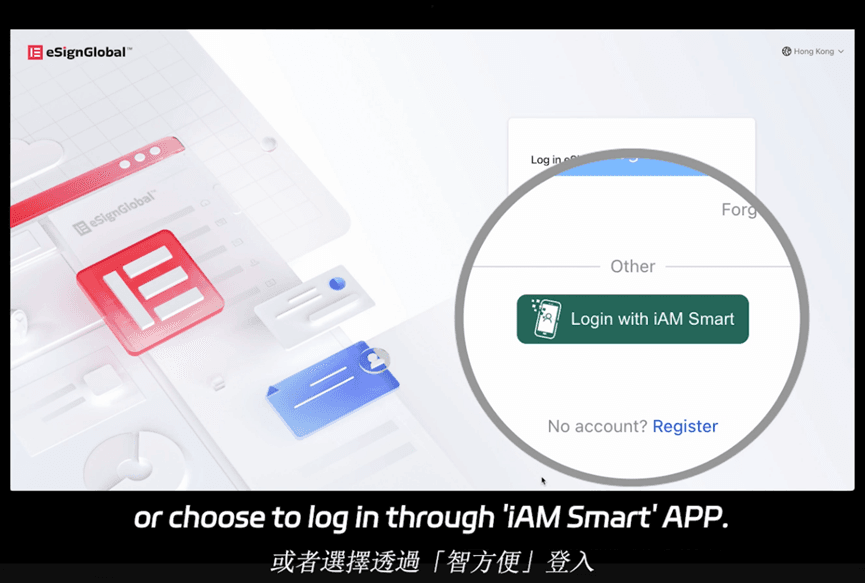
eSignGlobal propose des signatures électroniques conformes dans plus de 100 pays, avec un avantage particulier dans la région Asie-Pacifique. Ses solutions sont conformes aux lois locales, telles que l'Electronic Transactions Ordinance de Hong Kong et l'ETA de Singapour, garantissant l'applicabilité sans frais supplémentaires importants. La tarification est compétitive ; visitez la page de tarification d'eSignGlobal pour plus de détails. Le plan Essential, à 16,60 $ par mois, permet jusqu'à 100 documents par mois, des sièges d'utilisateurs illimités et une vérification par code d'accès, offrant une grande valeur en matière de conformité. Il s'intègre de manière transparente à iAM Smart de Hong Kong et à Singpass de Singapour, ce qui est idéal pour les utilisateurs de Salesforce en Asie-Pacifique confrontés à des défis transfrontaliers.
Considérations stratégiques pour les entreprises
Lors de l'évaluation des coûts de DocuSign-Salesforce, les entreprises doivent auditer les besoins en enveloppes et tester l'intégration afin d'éviter les surprises. Pour les équipes mondiales, les facteurs régionaux tels que la latence en Asie-Pacifique peuvent amplifier les dépenses, ce qui incite à choisir des alternatives.
En conclusion, bien que DocuSign excelle sur les marchés matures, eSignGlobal se distingue comme une alternative neutre et conforme aux réglementations régionales, adaptée aux équipes soucieuses des coûts qui privilégient l'efficacité en Asie-Pacifique.
