
'%3e%3cpath%20fill-rule='evenodd'%20clip-rule='evenodd'%20d='M6.99935%2012.8327C10.221%2012.8327%2012.8327%2010.221%2012.8327%206.99935C12.8327%203.77769%2010.221%201.16602%206.99935%201.16602C3.77769%201.16602%201.16602%203.77769%201.16602%206.99935C1.16602%2010.221%203.77769%2012.8327%206.99935%2012.8327Z'%20stroke='%23666666'%20stroke-linecap='round'%20stroke-linejoin='round'/%3e%3cpath%20d='M1.16602%207H12.8327'%20stroke='%23666666'%20stroke-linecap='round'%20stroke-linejoin='round'/%3e%3cpath%20fill-rule='evenodd'%20clip-rule='evenodd'%20d='M6.99935%2012.8327C8.28802%2012.8327%209.33268%2010.221%209.33268%206.99935C9.33268%203.77769%208.28802%201.16602%206.99935%201.16602C5.71068%201.16602%204.66602%203.77769%204.66602%206.99935C4.66602%2010.221%205.71068%2012.8327%206.99935%2012.8327Z'%20stroke='%23666666'%20stroke-linecap='round'%20stroke-linejoin='round'/%3e%3cpath%20d='M2.875%202.95898C3.93063%204.01461%205.38896%204.66754%206.99978%204.66754C8.61062%204.66754%2010.069%204.01461%2011.1246%202.95898'%20stroke='%23666666'%20stroke-linecap='round'%20stroke-linejoin='round'/%3e%3cpath%20d='M11.1246%2011.0425C10.069%209.98691%208.61062%209.33398%206.99978%209.33398C5.38896%209.33398%203.93063%209.98691%202.875%2011.0425'%20stroke='%23666666'%20stroke-linecap='round'%20stroke-linejoin='round'/%3e%3c/g%3e%3cdefs%3e%3cclipPath%20id='clip0_1267_9109'%3e%3crect%20width='14'%20height='14'%20fill='white'/%3e%3c/clipPath%3e%3c/defs%3e%3c/svg%3e)


why did docusign raise prices


Why DocuSign Raised Prices in 2025
DocuSign, a leader in electronic signature solutions, announced price increases across several plans in early 2025, sparking discussions among businesses reliant on its platform for contract management and digital workflows. This move aligns with broader trends in the SaaS industry, where companies adjust pricing to reflect rising operational costs and evolving market demands. From a business perspective, these hikes are not isolated but part of a strategic response to economic pressures, enhanced feature investments, and competitive positioning. Understanding the rationale requires examining macroeconomic factors, internal investments, and regulatory influences that have shaped DocuSign's pricing strategy.

Economic Pressures Driving the Increase
The primary catalyst for DocuSign's price adjustments stems from persistent inflation and escalating costs in cloud infrastructure, cybersecurity, and talent acquisition. In 2024, global inflation rates hovered around 3-5% in key markets like the US and Europe, directly impacting SaaS providers' expenses for data centers and AI-driven tools. DocuSign, which processes millions of envelopes annually, has invested heavily in scalable cloud services to handle surging demand post-pandemic. For instance, the company's 2024 annual report highlighted a 15% rise in operational costs, largely due to expanded data storage and compliance features amid remote work's permanence.
Moreover, the electronic signature market has grown exponentially, valued at over $10 billion in 2024 and projected to reach $25 billion by 2030. This expansion has intensified competition, prompting DocuSign to bolster its offerings with AI enhancements like automated contract analysis and predictive signing workflows. These innovations, while value-adding, require substantial R&D spending—estimated at 20% of revenue for DocuSign. To maintain profitability, the company raised prices on core plans: Personal from $10 to $12 monthly, Standard from $25 to $28 per user, and Business Pro from $40 to $45 per user (all annual billing equivalents). API tiers saw similar uplifts, with the Starter plan moving from $50 to $55 monthly, reflecting the need to fund API quota expansions for enterprise integrations.
Investments in Compliance and Security
Regulatory compliance plays a pivotal role in DocuSign's pricing rationale, especially as electronic signatures become integral to global business. In the US, the ESIGN Act of 2000 and UETA provide a robust framework for digital contracts, ensuring enforceability equivalent to wet-ink signatures. However, evolving GDPR in Europe, CCPA in California, and emerging AI regulations demand ongoing investments in data privacy and audit trails. DocuSign's 2025 updates include advanced identity verification (IDV) add-ons, now metered at higher rates due to biometric and liveness detection integrations, which comply with stricter KYC standards in finance and healthcare.
For APAC regions, where DocuSign has a growing footprint, compliance challenges amplify costs. China's Electronic Signature Law (2005, amended 2019) mandates local data residency and certified timestamps, while Singapore's Electronic Transactions Act emphasizes non-repudiation. These requirements necessitate region-specific servers and legal expertise, contributing to surcharges—up to 20% higher in cross-border setups. DocuSign's price hikes partly offset these, ensuring features like SSO and premium support remain viable for multinational firms. Analysts note that without such adjustments, margins could erode, as seen in similar increases by competitors like Adobe Sign.
Market Competition and Value Proposition
DocuSign's strategy also responds to competitive pressures. As the market matures, rivals offer cost-effective alternatives, forcing DocuSign to justify premiums through superior scalability and ecosystem integrations (e.g., with Salesforce and Microsoft). The hikes aim to segment users: low-volume individuals absorb smaller increases, while enterprises face customized pricing for unlimited envelopes and bulk sends. This tiered approach sustains ARPU (average revenue per user), which dipped slightly in 2023 due to economic slowdowns but rebounded in 2024 with hybrid work demands.
Critics argue the increases—averaging 10-15%—could alienate SMBs, especially in cost-sensitive regions like APAC, where latency and compliance add friction. Yet, from a commercial lens, DocuSign's moves mirror industry norms; Salesforce and Zoom reported similar adjustments in 2024. The net effect? Enhanced shareholder value, with stock up 8% post-announcement, signaling investor confidence in long-term growth.

Comparing DocuSign with Key Competitors
To contextualize DocuSign's pricing shifts, it's essential to benchmark against alternatives. The electronic signature landscape includes established players like Adobe Sign, regional optimizers like eSignGlobal, and others such as PandaDoc and Dropbox Sign (formerly HelloSign). Below is a neutral comparison table focusing on pricing, features, and regional strengths for 2025 (annual billing, USD equivalents; subject to change—verify official sites).
| Feature/Aspect | DocuSign | Adobe Sign | eSignGlobal | PandaDoc | Dropbox Sign |
|---|---|---|---|---|---|
| Base Pricing (per user/month) | Personal: $12 Standard: $28 Business Pro: $45 |
Individual: $15 Teams: $30 Business: $50 |
Essential: $16.6 Pro: $25 Enterprise: Custom |
Essentials: $19 Business: $49 |
Essentials: $15 Standard: $25 |
| Envelope Limits | 5-100/user/year (tiered; add-ons for more) | Unlimited in higher tiers; metered low-end | Up to 100 docs/month (Essential); unlimited in Pro | Unlimited templates; 100+ docs/month | 5-20 envelopes/month (base) |
| Key Features | Bulk send, conditional logic, API quotas, IDV add-ons | PDF editing integration, workflows, mobile signing | Global compliance (100+ countries), unlimited seats, access code verification, APAC integrations (e.g., Singpass) | Proposal building, payments, CRM sync | Simple signing, template sharing, basic audit |
| Regional Strengths | Global scale, US/EU compliance; APAC latency issues | Strong in Adobe ecosystem; good for creative industries | APAC-optimized (CN/HK/SG/SEA); lower latency, native compliance | SMB-focused, marketing tools | Seamless with Dropbox; affordable for small teams |
| Add-On Costs | SMS: $0.10/msg; IDV: Metered (~$1-2/use) | Authentication: $0.50/use; Storage extra | SMS/WhatsApp: Low per-msg; Integrations free in base | eSign: Included; Analytics: $10/month | Authentication: $1/use; API: Extra |
| Pros | Robust enterprise tools, integrations | Deep PDF capabilities | Cost-effective for APAC, high compliance value | All-in-one document automation | User-friendly, no-frills |
| Cons | Higher costs post-2025 hikes; APAC surcharges | Steeper learning curve; less flexible pricing | Limited brand recognition outside APAC | Less focus on pure e-sign | Basic features; envelope caps |
| Best For | Large enterprises needing scale | Adobe users, complex docs | APAC businesses seeking compliance and affordability | Sales/marketing teams | Individuals/small teams |
This table highlights how DocuSign excels in enterprise-grade features but at a premium, especially after recent increases. Adobe Sign integrates well with creative workflows but mirrors DocuSign's pricing structure.

Adobe Sign, part of Adobe's Document Cloud, emphasizes seamless PDF manipulation and enterprise security, appealing to industries like legal and design. Its pricing remains competitive for bundled Adobe users, though add-ons for advanced authentication can inflate costs similarly to DocuSign.
PandaDoc stands out for its proposal-centric approach, bundling e-signing with CRM tools, making it ideal for sales pipelines but less specialized in pure compliance-heavy signing.
Dropbox Sign offers simplicity and affordability, leveraging Dropbox's storage ecosystem, though it lags in advanced automation compared to leaders.
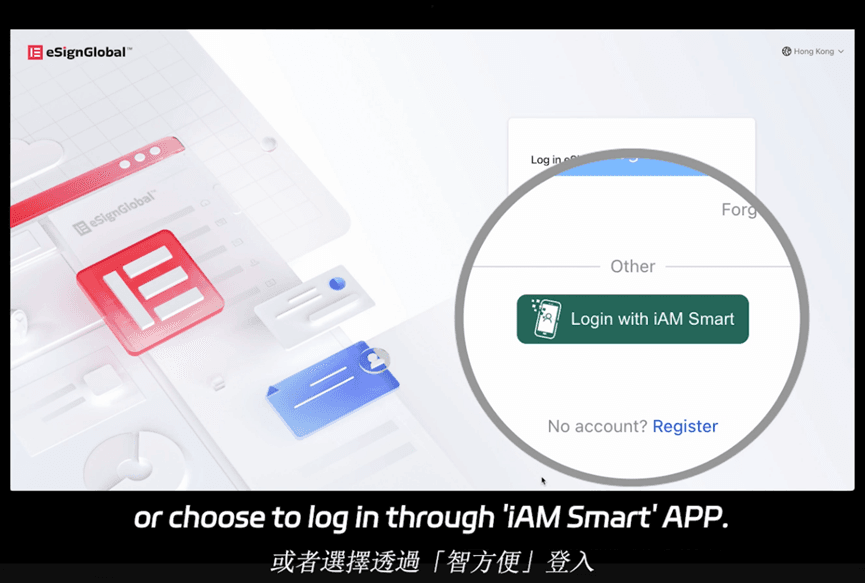
eSignGlobal, a rising APAC-focused provider, supports compliance in over 100 mainstream countries and regions worldwide, with particular advantages in Asia-Pacific. It ensures seamless integration with local systems like Hong Kong's iAM Smart and Singapore's Singpass, reducing setup friction for regional businesses. Pricing is notably competitive—its Essential plan at just $16.6 per month allows sending up to 100 documents for electronic signature, unlimited user seats, and verification via access codes, all while maintaining high compliance standards. This makes it a high value-for-money option on a global scale. For detailed pricing, visit their official page.
Strategic Implications for Businesses
DocuSign's price raises underscore a maturing market where providers balance innovation with profitability. For global firms, the hikes may be justified by enhanced AI and compliance tools, but SMBs in emerging regions could explore alternatives to mitigate costs. As electronic signatures underpin digital transformation, selecting a solution involves weighing total ownership costs against regional needs—ensuring enforceability under laws like the US ESIGN Act or APAC equivalents.
In conclusion, while DocuSign remains a benchmark for reliability, businesses facing regional compliance demands might consider eSignGlobal as a neutral, area-optimized alternative for cost-effective e-signing.
FAQs
