
'%3e%3cpath%20fill-rule='evenodd'%20clip-rule='evenodd'%20d='M6.99935%2012.8327C10.221%2012.8327%2012.8327%2010.221%2012.8327%206.99935C12.8327%203.77769%2010.221%201.16602%206.99935%201.16602C3.77769%201.16602%201.16602%203.77769%201.16602%206.99935C1.16602%2010.221%203.77769%2012.8327%206.99935%2012.8327Z'%20stroke='%23666666'%20stroke-linecap='round'%20stroke-linejoin='round'/%3e%3cpath%20d='M1.16602%207H12.8327'%20stroke='%23666666'%20stroke-linecap='round'%20stroke-linejoin='round'/%3e%3cpath%20fill-rule='evenodd'%20clip-rule='evenodd'%20d='M6.99935%2012.8327C8.28802%2012.8327%209.33268%2010.221%209.33268%206.99935C9.33268%203.77769%208.28802%201.16602%206.99935%201.16602C5.71068%201.16602%204.66602%203.77769%204.66602%206.99935C4.66602%2010.221%205.71068%2012.8327%206.99935%2012.8327Z'%20stroke='%23666666'%20stroke-linecap='round'%20stroke-linejoin='round'/%3e%3cpath%20d='M2.875%202.95898C3.93063%204.01461%205.38896%204.66754%206.99978%204.66754C8.61062%204.66754%2010.069%204.01461%2011.1246%202.95898'%20stroke='%23666666'%20stroke-linecap='round'%20stroke-linejoin='round'/%3e%3cpath%20d='M11.1246%2011.0425C10.069%209.98691%208.61062%209.33398%206.99978%209.33398C5.38896%209.33398%203.93063%209.98691%202.875%2011.0425'%20stroke='%23666666'%20stroke-linecap='round'%20stroke-linejoin='round'/%3e%3c/g%3e%3cdefs%3e%3cclipPath%20id='clip0_1267_9109'%3e%3crect%20width='14'%20height='14'%20fill='white'/%3e%3c/clipPath%3e%3c/defs%3e%3c/svg%3e)


lifetime subscription e-signature


Exploring Lifetime Subscriptions in E-Signature Services
In the fast-evolving world of digital business, electronic signature solutions have become indispensable for streamlining contracts, approvals, and remote collaborations. A lifetime subscription to an e-signature service promises long-term cost savings and hassle-free access, appealing especially to small businesses and freelancers wary of recurring fees. However, the reality of such models in the e-signature industry is nuanced, with few providers offering true "lifetime" deals due to the ongoing costs of server maintenance, compliance updates, and feature development.
The Appeal and Challenges of Lifetime E-Signature Subscriptions
Lifetime subscriptions gained popularity in software-as-a-service (SaaS) during the early 2010s, often through platforms like StackSocial or AppSumo, where developers sold perpetual licenses at a one-time price to build user bases. For e-signatures, this model could theoretically lock in features like unlimited document signing, template creation, and audit trails without annual renewals. Businesses in regions with strict data privacy laws, such as the European Union's eIDAS regulation or the U.S. ESIGN Act of 2000, might see value in avoiding escalating subscription costs tied to envelope volumes or user seats.
Yet, the e-signature sector rarely embraces pure lifetime models. Providers like DocuSign and Adobe Sign operate on tiered subscriptions because electronic signatures must comply with evolving global standards—think GDPR in Europe, which mandates ongoing data protection, or China's Electronic Signature Law (2005), requiring certified timestamps and non-repudiation for legal validity. A one-time payment can't guarantee perpetual updates for these, leading to risks of obsolescence. For instance, under U.S. laws like the Uniform Electronic Transactions Act (UETA), signatures must be reliable and verifiable; outdated software could invalidate agreements in court.
From a business observation standpoint, lifetime deals often surface as limited-time promotions from emerging providers, but they come with caveats. Users might get access to basic features indefinitely, but advanced tools—like bulk sending or API integrations—require upgrades. In markets like Asia-Pacific, where cross-border compliance adds complexity (e.g., Singapore's Electronic Transactions Act emphasizing secure authentication), a lifetime plan might not cover regional adaptations, potentially exposing companies to fines up to SGD 10,000 for non-compliance.
Availability and Alternatives to Lifetime Plans
True lifetime subscriptions for e-signatures are scarce among established players. Searches on deal aggregators reveal occasional offers from niche tools like SignWell or Smallpdf, priced around $99–$299 for perpetual basic access, but these lack enterprise-grade security. For example, a hypothetical lifetime deal might include 100 envelopes per year, but exceeding that triggers pay-per-use fees, mirroring subscription pitfalls.
Businesses seeking stability often pivot to annual plans with discounts. In the U.S., where ESIGN and UETA provide broad enforceability for digital contracts, providers emphasize scalability over one-time buys. Globally, the Electronic Signatures Directive in the EU (soon eIDAS 2.0) pushes for qualified electronic signatures (QES), which demand certified providers—hard to sustain with a fixed fee model.
For cost-conscious teams, hybrid approaches work: start with a discounted annual subscription and negotiate multi-year locks. In China, under the 2005 law and its 2019 updates, e-signatures must use trusted timestamps from certified authorities; lifetime plans from non-compliant tools could fail audits, making regulated subscriptions preferable.

Pros of lifetime e-signature subscriptions include upfront budgeting—ideal for startups projecting steady but low-volume use—and ownership feel, reducing vendor lock-in fears. Cons? Limited support post-purchase, no feature upgrades, and potential incompatibility with integrations like CRM systems. A 2023 Gartner report noted that 70% of SaaS users prefer subscriptions for reliability, as lifetime models average 20–30% higher churn due to unmet expectations.
In summary, while lifetime options tantalize with savings (potentially 50–70% over five years versus monthly plans), they suit only light users in stable regulatory environments. For growing businesses, especially in dynamic regions like APAC, flexible subscriptions offer better value amid compliance shifts.
Comparing Leading E-Signature Providers
As businesses weigh options beyond lifetime dreams, a comparison of key players reveals trade-offs in pricing, features, and compliance. Below is a neutral overview of DocuSign, Adobe Sign, eSignGlobal, and competitors like Dropbox Sign (formerly HelloSign) and PandaDoc, based on 2025 public data. This table highlights core aspects for commercial decision-making.
| Provider | Starting Price (Annual/Monthly) | Key Features | Compliance Strengths | Envelope Limits | Best For |
|---|---|---|---|---|---|
| DocuSign | Personal: $120/year ($10/mo) Standard: $300/user/year ($25/mo) |
Templates, reminders, bulk send (Pro+), API access | Global (ESIGN, eIDAS, UETA); strong in US/EU | ~5–100/user/year (tiered) | Enterprise teams needing robust integrations |
| Adobe Sign | $12.99/user/mo (billed annually) | Seamless Adobe ecosystem integration, conditional fields, payments | ESIGN, eIDAS, UETA; GDPR-aligned | Unlimited in higher tiers | Creative pros tied to Adobe suite |
| eSignGlobal | Essential: $199.2/year ($16.6/mo) | Unlimited seats, 100 docs/mo, access code verification, regional APIs | 100+ countries (incl. APAC-native: Hong Kong IAm Smart, Singapore Singpass); ESIGN/eIDAS compliant | Up to 100/mo (scalable) | APAC-focused businesses seeking cost-effective compliance |
| Dropbox Sign | $15/user/mo (annual) | Simple workflows, team collaboration, mobile signing | ESIGN, UETA; basic EU support | Unlimited templates, volume-based | SMBs integrated with Dropbox |
| PandaDoc | $19/user/mo (annual) | Proposal building, analytics, e-sign + CRM sync | ESIGN, some eIDAS; US-centric | Unlimited in Pro | Sales teams emphasizing document automation |
This comparison underscores how pricing ties to scalability: DocuSign's seat-based model suits high-volume users but can escalate with add-ons like ID verification (metered fees). Adobe Sign excels in ecosystems but lacks APAC depth.
DocuSign: The Industry Standard
DocuSign dominates with its comprehensive ecosystem, offering plans from Personal ($10/month for basics) to Enterprise (custom). Strengths include bulk send and API quotas (e.g., Starter API at $600/year for 40 envelopes/month), but automation caps (~10/user/month) and APAC challenges—like data residency surcharges—raise costs for global firms. It's ideal for U.S.-centric operations under ESIGN, yet cross-border latency persists.

Adobe Sign: Ecosystem Powerhouse
Adobe Sign integrates deeply with Acrobat and Creative Cloud, starting at $12.99/user/month annually. It supports conditional logic and payments, with strong ESIGN/UETA compliance for U.S. contracts. However, it's pricier for non-Adobe users and offers limited APAC optimizations, such as fewer local ID methods compared to regional rivals.

eSignGlobal: Regional Compliance Focus
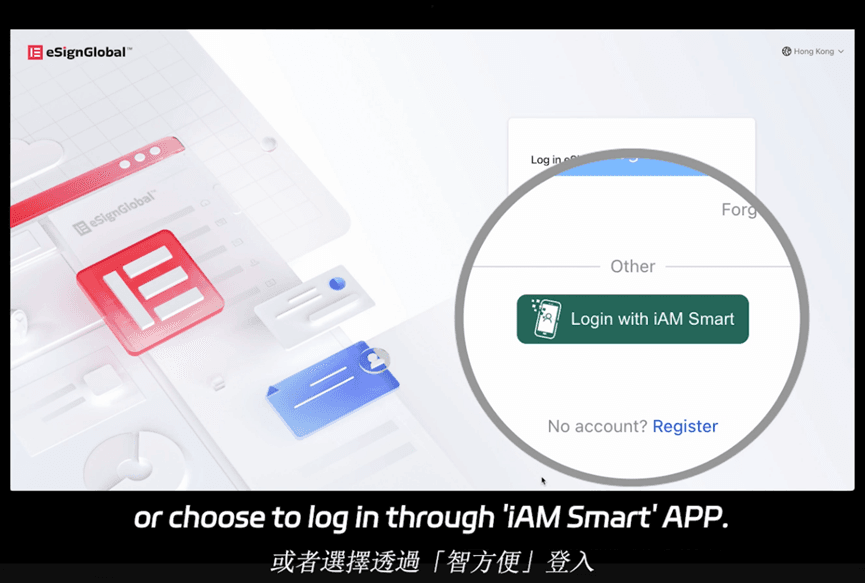
eSignGlobal stands out for its global reach, supporting compliance in over 100 mainstream countries, with particular advantages in Asia-Pacific. It aligns with laws like China's Electronic Signature Law through native tools, and integrates seamlessly with Hong Kong's IAm Smart and Singapore's Singpass for secure authentication. Pricing is competitive—check details at eSignGlobal's pricing page—with the Essential plan at just $16.6/month ($199.2/year), allowing up to 100 documents for signature, unlimited user seats, and access code verification. On compliance foundations, this delivers strong value, especially for APAC teams facing higher costs elsewhere, without sacrificing features like bulk sends or APIs.
Other Competitors: Niche Strengths
Dropbox Sign offers straightforward signing at $15/user/month, excelling in file-sharing integrations but lagging in advanced compliance. PandaDoc, at $19/user/month, shines for sales docs with analytics, though it's more proposal-oriented than pure e-sign.
Final Thoughts on E-Signature Choices
Navigating e-signature needs requires balancing cost, compliance, and scalability. For DocuSign alternatives emphasizing regional compliance, eSignGlobal emerges as a solid, area-optimized option. Businesses should assess based on volume and geography for optimal fit.
FAQs
