

certificado digital docusign cost


Understanding DocuSign Digital Certificate Costs
In the evolving landscape of digital transformation, businesses worldwide are increasingly relying on electronic signature platforms to streamline operations. DocuSign, a leader in this space, offers robust solutions for digital certificates and signatures, often referred to as “certificado digital” in Spanish-speaking regions. These tools ensure legally binding electronic agreements while enhancing security through identity verification. From a business perspective, understanding the costs associated with DocuSign’s digital certificate features is crucial for budgeting and compliance, especially as companies scale across borders.

DocuSign’s Core Pricing Structure for Digital Signatures
DocuSign’s pricing is tiered to accommodate various user needs, with digital certificates integrated into its eSignature plans. The platform’s costs revolve around subscription levels, envelope usage (each envelope represents a document or set of documents for signing), and add-ons for enhanced security like identity verification. All plans are billed annually for the best rates, and prices are in USD for the US region, though they may vary slightly by locale.
Personal Plan: Entry-Level Digital Signing
The Personal plan starts at $120 per year ($10 per month equivalent), designed for individuals or small-scale users. It includes up to 5 envelopes per month, basic template creation, and standard electronic signatures. Digital certificates here are straightforward, providing audit trails and basic compliance without advanced verification. This tier suits freelancers or solo professionals who occasionally need legally binding digital agreements, but it lacks team features or high-volume signing.
Standard and Business Pro Plans: Scaling for Teams
For growing teams, the Standard plan costs $300 per user per year ($25 monthly), supporting up to 100 envelopes per user annually. It adds collaboration tools like shared templates, comments, and reminders—essential for coordinated digital certificate workflows. The Business Pro tier, at $480 per user per year ($40 monthly), builds on this with advanced capabilities such as web forms, conditional logic, bulk sending, and payment collection. Digital certificates in these plans include signer attachments and more robust audit logs, making them ideal for mid-sized businesses handling complex contracts.
In both plans, envelope limits apply: roughly 100 per user per year on annual billing, with automation sends (like bulk or forms) capped at around 10 per month per user. Overages can incur extra fees, impacting total costs for high-volume users.

Enterprise and Advanced Solutions: Custom Digital Certificate Needs
For larger organizations, DocuSign offers Enterprise plans with no public pricing—costs are customized based on seats, volume, and compliance requirements. These include single sign-on (SSO), advanced governance, and premium support. Digital certificates here extend to sophisticated identity verification (IDV), ensuring tamper-evident seals and regulatory adherence.
Add-On Costs for Digital Certificates and Identity Verification
A key component of “certificado digital” in DocuSign is the Identity Verification (IDV) add-on, which goes beyond basic signatures to include biometric checks, ID document scans, and SMS authentication. This is metered, meaning costs scale with usage—expect per-verification fees starting around $1–$5, depending on the method and region. For instance, liveness detection or full biometric verification can add significant expenses for high-security needs like financial or legal documents.
SMS or WhatsApp delivery for notifications is another add-on, charged per message based on telecom rates, often $0.10–$0.50 each. These features enhance the reliability of digital certificates by ensuring recipients engage promptly. API integrations for developers start at $600 annually for the Starter plan (40 envelopes/month), escalating to $5,760 for Advanced, with custom Enterprise options. Automation limits persist, capping bulk sends at similar levels to core plans.
From a commercial standpoint, these add-ons can double or triple base costs for verification-heavy workflows. Businesses must forecast usage to avoid surprises, as envelope overages or IDV spikes directly affect ROI.
Regional Regulations for Electronic Signatures in Spanish-Speaking Markets
The term “certificado digital” is prevalent in Latin America and Spain, where electronic signatures must comply with local laws to hold legal weight. In Spain, the eIDAS Regulation (EU No 910/2014) governs digital certificates, classifying them into basic, advanced, and qualified levels. Qualified electronic signatures (QES), akin to DocuSign’s IDV-enhanced options, offer the highest evidential value, equivalent to handwritten signatures, and require certification by trusted providers.
In Latin American countries like Mexico, Brazil, and Argentina, regulations vary but align with international standards. Mexico’s Federal Electronic Signature Law (2012) recognizes advanced electronic signatures for most contracts, while Brazil’s Medida Provisória 2.200-2/2001 mandates ICP-Brasil certification for qualified ones in public sectors. Argentina’s Digital Signature Law (No. 25,506) similarly supports non-qualified signatures for private use but requires qualified ones for official documents. DocuSign complies with these through its global infrastructure, but users in these regions may face higher costs due to regional add-ons for local ID methods or data residency. Cross-border latency and compliance surcharges can increase effective pricing by 20–30%, prompting businesses to evaluate region-specific alternatives.
Comparing DocuSign with Key Competitors
To make informed decisions, businesses often compare DocuSign against rivals like Adobe Sign and eSignGlobal, alongside others such as HelloSign (Dropbox Sign) and PandaDoc. Each platform handles digital certificates differently, balancing cost, compliance, and features. Below is a neutral comparison table highlighting pricing, strengths, and regional fit based on 2025 data.
| Platform | Base Pricing (Annual, per User) | Envelope Limits | Key Digital Certificate Features | Regional Strengths | Drawbacks |
|---|---|---|---|---|---|
| DocuSign | Personal: $120; Standard: $300; Business Pro: $480 | 5–100/month/user | IDV (biometrics, SMS), audit trails, bulk send | Global compliance (eIDAS, ESIGN Act) | High add-on costs; APAC/LatAm surcharges |
| Adobe Sign | Personal: $144; Business: $360; Enterprise: Custom | Unlimited in higher tiers | Document cloud integration, qualified signatures | Strong in US/EU; Acrobat synergy | Steeper learning curve; less flexible for APIs |
| eSignGlobal | Essential: $200 ($16.6/month); Pro: Custom | Up to 100/month in Essential; scalable | Access code verification, unlimited seats, regional ID integration | APAC/Asia optimized (100+ countries compliant); cost-effective | Newer in some Western markets |
| HelloSign (Dropbox Sign) | Essentials: $180; Standard: $300 | 20–unlimited | Basic e-sign, templates, mobile support | Affordable for SMBs; Dropbox integration | Limited advanced IDV; no bulk native |
| PandaDoc | Essentials: $240; Business: $600 | Unlimited proposals | Proposal tracking, payments, e-sign | Sales-focused; CRM integrations | Higher cost for non-sales use; less emphasis on certificates |
DocuSign: A Market Leader with Proven Scalability
DocuSign excels in enterprise-grade digital certificates, offering seamless integration and broad compliance. Its pricing reflects premium support, but add-ons like IDV can escalate costs for verification-intensive users.
Adobe Sign: Integrated Document Workflow Powerhouse
Adobe Sign, part of the Adobe ecosystem, provides robust digital certificate tools tied to PDF handling. Starting at $144 annually for individuals, it supports unlimited envelopes in business plans and excels in qualified signatures under eIDAS. Ideal for document-heavy industries, it integrates natively with Acrobat for editing and verification, though API costs mirror DocuSign’s at custom rates. Businesses appreciate its security, but the platform’s complexity may deter smaller teams.

eSignGlobal: Compliant and Cost-Effective for Global Operations
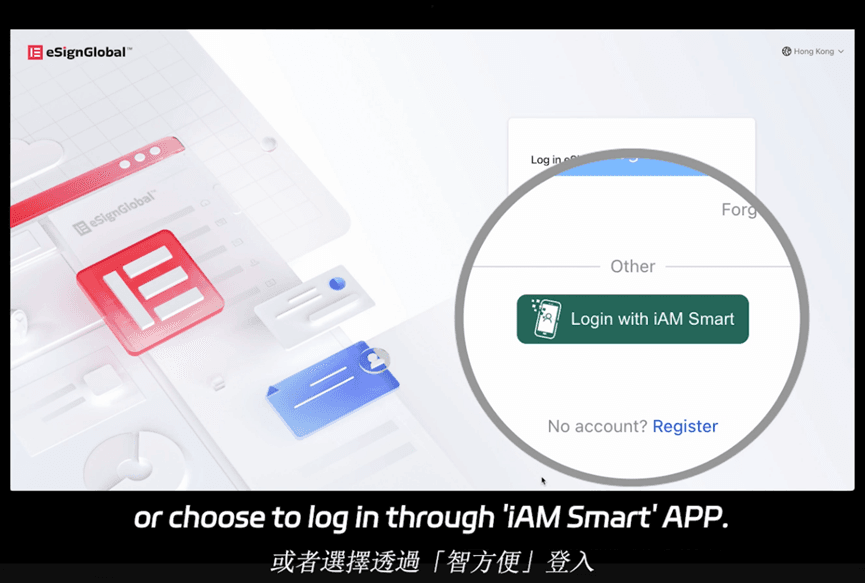
eSignGlobal stands out for its compliance across 100 mainstream countries and regions, with particular advantages in the Asia-Pacific (APAC) area. It offers native support for local regulations, including seamless integration with Hong Kong’s iAM Smart and Singapore’s Singpass for identity verification. Pricing is more accessible; for details, visit their pricing page. The Essential version, at just $16.6 per month ($200 annually), allows sending up to 100 documents for electronic signature, unlimited user seats, and verification via access codes—all while maintaining high compliance standards. This makes it highly cost-effective compared to competitors, especially for APAC businesses facing DocuSign’s regional premiums. On top of compliance, its features provide strong value for cross-border teams without the bloat of unnecessary add-ons.
Other Competitors: Niche Options for Specific Needs
HelloSign offers straightforward digital certificates at lower entry points, focusing on ease for small businesses. PandaDoc, meanwhile, emphasizes sales proposals with embedded e-signatures, suiting marketing teams but less so for pure compliance workflows.
Strategic Insights for Businesses
When evaluating DocuSign’s digital certificate costs, consider your volume, regional needs, and growth trajectory. While DocuSign provides reliability, its pricing can strain budgets in emerging markets. For alternatives prioritizing regional compliance, eSignGlobal emerges as a balanced choice, offering optimized solutions without compromising on global standards. Businesses in Spanish-speaking regions should prioritize platforms aligning with local laws like eIDAS or national equivalents to ensure enforceability. Ultimately, a trial of multiple options will reveal the best fit for operational efficiency and cost control.
Câu hỏi thường gặp

 Chỉ được phép sử dụng email doanh nghiệp

 +852-46749867
 sales@esignglobal.com
 support@esignglobal.com
 Tư vấn trực tuyến

