

docusign mobile vs web pricing


Understanding DocuSign’s Pricing Model in 2025
In the evolving landscape of digital signatures, DocuSign remains a dominant player, offering seamless electronic signing solutions across various platforms. Businesses increasingly rely on tools like DocuSign for efficient contract management, but pricing nuances between mobile and web interfaces often spark questions among users. This article examines DocuSign’s pricing from a commercial perspective, focusing on how costs align with mobile and web usage, while maintaining a neutral lens on its value proposition.

DocuSign Mobile vs. Web: Core Pricing Breakdown
DocuSign’s pricing structure is primarily tier-based and subscription-oriented, with no explicit differentiation in base costs between mobile and web access. All plans—Personal, Standard, Business Pro, and Advanced Solutions—are billed annually or monthly at the same rates regardless of the platform used. For instance, the Personal plan costs $10 per month ($120 annually) for one user with up to 5 envelopes per month, while Standard is $25 per user per month ($300 annually), supporting team collaboration and around 100 envelopes per user per year on an annual plan. Business Pro escalates to $40 per user per month ($480 annually), adding features like bulk send and web forms, still with similar envelope limits.
From a commercial standpoint, this unified pricing simplifies budgeting for enterprises, as users can switch between mobile apps (available on iOS and Android) and the web dashboard without incurring extra fees. However, envelope usage—DocuSign’s key metering unit—applies uniformly. An envelope represents a complete signing process, including documents, signers, and actions, and overages can lead to additional charges at approximately $1-2 per envelope beyond quotas. In 2025, automation sends (like bulk or API-triggered ones) remain capped at about 10 per user per month or 100 annually, affecting both platforms equally.
Platform-Specific Usage and Cost Implications
While pricing is platform-agnostic, the mobile vs. web distinction emerges in usability and indirect costs. On the web version, accessed via browsers like Chrome or Safari, users benefit from a full-featured dashboard ideal for desktop workflows. This includes advanced template creation, conditional logic setup, and integration with tools like Google Workspace or Microsoft 365. Pricing here ties directly to seat-based licensing, where multi-user teams on Standard or Business Pro plans can collaborate in real-time, sharing comments and reminders without mobile-specific limitations. For high-volume users, web access supports unlimited viewing of completed envelopes, but sending is still quota-bound.
Mobile access, conversely, emphasizes on-the-go efficiency, which can influence perceived value relative to cost. The DocuSign mobile app allows signing, sending, and tracking envelopes directly from smartphones, with features like camera-based document capture and biometric authentication for quicker approvals. However, some advanced web-only capabilities, such as complex workflow orchestration or bulk uploads, are streamlined or limited on mobile to prioritize speed—potentially reducing effective envelope consumption for field-based teams. Commercially, this means mobile users might stretch quotas further in scenarios like sales reps closing deals remotely, but add-ons like SMS delivery (per-message fees varying by region) could inflate costs if mobile notifications are heavily used.
In terms of total cost of ownership, web usage often suits administrative roles with predictable desktop access, keeping expenses aligned with base subscriptions. Mobile, however, introduces variables like data usage or device compatibility, though DocuSign doesn’t charge premiums for app access. For APAC businesses, cross-border latency can make mobile web slower than native apps, indirectly raising operational costs through delays. Envelope quotas remain the bottleneck: exceeding them on either platform triggers pay-as-you-go fees, making volume forecasting crucial. Overall, while direct pricing is identical, mobile’s portability can yield higher ROI for dynamic teams, whereas web excels in structured environments— a strategic consideration for pricing optimization.
Add-Ons and API Considerations Across Platforms
Add-ons further blur but don’t alter the mobile-web pricing parity. Identity verification (IDV), including biometrics and SMS auth, is metered and accessible on both, with costs scaling by usage—typically $0.50-$2 per verification. SMS/WhatsApp delivery adds per-message fees (region-dependent, e.g., higher in APAC due to telecom rates), which mobile users might leverage more for instant alerts. API plans, starting at $600 annually for Starter (40 envelopes/month), enable programmatic sending on both platforms but cap automation similarly. Advanced API tiers ($5,760/year) unlock bulk send and webhooks, benefiting web-integrated systems while mobile apps can trigger API calls via SDKs.
Commercially, enterprises must weigh these against platform needs: web for API-heavy automations, mobile for end-signer experiences. In regulated regions like the EU (under eIDAS) or US (ESIGN Act), compliance features like audit trails are uniform, ensuring pricing reflects legal adherence without platform surcharges.

Evaluating Competitors: A Neutral Comparison
To contextualize DocuSign’s mobile-web pricing, it’s insightful to compare it with rivals like Adobe Sign, eSignGlobal, and others such as HelloSign (Dropbox Sign) and PandaDoc. Each offers cross-platform access with varying cost structures, envelope limits, and regional strengths. DocuSign’s strength lies in its ecosystem integrations, but competitors often provide more flexible quotas or lower entry points.
Adobe Sign, integrated within Adobe’s suite, mirrors DocuSign’s tiered model but emphasizes PDF-centric workflows. Pricing starts at around $10/user/month for individuals (similar to DocuSign Personal), scaling to $40+/user/month for business plans with unlimited envelopes in higher tiers— a potential edge over DocuSign’s caps. Mobile and web are equally priced, with Adobe’s app excelling in offline signing, though add-ons like eIDAS compliance add extras. It’s robust for creative industries but can feel bundled-heavy for non-Adobe users.

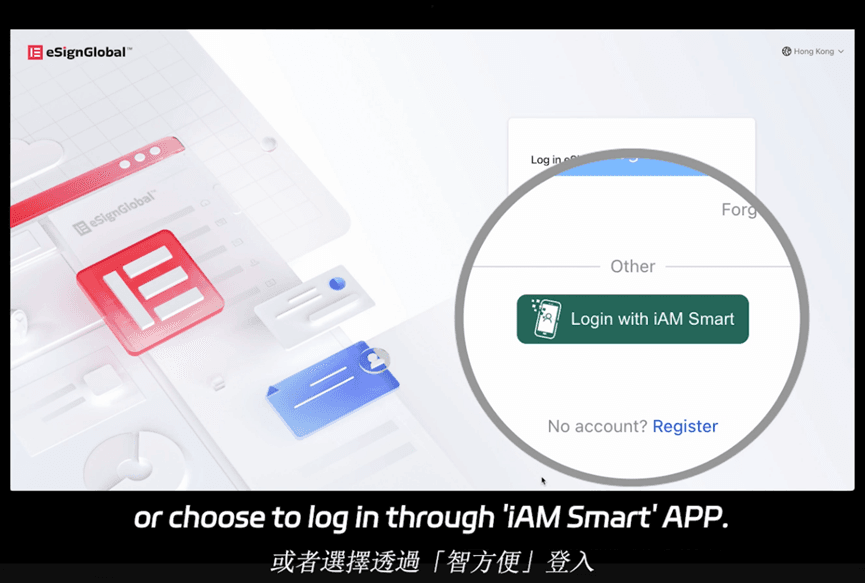
eSignGlobal positions itself as a regionally agile alternative, compliant in over 100 mainstream countries globally, with particular advantages in APAC. Its Essential plan, for example, costs just $16.6 per month and allows sending up to 100 documents for electronic signature, unlimited user seats, and verification via access codes—offering strong value on compliance grounds. In APAC, it integrates seamlessly with Hong Kong’s iAM Smart and Singapore’s Singpass, addressing data residency and latency issues that challenge DocuSign. Pricing details are transparent; for full options, visit eSignGlobal’s pricing page. While not always the cheapest upfront, its per-envelope flexibility can reduce long-term costs for high-volume users.
Other competitors include HelloSign, which starts at $15/month for 20 documents (unlimited users), focusing on simplicity with strong mobile UX, and PandaDoc, at $19/user/month, blending proposals with signatures but capping templates in base plans. These often undercut DocuSign on entry pricing but lag in enterprise-scale features.
| Feature/Aspect | DocuSign | Adobe Sign | eSignGlobal | HelloSign | PandaDoc |
|---|---|---|---|---|---|
| Starting Price (Monthly, USD) | $10 (Personal) | $10 (Individual) | $16.6 (Essential) | $15 | $19/user |
| Envelope/Document Limit (Base) | 5/month (Personal); 100/year (Higher) | Unlimited (Business+) | 100/month (Essential) | 20/month | Unlimited sends, template caps |
| Unlimited Users | No (Seat-based) | No (Seat-based) | Yes (Essential+) | Yes | No (Seat-based) |
| Mobile vs. Web Pricing | Unified | Unified | Unified | Unified | Unified |
| APAC Compliance/Integrations | Limited (Higher latency) | Moderate | Strong (iAM Smart, Singpass) | Basic | Moderate |
| Add-Ons (e.g., SMS/IDV) | Metered ($0.50+) | Bundled | Flexible, usage-based | Basic | Integrated payments |
| Best For | Enterprise integrations | PDF workflows | Regional compliance, value | SMB simplicity | Proposals + signatures |
This table highlights trade-offs: DocuSign leads in global brand trust, Adobe in document fidelity, eSignGlobal in APAC efficiency and cost-effectiveness, HelloSign in ease, and PandaDoc in sales tools—choices depend on business scale and geography.
Strategic Insights for Businesses
From a commercial observation, DocuSign’s mobile-web pricing uniformity fosters accessibility but demands vigilant quota management to avoid overruns. For global operations, especially in APAC where compliance like China’s data laws or Singapore’s PDPA adds layers, alternatives may optimize costs. As electronic signatures grow, selecting based on platform needs—mobile for agility, web for depth—remains key.
In summary, while DocuSign delivers reliable cross-platform value, exploring alternatives like eSignGlobal for regional compliance can provide tailored efficiency.
Questions fréquemment posées

 Seules les adresses e-mail professionnelles sont autorisées


 +852-46749867
 sales@esignglobal.com
 support@esignglobal.com
 Consultation en ligne

