
'%3e%3cpath%20fill-rule='evenodd'%20clip-rule='evenodd'%20d='M6.99935%2012.8327C10.221%2012.8327%2012.8327%2010.221%2012.8327%206.99935C12.8327%203.77769%2010.221%201.16602%206.99935%201.16602C3.77769%201.16602%201.16602%203.77769%201.16602%206.99935C1.16602%2010.221%203.77769%2012.8327%206.99935%2012.8327Z'%20stroke='%23666666'%20stroke-linecap='round'%20stroke-linejoin='round'/%3e%3cpath%20d='M1.16602%207H12.8327'%20stroke='%23666666'%20stroke-linecap='round'%20stroke-linejoin='round'/%3e%3cpath%20fill-rule='evenodd'%20clip-rule='evenodd'%20d='M6.99935%2012.8327C8.28802%2012.8327%209.33268%2010.221%209.33268%206.99935C9.33268%203.77769%208.28802%201.16602%206.99935%201.16602C5.71068%201.16602%204.66602%203.77769%204.66602%206.99935C4.66602%2010.221%205.71068%2012.8327%206.99935%2012.8327Z'%20stroke='%23666666'%20stroke-linecap='round'%20stroke-linejoin='round'/%3e%3cpath%20d='M2.875%202.95898C3.93063%204.01461%205.38896%204.66754%206.99978%204.66754C8.61062%204.66754%2010.069%204.01461%2011.1246%202.95898'%20stroke='%23666666'%20stroke-linecap='round'%20stroke-linejoin='round'/%3e%3cpath%20d='M11.1246%2011.0425C10.069%209.98691%208.61062%209.33398%206.99978%209.33398C5.38896%209.33398%203.93063%209.98691%202.875%2011.0425'%20stroke='%23666666'%20stroke-linecap='round'%20stroke-linejoin='round'/%3e%3c/g%3e%3cdefs%3e%3cclipPath%20id='clip0_1267_9109'%3e%3crect%20width='14'%20height='14'%20fill='white'/%3e%3c/clipPath%3e%3c/defs%3e%3c/svg%3e)


Coût de l'envoi groupé avec DocuSign


Explication détaillée de la fonctionnalité d'envoi groupé de DocuSign
Dans le monde trépidant des transactions numériques, les entreprises ont souvent besoin d'envoyer simultanément plusieurs documents à plusieurs destinataires pour rationaliser leurs opérations. La fonctionnalité d'envoi groupé (Bulk Send) de DocuSign résout ce problème en permettant aux utilisateurs de distribuer le même document à de nombreux destinataires en une seule fois, ce qui est idéal pour les intégrations d'employés, les accords clients ou les campagnes marketing. Cependant, le coût de l'envoi groupé dans DocuSign n'est pas simple : il est étroitement lié aux niveaux d'abonnement, aux limites d'enveloppes et aux plafonds d'utilisation. D'un point de vue commercial, il est essentiel de comprendre ces coûts pour la planification budgétaire, car une utilisation excessive peut entraîner des frais imprévus ou nécessiter une mise à niveau du plan.
La fonctionnalité d'envoi groupé est disponible à partir du plan Business Pro, ce qui la positionne comme une fonctionnalité de milieu à haut de gamme plutôt qu'une fonctionnalité de base. Cette fonctionnalité permet de télécharger des données de destinataires via un fichier CSV, ce qui automatise la distribution tout en respectant les normes de signature électronique. D'un point de vue commercial, elle est très avantageuse pour les équipes en expansion, mais le modèle de tarification met l'accent sur le contrôle du volume pour éviter les abus. Par exemple, même avec des enveloppes "illimitées" dans les plans supérieurs, les envois automatisés comme l'envoi groupé sont souvent limités - généralement environ 100 par utilisateur et par an avec une facturation annuelle, ou environ 10 par mois. Le dépassement de ces limites nécessite l'ajout de services supplémentaires ou des négociations au niveau de l'entreprise, ce qui peut augmenter considérablement les coûts.
Intégration des niveaux de tarification de DocuSign avec l'envoi groupé
DocuSign structure ses prix autour d'abonnements annuels aux plans de signature électronique, l'envoi groupé étant intégré au niveau Business Pro et supérieur. Le plan Personal, à 120 $ par an (10 $ par mois, un utilisateur), n'offre que 5 enveloppes par mois et ne prend absolument pas en charge l'envoi groupé - il convient uniquement aux utilisateurs individuels ayant des besoins minimes. La mise à niveau vers le plan Standard, à 300 $ par utilisateur et par an (25 $ par mois), introduit des fonctionnalités d'équipe telles que les modèles et les commentaires, mais les enveloppes restent limitées à environ 100 par utilisateur et par an, et l'envoi groupé n'est pas pris en charge.
Le plan Business Pro, au prix de 480 $ par utilisateur et par an (40 $ par mois), débloque la fonctionnalité d'envoi groupé, tout en incluant les formulaires Web, la logique conditionnelle, les pièces jointes du signataire et la collecte des paiements. Ici, le quota d'enveloppes reste similaire - environ 100 par utilisateur et par an - mais l'envoi groupé est comptabilisé dans cette limite d'automatisation. Les entreprises qui dépendent fortement des opérations groupées peuvent trouver cela limitatif ; par exemple, une équipe de vente qui envoie plus de 200 contrats par trimestre pourrait rapidement atteindre la limite, ce qui nécessiterait des frais de dépassement ou une mise à niveau vers Advanced Solutions (niveau entreprise, tarification personnalisée). Ces plans d'entreprise ajoutent la gouvernance, le SSO et des volumes plus élevés, mais commencent à plusieurs milliers de dollars par an, en fonction des sièges et de l'utilisation.
Pour l'envoi groupé piloté par API, les plans de développeurs de DocuSign entrent en jeu. Le plan Advanced API, à 5 760 $ par an, comprend l'API d'envoi groupé pour l'automatisation programmatique, avec un quota d'environ 100 enveloppes par mois, ainsi que des fonctionnalités avancées telles que les webhooks. Les plans Starter (600 $ par an) et Intermediate (3 600 $ par an) offrent des limites inférieures (40 à 100 enveloppes par mois) et ne disposent pas de la fonctionnalité d'envoi groupé complète. D'un point de vue commercial, cette approche par niveaux encourage les ventes incitatives : une petite entreprise peut commencer avec Business Pro à 480 $/utilisateur, mais si elle s'intègre à des systèmes CRM comme Salesforce, elle doit passer à l'API à plus de 5 760 $.
Les services supplémentaires ont un impact supplémentaire sur les coûts. L'authentification d'identité (IDV) pour les envois groupés sécurisés entraîne des frais biométriques ou SMS à l'utilisation, tandis que la livraison par SMS/WhatsApp ajoute des frais par message, qui varient selon la région. Dans la région Asie-Pacifique (APAC), les latences transfrontalières et les exigences de conformité peuvent ajouter des surtaxes, ce qui rend l'envoi groupé plus coûteux - potentiellement 20 à 30 % plus cher en raison des exigences de résidence des données.

Facteurs influençant les coûts d'envoi groupé de DocuSign
Plusieurs variables influencent le coût total de l'utilisation de l'envoi groupé. Les licences basées sur les sièges signifient que les coûts augmentent avec la taille de l'équipe ; une configuration Business Pro pour 10 utilisateurs coûte 4 800 $ par an, avant les enveloppes. L'utilisation des enveloppes est essentielle : chaque envoi groupé compte comme une enveloppe par destinataire, donc l'envoi à 500 personnes consomme 500 enveloppes, ce qui érode rapidement le quota de 100 par utilisateur et par an. Les limites d'automatisation s'appliquent de manière générale : même les plans d'entreprise imposent des seuils similaires pour l'envoi groupé, les formulaires Web et les PowerForms afin de gérer la charge du serveur.
Les facteurs régionaux jouent également un rôle. Aux États-Unis, la tarification est simple, mais les entreprises de la région Asie-Pacifique sont confrontées à des coûts effectifs plus élevés, en raison des outils de gouvernance, de l'IDV local limité et des frais de télécommunication pour la livraison par SMS. Pour les opérations mondiales, la conformité de DocuSign à ESIGN et UETA est forte, mais les lois spécifiques à la région Asie-Pacifique, telles que la loi chinoise sur la signature électronique ou l'ETA de Singapour, nécessitent des services supplémentaires, ce qui augmente les coûts. Les quotas d'API ajoutent une autre couche ; le dépassement des limites déclenche des frais à l'utilisation, généralement de 0,10 à 1 $ par enveloppe, en fonction du volume.
D'un point de vue stratégique, le modèle de DocuSign privilégie la prévisibilité grâce aux plafonds, mais peut dissuader les utilisateurs à volume élevé. Les dépassements peuvent coûter de 10 à 50 $ par enveloppe supplémentaire, selon les estimations publiques, ce qui conduit certaines entreprises à négocier des accords personnalisés. La surveillance centralisée via l'utilisation de l'API est utile, mais une planification proactive est essentielle pour éviter les dépassements budgétaires.

Comparaison de l'envoi groupé de DocuSign avec d'autres concurrents
Lors de l'évaluation des coûts d'envoi groupé, il est instructif de comparer DocuSign avec des alternatives telles qu'Adobe Sign, eSignGlobal, ainsi que Dropbox Sign (anciennement HelloSign) ou PandaDoc. Chaque solution offre des fonctionnalités groupées, une transparence des prix et des avantages régionaux différents, ce qui permet aux entreprises de peser les options en fonction de leur taille, de leur conformité et de leur budget.
DocuSign excelle en termes de notoriété de la marque mondiale et d'intégrations, mais lie l'envoi groupé à des niveaux supérieurs et impose des plafonds stricts, comme indiqué précédemment. Son orientation vers l'entreprise convient aux grandes entreprises, bien que les coûts puissent augmenter considérablement pour une utilisation à volume élevé.
Adobe Sign, en tant que partie de l'écosystème Adobe, s'intègre de manière transparente aux outils PDF et propose l'envoi groupé dans son plan Business, à environ 29,99 $/utilisateur/mois (annuel). Il prend en charge jusqu'à 100 enveloppes par utilisateur et par mois, avec des destinataires illimités en mode groupé, mais les plafonds d'automatisation sont similaires à ceux de DocuSign. Les services supplémentaires tels que l'authentification SMS ajoutent 0,50 à 2 $ par fois, et la tarification entreprise est personnalisée. Bien qu'il soit puissant pour les secteurs créatifs, la tarification d'Adobe manque de la prévisibilité des enveloppes de certains concurrents, ce qui peut entraîner des coûts à long terme plus élevés pour les opérations groupées.

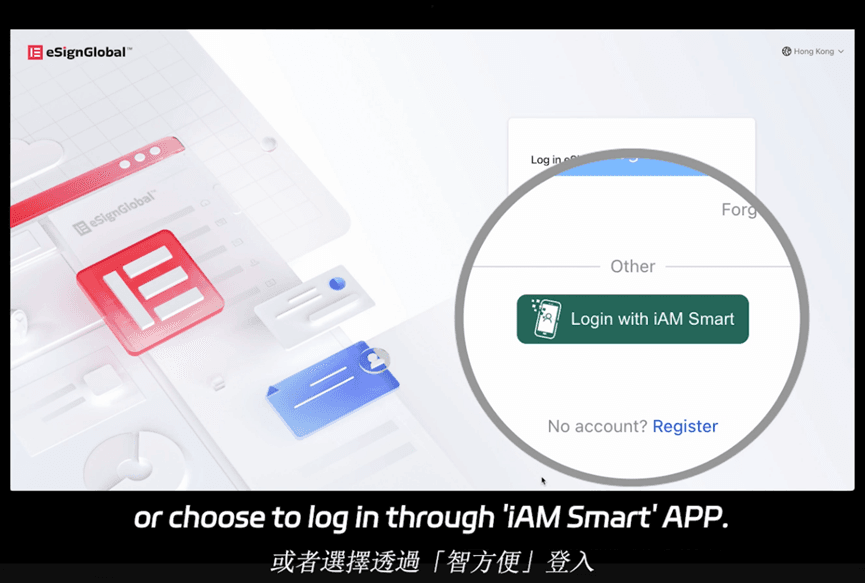
eSignGlobal se positionne comme une option conforme et rentable, prenant en charge les signatures électroniques dans plus de 100 pays principaux dans le monde. Dans la région Asie-Pacifique, il se distingue par une vitesse optimisée, une conformité locale pour des marchés tels que la Chine, Hong Kong et Singapour, et une tarification flexible. Par exemple, le plan Essential, à seulement 16,6 $/mois (équivalent annuel), permet jusqu'à 100 signatures de documents par mois, des sièges d'utilisateurs illimités et une vérification par code d'accès - le tout basé sur une base de conformité, offrant une valeur solide. Il s'intègre de manière transparente à iAM Smart à Hong Kong et à Singpass à Singapour pour une sécurité renforcée. Pour une tarification détaillée, visitez la page de tarification d'eSignGlobal. Cela le rend attrayant pour les entreprises axées sur la région Asie-Pacifique qui recherchent l'abordabilité sans sacrifier les fonctionnalités.
D'autres concurrents tels que Dropbox Sign proposent l'envoi groupé dans leur plan Standard (15 $/utilisateur/mois, 100 enveloppes/mois), prenant en charge les téléchargements CSV simples, en mettant l'accent sur la facilité d'utilisation pour les petites équipes. PandaDoc regroupe l'envoi groupé avec les outils de proposition à 19 $/utilisateur/mois, mais limite à 100 envois par mois. Ces alternatives offrent souvent des plafonds plus souples à un point d'entrée inférieur au seuil de 40 $ de DocuSign.
| Fonctionnalité/Aspect | DocuSign | Adobe Sign | eSignGlobal | Dropbox Sign | PandaDoc |
|---|---|---|---|---|---|
| Disponibilité de l'envoi groupé | Business Pro (40 $/mois/utilisateur) | Business (29,99 $/mois/utilisateur) | Essential (16,6 $/mois, sièges illimités) | Standard (15 $/mois/utilisateur) | Business (19 $/mois/utilisateur) |
| Quota d'enveloppes (mensuel) | ~10 automatisation/utilisateur (limité) | ~100/utilisateur | Jusqu'à 100 documents | 100/utilisateur | 100 envois |
| Conformité APAC | Partielle, nécessite des modules complémentaires | Forte à l'échelle mondiale, régionale supplémentaire | Localisé dans plus de 100 pays, optimisé pour l'APAC | De base | Limité |
| Coûts de volume élevé | Élevé (entreprise personnalisée) | Modéré (modules complémentaires à l'utilisation) | Faible, évolutivité flexible | Faible entrée, paiement à l'utilisation | Modéré, axé sur les modèles |
| Intégrations | Vaste (Salesforce, etc.) | Écosystème Adobe | iAM Smart, Singpass, API | Dropbox, Google | Intensif en CRM |
| Avantages | Gouvernance d'entreprise | Collaboration PDF | Abordabilité et vitesse régionales | Simplicité | Proposition + signature |
Cette comparaison met en évidence la position de leader de DocuSign en termes de fonctionnalités avancées, mais avec une prime de prix, tandis que des options comme eSignGlobal offrent des fonctionnalités groupées compétitives et sont mieux adaptées aux besoins régionaux.
En résumé, l'envoi groupé de DocuSign offre une efficacité pour une mise à l'échelle conforme, mais nécessite une gestion prudente des coûts en raison de la tarification par niveaux et des plafonds. Pour les entreprises qui explorent des alternatives, en particulier dans les régions réglementées, eSignGlobal se distingue comme un choix neutre et conforme aux réglementations régionales, offrant une valeur solide.
