
'%3e%3cpath%20fill-rule='evenodd'%20clip-rule='evenodd'%20d='M6.99935%2012.8327C10.221%2012.8327%2012.8327%2010.221%2012.8327%206.99935C12.8327%203.77769%2010.221%201.16602%206.99935%201.16602C3.77769%201.16602%201.16602%203.77769%201.16602%206.99935C1.16602%2010.221%203.77769%2012.8327%206.99935%2012.8327Z'%20stroke='%23666666'%20stroke-linecap='round'%20stroke-linejoin='round'/%3e%3cpath%20d='M1.16602%207H12.8327'%20stroke='%23666666'%20stroke-linecap='round'%20stroke-linejoin='round'/%3e%3cpath%20fill-rule='evenodd'%20clip-rule='evenodd'%20d='M6.99935%2012.8327C8.28802%2012.8327%209.33268%2010.221%209.33268%206.99935C9.33268%203.77769%208.28802%201.16602%206.99935%201.16602C5.71068%201.16602%204.66602%203.77769%204.66602%206.99935C4.66602%2010.221%205.71068%2012.8327%206.99935%2012.8327Z'%20stroke='%23666666'%20stroke-linecap='round'%20stroke-linejoin='round'/%3e%3cpath%20d='M2.875%202.95898C3.93063%204.01461%205.38896%204.66754%206.99978%204.66754C8.61062%204.66754%2010.069%204.01461%2011.1246%202.95898'%20stroke='%23666666'%20stroke-linecap='round'%20stroke-linejoin='round'/%3e%3cpath%20d='M11.1246%2011.0425C10.069%209.98691%208.61062%209.33398%206.99978%209.33398C5.38896%209.33398%203.93063%209.98691%202.875%2011.0425'%20stroke='%23666666'%20stroke-linecap='round'%20stroke-linejoin='round'/%3e%3c/g%3e%3cdefs%3e%3cclipPath%20id='clip0_1267_9109'%3e%3crect%20width='14'%20height='14'%20fill='white'/%3e%3c/clipPath%3e%3c/defs%3e%3c/svg%3e)


proposify team pricing


Understanding Proposify Team Pricing in 2025
In the competitive landscape of proposal software, Proposify stands out as a tool designed to streamline sales processes for teams handling complex deals. As businesses scale, understanding team pricing becomes crucial for budgeting and ROI evaluation. Proposify's team plans cater to collaborative environments, offering features like shared templates, real-time feedback, and analytics that go beyond individual use. From a business perspective, selecting the right tier involves balancing cost against team size, usage volume, and integration needs—especially when proposals integrate with e-signature solutions for faster closings.
Key Features Driving Proposify's Value for Teams
Proposify's team pricing is structured around scalability, making it appealing for sales, marketing, and account management groups. The platform emphasizes customization, with drag-and-drop builders for professional proposals that include interactive pricing tables, e-signatures, and payment integrations. For teams, this means centralized content libraries where multiple users can contribute without version control issues, a common pain point in fragmented workflows.
Businesses often face challenges like inconsistent branding or delayed approvals in proposal creation. Proposify addresses these through role-based permissions, allowing admins to oversee team activities while reps focus on personalization. Analytics dashboards provide insights into proposal performance, such as open rates and conversion metrics, helping teams refine strategies. In 2025, with remote work persisting, these collaborative tools are essential for maintaining efficiency across distributed teams.
Breaking Down Proposify Team Pricing Tiers
Proposify offers three main team-oriented plans: Essentials, Business, and Enterprise, all billed annually for cost savings. Pricing is per user, which can add up for larger teams but includes unlimited proposals and templates in higher tiers.
-
Essentials Plan: Starting at $19 per user per month (billed annually at $204/year), this entry-level team option supports up to 10 users effectively. It includes core features like proposal creation, basic analytics, and e-signature integration. Ideal for small sales teams (5-15 members) just starting with digital proposals, it limits advanced automations but covers 80% of standard needs. Overages for extra storage or API calls are minimal, around $0.10 per additional item.
-
Business Plan: At $49 per user per month ($588/year), this mid-tier is optimized for growing teams (15-50 users). It unlocks team-wide content libraries, custom branding for all users, and advanced reporting with CRM integrations (e.g., Salesforce, HubSpot). A key differentiator is the unlimited reviewer feedback feature, which speeds up internal approvals—crucial for B2B sales cycles averaging 60-90 days. Businesses report 20-30% faster proposal turnaround with this plan, justifying the investment for mid-market firms.
-
Enterprise Plan: Custom pricing starts around $99 per user per month for 50+ users, with tailored add-ons like SSO, dedicated support, and API access for custom workflows. For large organizations, this includes compliance tools for GDPR or SOC 2, plus unlimited everything. Total costs can range from $50,000 to $200,000 annually depending on seats and customizations, but ROI comes from reduced manual labor—teams save an estimated 15 hours per proposal.
From a commercial standpoint, Proposify's pricing model rewards annual commitments with 20% discounts, and a free trial lets teams test fit without upfront costs. Hidden fees are rare, but watch for add-ons like premium templates ($5-10 each) or extra integrations ($10/month). For a 20-person team, the Business plan totals about $11,760/year, offering strong value if proposals close deals worth 10x that amount.
Factors Influencing Total Cost of Ownership for Proposify Teams
When evaluating Proposify for team use, consider not just base pricing but scalability. User seats scale linearly, so a 50% team growth could double costs without negotiation. Integration with e-signature tools (like DocuSign or alternatives) adds value but may incur API fees—Proposify's native e-sign is free, but third-party links can cost $1-5 per envelope.
Business observers note that ROI hinges on usage: High-volume teams (100+ proposals/month) see 3-5x returns via faster sales cycles, while low-adoption teams might underutilize features. Training is minimal, with Proposify's academy providing free resources, but larger teams may need paid onboarding ($500-2,000). In APAC markets, currency fluctuations and local support can inflate effective costs by 10-15%, prompting some to explore regional alternatives.
Common pitfalls include overbuying tiers—start with Business for most teams and upgrade based on analytics. Compared to manual processes (e.g., Word + email), Proposify cuts creation time by 50%, per industry benchmarks, making it a neutral choice for efficiency-focused businesses.

Integrating E-Signature Solutions with Proposal Tools
As proposal software like Proposify evolves, seamless e-signature integration is non-negotiable for closing deals digitally. Teams using Proposify often pair it with dedicated e-signature platforms to handle legally binding signatures. This section explores key competitors—DocuSign, Adobe Sign, eSignGlobal, and others—from a neutral business lens, focusing on team pricing, compliance, and APAC suitability.
DocuSign: A Market Leader with Robust Team Features
DocuSign remains a go-to for enterprise teams due to its reliability and global reach. Team pricing starts with the Standard plan at $25/user/month ($300/year), supporting collaboration, templates, and reminders for small teams. Business Pro at $40/user/month ($480/year) adds bulk send and payments, suitable for 10-50 users handling high-volume proposals. Enterprise is custom, often $60+/user/month with SSO and audits.
Strengths include seamless Proposify integration via API, with unlimited envelopes in higher tiers (capped at ~100 automation sends/user/year). However, APAC users face latency and higher add-on costs for ID verification (metered, ~$1-2/use). From a business view, it's ideal for US-centric teams but can exceed budgets in regions with data residency needs.

Adobe Sign: Enterprise-Focused with Strong Security
Adobe Sign appeals to teams already in the Adobe ecosystem, offering team plans from $10/user/month for basics (personal) up to $40/user/month for business teams with conditional routing and forms. Enterprise customizes for large groups, emphasizing compliance like eIDAS and HIPAA.
It integrates well with Proposify for automated workflows, but pricing escalates with volume—envelopes are unlimited but automation caps apply (~100/year/user). APAC challenges include limited local integrations and higher costs for cross-border use. Businesses value its security, yet setup complexity can slow adoption for mid-sized teams.

eSignGlobal: Regionally Optimized for Global Teams
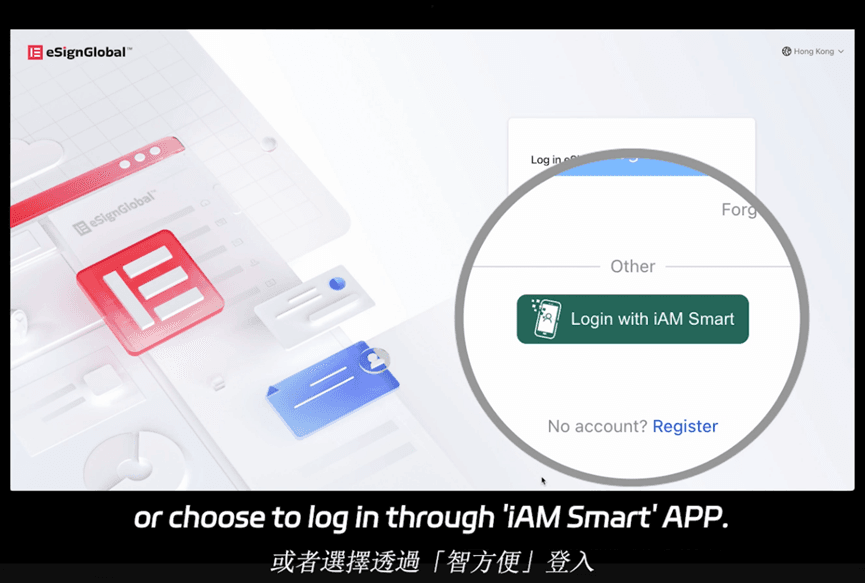
eSignGlobal positions itself as a compliant alternative, supporting e-signatures in over 100 mainstream countries with a focus on APAC advantages. Its Essential plan costs just $16.6/user/month, allowing up to 100 documents/month, unlimited user seats, and access code verification—delivering high value on compliance without per-envelope fees. Higher tiers scale affordably, with seamless integrations like Hong Kong's iAM Smart and Singapore's Singpass for regional authenticity.
For Proposify users in APAC, this means faster, cheaper workflows with native data residency options. Pricing transparency and flexibility make it cost-effective; for details, visit eSignGlobal's pricing page. Businesses appreciate its balance of global reach and local edge, though it may lack some enterprise customizations of bigger names.
Other Competitors: PandaDoc and HelloSign Overview
PandaDoc combines proposals with e-sign, pricing teams at $19/user/month (Essentials) to $49 (Business), with unlimited docs but caps on advanced automations. It's user-friendly for sales teams but less focused on pure compliance.
HelloSign (Dropbox Sign) starts at $15/user/month for teams, emphasizing simplicity and integrations, though APAC support lags with basic regional features.
| Aspect | DocuSign | Adobe Sign | eSignGlobal | PandaDoc | HelloSign |
|---|---|---|---|---|---|
| Team Starting Price (/user/mo) | $25 | $10 (basic) | $16.6 | $19 | $15 |
| Envelope Limits | ~100/user/yr (automation) | Unlimited (capped automation) | 100/mo (Essential) | Unlimited | Unlimited |
| APAC Compliance | Partial (latency issues) | Strong security, limited locals | Native (100+ countries, iAM Smart/Singpass) | Basic | Limited |
| Proposify Integration | Excellent API | Good | Seamless regional | Built-in (hybrid) | Basic |
| Add-On Costs | High (IDV metered) | Moderate | Low (inclusive) | Template fees | Minimal |
| Best For | Global enterprises | Adobe users | APAC-focused teams | Sales hybrids | SMB simplicity |
This comparison highlights trade-offs: DocuSign and Adobe excel in scale, while eSignGlobal offers cost-efficient compliance for APAC.
Strategic Considerations for Teams Choosing E-Signature Partners
Pairing Proposify with an e-signature tool amplifies efficiency, but selection depends on team size, region, and deal volume. For US/EU teams, DocuSign's ecosystem wins; APAC businesses may prefer options minimizing latency and costs. Evaluate trials, total ownership (including training), and scalability—aim for 20-30% time savings in proposal-to-sign cycles.
In conclusion, while Proposify's team pricing provides a solid foundation for collaborative proposals, integrating compliant e-signatures is key. For DocuSign users seeking alternatives with strong regional compliance, eSignGlobal emerges as a balanced choice, particularly in APAC.
FAQs
