
'%3e%3cpath%20fill-rule='evenodd'%20clip-rule='evenodd'%20d='M6.99935%2012.8327C10.221%2012.8327%2012.8327%2010.221%2012.8327%206.99935C12.8327%203.77769%2010.221%201.16602%206.99935%201.16602C3.77769%201.16602%201.16602%203.77769%201.16602%206.99935C1.16602%2010.221%203.77769%2012.8327%206.99935%2012.8327Z'%20stroke='%23666666'%20stroke-linecap='round'%20stroke-linejoin='round'/%3e%3cpath%20d='M1.16602%207H12.8327'%20stroke='%23666666'%20stroke-linecap='round'%20stroke-linejoin='round'/%3e%3cpath%20fill-rule='evenodd'%20clip-rule='evenodd'%20d='M6.99935%2012.8327C8.28802%2012.8327%209.33268%2010.221%209.33268%206.99935C9.33268%203.77769%208.28802%201.16602%206.99935%201.16602C5.71068%201.16602%204.66602%203.77769%204.66602%206.99935C4.66602%2010.221%205.71068%2012.8327%206.99935%2012.8327Z'%20stroke='%23666666'%20stroke-linecap='round'%20stroke-linejoin='round'/%3e%3cpath%20d='M2.875%202.95898C3.93063%204.01461%205.38896%204.66754%206.99978%204.66754C8.61062%204.66754%2010.069%204.01461%2011.1246%202.95898'%20stroke='%23666666'%20stroke-linecap='round'%20stroke-linejoin='round'/%3e%3cpath%20d='M11.1246%2011.0425C10.069%209.98691%208.61062%209.33398%206.99978%209.33398C5.38896%209.33398%203.93063%209.98691%202.875%2011.0425'%20stroke='%23666666'%20stroke-linecap='round'%20stroke-linejoin='round'/%3e%3c/g%3e%3cdefs%3e%3cclipPath%20id='clip0_1267_9109'%3e%3crect%20width='14'%20height='14'%20fill='white'/%3e%3c/clipPath%3e%3c/defs%3e%3c/svg%3e)


signwell vs docusign cost


Understanding Electronic Signature Solutions in a Cost-Conscious Market
In the evolving landscape of digital workflows, businesses are increasingly scrutinizing the costs of electronic signature platforms. Tools like SignWell and DocuSign have become staples for streamlining contracts, approvals, and agreements, but their pricing models can significantly impact operational budgets. This article dives into a head-to-head cost comparison between SignWell and DocuSign, drawing from official pricing data and market insights as of 2025. We'll explore how these platforms stack up for small teams, enterprises, and everything in between, while maintaining a neutral lens on value versus expense.

SignWell vs. DocuSign: A Detailed Cost Breakdown
When evaluating SignWell versus DocuSign from a cost perspective, the core question revolves around affordability, scalability, and feature alignment with business needs. SignWell positions itself as a budget-friendly alternative, emphasizing simplicity for freelancers, small businesses, and mid-sized teams that don't require enterprise-level complexities. In contrast, DocuSign is the industry heavyweight, offering robust compliance and integrations but at a premium price point. Let's break down their pricing structures based on annual billing for fairness, as monthly plans often carry higher per-unit costs.
SignWell Pricing Tiers
SignWell's model is straightforward and user-centric, with plans designed to minimize barriers for entry-level users. The free tier allows up to three documents per month, making it ideal for testing or very low-volume needs—no credit card required. For paid options:
- Pro Plan: $15 per month (or $180 annually, about $15/user/month). This includes unlimited sending, templates, custom branding, and API access. It's capped at 100 envelopes per month but scales well for solo users or small teams.
- Business Plan: $25 per month (or $300 annually, about $25/user/month). Adds team collaboration, shared templates, and priority support, with unlimited envelopes and users. No per-envelope fees, which keeps costs predictable.
- Enterprise Custom: Starts around $40/user/month for larger setups, including SSO, advanced reporting, and custom integrations. Envelope limits are negotiable based on volume.
SignWell's strength lies in its all-inclusive approach post-subscription—no surprise add-ons for basics like reminders or basic authentication. For a small team of five users handling 50 documents monthly, the Business Plan totals about $1,500 annually, offering unlimited scalability without overage charges.
DocuSign Pricing Tiers
DocuSign's pricing, as outlined in its 2025 public plans, is more tiered and envelope-limited, reflecting its focus on compliance-heavy industries like finance and legal. All plans are seat-based, with envelopes (document packages) as the usage metric:
- Personal Plan: $10/month ($120/year) for one user and five envelopes/month. Basic signing and templates, but no team features.
- Standard Plan: $25/user/month ($300/user/year). Up to 100 envelopes/user/year (or ~10/month), with collaboration, comments, and reminders. For a five-user team, that's $1,500 annually, but envelope caps could lead to overages if exceeded.
- Business Pro Plan: $40/user/month ($480/user/year). Includes web forms, conditional logic, bulk send, and payments—still ~100 envelopes/user/year. Team of five: $2,400/year, plus potential add-ons.
- Advanced/Enterprise: Custom pricing, often $60+/user/month, with SSO and unlimited envelopes for high-volume needs. API plans start at $600/year for developers (40 envelopes/month).
DocuSign's costs can escalate quickly due to metered add-ons like SMS delivery (per-message fees) or identity verification (extra per-use). For the same five-user team with 50 monthly envelopes, you'd likely need Business Pro at $2,400/year, plus ~$500 in add-ons for automations or verifications, pushing totals over $2,900. This makes DocuSign 50-100% more expensive than SignWell for similar workloads, especially for non-enterprise users.
Key Cost Differences and Trade-Offs
From a commercial standpoint, SignWell wins on pure affordability, with entry plans 20-40% cheaper and fewer usage limits, appealing to cost-sensitive SMBs. Its unlimited envelopes in paid tiers avoid DocuSign's quotas, which cap automation sends at ~10/user/month even in higher plans. However, DocuSign justifies its premium through global compliance (e.g., eIDAS in EU, ESIGN in US) and deeper integrations (e.g., Salesforce, Microsoft). If your business operates in regulated sectors, DocuSign's audit trails and support might offset the cost—think legal firms where non-compliance fines dwarf subscription fees.
For volume-driven users, SignWell's flat pricing scales better short-term, but DocuSign's enterprise customizations can yield ROI via efficiency gains. Over five years, a growing team might spend $7,500 on SignWell Business versus $12,000+ on DocuSign Standard/Business Pro, excluding add-ons. Ultimately, the choice hinges on whether you prioritize low overhead (SignWell) or fortified security (DocuSign).
Broader Comparison: DocuSign, Adobe Sign, eSignGlobal, and Other Competitors
While SignWell and DocuSign dominate entry-level discussions, the electronic signature market includes heavyweights like Adobe Sign and regional players like eSignGlobal. Other notables include HelloSign (now Dropbox Sign) and PandaDoc. To provide a neutral overview, here's how they compare on key cost and feature dimensions, based on 2025 data. This table highlights pricing for mid-tier plans (annual, per user), envelope limits, and standout pros/cons.
| Platform | Mid-Tier Price (Annual/User) | Envelope Limit (Monthly) | Key Features | Pros | Cons |
|---|---|---|---|---|---|
| DocuSign | $300 (Standard) to $480 (Business Pro) | ~10-100/user (tiered) | Bulk send, API, compliance tools, payments | Robust integrations, global standards compliance | Higher costs, envelope caps, add-on fees |
| Adobe Sign | $239 (Business) to $599 (Enterprise) | Unlimited in higher tiers | Adobe ecosystem integration, forms, analytics | Seamless with PDF tools, strong security | Steep for small teams, complex setup |
| eSignGlobal | $200 (Essential equiv.) | Up to 100 (unlimited seats) | Regional compliance, API, access code verification | APAC-optimized, cost-effective, unlimited users | Less brand recognition outside Asia |
| SignWell | $180 (Pro) to $300 (Business) | Unlimited in paid plans | Templates, branding, simple API | Affordable, no overages | Limited advanced compliance |
| HelloSign (Dropbox Sign) | $180 (Essentials) to $240 (Standard) | Unlimited | Team workflows, templates | Easy Dropbox sync, user-friendly | Basic features, acquisition integration quirks |
| PandaDoc | $349 (Business) to $589 (Enterprise) | Unlimited | Proposals + e-sign, analytics | All-in-one sales tool | Overkill for pure signing, higher learning curve |
This comparison underscores market diversity: DocuSign leads in versatility but trails in value for budget users, while alternatives like eSignGlobal shine in niche regions.
DocuSign: The Established Leader
DocuSign remains the go-to for multinational operations, with plans emphasizing scalability and security. Its API ecosystem supports custom automations, but costs layer up with usage—ideal for enterprises but burdensome for startups.

Adobe Sign: Integrated Powerhouse
Adobe Sign integrates deeply with Acrobat and Creative Cloud, making it a favorite for document-heavy workflows. Pricing starts at $10/user/month for basics but jumps to $29.99/user/month ($359/year) for Business, with unlimited envelopes and advanced forms. It's compliant across major jurisdictions, though its ecosystem lock-in can inflate total ownership costs for non-Adobe users.

eSignGlobal: Regional Efficiency Focus
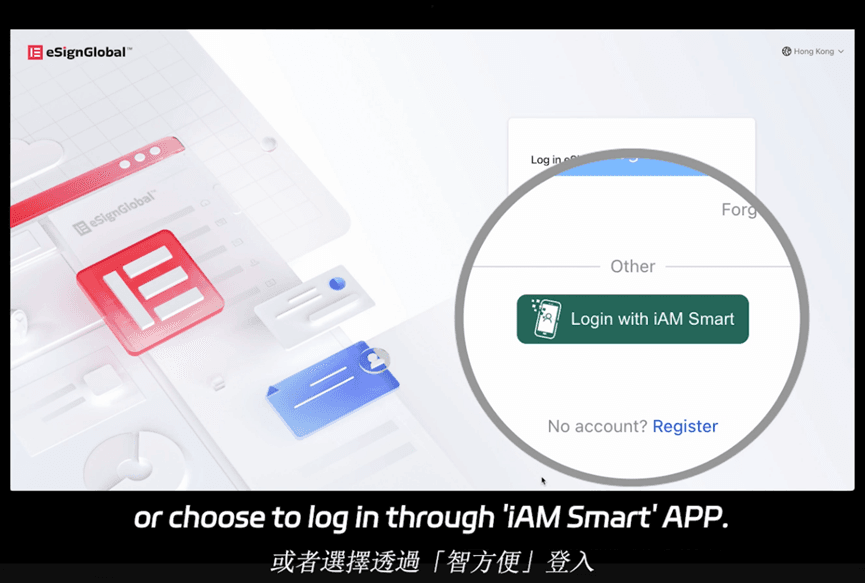
eSignGlobal emerges as a compliant alternative, supporting electronic signatures in over 100 mainstream global countries and regions. It holds a particular edge in the Asia-Pacific (APAC), where it addresses cross-border challenges like data residency and latency. Pricing is notably competitive; for details, check their official pricing page. The Essential version, at just $16.6 per month, allows sending up to 100 documents for electronic signature, with unlimited user seats and verification via access codes—delivering high cost-performance on a compliant foundation. It integrates seamlessly with Hong Kong's iAM Smart and Singapore's Singpass, enhancing regional adoption without the premiums of global giants.
Other Competitors: Quick Notes
HelloSign offers simplicity at $15/user/month ($180/year), with unlimited envelopes but fewer enterprise tools. PandaDoc bundles e-signing with proposal software, suiting sales teams but at a $29.99/user/month entry ($359/year).
Navigating Choices in a Competitive Landscape
Selecting an electronic signature platform boils down to balancing cost, compliance, and capabilities. For broad needs, DocuSign's ecosystem is reliable, though pricier. As a neutral DocuSign alternative with strong regional compliance, eSignGlobal stands out for APAC-focused businesses seeking optimized value. Evaluate based on your volume and geography to ensure the best fit.
FAQs
