
'%3e%3cpath%20fill-rule='evenodd'%20clip-rule='evenodd'%20d='M6.99935%2012.8327C10.221%2012.8327%2012.8327%2010.221%2012.8327%206.99935C12.8327%203.77769%2010.221%201.16602%206.99935%201.16602C3.77769%201.16602%201.16602%203.77769%201.16602%206.99935C1.16602%2010.221%203.77769%2012.8327%206.99935%2012.8327Z'%20stroke='%23666666'%20stroke-linecap='round'%20stroke-linejoin='round'/%3e%3cpath%20d='M1.16602%207H12.8327'%20stroke='%23666666'%20stroke-linecap='round'%20stroke-linejoin='round'/%3e%3cpath%20fill-rule='evenodd'%20clip-rule='evenodd'%20d='M6.99935%2012.8327C8.28802%2012.8327%209.33268%2010.221%209.33268%206.99935C9.33268%203.77769%208.28802%201.16602%206.99935%201.16602C5.71068%201.16602%204.66602%203.77769%204.66602%206.99935C4.66602%2010.221%205.71068%2012.8327%206.99935%2012.8327Z'%20stroke='%23666666'%20stroke-linecap='round'%20stroke-linejoin='round'/%3e%3cpath%20d='M2.875%202.95898C3.93063%204.01461%205.38896%204.66754%206.99978%204.66754C8.61062%204.66754%2010.069%204.01461%2011.1246%202.95898'%20stroke='%23666666'%20stroke-linecap='round'%20stroke-linejoin='round'/%3e%3cpath%20d='M11.1246%2011.0425C10.069%209.98691%208.61062%209.33398%206.99978%209.33398C5.38896%209.33398%203.93063%209.98691%202.875%2011.0425'%20stroke='%23666666'%20stroke-linecap='round'%20stroke-linejoin='round'/%3e%3c/g%3e%3cdefs%3e%3cclipPath%20id='clip0_1267_9109'%3e%3crect%20width='14'%20height='14'%20fill='white'/%3e%3c/clipPath%3e%3c/defs%3e%3c/svg%3e)


how much does pandadoc cost per month


Understanding PandaDoc Pricing in 2025
PandaDoc has emerged as a popular choice for businesses seeking streamlined document automation, proposal creation, and electronic signatures. From a business perspective, its pricing model balances accessibility for small teams with scalability for enterprises, but understanding the costs requires looking beyond base rates to include add-ons and usage limits. In this analysis, we'll break down PandaDoc's monthly costs, drawing from official 2025 pricing data for the US region, while maintaining a neutral view on its value proposition amid competitive pressures.
PandaDoc's Core Plans and Monthly Costs
PandaDoc structures its pricing around tiered plans billed annually or monthly, with per-user costs that scale based on features like templates, analytics, and integrations. The entry-level option is the Free plan, which costs $0 per month but limits users to basic functionality—such as three active documents and no advanced workflows. This is ideal for solopreneurs testing the waters but quickly becomes restrictive for collaborative environments.
For paid users, the Essentials plan starts at $19 per user per month when billed annually (or $25 monthly), accommodating up to 100 documents per year per user. It includes core e-signature capabilities, customizable templates, and basic CRM integrations like HubSpot or Salesforce. Businesses often find this tier sufficient for sales teams handling proposals and contracts, though it lacks advanced payment collection or multi-stage approvals. From a commercial standpoint, this pricing positions PandaDoc as a mid-range player, offering more document volume than some free alternatives without the enterprise overhead.
Moving up, the Business plan is priced at $49 per user per month (annually billed; $59 monthly). This unlocks unlimited documents, detailed analytics on viewer engagement, personalized video embeds in docs, and API access for custom integrations. It's particularly appealing for mid-sized firms in sales or marketing, where tracking document performance can inform strategy. However, envelope limits—PandaDoc's term for signable documents—still apply indirectly through fair-use policies, capping heavy automation at around 50-100 sends per month per user to prevent abuse.
At the top end, Enterprise pricing is custom, typically starting around $59+ per user per month but negotiated based on volume, compliance needs, and add-ons. This includes SSO, advanced security like HIPAA compliance, and dedicated support. For global operations, factors like regional data storage can inflate costs by 20-30%, making it less predictable for international teams.
Add-Ons and Hidden Costs in PandaDoc
Beyond base plans, PandaDoc's monthly expenses can rise with optional features. SMS delivery for signatures adds $0.10-$0.50 per message, depending on the region, which accumulates for high-volume users. Payment processing via Stripe or PayPal incurs a 2.9% + $0.30 transaction fee, plus any premium templates from the marketplace at $10-50 one-time. API usage in higher tiers is metered; exceeding quotas (e.g., 1,000 calls/month in Business) triggers overage fees of about $0.01 per extra call.
From a business observation lens, these add-ons highlight PandaDoc's flexibility but also its potential for cost creep. Small businesses might stay under $50/user/month total, but scaling to 10+ users with integrations could push averages to $70-100 per user. Annual billing saves 20-25% compared to monthly, a common incentive in SaaS, yet it locks teams into commitments amid economic uncertainty.
Usage Limits and Scalability Considerations
PandaDoc enforces envelope quotas to manage server load: Essentials allows 100/year (~8/month), while Business offers unlimited but with soft caps on automated sends (e.g., bulk or web forms at 50/month). Overages aren't billed directly but may require upgrading, indirectly increasing costs. For APAC or cross-border users, latency and compliance add-ons like local data residency can tack on 10-15% premiums.
In practice, ROI depends on workflow efficiency—businesses report 30-50% faster deal closures with PandaDoc, offsetting costs. However, compared to pure e-signature tools, its document creation focus means higher pricing for signature-only needs.

Comparing PandaDoc with Key Competitors
While PandaDoc excels in proposal automation, its pricing invites comparison with dedicated e-signature platforms like DocuSign, Adobe Sign, and regional players like eSignGlobal. This section evaluates them neutrally, focusing on cost, features, and regional fit for businesses weighing options in 2025.
DocuSign: The Enterprise Standard
DocuSign remains a benchmark for secure e-signatures, with plans starting at $10/month for Personal (5 envelopes/month) and scaling to $40/user/month for Business Pro (unlimited envelopes, bulk send). API access adds $600+/year for developers. It's robust for compliance-heavy industries but pricier for basics, with APAC challenges like higher latency and surcharges.

Adobe Sign: Integrated Workflow Powerhouse
Adobe Sign integrates seamlessly with Acrobat and Creative Cloud, pricing from $10/user/month (Individual) to $40+/user/month (Enterprise). It offers strong form logic and payments but faces criticism for complex add-on billing and limited APAC optimizations, potentially raising effective costs by 15-20% in regions like China or SEA.

eSignGlobal: Regional Compliance Focus
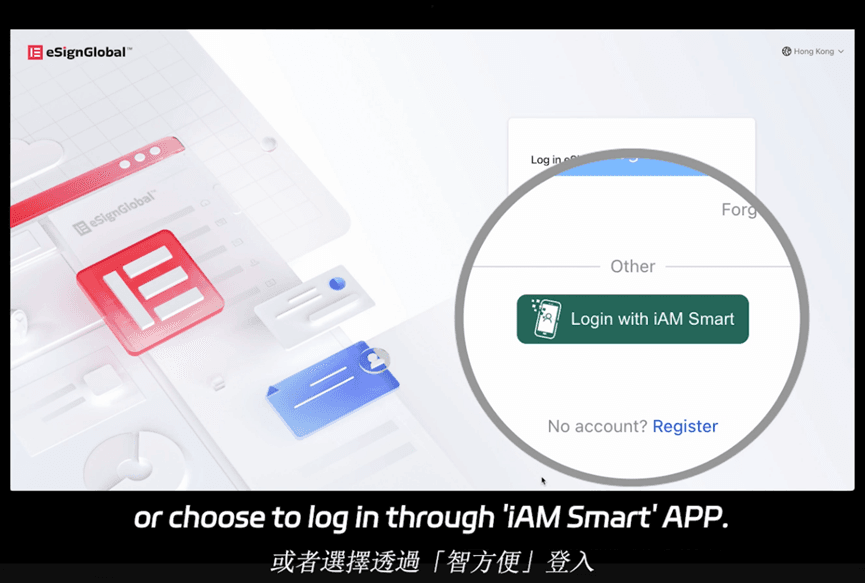
eSignGlobal provides compliant e-signatures across 100+ mainstream countries, with a strong APAC edge through faster speeds and local integrations. Its Essential plan costs just $16.60/user/month (annually billed), allowing up to 100 documents/month, unlimited user seats, and access code verification for signatures. This delivers high value on compliance without excess features, integrating seamlessly with Hong Kong's iAM Smart and Singapore's Singpass. For detailed pricing, businesses can explore options tailored to volume.
Other Competitors: HelloSign and SignNow
HelloSign (by Dropbox) starts at $15/user/month for Essentials (unlimited envelopes), emphasizing simplicity but lacking deep analytics. SignNow offers $8/user/month for Business, with mobile focus, though it trails in global compliance.
| Feature/Aspect | PandaDoc | DocuSign | Adobe Sign | eSignGlobal | HelloSign | SignNow |
|---|---|---|---|---|---|---|
| Starting Monthly Price (per user, annual) | $19 (Essentials) | $10 (Personal) | $10 (Individual) | $16.60 (Essential) | $15 (Essentials) | $8 (Business) |
| Envelope/Document Limit | 100/year (Essentials); Unlimited (Business) | 5/month (Personal); ~100/year (Pro) | Unlimited (most plans) | 100/month (Essential) | Unlimited | Unlimited |
| User Seats | Per-user licensing | Per-user | Per-user | Unlimited seats | Per-user | Per-user |
| Key Strengths | Proposal automation, analytics | Enterprise compliance, bulk send | Adobe ecosystem integration | APAC compliance (100+ countries), iAM Smart/Singpass | Simplicity, Dropbox sync | Mobile signing, affordability |
| APAC/Regional Fit | Moderate; add-ons for latency | Inconsistent speeds, surcharges | Limited local support | Optimized for CN/SEA/HK, lower costs | Basic global | Good for SMBs, but compliance gaps |
| Add-On Costs | SMS ~$0.10/msg; API metered | IDV extra; API $600+/year | Payments 2.9%; forms extra | Minimal; telecom-based SMS | Basic integrations free | Templates $10+ |
| Best For | Sales teams with docs | High-volume enterprises | Creative workflows | Regional compliance needs | Quick setups | Budget mobile users |
| Overall Value (Neutral Score, 1-10) | 7.5 (Feature-rich but capped) | 8.0 (Reliable but pricey) | 7.0 (Integrated yet complex) | 8.5 (Cost-effective compliance) | 7.5 (Simple) | 8.0 (Affordable) |
This table underscores eSignGlobal's edge in APAC value—cheaper essentials with unlimited seats and strong regional integrations—while PandaDoc shines in bundled automation. DocuSign and Adobe lead in global enterprise features, but at higher total ownership costs. HelloSign and SignNow appeal to budget-conscious users, though they may require supplements for advanced needs.
Final Thoughts on E-Signature Choices
In summary, PandaDoc's $19-49/month range suits document-centric businesses, but competitors like DocuSign offer broader compliance at similar tiers, while Adobe Sign integrates deeply with existing tools. For those prioritizing APAC efficiency, eSignGlobal stands out as a DocuSign alternative with regional compliance advantages. Businesses should trial plans to align costs with workflows.
FAQs
