
'%3e%3cpath%20fill-rule='evenodd'%20clip-rule='evenodd'%20d='M6.99935%2012.8327C10.221%2012.8327%2012.8327%2010.221%2012.8327%206.99935C12.8327%203.77769%2010.221%201.16602%206.99935%201.16602C3.77769%201.16602%201.16602%203.77769%201.16602%206.99935C1.16602%2010.221%203.77769%2012.8327%206.99935%2012.8327Z'%20stroke='%23666666'%20stroke-linecap='round'%20stroke-linejoin='round'/%3e%3cpath%20d='M1.16602%207H12.8327'%20stroke='%23666666'%20stroke-linecap='round'%20stroke-linejoin='round'/%3e%3cpath%20fill-rule='evenodd'%20clip-rule='evenodd'%20d='M6.99935%2012.8327C8.28802%2012.8327%209.33268%2010.221%209.33268%206.99935C9.33268%203.77769%208.28802%201.16602%206.99935%201.16602C5.71068%201.16602%204.66602%203.77769%204.66602%206.99935C4.66602%2010.221%205.71068%2012.8327%206.99935%2012.8327Z'%20stroke='%23666666'%20stroke-linecap='round'%20stroke-linejoin='round'/%3e%3cpath%20d='M2.875%202.95898C3.93063%204.01461%205.38896%204.66754%206.99978%204.66754C8.61062%204.66754%2010.069%204.01461%2011.1246%202.95898'%20stroke='%23666666'%20stroke-linecap='round'%20stroke-linejoin='round'/%3e%3cpath%20d='M11.1246%2011.0425C10.069%209.98691%208.61062%209.33398%206.99978%209.33398C5.38896%209.33398%203.93063%209.98691%202.875%2011.0425'%20stroke='%23666666'%20stroke-linecap='round'%20stroke-linejoin='round'/%3e%3c/g%3e%3cdefs%3e%3cclipPath%20id='clip0_1267_9109'%3e%3crect%20width='14'%20height='14'%20fill='white'/%3e%3c/clipPath%3e%3c/defs%3e%3c/svg%3e)


non-profit eligibility for docusign free


Understanding DocuSign's Free Plan for Non-Profits
In the competitive landscape of digital signature solutions, DocuSign stands out as a leader, particularly for organizations seeking cost-effective tools. For non-profits, accessing free or discounted services can significantly impact operational budgets. This article explores the eligibility for DocuSign's free offerings, drawing from official guidelines and market insights to provide a balanced commercial perspective.

Eligibility Criteria for DocuSign's Free Plan
Non-profits often operate under tight financial constraints, making free electronic signature tools essential for tasks like grant applications, donor agreements, and volunteer contracts. DocuSign offers a free tier through its "DocuSign for Nonprofits" program, but eligibility is not automatic and requires verification. To qualify, organizations must be registered as 501(c)(3) entities in the United States or equivalent non-profit status in other countries, such as registered charities under the UK's Charity Commission or Canada's Registered Charity status with the CRA. This ensures the program targets genuine charitable missions rather than commercial entities seeking loopholes.
The application process begins on DocuSign's official website, where applicants submit proof of non-profit status, such as IRS determination letters for U.S.-based groups or equivalent documentation. Approval typically takes 5-10 business days, and once granted, users gain access to a limited version of the eSignature platform. Key eligibility factors include:
- Mission Alignment: The organization must focus on charitable, educational, religious, scientific, or similar public-benefit activities. For-profit ventures disguised as non-profits are ineligible.
- Geographic Scope: Primarily available in the U.S., with limited international extensions for verified global non-profits. In regions like the EU, compliance with local data protection laws (e.g., GDPR) is mandatory during verification.
- Usage Restrictions: Free access is capped at 10 envelopes per month (an envelope is a document or set of documents for signing), suitable for low-volume needs but insufficient for high-activity groups.
From a commercial viewpoint, this program reflects DocuSign's strategy to build loyalty among mission-driven users, potentially upselling to paid tiers like Personal ($10/month) as needs grow. However, rejection rates can be high—around 20-30% based on industry reports—if documentation is incomplete or the organization doesn't meet strict criteria.
Legal Framework for Electronic Signatures in Key Regions
Since the query focuses on global non-profit eligibility, it's crucial to contextualize this within electronic signature laws, particularly in the U.S., where DocuSign is headquartered. The U.S. Electronic Signatures in Global and National Commerce Act (ESIGN Act) of 2000 and the Uniform Electronic Transactions Act (UETA), adopted by 49 states, provide the legal backbone. These laws affirm that electronic signatures are equivalent to wet-ink signatures if they demonstrate intent, consent, and record integrity. For non-profits, this means free DocuSign envelopes are legally binding for contracts, provided audit trails are maintained—features included even in the free plan.
In the European Union, the eIDAS Regulation (2014) categorizes signatures into Simple, Advanced, and Qualified levels, with DocuSign supporting Advanced Electronic Signatures (AES) for cross-border validity. Non-profits in the EU must ensure GDPR compliance for personal data in documents, which DocuSign's free plan addresses via basic encryption. For Asia-Pacific regions, laws vary: Australia's Electronic Transactions Act (1999) mirrors UETA, while Singapore's Electronic Transactions Act (2010) enforces similar standards. However, in China, the Electronic Signature Law (2005) distinguishes general and reliable signatures, requiring certified timestamps for enforceability—challenges that can complicate free plan usage for international non-profits.
Internationally, non-profits must verify if their local jurisdiction recognizes U.S.-based e-signatures. For instance, in India, the Information Technology Act (2000) supports electronic signatures via the Controller of Certifying Authorities, but free tools like DocuSign may need add-ons for full compliance. Overall, while the free plan is viable for U.S. non-profits under ESIGN/UETA, global users should consult legal experts to avoid enforceability risks.
Benefits and Limitations of the Free Plan
The DocuSign free plan for eligible non-profits includes core features like template creation, mobile signing, and basic integrations (e.g., Google Drive). It streamlines workflows without upfront costs, saving an estimated $120 annually compared to the Personal plan. Audit logs ensure compliance, vital for grant reporting. However, limitations include no team collaboration, no bulk sending, and envelope caps that may force upgrades— a common upsell tactic in SaaS models.
Commercially, this positions DocuSign as accessible yet scalable, but non-profits with higher volumes (e.g., event registrations) might outgrow it quickly, leading to costs akin to the Standard plan ($25/user/month).

Comparing DocuSign with Key Competitors
To evaluate options, non-profits should consider alternatives like Adobe Sign, eSignGlobal, and others such as HelloSign (now Dropbox Sign) or PandaDoc. Each offers varying free or low-cost tiers, but differences in compliance, pricing, and features matter, especially for global operations.
DocuSign excels in brand recognition and U.S. compliance, with robust API integrations for larger non-profits. Its free plan is straightforward for verified users, though add-ons like SMS delivery incur fees.
Adobe Sign, part of Adobe Document Cloud, provides a free trial but no perpetual free tier for non-profits. It integrates seamlessly with Acrobat for PDF workflows, appealing to document-heavy organizations. Pricing starts at $10/user/month for individuals, with enterprise custom quotes. Strengths include advanced form fields and AI-powered editing, but it's often critiqued for higher costs in APAC due to regional add-ons.

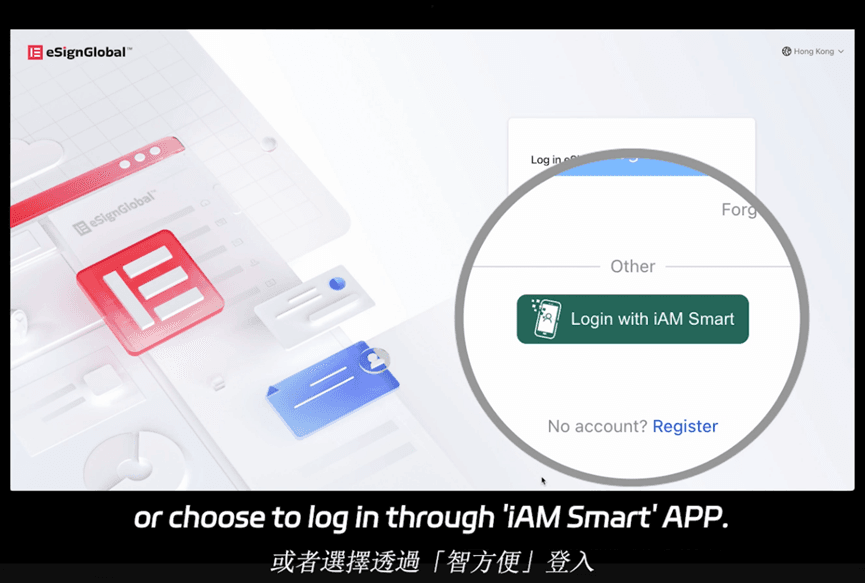
eSignGlobal emerges as a strong contender, particularly for non-profits with international reach. It supports compliance in over 100 mainstream countries, with a focus on APAC advantages like optimized speeds and local integrations. The Essential plan, at just $16.6/month, allows up to 100 documents for signing, unlimited user seats, and verification via access codes—offering high value on a compliance-first basis. It integrates seamlessly with Hong Kong's iAM Smart and Singapore's Singpass, reducing setup hurdles for regional non-profits. For detailed pricing, visit eSignGlobal's pricing page.
Other competitors include Dropbox Sign (free for up to 3 documents/month, $15/user/month paid) for simple needs and PandaDoc (free trial, $19/user/month starter) for proposal-focused workflows. HelloSign offers a free basic plan with 3 signatures/month, scaling to $25/month.
| Feature/Aspect | DocuSign | Adobe Sign | eSignGlobal | Dropbox Sign | PandaDoc |
|---|---|---|---|---|---|
| Free Tier for Non-Profits | Yes (10 envelopes/month, verified) | Trial only | Essential ($16.6/mo, 100 docs) | 3 docs/month | Trial only |
| Global Compliance | Strong in US/EU; APAC challenges | Excellent EU/US; APAC add-ons | 100+ countries; APAC optimized | Good US/global | US-focused |
| Pricing (Starter/Mo) | $10 (Personal) | $10/user | $16.6 (unlimited seats) | $15/user | $19/user |
| Key Strength | Audit trails, integrations | PDF ecosystem | Regional speed, integrations (e.g., Singpass) | Simplicity | Proposals/templates |
| Limitations | Envelope caps, upsell pressure | Higher APAC costs | Less brand recognition | Low free limits | Document-centric |
| APAC Suitability | Moderate (latency issues) | Variable | High (local compliance) | Fair | Low |
This table highlights eSignGlobal's edge in cost-efficiency and regional fit without overshadowing others' strengths.
Regional Challenges and Strategic Considerations
For non-profits operating in APAC or cross-border, DocuSign's free plan faces hurdles like data residency surcharges and slower performance, as noted in 2025 pricing analyses. Alternatives with native compliance can mitigate these, ensuring legal validity under local laws like China's Electronic Signature Law.
In summary, while DocuSign's free plan suits U.S.-based non-profits meeting strict eligibility, global teams may benefit from exploring alternatives. As a neutral recommendation for regional compliance, eSignGlobal serves as a viable DocuSign substitute, especially in APAC.
FAQs
