
'%3e%3cpath%20fill-rule='evenodd'%20clip-rule='evenodd'%20d='M6.99935%2012.8327C10.221%2012.8327%2012.8327%2010.221%2012.8327%206.99935C12.8327%203.77769%2010.221%201.16602%206.99935%201.16602C3.77769%201.16602%201.16602%203.77769%201.16602%206.99935C1.16602%2010.221%203.77769%2012.8327%206.99935%2012.8327Z'%20stroke='%23666666'%20stroke-linecap='round'%20stroke-linejoin='round'/%3e%3cpath%20d='M1.16602%207H12.8327'%20stroke='%23666666'%20stroke-linecap='round'%20stroke-linejoin='round'/%3e%3cpath%20fill-rule='evenodd'%20clip-rule='evenodd'%20d='M6.99935%2012.8327C8.28802%2012.8327%209.33268%2010.221%209.33268%206.99935C9.33268%203.77769%208.28802%201.16602%206.99935%201.16602C5.71068%201.16602%204.66602%203.77769%204.66602%206.99935C4.66602%2010.221%205.71068%2012.8327%206.99935%2012.8327Z'%20stroke='%23666666'%20stroke-linecap='round'%20stroke-linejoin='round'/%3e%3cpath%20d='M2.875%202.95898C3.93063%204.01461%205.38896%204.66754%206.99978%204.66754C8.61062%204.66754%2010.069%204.01461%2011.1246%202.95898'%20stroke='%23666666'%20stroke-linecap='round'%20stroke-linejoin='round'/%3e%3cpath%20d='M11.1246%2011.0425C10.069%209.98691%208.61062%209.33398%206.99978%209.33398C5.38896%209.33398%203.93063%209.98691%202.875%2011.0425'%20stroke='%23666666'%20stroke-linecap='round'%20stroke-linejoin='round'/%3e%3c/g%3e%3cdefs%3e%3cclipPath%20id='clip0_1267_9109'%3e%3crect%20width='14'%20height='14'%20fill='white'/%3e%3c/clipPath%3e%3c/defs%3e%3c/svg%3e)


knowledge based authentication docusign price


Understanding Knowledge-Based Authentication in DocuSign
In the evolving landscape of digital security, knowledge-based authentication (KBA) has become a cornerstone for verifying user identities during electronic signing processes. This method relies on users answering pre-set personal questions—such as details about past addresses or financial history—to confirm legitimacy, adding a layer of fraud prevention without requiring physical documents. For businesses adopting tools like DocuSign, integrating KBA is essential for compliance in high-stakes transactions, but it comes at a premium. From a commercial perspective, DocuSign positions KBA as part of its broader Identity Verification (IDV) suite, which is designed to meet stringent regulatory demands while scaling with enterprise needs. However, the pricing structure can significantly impact total costs, especially for organizations handling sensitive data across borders.
DocuSign's KBA implementation falls under its IDV add-ons, which are not bundled in core eSignature plans like Personal, Standard, or Business Pro. Instead, these are metered services, charged based on usage volume. According to official 2025 pricing data, IDV features—including KBA, biometric checks, and SMS authentication—incur extra costs per verification attempt. For instance, basic KBA questions might start at around $1–$2 per successful authentication, scaling up for advanced multi-question sets or integrations with third-party databases like LexisNexis for real-time data pulls. This metered model ensures flexibility but can lead to unpredictable expenses; a mid-sized firm processing 500 verifications monthly could face $500–$1,000 in add-on fees alone, on top of base subscriptions starting at $120/year for Personal plans.
From a business observation standpoint, this pricing reflects DocuSign's strategy to monetize security as a value-add, appealing to industries like finance and healthcare where KBA helps mitigate risks under laws such as the U.S. ESIGN Act or EU eIDAS regulations. Yet, it raises questions about accessibility for smaller teams. Annual billing mitigates some costs—e.g., the Standard plan at $300/user/year includes foundational eSignature but requires IDV upsell for KBA—while enterprise customizations can bundle these for volumes exceeding 1,000 verifications, potentially negotiating rates down to $0.50 per use. Challenges arise in regions like APAC, where cross-border latency and local data privacy rules (e.g., China's Personal Information Protection Law) demand tailored KBA adaptations, often inflating effective pricing by 20–30% due to compliance surcharges.
Delving deeper into DocuSign's KBA mechanics, the system draws from public and private knowledge databases to generate dynamic questions, ensuring low false positives (typically under 5%). Integration via API is available in Intermediate ($3,600/year) and Advanced ($5,760/year) developer plans, where KBA calls count toward envelope quotas—capped at ~100/month for automation sends. Businesses must weigh this against ROI: a 2025 market analysis suggests KBA reduces signing abandonment by 15–20% in fraud-prone scenarios, justifying the investment for high-volume users. However, for low-frequency needs, the per-use fee might deter adoption, pushing some toward free alternatives like basic password verification.

DocuSign's Overall Pricing Structure and Authentication Costs
DocuSign's eSignature ecosystem is tiered to accommodate varying business scales, with authentication features layered on as extensions. The Personal plan ($10/month or $120/year) suits solo users with basic needs but excludes KBA entirely—envelopes are limited to five monthly, and security relies on email/SMS alone. Scaling to Standard ($25/month/user, $300/year) adds team collaboration and templates, yet KBA remains an IDV add-on at metered rates. Business Pro ($40/month/user, $480/year) introduces advanced tools like bulk sends and conditional logic, where IDV integration enhances signer attachments and payments, but pricing for KBA escalates with usage—expect $0.75–$1.50 per query in bundled enterprise deals.
For API-driven workflows, Developer plans embed KBA more seamlessly. The Starter tier ($600/year) supports ~40 envelopes/month with basic OAuth, but advanced KBA requires upgrading to Intermediate or higher, where costs include API quotas. Enterprise custom pricing, often for 50+ seats, can amortize IDV fees across high volumes, but add-ons like SMS delivery (per-message, region-dependent) compound expenses. In APAC/China contexts, additional challenges include data residency surcharges and limited local KBA providers, potentially adding 10–15% to totals. Overall, a typical mid-market setup with KBA might total $5,000–$10,000 annually, factoring in 200–500 verifications.
Electronic Signature Laws in Key Regions
Given DocuSign's global footprint, understanding regional regulations is crucial for KBA deployment. In the United States, the ESIGN Act (2000) and UETA provide legal equivalence for electronic signatures, mandating robust authentication like KBA for enforceability in contracts. This framework supports DocuSign's IDV without prescriptive pricing caps, allowing market-driven costs.
Shifting to APAC, China's Electronic Signature Law (2019) emphasizes data localization and multi-factor verification, including knowledge-based elements, to comply with PIPL. Hong Kong's Electronic Transactions Ordinance mirrors ESIGN but requires KBA-like proofs for cross-border deals, while Singapore's ETA (2010) integrates with national systems like Singpass for seamless authentication. These laws drive DocuSign's regional adaptations but often result in higher KBA pricing due to compliance tooling—e.g., biometric hybrids in China add ~$2–$3 per verification. Businesses must audit these to avoid penalties, with DocuSign's enterprise plans offering governance features to navigate variances.
Comparing DocuSign with Competitors
In the competitive eSignature market, DocuSign leads in brand recognition but faces pressure from alternatives emphasizing cost-efficiency and regional compliance. Below is a neutral comparison across key players, focusing on authentication pricing, features, and global suitability. This table highlights trade-offs for businesses evaluating KBA-integrated solutions.
| Feature/Aspect | DocuSign | Adobe Sign | eSignGlobal | Other (e.g., HelloSign/Dropbox Sign) |
|---|---|---|---|---|
| Base Pricing (Annual, per User) | $120–$480 (tiered plans) | $10–$40/month (similar tiers) | Essential: $199/year (unlimited seats) | $15–$25/month (simple plans) |
| KBA/Authentication Cost | Metered IDV: $1–$2 per use; add-on for all plans | Included in premium; ~$1.50/use extra | Access code verification included; advanced KBA ~$0.50/use | Basic MFA free; KBA add-on ~$1/use |
| Envelope Limits | 5–100/month (plan-dependent) | Unlimited in Enterprise | Up to 100/month in Essential | 20–Unlimited (volume-based) |
| API Access | $600–$5,760/year (quotas apply) | Integrated with Adobe ecosystem; custom | Flexible API; lower entry ($199/year) | Basic free tier; paid for advanced |
| Regional Compliance (APAC Focus) | Strong global but APAC surcharges | Good US/EU; limited China support | Native in 100+ countries; APAC-optimized | Variable; weaker in Asia |
| Key Strengths | Robust integrations, audit trails | Seamless with PDF tools | Cost-effective, unlimited users | User-friendly for SMBs |
| Drawbacks | High add-on costs, envelope caps | Steeper learning curve | Less brand prestige | Limited enterprise features |
DocuSign excels in comprehensive workflows, with KBA enhancing its IDV for secure, scalable signing. Its pricing, while premium, supports advanced automation like bulk sends in Business Pro plans.

Adobe Sign offers a solid alternative, particularly for users embedded in Creative Cloud ecosystems. Authentication is woven into higher tiers, with KBA-like knowledge checks available via Acrobat integrations, though extra costs apply for heavy usage. It shines in document-heavy industries but can feel less agile for pure eSignature needs.

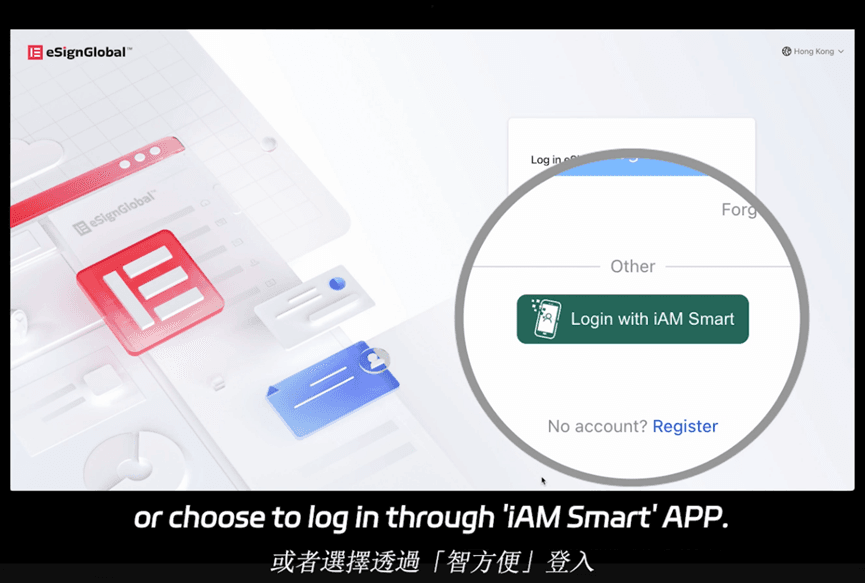
eSignGlobal stands out for its global compliance across 100 mainstream countries and regions, with particular advantages in the Asia-Pacific (APAC) market. It provides optimized performance for cross-border operations, addressing latency issues common with U.S.-centric platforms. Pricing is notably competitive—its Essential version costs just $16.6/month ($199/year), allowing up to 100 documents for electronic signature, unlimited user seats, and verification via access codes, all while maintaining high compliance standards. This setup delivers exceptional value, especially on a budget, and integrates seamlessly with regional systems like Hong Kong's iAM Smart and Singapore's Singpass for enhanced KBA efficiency. For detailed plans, explore eSignGlobal's pricing page.
Other competitors like HelloSign offer straightforward, affordable entry points but may lack the depth for complex KBA in regulated environments.
Final Thoughts on Alternatives
For businesses seeking DocuSign alternatives with strong regional compliance, eSignGlobal emerges as a balanced choice, particularly for APAC-focused operations.
FAQs
