
'%3e%3cpath%20fill-rule='evenodd'%20clip-rule='evenodd'%20d='M6.99935%2012.8327C10.221%2012.8327%2012.8327%2010.221%2012.8327%206.99935C12.8327%203.77769%2010.221%201.16602%206.99935%201.16602C3.77769%201.16602%201.16602%203.77769%201.16602%206.99935C1.16602%2010.221%203.77769%2012.8327%206.99935%2012.8327Z'%20stroke='%23666666'%20stroke-linecap='round'%20stroke-linejoin='round'/%3e%3cpath%20d='M1.16602%207H12.8327'%20stroke='%23666666'%20stroke-linecap='round'%20stroke-linejoin='round'/%3e%3cpath%20fill-rule='evenodd'%20clip-rule='evenodd'%20d='M6.99935%2012.8327C8.28802%2012.8327%209.33268%2010.221%209.33268%206.99935C9.33268%203.77769%208.28802%201.16602%206.99935%201.16602C5.71068%201.16602%204.66602%203.77769%204.66602%206.99935C4.66602%2010.221%205.71068%2012.8327%206.99935%2012.8327Z'%20stroke='%23666666'%20stroke-linecap='round'%20stroke-linejoin='round'/%3e%3cpath%20d='M2.875%202.95898C3.93063%204.01461%205.38896%204.66754%206.99978%204.66754C8.61062%204.66754%2010.069%204.01461%2011.1246%202.95898'%20stroke='%23666666'%20stroke-linecap='round'%20stroke-linejoin='round'/%3e%3cpath%20d='M11.1246%2011.0425C10.069%209.98691%208.61062%209.33398%206.99978%209.33398C5.38896%209.33398%203.93063%209.98691%202.875%2011.0425'%20stroke='%23666666'%20stroke-linecap='round'%20stroke-linejoin='round'/%3e%3c/g%3e%3cdefs%3e%3cclipPath%20id='clip0_1267_9109'%3e%3crect%20width='14'%20height='14'%20fill='white'/%3e%3c/clipPath%3e%3c/defs%3e%3c/svg%3e)


Cross-Border Electronic Signatures in the Tide of Globalization


Background and Pain Points
In the wave of globalization, whether it's Chinese companies expanding overseas or individuals signing agreements with overseas partners, electronic signatures have long become an essential tool to replace traditional paper signing.
But the pain points of cross-border signing have always troubled users: paper documents take weeks to mail across countries, differences in electronic signature regulations in different countries can easily cross compliance red lines, data stored abroad faces sovereignty risks, international platforms have slow response times and high costs...
eSignGlobal Solution Overview
Having insight into these pain points, the leading brand in the Asia-Pacific electronic signature industry, eSignBao, launches the international brand eSignGlobal, reconstructing the cross-border electronic signature process with a "global signing and management integrated solution," rooted in Chinese compliance foundation while compatible with international standards.
eSignGlobal Solution: With "China as the core," connecting global compliant signing.
Unlike electronic signature tools that focus solely on international markets, eSignGlobal's core advantage lies in "balancing Chinese and foreign needs" — it builds a set of electronic signature systems based on Chinese compliance requirements, covering major global markets, solving the "compliance adaptation" and "process simplification" issues of cross-border signing from the root.
Solution Core Framework
Its solution core can be summarized as "Three Comprehensives and One Flexible":
Comprehensive Scenario Global Compliance
● Comprehensive Scenario Global Compliance: Supports electronic signature regulations in over 70 countries and regions worldwide, whether it's China's Electronic Signature Law, EU eIDAS regulations, or local regulations in ASEAN, North America, etc., all can be precisely matched; provides three levels of choices: Simple Electronic Signature (SES), Advanced Electronic Signature (AES), Qualified Electronic Signature (QES), meeting legal validity needs from ordinary agreements to high-value contracts worth tens of millions.
Full-Chain Data Security
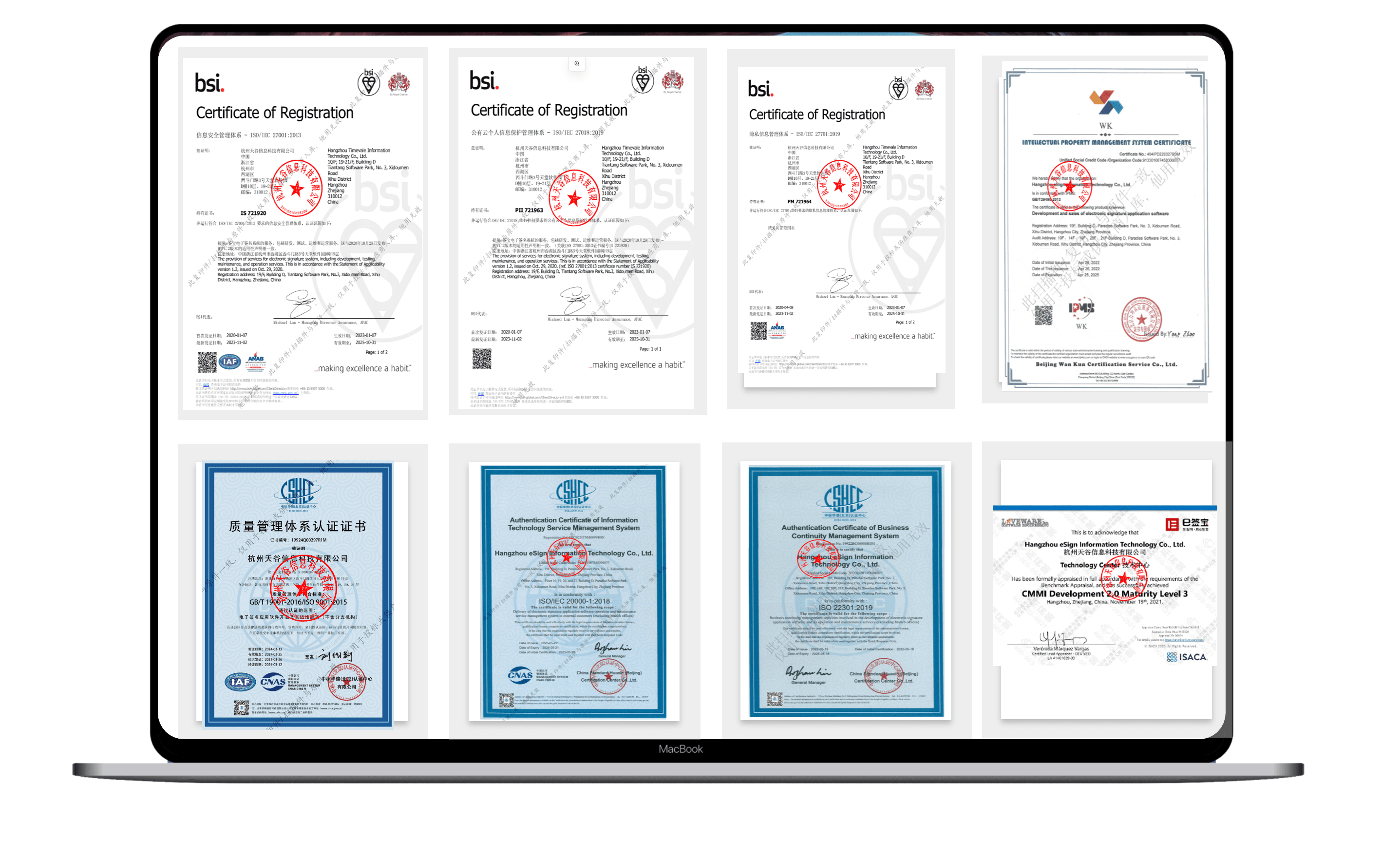
● Full-Chain Data Security: Through three international certifications: ISO 27001 (information security), ISO 27701 (privacy management), ISO 27018 (public cloud privacy), and deploying three data centers in Hong Kong, Singapore, and Frankfurt, enterprises can choose data storage locations autonomously, perfectly avoiding cross-border data sovereignty risks.
Flexible Integration and Expansion
● Flexible Integration and Expansion: Through standardized API interfaces, it can quickly integrate with existing enterprise ERP, HR, supply chain systems, achieving "seamless connection of signing processes and business processes"; also supports plug-in extensions, quickly integrating with mainstream global business platforms, enabling electronic signature functions without reconstructing the system.
Highlight Features: AI-Driven + Localized Adaptation, Directly Addressing Core Cross-Border Signing Needs
eSignGlobal's functional design always revolves around "cross-border scenarios," with each highlight precisely solving users' actual problems:
AI Empowerment: Boosting Cross-Border Contract Processing Efficiency by 70%+
As an electronic signature platform built on an AI foundation, eSignGlobal integrates AI capabilities throughout the signing process:
● Before signing: Supports instant translation in over 40 languages, agreements between Chinese companies and Southeast Asian clients can be instantly translated into local languages; AI automatically compares contract version differences, identifies risk clauses (such as cross-border tax loopholes, compliance inconsistencies), and generates contract summaries, avoiding misjudgments due to language barriers or complex clauses.
● During signing: AI automatically fills in contract variables (such as amounts, dates, party information), no manual modifications needed for batch initiations, greatly reducing repetitive operations.
Multi-Dimensional Identity Authentication: Adapting to Global Regulatory Requirements
The core of cross-border signing is "trustworthy identity." eSignGlobal integrates mainstream global identity verification methods:
● Basic authentication: Supports email, SMS, password verification, meeting lightweight signing needs for individual users;
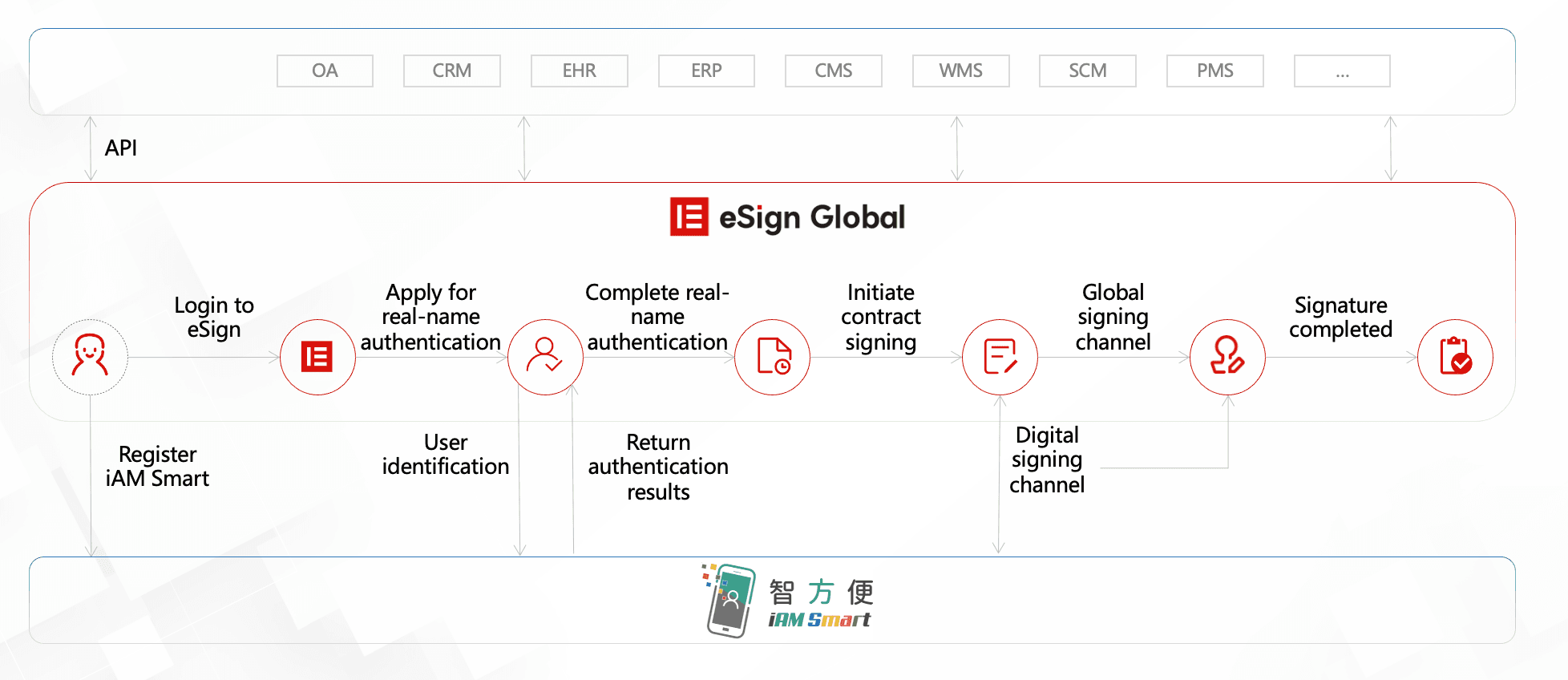
● Advanced authentication: Integrates biometric recognition (facial recognition), Hong Kong iAM Smart, Singapore Singpass, Vietnam VNPT, and other regional authoritative authentication tools, ensuring identity authenticity in high-risk scenarios like finance and government, complying with local eKYC requirements.
User-Friendly Signing Features: Solving Cross-Border "Efficiency and Timeliness" Challenges
● Batch initiation: Import hundreds of signers' information (names, emails, signing order) via Excel, the system automatically distributes signing tasks; what used to take 1 day to process 100 cross-border supplier agreements can now be completed in minutes.
● Scheduled sending: Supports precise scheduling across time zones, Chinese companies can set "send documents during EU working hours," avoiding signing delays due to time differences, improving signing rates by over 30%.
Core Differences with DocuSign: Better Understanding of Cross-Border Enterprises, Higher Cost-Performance
As an international electronic signature giant, DocuSign covers a wide area but still has "water-soil incompatibility" for Chinese companies going overseas, while eSignGlobal's differentiation advantages exactly fill these gaps:
Key Comparison
| Comparison Dimension | eSignGlobal | DocuSign |
|---|---|---|
| Price Cost | Total price 30%+ lower, no hidden fees (such as account authorization fees, excess additional fees), billing transparent and checkable | Higher pricing, prone to hidden fees, heavy burden on SMEs |
| Localization Service | Local teams in mainland China, Hong Kong, Southeast Asia, providing Chinese technical support and legal consultation, no communication barriers | Main service teams in Europe and America, slow Chinese support response, insufficient understanding of Chinese compliance needs |
| Data Sovereignty | Optional data centers in Hong Kong, Singapore, Frankfurt, complying with China's "Data Export Security Assessment" requirements | Data mostly stored in Europe and America, Chinese companies easily face data sovereignty risks |
| Adaptation for Chinese Companies Going Overseas | Deeply cultivating needs of Chinese companies, providing customized solutions of "Chinese compliance + global adaptation" | Mainly focused on international markets, insufficient adaptation to localized needs like China's Electronic Signature Law |
In simple terms, DocuSign is a "global universal tool," while eSignGlobal is a "global solution tailored for Chinese companies going overseas" — understanding international rules as well as the pain points of Chinese enterprises.
Overseas Electronic Signing Process: 5 Steps to Get It Done, Simpler Than Imagined
eSignGlobal breaks down the complex cross-border signing process into "5-step standardized operations," allowing both enterprises and individual users to get started quickly:
Step 1: Login Configuration
- Login Configuration: Visit the eSignGlobal official website (www.esignglobal.com), log in to the account and create an enterprise space, upload the company seal (supports PNG, JPG formats, transparent background is more professional).
Step 2: Template Setup (Optional)
- Template Setup (Optional): Commonly used cross-border contracts (such as foreign trade purchase agreements, overseas employment contracts) can be saved as templates, add fillable controls (such as amount fields, signature areas), set team usage permissions, and call directly next time.
Step 3: Initiate Task
- Initiate Task: Select "Upload File" or "Use Template," fill in signer information (name, email), set identity verification method (such as facial recognition), drag the mouse to mark the signing area, and click send.
Step 4: Signing Operation
- Signing Operation: Signers receive email notifications, verify identity and open the link, click the signing area to add handwritten signature or seal, submit after confirmation, no software installation required throughout.
Step 5: File Management
- File Management: After signing is completed, both initiator and signers receive confirmation emails, can download tamper-proof watermarked files at any time, the platform automatically archives, convenient for subsequent queries and exports.
Cracking Cross-Border Signing Pain Points: Transformation from "Stuck" to "Smooth"
Common problems enterprises encounter in cross-border signing, eSignGlobal can solve one by one:
Compliance Pain Points
- Compliance Pain Points: Worried about not complying with EU eIDAS or Southeast Asian regulations? eSignGlobal covers regulations in over 70 countries, providing full-process support from compliance consultation to technical implementation, avoiding contract invalidation due to compliance issues.
Data Pain Points
- Data Pain Points: Afraid of non-compliance in cross-border data storage? Three optional data centers, data stays in Asia or Europe, complying with China's Data Security Law and local data regulations.
Communication Pain Points
- Communication Pain Points: Overseas clients with language barriers, slow service responses? Multi-language documents (English, Simplified Chinese, Traditional Chinese, etc.) plus local team support (WeChat, WhatsApp instant connection), zero communication barriers.
Cost Pain Points
- Cost Pain Points: High fees from international platforms, limited budget? eSignGlobal flexible pricing (subscription, pay-per-use, customized packages), SMEs can afford easily.
eSignGlobal: 22 Years of Accumulation, from China Pioneer to Global Leader
The confidence of eSignGlobal comes from 22 years of deep industry cultivation by its parent company eSignBao:
Brand Foundation
● Brand Foundation: eSignBao was established in 2002, the "pioneer" of China's electronic signature industry — developed China's first electronic seal system, led the formulation of China's first cloud signature national standard. As of 2025, with a 35% market share, it steadily ranks first in the Chinese industry, serving over 100 Fortune 500 companies worldwide and over 200 Chinese top 500 enterprises.
Global Layout
● Global Layout: In 2021, eSignBao established the eSignGlobal international headquarters in Hong Kong, officially entering the global market; in 2023, deployed three global data centers, now serving over 200 overseas enterprises such as Cyberport, China State Construction International, and Greenland Hong Kong, breaking the European and American technology monopoly and safeguarding the digital sovereignty of Chinese enterprises.
Technical Strength
● Technical Strength: Holds 83 patents, 209 software copyrights, participates in the formulation of 15 national standards, from electronic seals to cloud services, to AI large models, always leading industry technology iterations.
Conclusion
Choosing eSignGlobal is not just choosing a signing system, but choosing a "understands China, connects globally" cross-border partner. Whether it's signing overseas orders for a 10-person startup team or managing global supply chain contracts for a thousand-person enterprise, eSignGlobal can simplify cross-border signing, making global business connections more efficient and secure.
