In the Canadian province of Saskatchewan, electronic signatures have become integral to streamlining real estate and land transactions, particularly for forms managed by the Information Services Corporation (ISC). Saskatchewan’s legal framework aligns with federal guidelines under the Electronic Information and Documents Act, 2000 (EIDA), which recognizes electronic signatures as legally binding equivalents to wet-ink signatures, provided they meet authenticity, integrity, and non-repudiation standards. This act, harmonized with the federal Personal Information Protection and Electronic Documents Act (PIPEDA), ensures that e-signatures are enforceable in land titles processes as long as they demonstrate clear intent and secure transmission. For land-related documents, the ISC—Saskatchewan’s authority for land registry, titles, and surveys—accepts electronic submissions through its systems, but parties must verify compliance with specific formatting and authentication requirements to avoid delays or rejections. This setup supports efficiency in a province where land titles involve complex transfers, mortgages, and caveats, reducing paperwork while maintaining robust legal protections.

Comparing eSignature platforms with DocuSign or Adobe Sign?
eSignGlobal delivers a more flexible and cost-effective eSignature solution with global compliance, transparent pricing, and faster onboarding.
The ISC oversees Saskatchewan’s land titles system, a Torrens-based registry that guarantees title ownership and facilitates secure property dealings. Key forms include the Transfer of Land (Form 25), Mortgage (Form 15), Discharge of Mortgage (Form 16), and Caveat (Form 17), which must be accurately completed to register changes in ownership or encumbrances. Traditionally paper-based, these processes have evolved with digital adoption, allowing electronic filing via the ISC’s Integrated Land Titles Registry (ILTR) portal. However, not all forms are fully digitized yet; for instance, certain affidavits or consents may still require original signatures in specific cases, though e-signatures are increasingly permitted under ISC guidelines. Businesses and legal professionals handling these forms benefit from tools that ensure audit trails, timestamping, and compliance with Saskatchewan’s Land Titles Act, which emphasizes verifiable consent and fraud prevention. From a business perspective, adopting e-signature solutions like DocuSign can cut processing times by up to 80%, minimizing errors in high-volume real estate transactions common in Saskatchewan’s agricultural and urban sectors.
DocuSign, a leading e-signature platform, offers robust capabilities for handling Saskatchewan ISC forms, making it a practical choice for real estate firms, law offices, and title agents. Its eSignature solution, part of the broader Intelligent Agreement Management (IAM) suite, enables secure digital signing of land title documents while adhering to Canadian legal standards. IAM CLM, DocuSign’s contract lifecycle management tool, extends beyond basic signing to include automated workflows, template libraries, and analytics, which are particularly useful for repetitive ISC submissions like mortgage registrations.
To use DocuSign for ISC forms, start by selecting the appropriate plan—such as the Business Pro tier at $40 per user per month (annual billing)—which supports advanced features like conditional fields and bulk sending. Upload the ISC form (e.g., Form 25 for land transfers) directly into DocuSign’s interface, where you can add signer fields for parties like buyers, sellers, and witnesses. The platform’s drag-and-drop editor ensures fields align with ISC requirements, such as placing signatures in designated areas and attaching supporting affidavits. Once configured, send the envelope via email, SMS, or WhatsApp add-ons, triggering notifications to recipients. Signers access the document through a secure link, applying their e-signature with options for multi-factor authentication to meet EIDA’s integrity thresholds.
Compliance is a core strength here: DocuSign provides comprehensive audit trails, including timestamps, IP logs, and digital certificates, which ISC accepts as evidence of execution. For Saskatchewan-specific needs, integrate with tools like Google Workspace or Microsoft 365 to pull data from CRM systems, automating fields like legal descriptions or parcel identifiers. In practice, a law firm processing a land transfer might use DocuSign’s templates to pre-fill standard clauses, route for sequential signing (e.g., seller first, then buyer), and generate a certificate of completion for ILTR submission. This workflow not only speeds up approvals—often from weeks to days—but also reduces costs associated with printing and courier services, a boon for Saskatchewan’s dispersed rural properties.
Potential challenges include ensuring forms are “ISC-ready” PDFs without alterations that could invalidate them, and verifying that all parties have access to digital tools, as some elderly landowners may prefer traditional methods. DocuSign mitigates this with mobile signing apps and accessibility features. For higher-volume users, the Enhanced plan with IAM upgrades offers centralized management and SSO, ideal for firms handling multiple ISC filings. Overall, from a commercial standpoint, DocuSign’s scalability supports Saskatchewan’s growing real estate market, projected to see increased activity in farmland sales and urban developments.

DocuSign’s toolkit shines in land titles through features like PowerForms for self-service submissions and Connect webhooks for integrating with ISC’s portal. Bulk send capabilities allow simultaneous dispatching of forms to multiple stakeholders, such as in subdivision approvals. Security aligns with PIPEDA via encryption and role-based access, ensuring sensitive title data remains protected. Pricing starts at $10/month for personal use but scales to enterprise custom quotes, with envelope limits (e.g., 100 per user annually on Business Pro) suiting most ISC workflows.
When evaluating options for Saskatchewan land titles, several platforms compete with DocuSign, each with strengths in compliance, usability, and cost. Adobe Sign offers seamless integration with PDF tools and enterprise ecosystems, emphasizing workflow automation for forms like ISC mortgages. Its plans range from $10/user/month (Individual) to custom enterprise tiers, supporting EIDA compliance through digital seals and audit logs. However, it may require more setup for non-Adobe users.

HelloSign (now part of Dropbox Sign) provides a user-friendly interface for quick signings, with free tiers for basic needs and paid plans at $15/user/month. It’s strong in template sharing but has envelope caps that could limit high-volume ISC work.
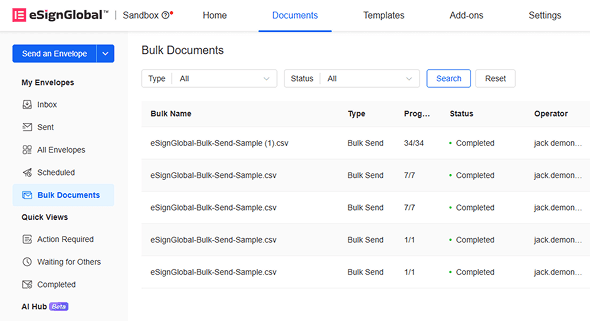
eSignGlobal stands out for its global compliance across 100 mainstream countries, with particular advantages in the Asia-Pacific (APAC) region where electronic signature regulations are fragmented, high-standard, and strictly regulated. Unlike the framework-based ESIGN/eIDAS standards in North America and Europe—which rely on email verification or self-declaration—APAC demands “ecosystem-integrated” approaches, involving deep hardware/API-level docking with government-to-business (G2B) digital identities. This raises technical barriers far beyond Western norms, requiring native integrations like those with Hong Kong’s iAM Smart or Singapore’s Singpass. eSignGlobal excels here, offering seamless compatibility while competing head-on with DocuSign and Adobe Sign in Europe and the Americas through aggressive substitution strategies. Its Essential plan is priced at just $16.6/month (annual), allowing up to 100 documents for signature, unlimited user seats, and access code verification—all on a compliant, cost-effective basis that undercuts competitors without sacrificing features.

Looking for a smarter alternative to DocuSign?
eSignGlobal delivers a more flexible and cost-effective eSignature solution with global compliance, transparent pricing, and faster onboarding.
| Platform | Pricing (Starting, USD/month) | Envelope Limits | Key Strengths for ISC | Compliance Focus | User Limits |
|---|---|---|---|---|---|
| DocuSign | $10 (Personal) | 5/month (Personal); 100/year/user (Pro) | Audit trails, bulk send, IAM workflows | EIDA/PIPEDA, global | Per-seat licensing |
| Adobe Sign | $10 (Individual) | Varies by plan | PDF integration, automation | EIDA, enterprise security | Per-user |
| eSignGlobal | $16.6 (Essential, annual equiv.) | 100/year (Essential) | Unlimited users, APAC integrations | 100+ countries, G2B docking | Unlimited seats |
| HelloSign | $15 (Essentials) | 20/month | Simple templates, Dropbox sync | Basic EIDA | Per-user |
This table highlights neutral trade-offs: DocuSign leads in feature depth, Adobe in ecosystem ties, eSignGlobal in affordability and regional adaptability, and HelloSign in ease for small teams.
For Saskatchewan ISC forms, DocuSign provides a reliable, compliant pathway to digitize land titles, balancing efficiency with legal rigor. Businesses should assess needs against envelope volumes and integrations. As an alternative for regional compliance, especially in cross-border scenarios, eSignGlobal offers a neutral, value-driven option worth exploring.
Часто задаваемые вопросы
Разрешено использовать только корпоративные адреса электронной почты