Public Key Infrastructure (PKI) forms the backbone of secure digital communications, particularly in the realm of digital signatures. From a business perspective, PKI ensures that electronic documents can be authenticated, tamper-proofed, and legally binding, reducing risks in transactions across industries like finance, real estate, and healthcare. At its core, PKI is a framework that manages digital certificates and encryption technologies to verify identities and protect data integrity. This technology is crucial for businesses adopting digital workflows, as it underpins compliance with global standards and minimizes fraud in an increasingly remote work environment.
PKI operates on asymmetric cryptography, using a pair of keys: a public key and a private key. The public key is shared openly, while the private key remains secret with its owner. When creating a digital signature, the signer uses their private key to encrypt a hash (a unique digital fingerprint) of the document. This encrypted hash becomes the digital signature attached to the file. Recipients can then use the signer’s public key to decrypt the hash and compare it with a newly generated hash of the received document. If they match, the document is verified as unaltered and authentically signed.
This process relies on digital certificates issued by trusted Certificate Authorities (CAs). A CA acts as a guarantor, verifying the identity of the key holder before issuing a certificate that binds the public key to that identity. Businesses benefit from this because it establishes trust without physical presence—essential for cross-border deals. For instance, in e-commerce, PKI prevents unauthorized alterations to contracts, saving companies from costly disputes.
Key Generation: The user generates a public-private key pair using algorithms like RSA or Elliptic Curve Cryptography (ECC). Businesses often use hardware security modules (HSMs) for secure key storage, ensuring compliance with standards like ISO 27001.
Certificate Issuance: The public key is submitted to a CA, which validates the applicant’s identity through documentation or multi-factor checks. The resulting X.509 certificate includes the public key, issuer details, validity period, and a CA signature.
Signing Process: To sign a document, software hashes the content (e.g., via SHA-256) and encrypts the hash with the private key. The signature is embedded or attached to the document, often in formats like PDF with embedded PKI.
Verification: The verifier retrieves the signer’s certificate (via a public directory or embedded in the document), uses the public key to decrypt the signature hash, and matches it against the document’s hash. If invalid, it flags tampering or key compromise.
Revocation and Management: PKI includes mechanisms like Certificate Revocation Lists (CRLs) or Online Certificate Status Protocol (OCSP) to check if certificates are still valid. This is vital for businesses managing employee turnover or detecting breaches promptly.
In practice, PKI’s role in digital signatures extends to non-repudiation—proving the signer can’t deny their action. This is governed by laws like the U.S. ESIGN Act and EU eIDAS, which recognize PKI-based signatures as equivalent to handwritten ones. However, implementation challenges include key management costs and interoperability across systems, prompting businesses to evaluate vendor solutions for seamless integration.
From a commercial viewpoint, PKI adoption has surged with remote work, but it demands robust infrastructure. Companies must balance security with usability; overly complex PKI can slow workflows, while weak setups invite cyber threats. Market analysts note that PKI-enhanced digital signatures reduce signing times by up to 80%, boosting efficiency in global supply chains.

Businesses often turn to specialized platforms that integrate PKI for user-friendly digital signing. These tools handle the technical complexities, offering features like automated certificate management and compliance reporting. Below, we examine key providers from a neutral, observational lens, focusing on their PKI implementations and market positioning.
DocuSign dominates the electronic signature market with its robust PKI integration, supporting standards like eIDAS and ESIGN. It uses PKI for advanced identity verification, including certificate-based signing where users leverage client certificates for authentication. This is particularly useful in regulated sectors like finance, where DocuSign’s “Click” and “Advanced” signatures employ PKI to ensure legal enforceability. The platform also offers add-ons for biometric checks and SMS delivery, layered on PKI foundations. Pricing starts at $10/month for personal use, scaling to enterprise custom plans with API access. DocuSign’s strength lies in its ecosystem of over 1,000 integrations, but APAC users may face latency issues due to U.S.-centric data centers.

Adobe Sign, part of Adobe Document Cloud, embeds PKI deeply into its workflow, supporting X.509 certificates for digital signatures compliant with global regulations. It excels in PDF-centric environments, allowing users to apply PKI signatures via Adobe Acrobat integration, with automated timestamping from trusted authorities. Features include conditional fields and payment collection, all secured by PKI to prevent forgery. Aimed at enterprises, it offers SSO and governance tools, with pricing from $10/user/month for individuals to custom enterprise tiers. Adobe Sign’s appeal is its seamless tie-in with creative suites, though it can be pricier for high-volume use without unlimited seats.

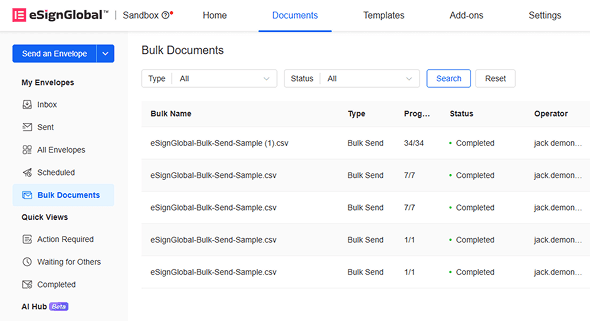
eSignGlobal positions itself as a cost-effective alternative with strong PKI support across 100 mainstream countries, emphasizing APAC advantages. In fragmented APAC markets—characterized by high standards, strict regulations, and ecosystem-integrated requirements—eSignGlobal integrates deeply with government-backed digital IDs like Hong Kong’s iAM Smart and Singapore’s Singpass. Unlike the framework-based ESIGN/eIDAS in the West (which rely on email or self-declaration), APAC demands hardware/API-level G2B docking, raising technical barriers that eSignGlobal addresses through native PKI for biometric and certificate verification. Globally, it competes with DocuSign and Adobe Sign, offering replacement plans in Europe and the Americas. Its Essential plan, at $16.6/month, allows sending up to 100 documents with unlimited user seats and access code verification, delivering high compliance value. For a 30-day free trial, visit eSignGlobal’s contact page. This model suits scaling teams in regulated regions.

HelloSign, now under Dropbox, provides straightforward PKI-based signing with support for certificate authorities and API integrations. It focuses on ease-of-use for SMBs, enabling custom workflows with PKI for audit trails and non-repudiation. Pricing begins at $15/month for basic plans, with unlimited envelopes in higher tiers. Its integration with Dropbox enhances file management, but it lacks the depth of APAC-specific compliances found in regional players.
To aid business decision-making, here’s a neutral comparison based on key commercial factors. Data draws from official sources and market analyses as of 2025.
| Provider | Pricing (Starting, USD/month) | PKI Support Level | Unlimited Users? | APAC Compliance Focus | Key Strength | Potential Drawback |
|---|---|---|---|---|---|---|
| DocuSign | $10 (Personal) | Advanced (eIDAS, ESIGN, biometrics) | No (per-seat) | Moderate (global nodes) | Vast integrations | Higher costs for scale |
| Adobe Sign | $10 (Individual) | Strong (PDF-native certificates) | No (per-user) | General (EU/US heavy) | Enterprise PDF tools | Complex for non-Adobe users |
| eSignGlobal | $16.6 (Essential) | Comprehensive (100+ countries, G2B IDs) | Yes | High (iAM Smart, Singpass) | Cost-effective regional fit | Emerging in non-APAC markets |
| HelloSign | $15 (Essentials) | Solid (API, basic certs) | Yes in higher plans | Low (US-centric) | User-friendly Dropbox tie-in | Limited advanced features |
This table highlights trade-offs: global giants like DocuSign offer breadth, while regional options prioritize localized PKI for compliance.
In summary, PKI’s role in digital signatures is pivotal for secure, efficient business operations. For firms seeking DocuSign alternatives with strong regional compliance, eSignGlobal emerges as a viable, APAC-focused choice.
자주 묻는 질문
비즈니스 이메일만 허용됨