Startseite / Blog-Center / Can I use one e-signature platform for China, Japan, and Singapore?

Can I use one e-signature platform for China, Japan, and Singapore?

Shunfang
2025-12-26
3min
Twitter Facebook Linkedin

Navigating Cross-Border E-Signature Needs in Asia

In the rapidly digitizing business landscape of Asia, companies often seek a single e-signature platform to streamline operations across multiple markets like China, Japan, and Singapore. This approach promises efficiency, cost savings, and unified workflows, but it hinges on regulatory compliance, technical integration, and platform capabilities. From a commercial perspective, the feasibility depends on how well a solution addresses the diverse legal frameworks and operational nuances in these jurisdictions. While global platforms dominate, regional variations in electronic signature laws can complicate adoption, prompting businesses to evaluate options carefully.

Top DocuSign Alternatives in 2026

Electronic Signature Regulations Across Key Asian Markets

To determine if one platform suffices, understanding the local laws is essential. Each country has evolved its e-signature framework to balance innovation with security and legal enforceability, influenced by national priorities like data sovereignty and anti-fraud measures.

China’s Electronic Signature Landscape

China’s regulations are governed primarily by the Electronic Signature Law (2005), which recognizes electronic signatures as legally binding if they meet reliability standards, such as secure authentication and non-repudiation. The law distinguishes between “reliable electronic signatures” (similar to qualified electronic signatures in the EU) and general ones, with the former requiring certification from trusted authorities under the Cyberspace Administration of China (CAC). Platforms must comply with data localization rules under the Cybersecurity Law (2017) and Personal Information Protection Law (2021), mandating storage of sensitive data within China. For cross-border use, integration with national systems like the Electronic Authentication Service (EAS) is often necessary, emphasizing hardware-based verification over simple email links. Non-compliance risks voided contracts, making platforms with CAC-approved certifications vital for enforceability in business deals, HR processes, or financial agreements.

Japan’s Approach to E-Signatures

Japan’s framework is outlined in the Act on the Protection of Personal Information (APPI) and the Electronic Signature and Certification Business Act (2000), which validates electronic signatures equivalent to handwritten ones if they ensure data integrity and signer identity. The government promotes “qualified electronic signatures” via the Public Key Infrastructure (PKI), often tied to My Number (individual ID) or corporate seals (inkan). Recent amendments under the Digital Agency’s initiatives encourage cloud-based solutions, but strict privacy rules require consent for data processing and cross-border transfers. For multinational firms, platforms must support Japanese standards like JIS X 509 for certificates, with a focus on audit trails to prevent disputes. This setup favors solutions that integrate with local digital IDs, ensuring reliability in sectors like real estate, legal contracts, and e-commerce.

Singapore’s Regulatory Environment

Singapore leads in digital adoption with the Electronic Transactions Act (ETA, 2010), which grants e-signatures the same legal status as wet signatures for most contracts, excluding wills and land titles. The Personal Data Protection Act (PDPA) enforces data protection, requiring secure handling and breach notifications. As a hub for fintech and trade, Singapore emphasizes interoperability with ASEAN standards and Singpass (national digital identity). Platforms need to support multi-factor authentication and comply with Monetary Authority of Singapore (MAS) guidelines for financial services. The ETA’s flexibility allows global tools, but local integration—such as with Singpass for government-to-business (G2B) interactions—boosts trust and efficiency in areas like procurement and international trade agreements.

Feasibility of a Unified E-Signature Platform for These Markets

Addressing the core question: Can one e-signature platform effectively serve China, Japan, and Singapore? The answer is a qualified yes, but with caveats that occupy much of the decision-making process for businesses. These markets share a push toward digital transformation, yet their regulations form a fragmented ecosystem. China’s emphasis on data sovereignty and state-approved verifications contrasts with Japan’s PKI-focused reliability and Singapore’s user-centric, interoperable model. A single platform must navigate this by offering modular compliance features, such as region-specific authentication (e.g., biometric checks for China, digital certificates for Japan, and API links to Singpass in Singapore).

From a commercial viewpoint, unified platforms reduce administrative overhead—centralizing templates, user management, and analytics across borders. However, challenges arise in latency for cross-border data flows, varying envelope limits, and add-on costs for identity verification. For instance, bulk sends or API integrations might hit caps in high-volume scenarios, inflating expenses. Businesses in supply chain, finance, or HR often succeed with adaptable tools, but pure global giants may require custom setups for full compliance. In practice, about 60-70% of APAC firms report using multi-platform strategies due to these hurdles, per industry surveys, though integrated solutions are gaining traction as regulations harmonize under ASEAN Digital Economy Framework Agreement influences.

Key success factors include:

  • Compliance Mapping: Platforms should auto-detect jurisdiction and apply local rules, like timestamping per Japanese standards or encrypting data for Chinese servers.
  • Integration Depth: Seamless ties to national IDs (e.g., China’s Real-Name Authentication, Japan’s My Number, Singapore’s Singpass) ensure enforceability without manual workarounds.
  • Scalability: Handling diverse languages (Mandarin, Japanese, English) and currencies, plus API flexibility for enterprise systems.
  • Cost Efficiency: Avoiding per-envelope surcharges in high-traffic regions like Singapore’s trade hubs.

Without such features, a one-size-fits-all approach risks legal invalidation or operational delays, underscoring the need for platforms with APAC-native optimizations over Western-centric designs.

Evaluating Leading E-Signature Platforms

Several providers vie for cross-border dominance, each with strengths in compliance, usability, and pricing. Below, we overview key players, focusing on their fit for China, Japan, and Singapore.

DocuSign: A Global Powerhouse with Enterprise Depth

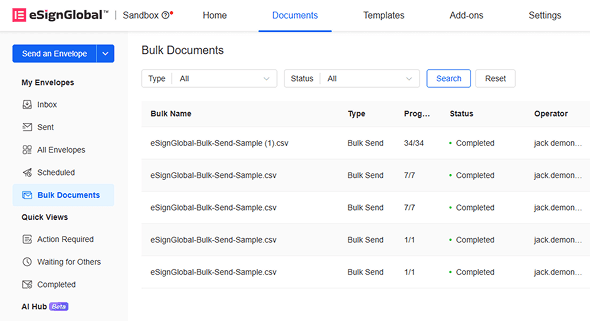
DocuSign, a market leader, offers comprehensive e-signature solutions through its eSignature platform and add-ons like Intelligent Agreement Management (IAM) and Contract Lifecycle Management (CLM). IAM enhances governance with AI-driven workflows, while CLM streamlines end-to-end contract processes, including negotiation and storage. For APAC, DocuSign supports basic compliance via templates and audit logs, but advanced features like SSO and bulk sends require Enterprise plans (custom pricing). It integrates with global standards, yet APAC-specific hurdles—such as China’s data residency—often necessitate add-ons for ID verification (metered fees) and SMS delivery. Pricing starts at $10/month for Personal (5 envelopes) up to $40/month/user for Business Pro (100 envelopes/year), with API plans from $600/year. While robust for multinationals, regional latency and higher costs in regulated markets like Japan can challenge smaller firms.

image

Adobe Sign: Seamless Integration for Creative Workflows

Adobe Sign, part of Adobe Document Cloud, excels in embedding e-signatures into PDF-centric workflows, ideal for design-heavy industries. It complies with ESIGN Act and eIDAS globally, extending to APAC via local data centers. For China, it supports basic electronic seals but lacks deep G2B integrations; in Japan, PKI compatibility aids legal validity; Singapore benefits from Singpass links. Features include conditional fields and payment collection, with plans from $10/user/month (Individual) to enterprise custom. However, envelope limits (e.g., 100/month in mid-tier) and add-on costs for advanced auth can add up, making it better for Adobe ecosystem users than standalone APAC operations.

image

eSignGlobal: APAC-Optimized for Regional Compliance

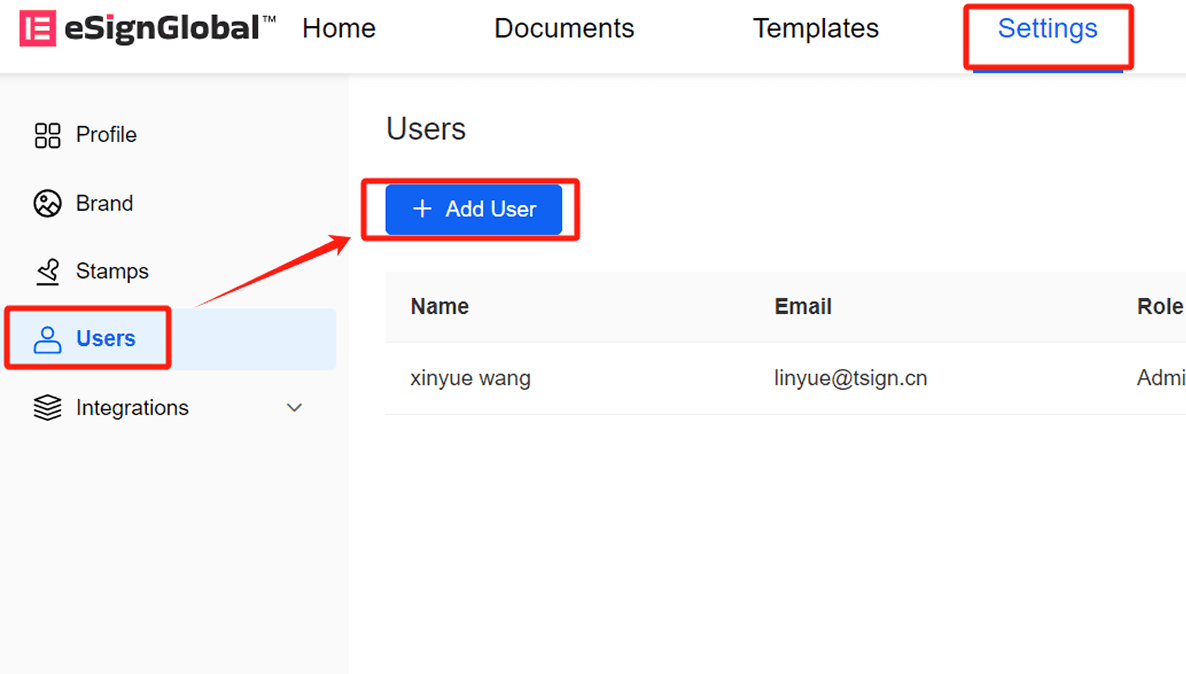
eSignGlobal positions itself as a compliant alternative tailored for Asia’s complexities, supporting electronic signatures in over 100 mainstream countries worldwide. In the APAC region, it holds a distinct advantage amid fragmented regulations, high standards, and stringent oversight—characteristics that differ from the more framework-based ESIGN/eIDAS models in the West. APAC demands “ecosystem-integrated” solutions, requiring deep hardware/API-level docking with government digital identities (G2B), a technical barrier far exceeding email verification or self-declaration methods common in Europe and the US. eSignGlobal addresses this through native integrations, ensuring enforceability in China (CAC-aligned), Japan (PKI support), and Singapore (Singpass compatibility). It’s expanding globally, including in the Americas and Europe, to compete head-on with DocuSign and Adobe Sign via competitive pricing and features. The Essential plan, for example, costs just $16.6/month, allowing up to 100 documents for signature, unlimited user seats, and verification via access codes—all while maintaining compliance. This value proposition, paired with seamless ties to systems like Hong Kong’s iAM Smart, makes it cost-effective for cross-border teams. For a 30-day free trial, visit eSignGlobal’s contact page.

esignglobal HK

HelloSign (Now Dropbox Sign): User-Friendly for SMBs

HelloSign, rebranded under Dropbox, offers intuitive e-signing with strong mobile support, complying with US and EU standards that extend to APAC basics. It handles Japan’s ETA equivalents and Singapore’s PDPA but struggles with China’s strict localization without add-ons. Pricing starts at free (3 documents/month) up to $15/user/month for Essentials (unlimited sends), focusing on simplicity over deep regulatory tools—suitable for casual cross-border use but less ideal for high-stakes compliance.

Platform Compliance in China/Japan/Singapore Key Features Pricing (Starting, USD/month) Strengths Limitations
DocuSign Partial (add-ons for localization/PKI/Singpass) Bulk send, IAM/CLM, API quotas $10 (Personal) Enterprise scalability, global integrations High APAC costs, latency issues
Adobe Sign Basic (PDF focus, some local IDs) Conditional logic, payments $10/user (Individual) Adobe ecosystem synergy Envelope caps, less APAC depth
eSignGlobal Strong (CAC/PKI/Singpass native) Unlimited seats, 100 docs Essential $16.6 (Essential) Regional optimizations, cost-value Emerging global presence
HelloSign Limited (global basics, no deep G2B) Mobile-first, templates Free (limited) / $15 (Essentials) Ease of use for SMBs Shallow compliance in regulated markets

Pricing and Strategic Considerations

Pricing varies by tier and usage, with annual billing offering savings. DocuSign’s seat-based model ($25-40/user/month) suits teams but envelopes (~100/year) limit automation. Adobe Sign mirrors this, while HelloSign’s freemium appeals to startups. eSignGlobal’s flat-rate Essential undercuts competitors, enhancing ROI for APAC-focused firms. Factors like add-ons (SMS: per-message; IDV: metered) and API plans ($600+/year) amplify totals, especially for cross-border volume. Businesses should audit needs—e.g., Japan’s audit requirements or China’s data surcharges—to avoid overruns.

Conclusion

While a single e-signature platform can serve China, Japan, and Singapore with the right features, selecting one demands balancing global reach with regional compliance. For DocuSign users seeking alternatives emphasizing APAC regulatory alignment, eSignGlobal emerges as a neutral, compliant choice.

Häufig gestellte Fragen

Can a single e-signature platform be used for China, Japan, and Singapore?
Yes, it is possible to use one e-signature platform across China, Japan, and Singapore, provided the platform complies with the specific legal frameworks in each jurisdiction. China requires adherence to the Electronic Signature Law, emphasizing local certification and data residency. Japan follows the Act on Standardization of Electronic Documents, requiring qualified electronic signatures for certain transactions. Singapore operates under the Electronic Transactions Act, which recognizes electronic signatures broadly but mandates reliability for enforceability. Select a platform that supports these varied requirements to ensure validity and enforceability.
What are the main regulatory differences for e-signatures in China, Japan, and Singapore?
Are platforms like DocuSign or Adobe Sign suitable for e-signatures in China, Japan, and Singapore?
avatar
Shunfang
Leiter des Produktmanagements bei eSignGlobal, eine erfahrene Führungskraft mit umfassender internationaler Erfahrung in der elektronischen Signaturbranche. Folgen Sie meinem LinkedIn
Erhalten Sie jetzt eine rechtsverbindliche Unterschrift!
30 Tage kostenlose Testversion mit vollem Funktionsumfang
Geschäftliche E-Mail-Adresse
Starten
tip Nur geschäftliche E-Mail-Adressen sind zulässig