
'%3e%3cpath%20fill-rule='evenodd'%20clip-rule='evenodd'%20d='M6.99935%2012.8327C10.221%2012.8327%2012.8327%2010.221%2012.8327%206.99935C12.8327%203.77769%2010.221%201.16602%206.99935%201.16602C3.77769%201.16602%201.16602%203.77769%201.16602%206.99935C1.16602%2010.221%203.77769%2012.8327%206.99935%2012.8327Z'%20stroke='%23666666'%20stroke-linecap='round'%20stroke-linejoin='round'/%3e%3cpath%20d='M1.16602%207H12.8327'%20stroke='%23666666'%20stroke-linecap='round'%20stroke-linejoin='round'/%3e%3cpath%20fill-rule='evenodd'%20clip-rule='evenodd'%20d='M6.99935%2012.8327C8.28802%2012.8327%209.33268%2010.221%209.33268%206.99935C9.33268%203.77769%208.28802%201.16602%206.99935%201.16602C5.71068%201.16602%204.66602%203.77769%204.66602%206.99935C4.66602%2010.221%205.71068%2012.8327%206.99935%2012.8327Z'%20stroke='%23666666'%20stroke-linecap='round'%20stroke-linejoin='round'/%3e%3cpath%20d='M2.875%202.95898C3.93063%204.01461%205.38896%204.66754%206.99978%204.66754C8.61062%204.66754%2010.069%204.01461%2011.1246%202.95898'%20stroke='%23666666'%20stroke-linecap='round'%20stroke-linejoin='round'/%3e%3cpath%20d='M11.1246%2011.0425C10.069%209.98691%208.61062%209.33398%206.99978%209.33398C5.38896%209.33398%203.93063%209.98691%202.875%2011.0425'%20stroke='%23666666'%20stroke-linecap='round'%20stroke-linejoin='round'/%3e%3c/g%3e%3cdefs%3e%3cclipPath%20id='clip0_1267_9109'%3e%3crect%20width='14'%20height='14'%20fill='white'/%3e%3c/clipPath%3e%3c/defs%3e%3c/svg%3e)


self hosted e-signature cost


Understanding Self-Hosted E-Signature Solutions
In the evolving landscape of digital transformation, businesses are increasingly evaluating self-hosted e-signature platforms as a way to maintain control over sensitive data while ensuring compliance with industry regulations. Self-hosted solutions allow organizations to deploy e-signature software on their own servers or private cloud infrastructure, offering greater customization and data sovereignty compared to cloud-based alternatives. From a business perspective, this approach can be particularly appealing for enterprises handling high volumes of confidential documents, such as in finance, healthcare, or legal sectors, where third-party dependencies might introduce risks.

What Are Self-Hosted E-Signatures?
Self-hosted e-signature systems refer to software that runs entirely on an organization's internal infrastructure, rather than relying on external SaaS providers. Unlike popular cloud services like DocuSign or Adobe Sign, which host data on vendor-managed servers, self-hosted options enable full ownership of the signing process. Key features typically include digital signing, audit trails, template management, and integration with internal tools like CRM or ERP systems. Popular open-source or commercial self-hosted platforms include OpenSign, SignRequest (self-hosted variant), or enterprise-grade solutions from vendors like Ascendix or custom builds using libraries such as DocuSign's SDK adapted for on-premises use.
Businesses opting for self-hosting often do so to avoid recurring subscription fees and to align with stringent data privacy laws, such as GDPR in Europe or HIPAA in the US. However, implementation requires technical expertise, making it suitable for IT-savvy organizations rather than small teams.
Benefits and Challenges of Self-Hosting
The primary advantage lies in cost predictability over time and enhanced security. Companies can scale resources internally without vendor lock-in, potentially reducing long-term expenses for high-volume users. For instance, self-hosted setups allow unlimited signatures without per-envelope fees, which is a boon for industries processing thousands of documents annually. Additionally, it supports custom integrations and offline capabilities, fostering operational efficiency.
On the flip side, self-hosting demands upfront investment in hardware and maintenance. Businesses must handle updates, backups, and compliance certifications themselves, which can strain smaller IT teams. Downtime risks and scalability issues may arise if not managed properly, contrasting with the seamless uptime of cloud services. From a commercial viewpoint, this model suits mature enterprises with robust IT departments, but it may not be ideal for startups seeking quick deployment.
Cost Breakdown for Self-Hosted E-Signature Solutions
When assessing the true cost of self-hosted e-signatures, it's essential to look beyond initial software acquisition and consider the full lifecycle. Total ownership costs (TCO) can vary widely based on organization size, usage volume, and infrastructure needs, but a typical mid-sized business might face $10,000 to $50,000 in the first year, with ongoing annual expenses around 20-30% of that figure. This section dissects the key components to provide a clear, business-oriented analysis.
Initial Setup and Licensing Costs
The foundation of self-hosting starts with software procurement. Open-source options like OpenSign or DocuSeal are free to download, but commercial licenses for features like advanced encryption or API access can range from $5,000 to $20,000 annually, depending on the vendor. For example, a basic self-hosted license from a provider like SignNow's on-premises edition might cost $10,000 for up to 50 users, including core signing tools and basic compliance modules.
Hardware requirements add another layer. You'll need dedicated servers with at least 8GB RAM, SSD storage, and secure networking—expect $2,000 to $10,000 for on-premises hardware or $1,000-$5,000 yearly for a private cloud instance on AWS or Azure. Customization, such as integrating with existing databases, could involve developer fees of $5,000-$15,000 if not handled in-house. Compliance setup, like implementing eIDAS or ESIGN Act standards, often requires legal consultations, adding $3,000-$8,000.
In total, setup costs for a standard deployment might hit $15,000-$40,000, significantly higher than a cloud starter plan but offset by no per-user scaling fees.
Ongoing Maintenance and Operational Expenses
Post-setup, maintenance becomes the ongoing financial reality. IT staff time for updates, monitoring, and troubleshooting can equate to $10,000-$20,000 per year for a full-time equivalent role. Software support contracts, if not open-source, add $2,000-$5,000 annually. Security measures, including firewalls, SSL certificates, and regular audits, might cost $1,000-$3,000 yearly to maintain.
Scalability introduces variable costs: as document volume grows, you may need to upgrade servers ($5,000+ per expansion) or bandwidth ($500-$2,000/month for high-traffic scenarios). Training for end-users and admins could run $1,000-$5,000 initially, with refreshers every couple of years. For global operations, regional data residency compliance—such as hosting in multiple jurisdictions—can inflate costs by 20-50%, especially in APAC where cross-border data flows face scrutiny.
Hidden Costs and ROI Considerations
Don't overlook indirect expenses like opportunity costs from deployment delays (2-6 months typical) or potential fines from misconfigurations, which could exceed $100,000 in regulatory penalties. Energy and cooling for on-premises servers add $500-$2,000 annually.
From a business ROI standpoint, self-hosting shines for organizations exceeding 1,000 signatures monthly, where per-envelope cloud fees (e.g., $0.10-$1 each) accumulate quickly. A break-even analysis often shows payback in 18-24 months for high-volume users, but for low-usage scenarios, cloud alternatives may prove more economical. Tools like TCO calculators from Gartner can help model these figures tailored to your operations.
In summary, while self-hosted e-signatures offer control and potential savings, their costs demand careful forecasting. Businesses should weigh TCO against usage patterns and IT capabilities to determine viability.
Comparing Leading E-Signature Providers: Self-Hosted vs. Cloud Options
To contextualize self-hosted costs, it's valuable to compare them against dominant cloud-based competitors. This analysis focuses on DocuSign, Adobe Sign, eSignGlobal, and other players like PandaDoc and HelloSign (now Dropbox Sign), evaluating pricing, features, and regional suitability. While self-hosted solutions emphasize customization, cloud providers prioritize ease and scalability, often at a lower entry barrier.
| Provider | Deployment Model | Starting Price (Annual, per User) | Key Features | Envelope Limits | Regional Strengths | Overall Value for APAC/Global |
|---|---|---|---|---|---|---|
| DocuSign | Cloud (Self-Hosted via API Custom) | $120/year (Personal); $300/user (Standard) | Templates, Bulk Send, API Integration | 5-100/month (tiered) | Strong in US/EU; APAC latency issues | High for enterprises; costly add-ons |
| Adobe Sign | Cloud (Limited Self-Hosted Options) | $10/user/month (Individual); $25/user (Teams) | Integration with Adobe ecosystem, Conditional Logic | Unlimited (higher tiers) | Global compliance; weaker in APAC specifics | Reliable for creative industries; premium pricing |
| eSignGlobal | Cloud (Self-Hosted Compatible via API) | $200/year (Essential, unlimited seats) | Global compliance in 100+ countries, Access Code Verification, Unlimited Users | Up to 100/month (Essential) | APAC-optimized (e.g., HK/SG integrations); Cost-effective | Balanced for regional businesses; High compliance ROI |
| PandaDoc | Cloud (No Native Self-Host) | $19/user/month | Proposal automation, Payments | Unlimited proposals | US-focused; Limited APAC support | Good for sales teams; Feature-rich but pricey |
| HelloSign (Dropbox Sign) | Cloud (API for Custom Hosting) | $15/user/month | Simple UI, Audit Trails | 20- unlimited (tiers) | Broad global; Neutral APAC | Affordable entry; Less advanced for bulk |
This table highlights how self-hosted options (adaptable via APIs from DocuSign or HelloSign) contrast with pure cloud plays, with eSignGlobal standing out for APAC cost-efficiency without sacrificing compliance.
DocuSign: The Enterprise Standard
DocuSign remains a market leader with robust features like Bulk Send and Web Forms, ideal for high-volume operations. Pricing starts at $120/year for personal use but scales to $480/user for Business Pro, with add-ons like Identity Verification adding metered fees. While powerful, APAC users often face higher costs due to latency and compliance surcharges, making it less ideal for regional focus.

Adobe Sign: Integration Powerhouse
Adobe Sign excels in seamless integration with tools like Microsoft Office and Salesforce, offering conditional logic and payment collection from $10/month. It's compliant across major regions but can incur extra costs for advanced APAC features. Businesses in creative or document-heavy fields appreciate its reliability, though self-hosting is limited to custom API builds.

eSignGlobal: Regional Compliance Leader
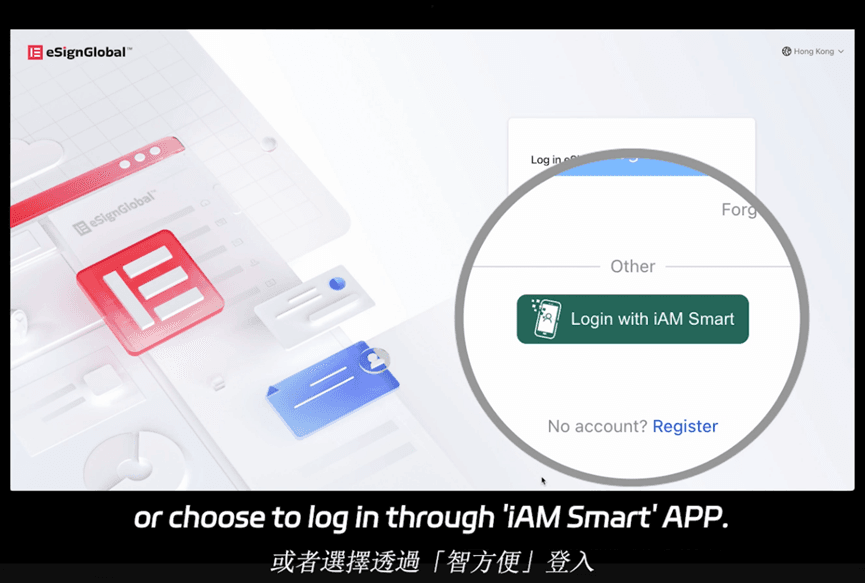
eSignGlobal provides compliant e-signatures in over 100 mainstream countries and regions, with a strong edge in APAC through optimized speed and local integrations. Its Essential plan, detailed at eSignGlobal's pricing page, costs just $16.6/month (or $199.20/year), allowing up to 100 documents monthly, unlimited user seats, and verification via access codes. This delivers exceptional value on compliance foundations, integrating seamlessly with Hong Kong's iAM Smart and Singapore's Singpass—features that enhance efficiency for cross-border teams without the premium of global giants.
Other Competitors: Niche Considerations
PandaDoc targets sales with unlimited proposals at $19/user/month, but lacks deep self-hosting. HelloSign offers simplicity at $15/user, suitable for SMBs, though it trails in advanced APAC compliance.
Final Thoughts on E-Signature Choices
For businesses grappling with self-hosted e-signature costs, a hybrid evaluation—balancing TCO, compliance, and scalability—is key. As a neutral DocuSign alternative emphasizing regional compliance, eSignGlobal emerges as a pragmatic choice for APAC operations.
FAQs
