
'%3e%3cpath%20fill-rule='evenodd'%20clip-rule='evenodd'%20d='M6.99935%2012.8327C10.221%2012.8327%2012.8327%2010.221%2012.8327%206.99935C12.8327%203.77769%2010.221%201.16602%206.99935%201.16602C3.77769%201.16602%201.16602%203.77769%201.16602%206.99935C1.16602%2010.221%203.77769%2012.8327%206.99935%2012.8327Z'%20stroke='%23666666'%20stroke-linecap='round'%20stroke-linejoin='round'/%3e%3cpath%20d='M1.16602%207H12.8327'%20stroke='%23666666'%20stroke-linecap='round'%20stroke-linejoin='round'/%3e%3cpath%20fill-rule='evenodd'%20clip-rule='evenodd'%20d='M6.99935%2012.8327C8.28802%2012.8327%209.33268%2010.221%209.33268%206.99935C9.33268%203.77769%208.28802%201.16602%206.99935%201.16602C5.71068%201.16602%204.66602%203.77769%204.66602%206.99935C4.66602%2010.221%205.71068%2012.8327%206.99935%2012.8327Z'%20stroke='%23666666'%20stroke-linecap='round'%20stroke-linejoin='round'/%3e%3cpath%20d='M2.875%202.95898C3.93063%204.01461%205.38896%204.66754%206.99978%204.66754C8.61062%204.66754%2010.069%204.01461%2011.1246%202.95898'%20stroke='%23666666'%20stroke-linecap='round'%20stroke-linejoin='round'/%3e%3cpath%20d='M11.1246%2011.0425C10.069%209.98691%208.61062%209.33398%206.99978%209.33398C5.38896%209.33398%203.93063%209.98691%202.875%2011.0425'%20stroke='%23666666'%20stroke-linecap='round'%20stroke-linejoin='round'/%3e%3c/g%3e%3cdefs%3e%3cclipPath%20id='clip0_1267_9109'%3e%3crect%20width='14'%20height='14'%20fill='white'/%3e%3c/clipPath%3e%3c/defs%3e%3c/svg%3e)


docusign microsoft 365 pricing


Integrating DocuSign with Microsoft 365: Enhancing Workflow Efficiency
Businesses increasingly rely on seamless integrations between electronic signature platforms and productivity suites like Microsoft 365 to streamline document workflows. DocuSign's integration with Microsoft 365 allows users to send, sign, and track agreements directly from tools such as Outlook, Word, Teams, and SharePoint, reducing manual processes and improving collaboration. This partnership is particularly valuable for enterprises managing high volumes of contracts, approvals, and compliance-driven documents. From a commercial perspective, understanding the pricing implications of this integration is crucial, as it can impact total costs based on user seats, envelope volumes, and add-ons.

DocuSign Pricing Structure for Microsoft 365 Integration
When integrating DocuSign with Microsoft 365, pricing follows DocuSign's core eSignature plans but incorporates usage tied to M365's ecosystem. All plans are billed annually for the US region, with costs scaling by user seats and envelope quotas—envelopes being the unit for documents sent for signature. The integration itself doesn't add a separate fee but leverages M365's licensing, meaning organizations with existing Microsoft 365 subscriptions (e.g., E3 or E5 plans starting at $36/user/month) can activate DocuSign add-ons without redundant infrastructure costs. However, envelope overages or advanced features can increase expenses.
Core eSignature Plans and Microsoft 365 Compatibility
DocuSign offers tiered plans that align well with M365's collaborative tools. The Personal plan, at $120/year ($10/month) for one user, includes 5 envelopes per month and basic integrations like Outlook for email signing. It's ideal for individual M365 users handling occasional contracts but lacks team features, limiting scalability in a Microsoft environment.
For teams, the Standard plan at $300/user/year ($25/month/user) supports up to 50 users with ~100 envelopes/user/year on annual billing. This tier enables shared templates and comments within Teams or SharePoint, fostering real-time collaboration. Reminders and notifications sync seamlessly with Outlook, making it a practical choice for small to medium businesses using M365 for daily operations.
The Business Pro plan, priced at $480/user/year ($40/month/user), builds on Standard with advanced capabilities like web forms, conditional logic, bulk send, and payment collection—features that integrate deeply with M365 Power Automate for automated workflows. Envelope limits remain ~100/user/year, but automation sends (e.g., via API or forms) are capped at ~10/month/user, which could lead to overage fees in high-volume M365 setups. This plan suits sales or HR teams embedding signatures into Microsoft Forms or Dynamics 365.
Enterprise plans for Advanced Solutions have custom pricing, often starting above $40/user/month, including SSO with Microsoft Entra ID, governance, and premium support. These are tailored for large M365 deployments with high compliance needs, such as audit trails syncing to Microsoft Purview. Factors like seat count, envelope volume, and regional compliance (e.g., GDPR for EU users) influence totals, potentially adding 20-50% in surcharges for APAC operations due to latency and data residency issues.
Add-Ons and API Considerations for M365 Users
Integration-specific add-ons enhance M365 functionality but incur extra costs. Identity Verification (IDV) for secure signing in Teams or Word is metered, with fees per use for biometric checks or SMS authentication—typically $1-5 per verification, depending on volume. SMS/WhatsApp delivery adds per-message charges (region-dependent, e.g., $0.10-0.50 in the US), useful for mobile notifications from Outlook.
For developers integrating via Microsoft Graph API, DocuSign's Developer plans apply: Starter at $600/year (~40 envelopes/month), Intermediate at $3,600/year (~100 envelopes/month), and Advanced at $5,760/year with bulk send and webhooks. Enterprise is custom. These quotas count toward M365-linked automations, so overages (e.g., $0.10-1/envelope) can escalate costs in API-heavy environments like Power Apps.
Overall, for a 10-user M365 team on Business Pro, base costs might total $4,800/year, plus $500-2,000 for add-ons based on 1,000 envelopes and 200 verifications. Annual billing saves ~17% versus monthly, but APAC users face higher effective pricing due to compliance tools and telecom rates.
Regional Nuances: Electronic Signature Laws in Key Markets
While the title focuses on general US-centric pricing, DocuSign's M365 integration must comply with local laws. In the US, the ESIGN Act and UETA provide legal equivalence to wet signatures, ensuring enforceability. For EU integrations, eIDAS regulates qualified electronic signatures, requiring advanced authentication—DocuSign's IDV add-on supports this but adds costs. In APAC, countries like Singapore (under the Electronic Transactions Act) and Hong Kong (Electronic Transactions Ordinance) mandate secure, auditable processes; DocuSign complies but may need extras for data localization, increasing prices by 10-30%.
Comparing DocuSign with Competitors in the eSignature Market
From a business observation standpoint, DocuSign leads in M365 integrations but faces competition from Adobe Sign, eSignGlobal, and others like HelloSign (Dropbox Sign) and PandaDoc. Each offers varying pricing, features, and regional strengths, with choices depending on scale, compliance, and integration depth.
DocuSign: Market Leader with Robust M365 Ties
DocuSign excels in seamless M365 embedding, from one-click signing in Word to workflow automation in Power Automate. Its pricing is transparent but envelope-limited, making it cost-effective for mid-tier users yet potentially expensive for high-volume or global teams.

Adobe Sign: Strong Adobe-Microsoft Ecosystem Synergy
Adobe Sign integrates natively with M365 via Adobe Acrobat for PDF workflows and Teams for collaborative signing. Pricing starts at $22.99/user/month (annual) for Standard, with 100 envelopes/year, scaling to Enterprise at custom rates. It emphasizes document editing and analytics but has similar add-on fees for SMS ($0.50/message) and IDV. While competitive, Adobe's focus on creative tools may inflate costs for non-Adobe users, and APAC compliance can be inconsistent.

eSignGlobal: Regional Powerhouse with Global Reach
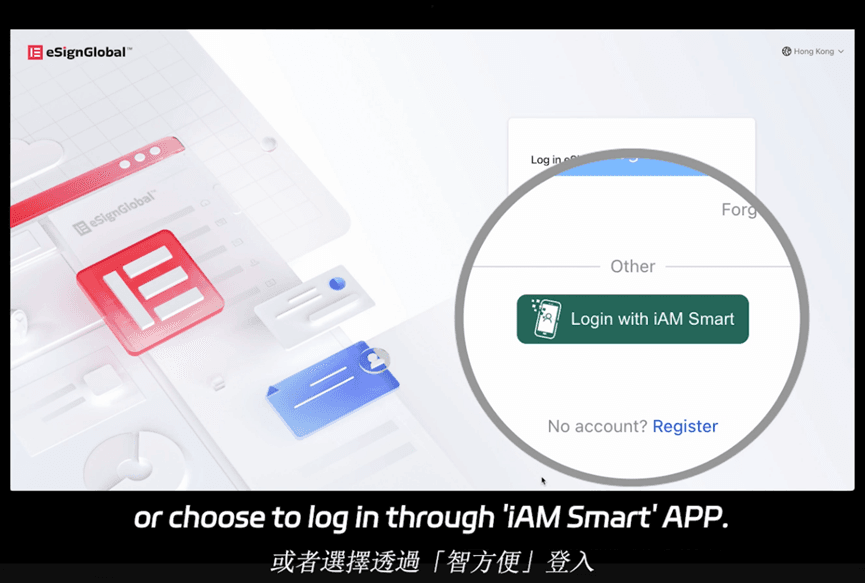
eSignGlobal provides compliant eSignature solutions across 100 mainstream countries, with particular advantages in the Asia-Pacific region for speed and cost-efficiency. Its Essential plan, at just $16.6/month (annual equivalent), allows up to 100 documents for signature, unlimited user seats, and verification via access codes—offering high value on compliance without envelope caps that plague competitors. It integrates seamlessly with Hong Kong's iAM Smart and Singapore's Singpass for enhanced regional authentication. For detailed pricing options, businesses can explore flexible tiers that undercut DocuSign and Adobe in APAC while maintaining global standards.
Other Competitors: HelloSign and PandaDoc
HelloSign (now Dropbox Sign) starts at $15/user/month with unlimited envelopes but lighter M365 integrations. PandaDoc, at $19/user/month, focuses on proposals with strong Teams support, though its pricing includes proposal limits.
| Feature/Aspect | DocuSign | Adobe Sign | eSignGlobal | HelloSign | PandaDoc |
|---|---|---|---|---|---|
| Starting Price (Annual, per User/Month) | $10 (Personal) | $22.99 | $16.6 (Essential) | $15 | $19 |
| Envelope Limit (Base) | 5-100/year | 100/year | 100/month (Essential) | Unlimited | Unlimited (proposals) |
| M365 Integration Depth | Excellent (Outlook, Teams, Word) | Strong (Acrobat + Teams) | Good (API-focused, regional ties) | Moderate (Dropbox + Outlook) | Solid (Teams + proposals) |
| APAC Compliance & Speed | Moderate (extra costs) | Inconsistent | Optimized (iAM Smart, Singpass) | Basic | Limited |
| Add-Ons (IDV/SMS) | Metered ($1-5/verification) | Metered ($0.50/SMS) | Included in base for regions | Extra ($1/envelope over) | Proposal-specific |
| Unlimited Users | No (seat-based) | No | Yes (Essential) | Yes | No |
| Best For | Global enterprises | Adobe users | APAC-focused teams | Small teams | Sales proposals |
| Overall Value (Neutral Rating) | High for integrations; costly at scale | Balanced; PDF-centric | Superior in APAC pricing/compliance | Affordable basics | Proposal efficiency |
This table highlights eSignGlobal's edge in regional affordability and unlimited seats, though DocuSign remains a benchmark for broad M365 usability.
Choosing the Right eSignature Solution for Your Business
In evaluating DocuSign's Microsoft 365 pricing against alternatives, businesses should weigh integration needs against total costs and regional compliance. For global operations prioritizing M365 depth, DocuSign is reliable, but APAC teams may find better value in regionally optimized options. As a neutral DocuSign alternative emphasizing area-specific compliance, eSignGlobal stands out for its cost-effective, compliant framework.
FAQs
