
'%3e%3cpath%20fill-rule='evenodd'%20clip-rule='evenodd'%20d='M6.99935%2012.8327C10.221%2012.8327%2012.8327%2010.221%2012.8327%206.99935C12.8327%203.77769%2010.221%201.16602%206.99935%201.16602C3.77769%201.16602%201.16602%203.77769%201.16602%206.99935C1.16602%2010.221%203.77769%2012.8327%206.99935%2012.8327Z'%20stroke='%23666666'%20stroke-linecap='round'%20stroke-linejoin='round'/%3e%3cpath%20d='M1.16602%207H12.8327'%20stroke='%23666666'%20stroke-linecap='round'%20stroke-linejoin='round'/%3e%3cpath%20fill-rule='evenodd'%20clip-rule='evenodd'%20d='M6.99935%2012.8327C8.28802%2012.8327%209.33268%2010.221%209.33268%206.99935C9.33268%203.77769%208.28802%201.16602%206.99935%201.16602C5.71068%201.16602%204.66602%203.77769%204.66602%206.99935C4.66602%2010.221%205.71068%2012.8327%206.99935%2012.8327Z'%20stroke='%23666666'%20stroke-linecap='round'%20stroke-linejoin='round'/%3e%3cpath%20d='M2.875%202.95898C3.93063%204.01461%205.38896%204.66754%206.99978%204.66754C8.61062%204.66754%2010.069%204.01461%2011.1246%202.95898'%20stroke='%23666666'%20stroke-linecap='round'%20stroke-linejoin='round'/%3e%3cpath%20d='M11.1246%2011.0425C10.069%209.98691%208.61062%209.33398%206.99978%209.33398C5.38896%209.33398%203.93063%209.98691%202.875%2011.0425'%20stroke='%23666666'%20stroke-linecap='round'%20stroke-linejoin='round'/%3e%3c/g%3e%3cdefs%3e%3cclipPath%20id='clip0_1267_9109'%3e%3crect%20width='14'%20height='14'%20fill='white'/%3e%3c/clipPath%3e%3c/defs%3e%3c/svg%3e)


DocuSign for Swiss Watches: Warranty registration in China


Navigating Electronic Signatures for Luxury Brands in China
In the competitive world of luxury goods, Swiss watch manufacturers like Rolex, Omega, and Patek Philippe rely on efficient warranty registration processes to maintain customer trust and compliance. For brands entering or expanding in China, the world's largest consumer market for luxury watches, implementing digital tools such as DocuSign's eSignature platform can streamline warranty registrations. This approach not only reduces paperwork but also ensures legal validity under China's stringent electronic signature regulations. As a business observer, this article examines how DocuSign fits into warranty workflows for Swiss watches in China, while comparing it to alternatives like Adobe Sign, eSignGlobal, and HelloSign.
Comparing eSignature platforms with DocuSign or Adobe Sign?
eSignGlobal delivers a more flexible and cost-effective eSignature solution with global compliance, transparent pricing, and faster onboarding.
China's Electronic Signature Landscape and Its Implications for Warranty Registration
China's electronic signature framework is governed by the Electronic Signature Law of the People's Republic of China (2005), which distinguishes between "reliable" electronic signatures—those with legal equivalence to handwritten ones—and general ones. Reliable signatures require certification from a licensed Certification Authority (CA), such as those accredited by the Ministry of Industry and Information Technology (MIIT). This ensures non-repudiation, integrity, and authenticity, critical for high-value transactions like luxury watch warranties.
For Swiss watch brands, warranty registration involves verifying ownership, purchase details, and customer identity to prevent fraud. In China, where counterfeiting is rampant in the luxury sector, using compliant eSignatures mitigates risks. The law mandates that electronic contracts, including warranties, must meet data security standards under the Cybersecurity Law (2017) and Personal Information Protection Law (PIPL, 2021). Platforms must support encryption, audit trails, and data localization—storing data within China to comply with cross-border transfer rules.
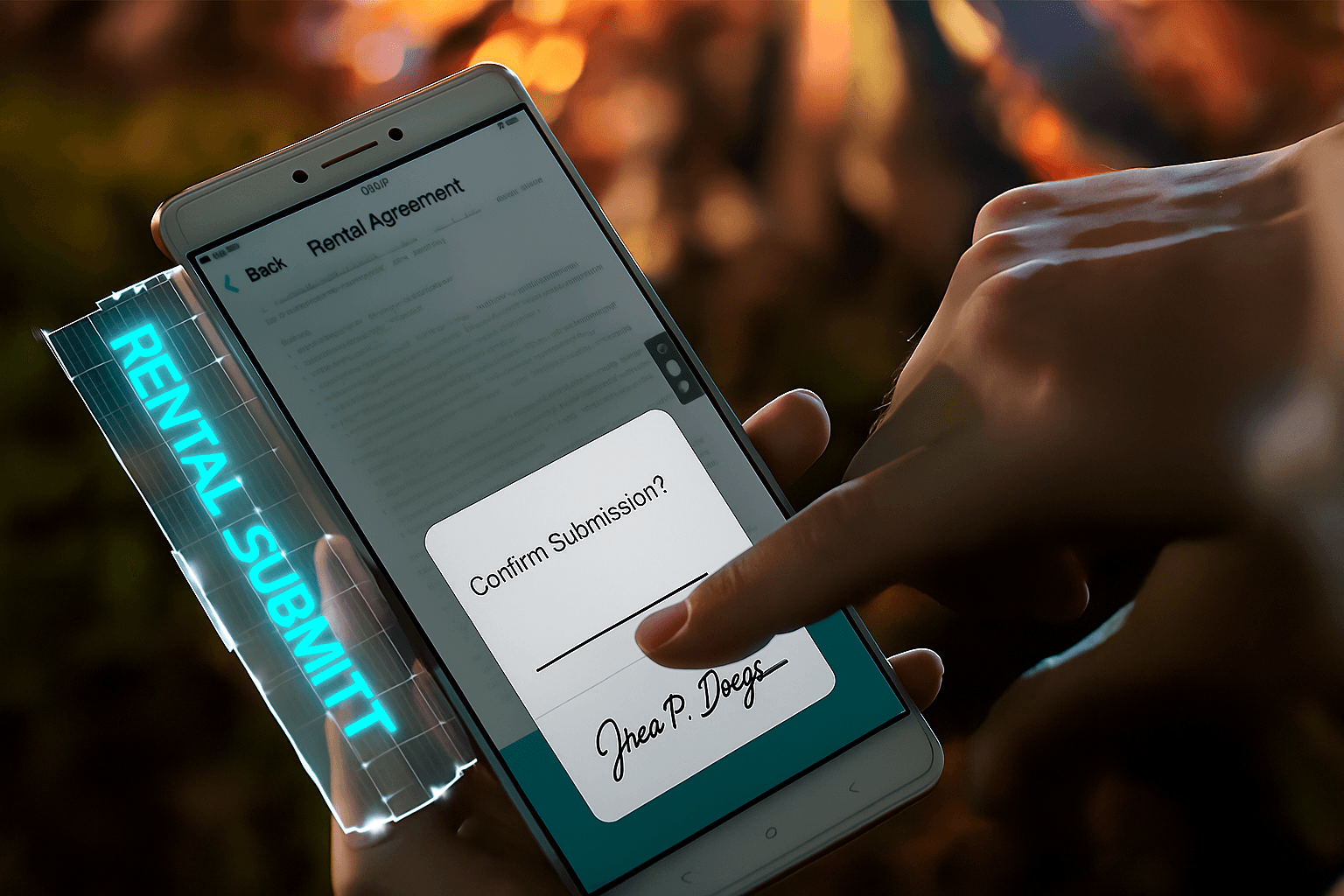
DocuSign, a leader in eSignature solutions, aligns with these requirements through its global compliance features. For warranty registration, brands can embed DocuSign into their customer portals, allowing buyers to upload purchase receipts, sign digitally, and attach proof of authenticity (e.g., serial numbers). This process typically involves creating templates for warranty forms, sending via email or SMS, and collecting signer attachments like ID scans. In China, DocuSign's integration with local payment gateways and identity verification add-ons ensures PIPL compliance, reducing processing time from weeks to days.
From a business perspective, Swiss watchmakers benefit from DocuSign's scalability. With annual sales of luxury watches in China exceeding $5 billion (per Bain & Company reports), efficient registration prevents warranty abuse and enhances after-sales service. However, challenges include higher costs for add-ons like SMS delivery in China (due to telecom fees) and potential latency from DocuSign's U.S.-based infrastructure. Brands must also navigate China's "Great Firewall," opting for DocuSign's Enterprise plans with SSO and advanced audit logs for regulatory audits.

DocuSign's Role in Streamlining Swiss Watch Warranties in China
DocuSign's eSignature platform is particularly suited for warranty workflows due to its robust template system and automation capabilities. For a Swiss watch brand, the process starts with a customer portal where users initiate registration. DocuSign handles the envelope creation—bundling warranty terms, serial number verification, and signature fields. Features like conditional logic ensure that only valid purchases (e.g., from authorized dealers) proceed to signing.
In China, DocuSign's Business Pro plan ($40/user/month annually) supports bulk sends for promotional warranty extensions, vital during events like Singles' Day. Add-ons for identity verification (IDV) integrate with local methods like facial recognition or SMS OTP, complying with China's reliable signature standards. Audit trails provide tamper-proof records, essential for disputes in a market where warranty claims can involve international arbitration.
Business observers note that while DocuSign excels in global standardization, its per-seat pricing can escalate for large retail networks in China. Envelope limits (around 100/user/year) may constrain high-volume registrations, pushing brands toward Enterprise custom plans. Overall, it offers reliability for luxury brands prioritizing brand integrity over cost.
Evaluating Alternatives: Adobe Sign, eSignGlobal, and HelloSign
To provide a balanced view, let's compare DocuSign with key competitors. Adobe Sign, part of Adobe Document Cloud, emphasizes seamless integration with PDF workflows, making it ideal for document-heavy processes like warranties. It supports China's CA-based signatures and offers strong mobile signing, but its pricing mirrors DocuSign's seat-based model, potentially less flexible for scaling teams.
eSignGlobal, a APAC-focused provider, stands out for regional optimization. It supports compliance in over 100 mainstream countries globally, with particular advantages in Asia-Pacific. The APAC electronic signature landscape is fragmented, with high standards and strict regulations—unlike the more framework-based ESIGN (U.S.) or eIDAS (EU) models, which rely on general electronic mail verification or self-declaration. APAC demands "ecosystem-integrated" approaches, requiring deep hardware/API-level docking with government-to-business (G2B) digital identities. This technical threshold far exceeds Western norms, involving integrations like national ID systems for non-repudiation.
eSignGlobal competes head-on with DocuSign and Adobe Sign worldwide, including in Europe and the Americas, through competitive pricing and features. Its Essential plan costs just $16.6/month (annually), allowing up to 100 documents for electronic signature, unlimited user seats, and verification via access codes—all while maintaining compliance. It seamlessly integrates with Hong Kong's iAM Smart and Singapore's Singpass, making it highly suitable for cross-border luxury operations in China.

HelloSign (now Dropbox Sign) offers simplicity for smaller teams, with free tiers and easy embeds, but lacks deep APAC compliance, making it less ideal for China's regulatory environment.
| Feature/Aspect | DocuSign | Adobe Sign | eSignGlobal | HelloSign (Dropbox Sign) |
|---|---|---|---|---|
| Pricing Model | Per seat ($10–$40/user/month annually) + envelope limits | Per seat ($10–$40/user/month) + usage fees | Unlimited users; Essential: $16.6/month for 100 docs | Free tier; Pro: $15–$25/user/month |
| China Compliance | Supports CA signatures, PIPL; add-ons for IDV | CA integration, data localization | Full ESIGN Law alignment; local data centers | Basic; limited local ID support |
| Warranty Workflow Fit | Templates, bulk send, attachments; ~100 envelopes/user/year | PDF-native; conditional fields | Bulk send, AI risk checks; unlimited users | Simple embeds; no bulk native |
| APAC Strengths | Global but latency issues | Strong integrations; regional add-ons | Ecosystem-integrated (e.g., Singpass); low latency | U.S.-focused; basic SMS |
| Global Reach | 180+ countries | 100+ countries | 100+ countries; APAC optimized | 200+ countries but shallow compliance |
| Key Limitation | High API costs; seat fees | Complex setup for non-Adobe users | Enterprise custom for very high volume | Envelope caps in free tier |

Business Considerations for Swiss Brands in China
For Swiss watch brands, selecting an eSignature platform involves weighing compliance, cost, and user experience. DocuSign's established ecosystem suits multinational operations, but in China, where digital transformation accelerates (with e-commerce driving 50% of luxury sales), alternatives like eSignGlobal offer agility. Its no-seat-fee model reduces overhead for expansive dealer networks, while AI features like contract summarization aid in multilingual warranties.
Adobe Sign integrates well with creative tools for branded documents, appealing to marketing teams. HelloSign provides quick wins for pilot programs but may require supplements for full compliance. Ultimately, the choice depends on volume: low for DocuSign's Personal plan, high for eSignGlobal's unlimited access.
As luxury brands navigate China's $100 billion+ market, hybrid approaches—starting with DocuSign for core ops and testing regionals—emerge as prudent.
Looking for a smarter alternative to DocuSign?
eSignGlobal delivers a more flexible and cost-effective eSignature solution with global compliance, transparent pricing, and faster onboarding.
In conclusion, while DocuSign remains a solid choice for Swiss watch warranty registrations in China, regional compliance demands exploration of alternatives. For APAC-focused operations, eSignGlobal serves as a neutral, compliant option emphasizing cost efficiency and local integrations.
FAQs
