
'%3e%3cpath%20fill-rule='evenodd'%20clip-rule='evenodd'%20d='M6.99935%2012.8327C10.221%2012.8327%2012.8327%2010.221%2012.8327%206.99935C12.8327%203.77769%2010.221%201.16602%206.99935%201.16602C3.77769%201.16602%201.16602%203.77769%201.16602%206.99935C1.16602%2010.221%203.77769%2012.8327%206.99935%2012.8327Z'%20stroke='%23666666'%20stroke-linecap='round'%20stroke-linejoin='round'/%3e%3cpath%20d='M1.16602%207H12.8327'%20stroke='%23666666'%20stroke-linecap='round'%20stroke-linejoin='round'/%3e%3cpath%20fill-rule='evenodd'%20clip-rule='evenodd'%20d='M6.99935%2012.8327C8.28802%2012.8327%209.33268%2010.221%209.33268%206.99935C9.33268%203.77769%208.28802%201.16602%206.99935%201.16602C5.71068%201.16602%204.66602%203.77769%204.66602%206.99935C4.66602%2010.221%205.71068%2012.8327%206.99935%2012.8327Z'%20stroke='%23666666'%20stroke-linecap='round'%20stroke-linejoin='round'/%3e%3cpath%20d='M2.875%202.95898C3.93063%204.01461%205.38896%204.66754%206.99978%204.66754C8.61062%204.66754%2010.069%204.01461%2011.1246%202.95898'%20stroke='%23666666'%20stroke-linecap='round'%20stroke-linejoin='round'/%3e%3cpath%20d='M11.1246%2011.0425C10.069%209.98691%208.61062%209.33398%206.99978%209.33398C5.38896%209.33398%203.93063%209.98691%202.875%2011.0425'%20stroke='%23666666'%20stroke-linecap='round'%20stroke-linejoin='round'/%3e%3c/g%3e%3cdefs%3e%3cclipPath%20id='clip0_1267_9109'%3e%3crect%20width='14'%20height='14'%20fill='white'/%3e%3c/clipPath%3e%3c/defs%3e%3c/svg%3e)


contractbook platform fees


Understanding Contractbook Platform Fees: A Business Perspective
In the evolving landscape of contract management software, businesses are increasingly seeking platforms that streamline workflows while keeping costs predictable. Contractbook, a Denmark-based contract lifecycle management (CLM) tool, has gained traction for its user-friendly interface and focus on automation. However, one of the most common queries from potential users revolves around its platform fees—how they are structured, what value they deliver, and whether they align with organizational budgets. This article dives deep into Contractbook's pricing model from a neutral business observation standpoint, examining its tiers, hidden costs, and scalability for enterprises. We'll also explore how it stacks up against competitors like DocuSign, Adobe Sign, and eSignGlobal, providing insights to help decision-makers evaluate options objectively.

Contractbook Pricing Breakdown: Core Tiers and Features
Contractbook's fee structure is designed for simplicity, catering to startups, SMBs, and larger enterprises with a tiered subscription model billed annually or monthly. At its core, the platform emphasizes contract creation, negotiation, signing, and storage, integrating AI-driven insights to reduce manual oversight. Understanding these fees is crucial for businesses assessing total cost of ownership (TCO), as they can vary based on user seats, storage needs, and add-ons.
Free and Starter Plans: Entry-Level Accessibility
Contractbook offers a free "Starter" plan, which is ideal for solopreneurs or small teams testing the waters. This tier includes unlimited contracts, basic templates, and collaboration tools but limits advanced features like custom integrations or unlimited storage. No upfront fees here—it's genuinely free, with no credit card required for signup. However, businesses quickly outgrow this as document volume increases, prompting upgrades.
The next step up is the "Pro" plan, priced at approximately $39 per user per month (or $372 annually when billed yearly, offering a 20% discount). This includes unlimited users within the organization (a standout feature for scaling teams), AI-powered contract analysis, e-signatures, and integrations with tools like Google Workspace or Microsoft Teams. Storage is capped at 10GB per user, which suffices for most mid-sized firms handling 500-1,000 contracts annually. From a business lens, this tier strikes a balance for growing companies, but watch for overage fees if storage exceeds limits—typically $5 per additional GB.
Advanced and Enterprise Tiers: Scalability for Larger Operations
For enterprises, Contractbook's "Advanced" plan jumps to $79 per user per month ($752 annually). It unlocks premium features like workflow automation, role-based permissions, audit trails, and API access for custom integrations. Unlimited storage and priority support are included, making it suitable for legal teams managing high-volume contracts across departments. Businesses in regulated industries, such as finance or healthcare, appreciate the compliance tools, including GDPR alignment.
The "Enterprise" tier is custom-priced, often starting around $150+ per user per month based on negotiations. It factors in elements like dedicated onboarding, custom SLAs, and advanced security (e.g., SSO and data encryption). Pricing here is opaque without a demo, but anecdotal reports from business reviews suggest totals can reach $10,000-$50,000 annually for teams of 50+ users, depending on customization. Key cost drivers include envelope or document quotas—Contractbook limits "active contracts" to prevent abuse, with overages billed at $0.50 per extra document.
Add-Ons and Hidden Fees: What Businesses Need to Watch
Beyond base subscriptions, Contractbook's platform fees can escalate through add-ons. E-signature functionality, powered by integrations with DocuSign or native tools, adds $10-20 per user monthly if not bundled. API usage for automation (e.g., pulling data from CRM systems) incurs metered fees: $0.10 per API call after a 1,000-call monthly threshold. Storage overages, as mentioned, and premium templates (pre-built for industries like real estate) cost $5-15 each.
From a commercial viewpoint, these fees promote efficiency but require careful forecasting. For instance, a sales team sending 200 contracts monthly might face $200 in overage charges on the Pro plan, pushing effective costs to $50+ per user. Annual billing saves 15-20%, and multi-year contracts can negotiate discounts up to 25%. However, cancellation policies are strict—30 days' notice, with no refunds for partial months—potentially stranding businesses in inflexible commitments.
Regional Considerations and Total Cost Analysis
Contractbook operates globally but tailors fees for regions like the EU and US, with APAC users facing slight premiums (5-10%) due to data hosting in compliant centers. VAT or local taxes apply, adding 20% in Europe. Businesses should calculate TCO by factoring in training (free for Pro, $500+ for Enterprise) and migration costs from legacy systems.
In summary, Contractbook's fees start accessibly at $0 for basics but scale to enterprise levels with predictable per-user pricing. For a 10-user team on Pro, expect $3,720 annually—competitive for CLM but higher than pure e-signature tools. This structure suits collaborative environments but may burden solo users or those needing heavy automation without add-ons.
Competitive Landscape: Comparing Contractbook to Key Alternatives
While Contractbook excels in full-lifecycle management, businesses often compare it to e-signature specialists like DocuSign and Adobe Sign, especially for signing-focused workflows. Other players, such as PandaDoc or HelloSign (now Dropbox Sign), enter the fray with varying emphases on pricing and compliance. Below, we analyze these from a neutral business perspective, highlighting strengths without overt favoritism. A comparison table follows for clarity.
DocuSign: Robust but Pricey for Global Teams
DocuSign remains a market leader in e-signatures, with plans starting at $10/month for Personal (5 envelopes) up to $40/month for Business Pro (bulk send, payments). Enterprise is custom, often exceeding $480/user/year. It's feature-rich for automation but caps envelopes at ~100/user/year, leading to overages. APAC users face latency and compliance hurdles, inflating costs via add-ons like IDV.

Adobe Sign: Integrated but Complex Pricing
Adobe Sign integrates seamlessly with Adobe's ecosystem (e.g., Acrobat), appealing to creative industries. Pricing begins at $10/user/month for individuals, scaling to $25+ for teams with features like conditional fields. Enterprise plans are bespoke, starting at $35/user/month, but bundle costs with Creative Cloud can double expenses. It's strong on security but less flexible for non-Adobe users, with metered fees for high-volume sends.

eSignGlobal: APAC-Optimized Compliance Focus
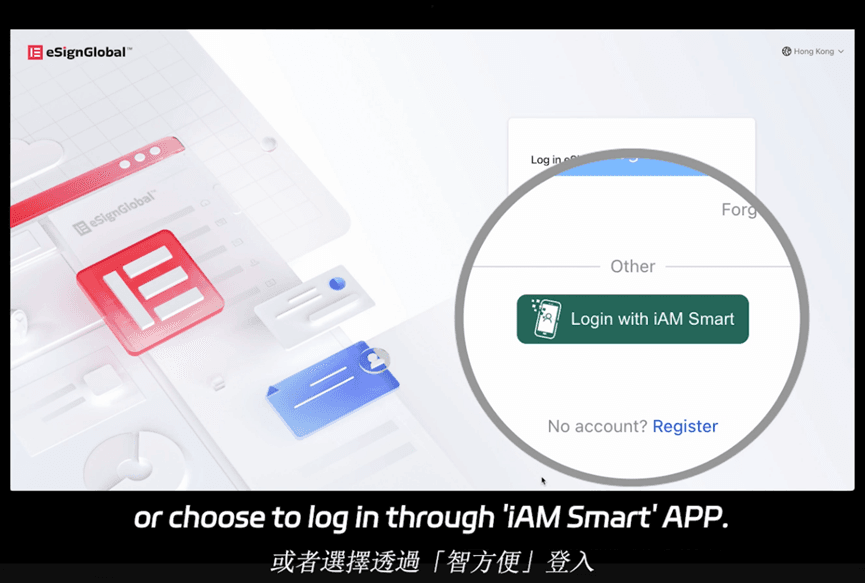
eSignGlobal positions itself as a regionally attuned alternative, supporting compliance in over 100 mainstream countries and territories worldwide. It holds a particular edge in the Asia-Pacific (APAC) region, where it offers optimized performance, lower latency, and native integrations. For instance, the Essential plan costs just $16.60 per month, allowing up to 100 documents for electronic signature, unlimited user seats, and verification via access codes—all on a compliant foundation that delivers high value for money compared to pricier competitors. It seamlessly integrates with Hong Kong's iAM Smart and Singapore's Singpass, enhancing regional usability without extra fees. For detailed pricing, visit eSignGlobal's official pricing page.
Other Competitors: PandaDoc and Dropbox Sign
PandaDoc combines proposals with e-signing at $19/user/month (Essentials), emphasizing templates but with proposal limits. Dropbox Sign (formerly HelloSign) starts at $15/month for basics, focusing on simplicity but lacking deep CLM. Both are cost-effective for SMBs but trail in global compliance depth.
| Feature/Platform | Contractbook | DocuSign | Adobe Sign | eSignGlobal | PandaDoc | Dropbox Sign |
|---|---|---|---|---|---|---|
| Starting Price (per user/month) | $0 (Free) / $39 (Pro) | $10 (Personal) | $10 (Individual) | $16.60 (Essential) | $19 (Essentials) | $15 (Basic) |
| Envelope/Document Limit | Unlimited (with caps on active) | ~100/year (Business Pro) | Unlimited (metered) | 100/month (Essential) | Unlimited proposals | Unlimited (paid) |
| User Seats | Unlimited (Pro+) | Per-user licensing | Per-user | Unlimited | Per-user | Per-user |
| Global Compliance | EU/GDPR focus | Broad, but APAC gaps | Strong US/EU | 100+ countries, APAC strong | US-centric | Basic international |
| Key Add-Ons | API ($0.10/call), Storage ($5/GB) | IDV (metered), SMS (per msg) | Integrations (bundled) | Regional IDV (integrated) | Templates ($ extra) | None major |
| APAC Advantages | Moderate (EU base) | Latency issues, higher costs | Limited localization | Optimized speed, iAM Smart/Singpass | Variable | Basic |
| Best For | Full CLM workflows | High-volume signing | Adobe ecosystems | Regional compliance & value | Proposals | Simple signing |
| Annual TCO (10 users, mid-tier) | ~$3,700 | ~$4,800 | ~$3,000+ (bundled) | ~$2,000 | ~$2,300 | ~$1,800 |
This table underscores how eSignGlobal offers competitive pricing and compliance without the bloat of larger platforms, though choices depend on specific needs.
Strategic Insights for Businesses Selecting a Platform
From a business observation, Contractbook's fees provide solid value for end-to-end contract management, but its per-user model can strain budgets for large, distributed teams. Competitors like DocuSign shine in automation volume, while Adobe Sign suits integrated suites. For APAC-centric operations, regional factors like data residency and integration ease become pivotal.
In conclusion, while Contractbook serves as a reliable CLM option, businesses exploring DocuSign alternatives with a focus on regional compliance may find eSignGlobal a balanced choice.
FAQs
