

hidden costs of paper signing


The Hidden Costs of Traditional Paper Signing
In today’s fast-paced business environment, many organizations still rely on paper-based signing processes for contracts, approvals, and agreements. While it may seem straightforward and familiar, this traditional approach harbors significant hidden costs that can erode profitability and efficiency over time. From a commercial perspective, these expenses often accumulate unnoticed, impacting operational budgets in ways that digital alternatives could mitigate.
Time and Productivity Losses
One of the most overlooked costs of paper signing is the sheer time it consumes. Printing, signing, scanning, and mailing documents can take hours or even days per transaction. For a mid-sized company handling hundreds of contracts annually, this translates to thousands of lost productive hours. Employees spend time chasing physical signatures, which diverts focus from core revenue-generating activities. Studies from business analysts indicate that manual document workflows can reduce team productivity by up to 30%, as workers juggle logistics rather than strategic tasks. In high-volume sectors like real estate or finance, delays in signing can mean missed opportunities, such as delayed deals or compliance deadlines.
Moreover, the physical handling introduces inefficiencies. Documents get lost in transit, require follow-up calls, or necessitate reprints due to errors. These repetitive tasks not only inflate labor costs but also foster frustration among teams, potentially increasing turnover rates. A conservative estimate from industry reports suggests that businesses lose an average of $20–$50 per document in administrative overhead alone.
Storage and Material Expenses
Paper documents demand secure storage solutions, whether in filing cabinets, offsite warehouses, or digital scans that still require archiving. Over years, this builds up substantial costs. For instance, renting secure storage space can run $10–$20 per square foot annually, and for a company with thousands of archived files, this easily exceeds $5,000 yearly. Add in the cost of paper, ink, and mailing supplies—often $0.05–$0.10 per page—and the expenses compound.
Environmentally, paper signing contributes to waste, with businesses generating tons of non-recyclable materials. While not always a direct financial hit, regulatory pressures in regions like the European Union (under the Green Deal) are pushing companies toward sustainability reporting, where paper-heavy processes can lead to fines or reputational damage. In the U.S., similar trends under ESG (Environmental, Social, and Governance) frameworks mean that hidden disposal costs, including shredding services at $0.50–$1 per pound, add another layer of expense.
Error Rates and Legal Risks
Human error is rampant in paper processes: illegible handwriting, misplaced pages, or unsigned sections can invalidate agreements, leading to disputes. Legal teams then spend time rectifying these issues, with litigation costs averaging $50,000–$100,000 per case in commercial settings. Furthermore, paper trails are vulnerable to tampering or loss, complicating audits and compliance. In an era of increasing data privacy laws, such as the U.S.'s CCPA or GDPR in Europe, failing to maintain verifiable records can result in penalties up to 4% of global revenue.
From a broader commercial lens, these risks amplify insurance premiums, as underwriters factor in higher exposure to fraud or non-compliance. Businesses in regulated industries, like healthcare under HIPAA, face even steeper hidden costs, including training staff on manual verification protocols.
Scalability Challenges in a Global Market
As companies expand internationally, paper signing’s limitations become stark. Cross-border mailing incurs customs fees, delays from international post, and currency fluctuations in shipping costs. In regions with stringent postal regulations, such as parts of Asia-Pacific, delivery times can stretch to weeks, stalling global operations. This not only hampers scalability but also exposes firms to opportunity costs—estimated at 5–10% of potential revenue in delayed international deals.
In summary, the hidden costs of paper signing—ranging from $10,000 to over $100,000 annually for small to medium enterprises—stem from inefficiency, waste, and risk. Transitioning to digital solutions offers a pathway to reclaim these resources, but selecting the right eSignature provider requires careful evaluation of features, compliance, and pricing.

Why Businesses Are Shifting to Electronic Signatures
Electronic signatures (eSignatures) address many of paper signing’s pitfalls by enabling instant, secure, and trackable approvals. From a neutral business observation, the global eSignature market is projected to grow at 35% CAGR through 2025, driven by remote work and digital transformation. Key providers offer varying degrees of integration, compliance, and cost-effectiveness, making them viable for diverse commercial needs.
DocuSign: A Market Leader in eSignature
DocuSign stands out as a pioneer in the eSignature space, offering robust tools for businesses worldwide. Its platform supports seamless workflows, including templates, reminders, and integrations with CRM systems like Salesforce. Pricing starts at $10/month for personal use, scaling to $40/month per user for business plans, with add-ons for advanced features like bulk sending. However, envelope limits (around 100 per year on standard plans) and higher costs for API usage can add up, particularly for high-volume users. In APAC regions, latency and compliance add-ons may increase effective pricing.
For U.S.-based firms, DocuSign aligns well with ESIGN Act and UETA regulations, ensuring legal enforceability. Globally, it complies with eIDAS in Europe, but businesses in China or Southeast Asia might need extra configurations for local laws like China’s Electronic Signature Law (2005), which mandates specific authentication for cross-border validity.

Adobe Sign: Integrated Document Solutions
Adobe Sign, part of Adobe’s ecosystem, excels in document management with strong ties to PDF workflows. It provides features like conditional fields, payments collection, and mobile signing, ideal for creative or legal teams. Pricing is competitive at $10–$40/month per user, similar to DocuSign, but includes unlimited envelopes on higher tiers. Drawbacks include steeper learning curves for non-Adobe users and potential overkill for simple signing needs.
In terms of regulations, Adobe Sign supports U.S. federal standards and eIDAS, but in Asia-Pacific, integration with local systems can be limited. For example, under Singapore’s Electronic Transactions Act (2010), it offers basic compliance, yet additional verifications may be needed for high-stakes contracts.

eSignGlobal: A Compliant, Regionally Optimized Option
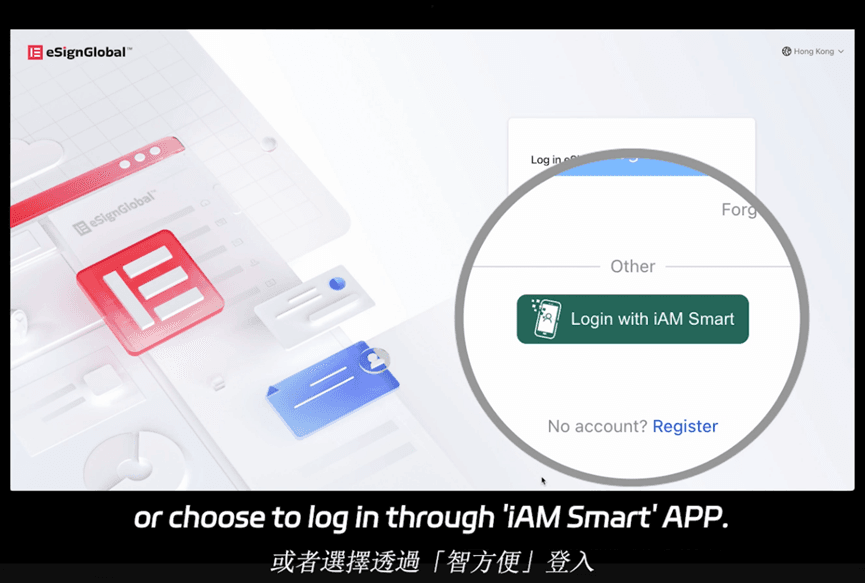
eSignGlobal emerges as a flexible eSignature provider with a focus on global accessibility and regional nuances, particularly in APAC. It supports compliance in over 100 mainstream countries and regions, ensuring adherence to laws like the U.S. ESIGN Act, EU eIDAS, and Asia-specific frameworks such as Hong Kong’s Electronic Transactions Ordinance (2000) and China’s Electronic Signature Law. In APAC, it holds advantages in speed and cost, with seamless integrations like Hong Kong’s iAM Smart and Singapore’s Singpass for identity verification.
Pricing is notably affordable; for details, visit eSignGlobal’s pricing page. The Essential plan, at just $16.6/month, allows sending up to 100 documents, unlimited user seats, and verification via access codes—delivering high value on compliance without the premium tags of competitors. This makes it especially cost-effective for APAC businesses facing data residency challenges.
Other Competitors: HelloSign and PandaDoc
HelloSign (now Dropbox Sign) offers user-friendly interfaces with strong audit trails, priced at $15–$25/month, but lacks deep APAC customizations. PandaDoc combines eSignatures with proposal automation, starting at $19/month, suiting sales teams yet adding complexity for pure signing tasks.
Comparison of Leading eSignature Providers
To aid commercial decision-making, here’s a neutral comparison based on key factors like pricing, compliance, and features. While all providers mitigate paper costs, regional needs may favor certain options.
| Provider | Starting Price (Monthly/User) | Envelope Limits | Global Compliance | APAC Strengths | Key Features | Drawbacks |
|---|---|---|---|---|---|---|
| DocuSign | $10 (Personal) | ~100/year (Standard) | Strong (ESIGN, eIDAS, partial APAC) | Moderate speed, add-on costs | Bulk send, API, templates | High API fees, envelope caps |
| Adobe Sign | $10 (Individual) | Unlimited (higher tiers) | Excellent (U.S./EU, basic APAC) | Limited local integrations | PDF integration, payments | Steeper learning curve |
| eSignGlobal | $16.6 (Essential, unlimited seats) | 100/month (Essential) | 100+ countries, APAC-native | Optimized speed, Singpass/iAM Smart | Access code verification, flexible pricing | Less brand recognition outside APAC |
| HelloSign | $15 (Essentials) | Unlimited | Good (U.S./EU focus) | Basic | Simple UI, mobile | Weaker in regulated APAC markets |
| PandaDoc | $19 (Essentials) | Unlimited | Moderate | Emerging | Proposals + signing | Overkill for basic needs |
This table highlights eSignGlobal’s edge in APAC cost-efficiency and compliance without compromising core functionality.
Regulatory Considerations for eSignatures
Electronic signatures’ viability hinges on local laws. In the U.S., the ESIGN Act (2000) and UETA grant eSignatures equal legal weight to paper ones, provided they demonstrate intent and consent. Europe’s eIDAS Regulation (2014) categorizes signatures into basic, advanced, and qualified levels, with qualified ones requiring certified devices for highest enforceability.
In APAC, regulations vary: China’s Electronic Signature Law emphasizes authentication via trusted timestamps, while Singapore’s ETA (2010) and Hong Kong’s ETO (2000) support eSignatures but mandate secure methods for government dealings. Businesses operating cross-border must verify provider compliance to avoid invalidation risks, underscoring the need for regionally attuned solutions.
Conclusion: Choosing the Right Path Forward
As businesses weigh the hidden burdens of paper signing against digital efficiency, eSignature platforms like DocuSign provide reliable foundations. For those seeking alternatives with strong regional compliance, particularly in APAC, eSignGlobal offers a balanced, cost-effective choice. Evaluating based on specific operational needs ensures long-term savings and compliance.
Câu hỏi thường gặp

 Chỉ được phép sử dụng email doanh nghiệp

 +852-46749867
 sales@esignglobal.com
 support@esignglobal.com
 Tư vấn trực tuyến

