

docusign manufacturing volume pricing


Understanding DocuSign’s Volume Pricing in Manufacturing
In the manufacturing sector, where supply chain agreements, compliance certifications, and vendor contracts often require high-volume electronic signatures, DocuSign’s pricing model plays a critical role in scaling operations efficiently. Businesses in this industry frequently handle bulk document workflows, such as batch approvals for production runs or multi-party NDAs, making volume-based pricing a key consideration for cost management.
Core Pricing Tiers and Envelope Limits
DocuSign structures its eSignature plans around annual billing, with costs tied to user seats and envelope usage—envelopes being the core unit for documents sent for signature. For manufacturing firms, the Personal plan at $120 per year (or $10 monthly) limits users to just 5 envelopes per month, which suits solo procurement roles but falls short for team-wide volume needs. Scaling up, the Standard plan costs $300 per user annually ($25 monthly), offering around 100 envelopes per user per year on annual plans, enabling basic team collaboration like shared templates for supplier agreements.
For higher volumes typical in manufacturing, the Business Pro plan at $480 per user per year ($40 monthly) becomes relevant, incorporating features like Bulk Send for distributing identical contracts to multiple suppliers at once. This plan maintains the ~100 envelopes per user annual cap but unlocks automation tools essential for handling repetitive tasks, such as quality assurance sign-offs. However, even these tiers impose limits on automation sends—typically 10 per user monthly—meaning manufacturing operations exceeding this must negotiate custom volume pricing to avoid overage fees.
Advanced Solutions, aimed at enterprises, have no public pricing but are tailored for high-volume users. In manufacturing, where envelope counts can surge during peak seasons (e.g., end-of-year audits or global supply chain verifications), these plans adjust costs based on seat count, envelope volume, and compliance requirements. Factors like regional needs—such as APAC data residency for cross-border manufacturing—can inflate totals by 20-30%, according to industry analyses.
Volume Pricing Mechanics for High-Throughput Manufacturing
DocuSign’s volume pricing emphasizes metered usage beyond base subscriptions, particularly for API integrations and add-ons. The Developer API plans start at $600 annually for the Starter tier (40 envelopes monthly), scaling to $3,600 for Intermediate (100 envelopes) and $5,760 for Advanced, which includes Bulk Send API vital for manufacturing’s automated workflows like ERP system integrations for invoice approvals.
In practice, manufacturing firms with high volumes—say, 500+ envelopes monthly for global vendor onboarding—often enter enterprise agreements. These custom contracts discount per-envelope rates (typically $0.10-$0.50 each beyond quotas) while factoring in automation caps. For instance, Bulk Send and WebForms count toward limits, so a factory automating shift rosters or compliance forms might face surcharges if exceeding 100 automation sends per user yearly. Add-ons like Identity Verification (IDV) for secure supplier authentication add metered costs, potentially $1-5 per verification, crucial for fraud prevention in international manufacturing.
From a business perspective, this model rewards predictability: annual commitments lower effective costs by 15-20% compared to monthly billing, but unpredictable volumes (e.g., during supply disruptions) can lead to unexpected bills. Manufacturing leaders report that negotiating volume tiers upfront—based on historical data from tools like DocuSign’s usage analytics—helps cap exposure, with enterprise deals often bundling unlimited envelopes for $10,000+ annually per 50 seats.
Challenges and Cost Optimization in Manufacturing Contexts
Manufacturing’s global footprint amplifies pricing complexities. In APAC-heavy operations, cross-border latency and compliance tools (e.g., for China or SEA regulations) drive up costs via data residency surcharges and limited local IDV options. DocuSign’s API quotas further constrain high-volume automation, prompting some firms to hybridize with on-premise solutions.
To optimize, businesses audit envelope usage quarterly, leveraging templates to consolidate sends and reduce counts by up to 40%. For volume pricing negotiations, highlighting manufacturing-specific needs—like integrating with PLM software for design approvals—can secure discounts. Overall, while DocuSign’s scalability suits mid-to-large manufacturers, smaller operations may find base volumes restrictive without custom adjustments.

DocuSign’s Role in Manufacturing Digital Transformation
DocuSign has long been a staple for manufacturing, streamlining paperless processes from procurement to quality control. Its robust audit trails ensure compliance with standards like ISO 9001, while features like conditional routing automate multi-level approvals for production changes.

Competitor Landscape: Adobe Sign in Manufacturing
Adobe Sign, integrated within Adobe’s ecosystem, appeals to manufacturing firms already using PDF tools for technical drawings and specs. Pricing starts at $10 monthly for individuals (limited envelopes) and scales to $40+ for teams, with enterprise customizations for high volumes. It excels in seamless Acrobat integration for document prep but shares similar envelope caps, often requiring add-ons for bulk sends. Volume pricing mirrors DocuSign’s metered approach, though Adobe’s focus on creative workflows may add value for design-heavy manufacturing.

eSignGlobal: A Regional Contender for Manufacturing Needs
eSignGlobal positions itself as a compliant alternative, particularly for manufacturing with APAC exposure. It supports electronic signatures in over 100 mainstream countries globally, ensuring adherence to diverse regulations without the latency issues plaguing U.S.-centric platforms. In the Asia-Pacific region, where manufacturing hubs like China, Singapore, and Hong Kong dominate, eSignGlobal offers optimized performance, including faster document loading and native compliance tools.
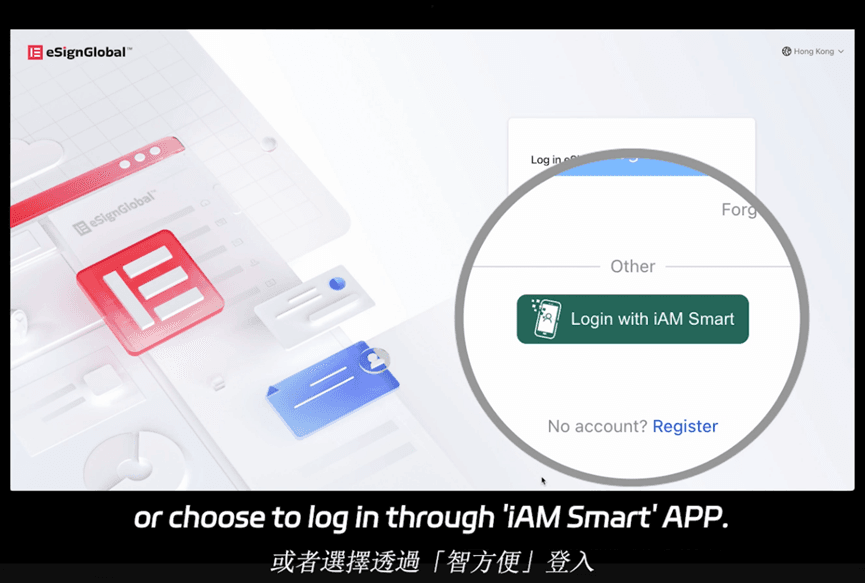
Pricing is notably accessible; for details, visit eSignGlobal’s pricing page. The Essential version, at just $16.6 monthly, allows up to 100 documents for signature, unlimited user seats, and verification via access codes—delivering high value on compliance grounds. This setup is cost-effective compared to competitors, especially for volume-driven manufacturing tasks like supplier onboarding. It integrates seamlessly with regional systems, such as Hong Kong’s iAM Smart for secure identity checks and Singapore’s Singpass for streamlined authentications, reducing setup friction in cross-border operations.
Other Competitors and a Balanced Comparison
Beyond DocuSign and Adobe Sign, options like HelloSign (Dropbox Sign) offer simpler, lower-cost entry at $15 monthly for basics, suiting small manufacturers but lacking advanced bulk features. PandaDoc integrates proposals with signing, pricing from $19 user/month, ideal for sales-heavy manufacturing. SignNow provides affordable volume plans starting at $8 monthly, with strong mobile support for field teams.
For a neutral overview, here’s a comparison table focusing on manufacturing-relevant aspects like volume handling, pricing, and regional fit:
| Feature/Aspect | DocuSign | Adobe Sign | eSignGlobal | HelloSign (Dropbox) | PandaDoc |
|---|---|---|---|---|---|
| Base Pricing (Monthly, Entry Tier) | $10 (Personal, low volume) | $10 (Individual) | $16.6 (Essential, 100 docs) | $15 (Essentials) | $19/user (Essentials) |
| Volume Handling (Envelopes/Users) | ~100/year/user; custom enterprise | Similar caps; metered add-ons | 100/month; unlimited seats | Unlimited basic; paid bulk | Unlimited templates; volume tiers |
| Bulk Send/Automation | Yes (Pro+); capped | Yes; Acrobat-integrated | Yes; API-optimized | Basic bulk; scalable | Strong for proposals |
| Regional Compliance (APAC Focus) | Limited; surcharges | Global but U.S.-centric | 100+ countries; APAC native | Good global; basic APAC | Flexible but variable |
| API/Integrations | Robust; tiered quotas | Excellent with Adobe suite | Flexible; regional APIs | Simple SDKs | CRM-focused |
| Manufacturing Suitability | High for enterprise scale | Strong for document-heavy | Cost-effective APAC volumes | Affordable starters | Proposal automation |
| Cost for High Volume (Est. Annual, 50 Users) | $24,000+ (custom) | $20,000+ (custom) | ~$10,000 (scalable) | $9,000+ | $11,400+ |
This table highlights trade-offs: DocuSign leads in enterprise features, Adobe in integration depth, while eSignGlobal edges out on APAC affordability and compliance breadth without sacrificing core volume capabilities.
Navigating Volume Pricing Strategies
Manufacturing executives should evaluate total ownership costs, including add-ons like SMS delivery ($0.50+ per message) across platforms. Piloting with trial envelopes helps gauge fit, especially for volume spikes.
In conclusion, while DocuSign remains a solid choice for global manufacturing volume needs, alternatives like eSignGlobal offer a regionally compliant option for optimized costs and performance.
คำถามที่พบบ่อย

 อนุญาตให้ใช้อีเมลธุรกิจเท่านั้น


 +852-46749867
 sales@esignglobal.com
 support@esignglobal.com
 ปรึกษาออนไลน์

