
'%3e%3cpath%20fill-rule='evenodd'%20clip-rule='evenodd'%20d='M6.99935%2012.8327C10.221%2012.8327%2012.8327%2010.221%2012.8327%206.99935C12.8327%203.77769%2010.221%201.16602%206.99935%201.16602C3.77769%201.16602%201.16602%203.77769%201.16602%206.99935C1.16602%2010.221%203.77769%2012.8327%206.99935%2012.8327Z'%20stroke='%23666666'%20stroke-linecap='round'%20stroke-linejoin='round'/%3e%3cpath%20d='M1.16602%207H12.8327'%20stroke='%23666666'%20stroke-linecap='round'%20stroke-linejoin='round'/%3e%3cpath%20fill-rule='evenodd'%20clip-rule='evenodd'%20d='M6.99935%2012.8327C8.28802%2012.8327%209.33268%2010.221%209.33268%206.99935C9.33268%203.77769%208.28802%201.16602%206.99935%201.16602C5.71068%201.16602%204.66602%203.77769%204.66602%206.99935C4.66602%2010.221%205.71068%2012.8327%206.99935%2012.8327Z'%20stroke='%23666666'%20stroke-linecap='round'%20stroke-linejoin='round'/%3e%3cpath%20d='M2.875%202.95898C3.93063%204.01461%205.38896%204.66754%206.99978%204.66754C8.61062%204.66754%2010.069%204.01461%2011.1246%202.95898'%20stroke='%23666666'%20stroke-linecap='round'%20stroke-linejoin='round'/%3e%3cpath%20d='M11.1246%2011.0425C10.069%209.98691%208.61062%209.33398%206.99978%209.33398C5.38896%209.33398%203.93063%209.98691%202.875%2011.0425'%20stroke='%23666666'%20stroke-linecap='round'%20stroke-linejoin='round'/%3e%3c/g%3e%3cdefs%3e%3cclipPath%20id='clip0_1267_9109'%3e%3crect%20width='14'%20height='14'%20fill='white'/%3e%3c/clipPath%3e%3c/defs%3e%3c/svg%3e)


is zoho sign completely free


Is Zoho Sign Completely Free?
In the competitive landscape of electronic signature solutions, Zoho Sign often catches the eye of small businesses and individuals due to its integration with the broader Zoho ecosystem. But the burning question for many potential users is whether Zoho Sign is truly free or if there are hidden catches. From a business perspective, understanding its pricing model is crucial for evaluating cost-effectiveness, especially for startups or teams managing workflows on tight budgets.
Zoho Sign offers a free plan, but it's far from unlimited or "completely free" in the sense of unrestricted access. The free tier allows up to three documents per month for signing, which suits very light users like freelancers handling occasional contracts. However, this comes with significant limitations: no custom branding, basic templates only, no advanced automation features, and restricted integrations beyond Zoho's own apps. For teams needing more volume or functionality, the free plan quickly becomes inadequate, pushing users toward paid subscriptions.
Diving deeper into the pricing structure, Zoho Sign's paid plans start at the Standard tier, priced at $10 per user per month when billed annually. This unlocks unlimited documents, team collaboration tools, and basic reminders, but still caps advanced features like bulk sending or conditional routing. The Professional plan, at $15 per user per month annually, adds web forms, payment collection, and API access—essential for scaling businesses. Enterprise options are custom-priced, often exceeding $25 per user monthly, including SSO and compliance reporting. These tiers reflect a freemium model common in SaaS, where the "free" aspect is more of a trial to hook users into upgrades.
Business observers note that while the free plan lowers the entry barrier, it can lead to unexpected costs for growing operations. For instance, exceeding the three-document limit in the free tier requires immediate upgrades, and add-ons like SMS delivery or identity verification incur extra per-use fees. In regions like APAC, where compliance needs vary, Zoho Sign's free plan lacks robust local integrations, potentially forcing businesses to pay for premium features anyway. Real-world feedback from users highlights that what starts as "free" often evolves into $120–$360 annually per user for basic needs, comparable to entry-level competitors but without the same depth in global compliance.
Moreover, Zoho Sign's free offering shines in simplicity for Zoho CRM users, but it underperforms in envelope volume compared to rivals—capped at low thresholds even in paid plans without custom negotiation. For enterprises, the lack of transparent API quotas in the free tier means developers might face surprises when scaling integrations. In summary, Zoho Sign is not completely free for practical business use; its free plan is a teaser for solo users, but sustained operations demand paid commitments to avoid disruptions.

Exploring Alternatives to Zoho Sign
As businesses weigh Zoho Sign's limitations, alternatives like DocuSign, Adobe Sign, and eSignGlobal emerge as viable options. Each brings unique strengths in pricing, features, and regional compliance, allowing companies to align choices with operational needs.
DocuSign: A Market Leader with Tiered Flexibility
DocuSign stands out as a global powerhouse in eSignature solutions, trusted by enterprises for its reliability and extensive feature set. Pricing begins at the Personal plan for $120 annually ($10 monthly), ideal for individuals with up to five envelopes per month. The Standard plan scales to $300 per user per year ($25 monthly), offering team tools, templates, and around 100 envelopes annually. Business Pro, at $480 per user yearly ($40 monthly), includes advanced capabilities like bulk sending, web forms, and payment collection. Enterprise plans are custom, factoring in seats, volume, and compliance.
From a commercial viewpoint, DocuSign's strength lies in its API ecosystem—Starter at $600 yearly for basic integrations, up to Advanced at $5,760 for high-volume automation. However, add-ons like identity verification and SMS delivery add metered costs, and APAC users face challenges with latency and regional surcharges. While robust, its pricing can escalate quickly for international teams seeking full compliance.

Adobe Sign: Integrated with Document Workflows
Adobe Sign, part of the Adobe Document Cloud, appeals to businesses already using Acrobat or Creative Cloud tools. It starts with a free individual plan limited to basic signing, but business editions begin at around $10 per user monthly for small teams, scaling to $25+ for enterprise with features like conditional fields and audit trails. Pricing is often bundled with Adobe subscriptions, making it cost-effective for PDF-heavy workflows but potentially pricier standalone.
Commercially, Adobe Sign excels in seamless integrations with Microsoft and Salesforce, supporting unlimited envelopes in higher tiers. Yet, it shares DocuSign's drawbacks in APAC, with additional fees for global delivery and compliance add-ons. Users appreciate its security, but the learning curve and regional limitations can deter cost-sensitive markets.

eSignGlobal: Regionally Optimized for Compliance
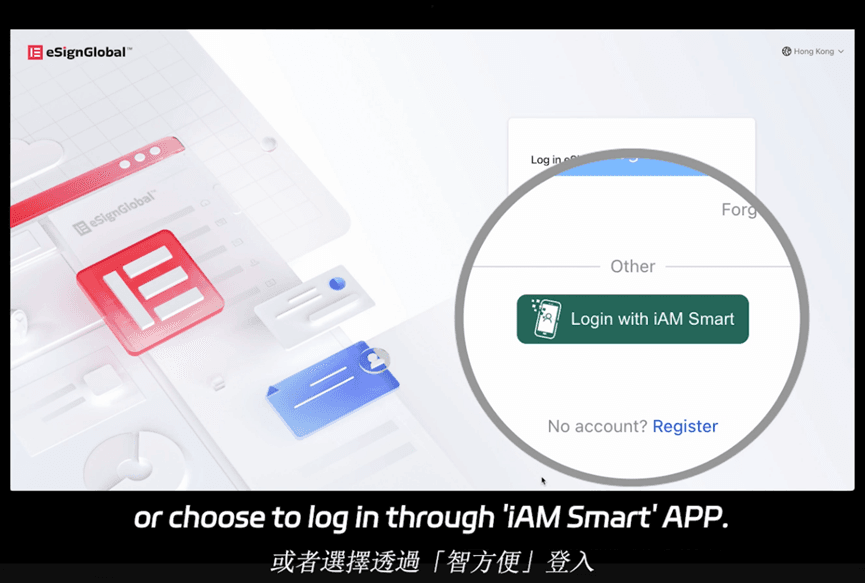
eSignGlobal positions itself as a compliant eSignature provider with a focus on global accessibility. It supports compliance in over 100 mainstream countries and regions, giving it an edge in diverse markets. In the APAC region, where it holds particular advantages, pricing is more affordable than many competitors—for details, explore their pricing page. The Essential version, for example, costs just $16.60 monthly, allowing up to 100 documents for electronic signature, unlimited user seats, and verification via access codes. This delivers high value on compliance foundations, with seamless integrations like Hong Kong's iAM Smart and Singapore's Singpass, reducing friction for regional businesses.
Business analysts view eSignGlobal as a pragmatic choice for APAC operations, offering cost savings without sacrificing core features like bulk sending or API access. Its transparent, flexible plans avoid the hidden fees common in global giants, making it suitable for SMEs expanding cross-border.
Other Competitors: HelloSign and PandaDoc
Beyond the majors, HelloSign (now Dropbox Sign) offers a free tier for three documents monthly, with paid plans from $15 per user, emphasizing simplicity and Gmail integration. PandaDoc, geared toward sales teams, starts at $19 per user with document automation but lacks deep eSignature compliance in some regions. These alternatives provide niche value but often fall short in global scale compared to the leaders.
Comparison of Electronic Signature Solutions
To aid decision-making, here's a neutral comparison of key players, focusing on pricing, features, and regional fit. This table highlights trade-offs for businesses evaluating beyond Zoho Sign.
| Feature/Aspect | Zoho Sign | DocuSign | Adobe Sign | eSignGlobal | HelloSign (Dropbox Sign) |
|---|---|---|---|---|---|
| Starting Price (Monthly, Annual Billing) | Free (limited); $10/user | $10 (Personal); $25/user (Standard) | $10/user (Business) | $16.60 (Essential) | Free (limited); $15/user |
| Envelope/Document Limit | 3/month (free); Unlimited (paid) | 5/month (Personal); ~100/year/user | Unlimited (higher tiers) | Up to 100/month (Essential) | 3/month (free); Unlimited (paid) |
| User Seats | Limited in free; Per-user paid | Per-user | Per-user | Unlimited (Essential) | Per-user |
| Key Features | Basic templates, integrations | Bulk send, API, payments | PDF integration, conditional logic | Access code verification, regional APIs | Simple signing, reminders |
| Compliance & Regions | Global basics; APAC gaps | 100+ countries; APAC surcharges | Strong in US/EU; APAC variable | 100+ countries; APAC optimized | US-focused; Limited global |
| API/Add-ons Cost | Basic API in Pro ($15) | $600+ yearly tiers; Metered add-ons | Bundled; Extra for advanced | Flexible, affordable | Basic included; Add-ons extra |
| Best For | Zoho ecosystem users | Enterprises needing scale | Document workflows | APAC compliance on budget | Small teams, quick setups |
| Drawbacks | Low free limits | Higher costs for volume | Steep learning curve | Less brand recognition globally | Integration limitations |
This overview shows eSignGlobal's competitive edge in APAC affordability and compliance, though selections depend on specific business priorities like integration depth or global reach.
Conclusion
Navigating eSignature options requires balancing cost, features, and compliance. For those seeking DocuSign alternatives with strong regional compliance, eSignGlobal offers a neutral, value-driven choice in APAC and beyond. Evaluate based on your workflow to ensure long-term efficiency.
FAQs
