
'%3e%3cpath%20fill-rule='evenodd'%20clip-rule='evenodd'%20d='M6.99935%2012.8327C10.221%2012.8327%2012.8327%2010.221%2012.8327%206.99935C12.8327%203.77769%2010.221%201.16602%206.99935%201.16602C3.77769%201.16602%201.16602%203.77769%201.16602%206.99935C1.16602%2010.221%203.77769%2012.8327%206.99935%2012.8327Z'%20stroke='%23666666'%20stroke-linecap='round'%20stroke-linejoin='round'/%3e%3cpath%20d='M1.16602%207H12.8327'%20stroke='%23666666'%20stroke-linecap='round'%20stroke-linejoin='round'/%3e%3cpath%20fill-rule='evenodd'%20clip-rule='evenodd'%20d='M6.99935%2012.8327C8.28802%2012.8327%209.33268%2010.221%209.33268%206.99935C9.33268%203.77769%208.28802%201.16602%206.99935%201.16602C5.71068%201.16602%204.66602%203.77769%204.66602%206.99935C4.66602%2010.221%205.71068%2012.8327%206.99935%2012.8327Z'%20stroke='%23666666'%20stroke-linecap='round'%20stroke-linejoin='round'/%3e%3cpath%20d='M2.875%202.95898C3.93063%204.01461%205.38896%204.66754%206.99978%204.66754C8.61062%204.66754%2010.069%204.01461%2011.1246%202.95898'%20stroke='%23666666'%20stroke-linecap='round'%20stroke-linejoin='round'/%3e%3cpath%20d='M11.1246%2011.0425C10.069%209.98691%208.61062%209.33398%206.99978%209.33398C5.38896%209.33398%203.93063%209.98691%202.875%2011.0425'%20stroke='%23666666'%20stroke-linecap='round'%20stroke-linejoin='round'/%3e%3c/g%3e%3cdefs%3e%3cclipPath%20id='clip0_1267_9109'%3e%3crect%20width='14'%20height='14'%20fill='white'/%3e%3c/clipPath%3e%3c/defs%3e%3c/svg%3e)


Why are some e-signature services priced several times higher than others?


Why are some e-signature services priced several times higher than others?
In the digital age, electronic signature services have become indispensable for businesses streamlining contracts, approvals, and transactions. Yet, a glance at the market reveals stark pricing differences: some platforms charge just a fraction of what others demand for seemingly similar features. This disparity isn't random—it's rooted in factors like feature depth, compliance standards, scalability, and target markets. From a business perspective, understanding these elements helps organizations make informed decisions without overpaying for unnecessary premiums.

Understanding Pricing Disparities in e-Signature Services
Core Factors Driving Higher Costs
At the heart of why some e-signature services cost several times more lies a combination of technological sophistication and operational overheads. Premium providers often invest heavily in advanced security protocols, such as multi-factor authentication, blockchain-level audit trails, and AI-driven fraud detection. For instance, services catering to regulated industries like finance or healthcare must comply with standards such as eIDAS in Europe, ESIGN Act in the US, or even region-specific laws in Asia-Pacific (APAC). Achieving and maintaining these certifications involves ongoing legal audits, data center redundancies, and integrations with global identity providers—expenses that trickle down to users through higher subscription fees.
Scalability plays another pivotal role. Enterprise-grade platforms support unlimited users, high-volume envelope processing (where an "envelope" refers to a document package for signing), and API integrations for seamless workflow automation. A basic service might limit you to 5-10 documents per month for under $10, while a robust one handles thousands, justifying prices that climb to $40+ per user monthly. Add-ons like identity verification (e.g., biometric checks or SMS delivery) are often metered, turning fixed costs into variable ones based on usage. In 2025, with rising cyber threats, providers embedding these as core features command premiums—sometimes 3-5x higher than stripped-down alternatives.
Market positioning also inflates prices. Global leaders target multinational corporations, bundling premium support, SSO (Single Sign-On), and governance tools that smaller firms rarely need. This leads to opaque pricing models where base plans start affordably but balloon with "unlimited" envelopes that still cap automation sends (e.g., bulk or API-driven) at 100 per year per user. Regional challenges exacerbate this: cross-border latency in APAC can require specialized infrastructure, hiking costs for services not optimized locally. Conversely, niche or regional players focus on cost-efficiency, offering similar compliance at lower rates by avoiding global bloat.
The Impact of Envelope Quotas and Add-Ons
Envelope limits are a subtle yet significant price driver. Entry-level plans might offer 5 envelopes monthly for $10, scaling to 100+ for $40, but "unlimited" tiers often hide restrictions on automated sends—critical for sales teams or HR departments. API access, essential for developers integrating e-signing into CRMs like Salesforce, adds another layer: starter API plans can cost $600 annually for just 40 envelopes monthly, escalating to $5,760 for advanced features like webhooks and bulk APIs. Businesses exceeding quotas face overage fees, effectively multiplying costs.
Add-ons further widen the gap. Identity verification, vital for high-stakes agreements, incurs per-use charges—think $1-5 per check for biometrics or document scans. SMS/WhatsApp delivery varies by region, with APAC telecom rates pushing expenses higher. Providers bundling these into core plans charge more upfront, while modular ones allow à la carte selection, appealing to budget-conscious users. From a commercial viewpoint, this tiered approach rewards high-volume users with economies of scale but penalizes sporadic ones, explaining why some services feel disproportionately expensive.
Compliance and Regional Variations
Compliance isn't just a checkbox—it's a cost multiplier. In the US and EU, adherence to GDPR or HIPAA demands encrypted storage and detailed logs, embedded in pricier plans. APAC introduces unique hurdles: data residency laws in China or Singapore require local servers, increasing infrastructure costs. Services ignoring these face fines or lost business, so they either pass on surcharges or limit features in "long-tail" regions, leading to slower performance and higher effective pricing for global users.
Economic factors round out the picture. R&D for AI-enhanced routing or predictive signing analytics requires substantial investment, reflected in subscription models. Vendor lock-in through proprietary templates or integrations discourages switching, allowing sustained high pricing. In essence, the "several times higher" premium often buys reliability and breadth, but savvy businesses weigh if it's overkill for their needs—especially when regional alternatives deliver 80% of the value at half the cost.
Examining Premium Providers: Challenges and Trade-Offs
Adobe Sign: Opacity and Market Withdrawals
Adobe Sign, part of Adobe's ecosystem, exemplifies pricing opacity in the e-signature space. While it integrates seamlessly with PDF tools, its costs are notoriously hard to pin down without sales consultations. Base plans start around $10-15 per user monthly, but enterprise features like advanced workflows or integrations quickly escalate to $30+, with add-ons for compliance or API access adding unpredictable fees. This lack of transparency frustrates mid-sized businesses, as total costs can double based on hidden envelope limits or regional surcharges.
A notable drawback is Adobe Sign's 2023 withdrawal from the Chinese mainland market, citing regulatory complexities. This left APAC users scrambling for alternatives, especially those needing local compliance. Performance in other APAC areas remains inconsistent, with latency issues in document loading. For businesses reliant on Adobe's creative suite, the convenience comes at a steep, often unclear price—highlighting how global ambitions can lead to uneven service and higher effective costs.

DocuSign: High Fees and Regional Friction
DocuSign dominates with robust features, but its pricing reflects enterprise focus. Personal plans run $10 monthly (5 envelopes), scaling to Business Pro at $40 per user (100 envelopes yearly, plus bulk send). Advanced tiers and APIs start at $600 annually, reaching custom enterprise quotes for SSO and audits. While feature-rich, the model lacks transparency—envelope "unlimited" claims cap automation at ~10 monthly per user, and add-ons like IDV or SMS are metered, inflating bills for high-volume users.
In APAC and long-tail regions, DocuSign's challenges amplify costs. Cross-border latency slows signing, and limited local ID methods require pricier workarounds. Compliance tools for China or SEA are add-ons, not natives, leading to higher support fees and data residency surcharges. This user-unfriendly setup—coupled with rigid seat-based licensing—makes DocuSign feel overpriced for non-US-centric firms, where effective costs can exceed competitors by 2-3x due to regional inefficiencies.

eSignGlobal: A Regional Contender with Value Focus
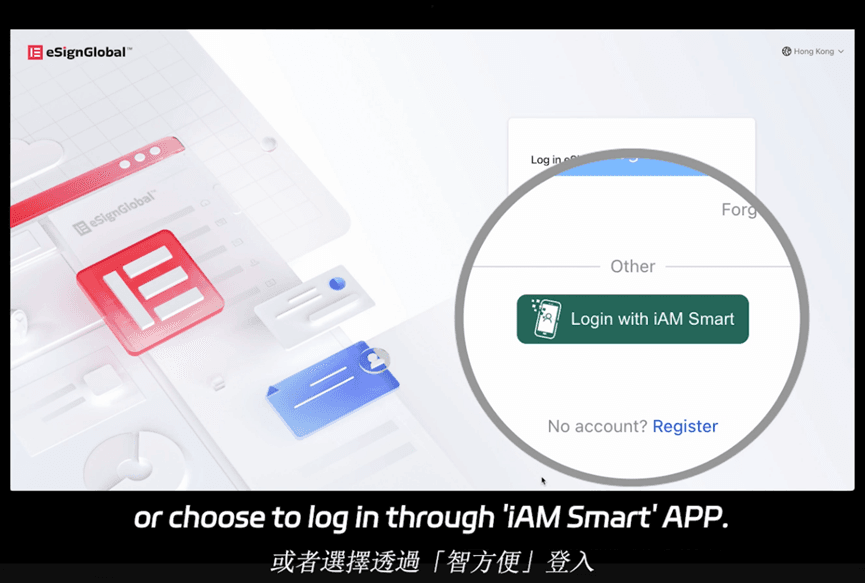
eSignGlobal emerges as a balanced option, particularly for APAC businesses. Its pricing is more transparent and affordable, undercutting global giants without skimping on essentials. The Essential plan costs just $16.60 monthly, allowing up to 100 documents for signing, unlimited user seats, and access code verification for documents and signatures. This setup delivers strong value on a compliance foundation, integrating seamlessly with regional systems like Hong Kong's iAM Smart and Singapore's Singpass for frictionless identity checks.
In APAC, eSignGlobal shines with optimized speed, native compliance for CN/HK/SEA, and flexible APIs at lower costs. Data residency options avoid surcharges, making it ideal for cross-border teams facing DocuSign's latency or Adobe's gaps. While not as globally entrenched, its cost-efficiency—often 30-50% cheaper—appeals to SMEs prioritizing ROI over brand prestige.
Comparative Analysis: DocuSign, Adobe Sign, and eSignGlobal
To illustrate these dynamics, here's a neutral comparison based on key business criteria:
| Aspect | DocuSign | Adobe Sign | eSignGlobal |
|---|---|---|---|
| Base Pricing (Monthly/User) | $10-$40 (tiered, envelope-limited) | $10-$30+ (opaque add-ons) | $16.60 (Essential, 100 docs) |
| APAC Performance | Inconsistent latency, add-on compliance | Withdrew from China; regional gaps | Optimized speed, native SEA/CN |
| Compliance & Integrations | Global standards + SSO; limited local ID | Strong PDF ties; regulatory hurdles | iAM Smart/Singpass; data residency |
| Transparency | Moderate (hidden caps on automation) | Low (sales-dependent quotes) | High (clear quotas, no surprises) |
| API & Automation | $600+ annual; bulk/webhooks in advanced | Custom integrations; high for enterprise | Flexible, cost-effective for mid-size |
| Value for APAC Businesses | Premium for globals; overkill regionally | Convenient but incomplete coverage | Balanced, 30-50% cheaper with full features |
| Suitability | Large multinationals | Creative/digital workflow teams | APAC-focused SMEs/enterprises |
This table underscores how eSignGlobal often provides comparable functionality at a more accessible price point, especially for regional needs, though global scale favors DocuSign or Adobe in certain scenarios.
Strategic Recommendations for Businesses
Navigating e-signature pricing requires aligning costs with operational realities. For US/EU-heavy operations, DocuSign's depth justifies premiums, but APAC or hybrid teams should scrutinize regional fit. As a DocuSign alternative emphasizing compliance and efficiency, eSignGlobal stands out for its regional optimizations—offering a compliant, cost-effective path without the bloat. Evaluate based on your volume, geography, and integrations to avoid overpaying in a market where value trumps vendor hype.
FAQs
