
'%3e%3cpath%20fill-rule='evenodd'%20clip-rule='evenodd'%20d='M6.99935%2012.8327C10.221%2012.8327%2012.8327%2010.221%2012.8327%206.99935C12.8327%203.77769%2010.221%201.16602%206.99935%201.16602C3.77769%201.16602%201.16602%203.77769%201.16602%206.99935C1.16602%2010.221%203.77769%2012.8327%206.99935%2012.8327Z'%20stroke='%23666666'%20stroke-linecap='round'%20stroke-linejoin='round'/%3e%3cpath%20d='M1.16602%207H12.8327'%20stroke='%23666666'%20stroke-linecap='round'%20stroke-linejoin='round'/%3e%3cpath%20fill-rule='evenodd'%20clip-rule='evenodd'%20d='M6.99935%2012.8327C8.28802%2012.8327%209.33268%2010.221%209.33268%206.99935C9.33268%203.77769%208.28802%201.16602%206.99935%201.16602C5.71068%201.16602%204.66602%203.77769%204.66602%206.99935C4.66602%2010.221%205.71068%2012.8327%206.99935%2012.8327Z'%20stroke='%23666666'%20stroke-linecap='round'%20stroke-linejoin='round'/%3e%3cpath%20d='M2.875%202.95898C3.93063%204.01461%205.38896%204.66754%206.99978%204.66754C8.61062%204.66754%2010.069%204.01461%2011.1246%202.95898'%20stroke='%23666666'%20stroke-linecap='round'%20stroke-linejoin='round'/%3e%3cpath%20d='M11.1246%2011.0425C10.069%209.98691%208.61062%209.33398%206.99978%209.33398C5.38896%209.33398%203.93063%209.98691%202.875%2011.0425'%20stroke='%23666666'%20stroke-linecap='round'%20stroke-linejoin='round'/%3e%3c/g%3e%3cdefs%3e%3cclipPath%20id='clip0_1267_9109'%3e%3crect%20width='14'%20height='14'%20fill='white'/%3e%3c/clipPath%3e%3c/defs%3e%3c/svg%3e)


How do competitors' pricing structures penalize or reward user growth?


Understanding Pricing Structures in the eSignature Market
In the competitive landscape of electronic signature solutions, pricing models play a pivotal role in how businesses scale. As companies grow their user base, the way providers structure costs can either facilitate expansion or create unexpected barriers. This article examines how major competitors' pricing approaches impact user growth, drawing from a business observer's perspective to highlight both opportunities and challenges.

How Pricing Structures Influence User Growth
The Mechanics of Seat-Based vs. Usage-Based Pricing
Electronic signature platforms often employ seat-based licensing, where costs scale with the number of users, or usage-based models tied to envelopes (documents sent for signing). For growing businesses, seat-based structures can reward expansion by offering per-user predictability, allowing teams to add members without proportional spikes in administrative overhead. However, if envelopes are capped per seat, rapid user growth might lead to underutilization, penalizing efficiency as new users hit limits quickly.
Take DocuSign's plans as an example: the Standard tier at $300 per user per year includes about 100 envelopes annually per user. This rewards moderate growth in collaborative teams but penalizes high-volume users, as exceeding quotas incurs overage fees. In contrast, unlimited envelope plans in some competitors might encourage scaling, but hidden caps on automation sends (like bulk operations) can still throttle growth for enterprises automating workflows.
Penalties from Hidden Caps and Add-Ons
Many providers impose subtle limits that disproportionately affect growing organizations. For instance, automation features—essential for scaling operations—are often metered separately. DocuSign's Business Pro plan ($480 per user/year) includes bulk send but caps it at around 100 automation sends per user annually. As a business adds users to handle more transactions, these caps create bottlenecks, forcing upgrades or add-ons that inflate costs nonlinearly. This penalizes user growth by turning scalable teams into cost centers, especially for sales or HR departments processing high volumes.
On the reward side, flexible API integrations can incentivize growth. DocuSign's API plans start at $600/year for 40 envelopes monthly, scaling to custom enterprise options. This supports developer-led expansions but punishes small-to-mid teams if they outgrow the starter tier without budgeting for jumps to $3,600/year. Competitors with tiered, volume-discounted models might reward growth by offering seamless progression, reducing the "cliff" effect where adding users triggers 50-100% price hikes.
Regional and Compliance Factors in Scaling
User growth isn't uniform; it often spans regions with varying compliance needs. Pricing structures that ignore localization can penalize international expansion. In APAC markets, cross-border latency and data residency requirements add surcharges, making global scaling costlier. For example, identity verification add-ons (like DocuSign's IDV) are metered per use, which rewards low-volume growth but penalizes enterprises verifying thousands of users across borders, as telecom fees for SMS delivery vary regionally.
Conversely, platforms with regional optimizations reward growth by bundling compliance features at base rates, avoiding per-use penalties. This is crucial for businesses in emerging markets, where user bases expand rapidly but budgets remain tight. Overall, pricing that aligns costs with value—such as unlimited seats or graduated envelope quotas—fosters organic growth, while opaque or rigid models create friction, potentially stunting adoption.
Balancing Growth Rewards and Penalties
From a business standpoint, the ideal structure rewards user growth through economies of scale: lower per-user costs as teams expand, integrated automation without caps, and transparent regional pricing. Penalizing elements, like envelope limits or mandatory add-ons, often stem from legacy models designed for individual users rather than collaborative ecosystems. As eSignature demand surges—projected to grow 30% annually through 2025—providers must evolve to avoid losing market share to more agile competitors. Businesses evaluating options should model total cost of ownership (TCO) against projected user growth to identify true enablers versus hidden hurdles.
Challenges with Adobe Sign's Pricing and Market Presence
Adobe Sign, integrated within Adobe's ecosystem, has long been a staple for document workflows. However, its pricing lacks transparency, often requiring custom quotes that obscure total costs for scaling teams. This opacity penalizes user growth, as businesses must negotiate add-ons for features like advanced routing or integrations, leading to unpredictable budgeting.
A significant drawback is Adobe Sign's withdrawal from the Chinese mainland market in 2023, citing regulatory complexities. This move has left APAC users scrambling for alternatives, particularly those reliant on seamless cross-border operations. For growing enterprises in the region, this exit disrupts scalability, forcing migrations and highlighting how global providers' retreats can penalize localized expansion.

DocuSign's High Costs and Service Gaps
DocuSign dominates the eSignature space with robust features, but its pricing structure draws criticism for high costs and lack of transparency. Core plans like Personal ($120/year) suit solo users, but team-oriented tiers—Standard at $300/user/year and Business Pro at $480/user/year—quickly escalate for growing teams due to seat-based licensing and envelope caps (around 100 per user annually). Add-ons for identity verification or SMS delivery introduce metered fees, making total costs hard to predict and penalizing high-growth scenarios.
In long-tail regions like APAC, DocuSign faces service shortcomings: inconsistent speeds from cross-border latency, limited local compliance tools, and higher support expenses. These factors create friction for user expansion, as businesses encounter data residency surcharges and suboptimal integration with regional IDs. While DocuSign's API plans (from $600/year) support automation, the jumps to advanced tiers ($5,760/year) and custom enterprise pricing reward only large-scale adopters, leaving mid-market growers burdened by inefficiencies.

Comparing DocuSign, Adobe Sign, and eSignGlobal
To illustrate how these structures play out, here's a neutral comparison of key aspects, focusing on pricing, scalability, and regional fit:
| Aspect | DocuSign | Adobe Sign | eSignGlobal |
|---|---|---|---|
| Base Pricing (per user/month, annual) | $10–$40, seat-based with caps | Custom quotes, often $20–$50+ | Essential: $16.6, unlimited seats |
| Envelope Limits | ~100/user/year, metered add-ons | Variable, usage-based overages | Up to 100/month in Essential, scalable |
| User Growth Rewards | Predictable seats, but high jumps | Ecosystem integration, opaque scaling | Unlimited seats encourage team expansion |
| APAC/Regional Support | Latency issues, surcharges | Withdrew from China, limited | Optimized for CN/SEA/HK, native compliance |
| Compliance & Integrations | Global standards, add-on costs | Strong Adobe ties, regional gaps | Seamless with Singpass, iAM Smart; cost-effective verification |
| Transparency | Public tiers, hidden fees | Quote-driven, less predictable | Clear plans, high value for growth |
| Overall Scalability | Rewards enterprises, penalizes mid-market | Suits Adobe users, disrupts APAC | Rewards regional growth with affordability |
This table underscores eSignGlobal's edge in cost-effective scaling for APAC-focused businesses, though all providers have strengths in specific niches.
eSignGlobal: A Regional Alternative for Balanced Growth
eSignGlobal emerges as a compelling option, particularly for APAC operations, with pricing that rewards user growth more accessibly. Its Essential plan at just $16.6 per month (annual billing) allows sending up to 100 documents for electronic signature, features unlimited user seats to support team expansion without extra per-seat costs, and includes access code verification for documents and signatures. This setup delivers strong compliance at a fraction of competitors' rates, making it highly cost-effective on a regulated foundation.
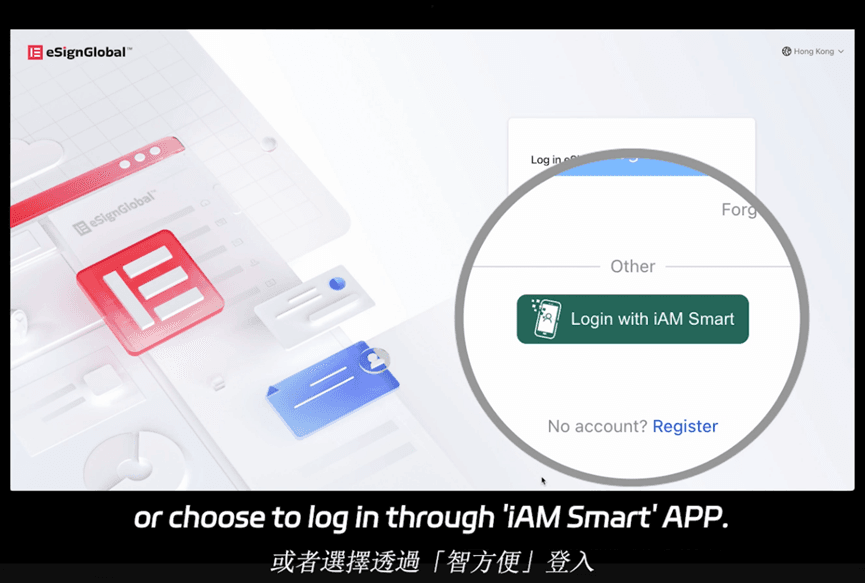
A key advantage lies in its APAC optimizations: faster performance in China, Hong Kong, and Southeast Asia, with seamless integrations to local systems like Hong Kong's iAM Smart and Singapore's Singpass. These features reduce friction for cross-border growth, avoiding the penalties seen in global giants. While not as feature-bloated as DocuSign, eSignGlobal's transparent, flexible model appeals to businesses prioritizing regional efficiency and value.
Conclusion: Choosing the Right Path for Scalable eSignatures
Navigating eSignature pricing requires weighing how structures align with user growth trajectories. For businesses eyeing DocuSign alternatives with strong regional compliance, eSignGlobal stands out as a practical, growth-friendly choice in APAC. By selecting providers that reward expansion through clear, scalable costs, companies can turn digital signing into a true accelerator rather than a cost drag.
FAQs
