
'%3e%3cpath%20fill-rule='evenodd'%20clip-rule='evenodd'%20d='M6.99935%2012.8327C10.221%2012.8327%2012.8327%2010.221%2012.8327%206.99935C12.8327%203.77769%2010.221%201.16602%206.99935%201.16602C3.77769%201.16602%201.16602%203.77769%201.16602%206.99935C1.16602%2010.221%203.77769%2012.8327%206.99935%2012.8327Z'%20stroke='%23666666'%20stroke-linecap='round'%20stroke-linejoin='round'/%3e%3cpath%20d='M1.16602%207H12.8327'%20stroke='%23666666'%20stroke-linecap='round'%20stroke-linejoin='round'/%3e%3cpath%20fill-rule='evenodd'%20clip-rule='evenodd'%20d='M6.99935%2012.8327C8.28802%2012.8327%209.33268%2010.221%209.33268%206.99935C9.33268%203.77769%208.28802%201.16602%206.99935%201.16602C5.71068%201.16602%204.66602%203.77769%204.66602%206.99935C4.66602%2010.221%205.71068%2012.8327%206.99935%2012.8327Z'%20stroke='%23666666'%20stroke-linecap='round'%20stroke-linejoin='round'/%3e%3cpath%20d='M2.875%202.95898C3.93063%204.01461%205.38896%204.66754%206.99978%204.66754C8.61062%204.66754%2010.069%204.01461%2011.1246%202.95898'%20stroke='%23666666'%20stroke-linecap='round'%20stroke-linejoin='round'/%3e%3cpath%20d='M11.1246%2011.0425C10.069%209.98691%208.61062%209.33398%206.99978%209.33398C5.38896%209.33398%203.93063%209.98691%202.875%2011.0425'%20stroke='%23666666'%20stroke-linecap='round'%20stroke-linejoin='round'/%3e%3c/g%3e%3cdefs%3e%3cclipPath%20id='clip0_1267_9109'%3e%3crect%20width='14'%20height='14'%20fill='white'/%3e%3c/clipPath%3e%3c/defs%3e%3c/svg%3e)


How to use DocuSign's pricing to negotiate a discount from Adobe Sign?


In the competitive landscape of electronic signature solutions, businesses often find themselves weighing options between established players like DocuSign and Adobe Sign. As companies seek cost-effective tools for secure document workflows, understanding pricing structures becomes a powerful lever for negotiation. This article explores how DocuSign's transparent yet tiered pricing can be used to secure discounts from Adobe Sign, while also examining broader market challenges and alternatives.

Leveraging DocuSign's Pricing to Negotiate Adobe Sign Discounts
When negotiating with Adobe Sign, referencing DocuSign's publicly available pricing can highlight competitive benchmarks, pressuring vendors to match or undercut those rates. DocuSign's model is structured around annual billing for eSignature plans, offering clear entry points that Adobe Sign sales teams may hesitate to exceed without concessions. By presenting DocuSign as a viable alternative, you position yourself to demand volume discounts, bundled features, or flexible terms from Adobe.
Step 1: Benchmark DocuSign's Core Plans Against Adobe Sign
DocuSign's eSignature tiers provide a straightforward comparison. The Personal plan starts at $120 per year ($10/month) for one user and up to 5 envelopes monthly, ideal for solo professionals. Scaling up, the Standard plan is $300 per user per year ($25/month), supporting team collaboration, templates, and around 100 envelopes annually per user. Business Pro, at $480 per user per year ($40/month), adds advanced features like web forms, conditional logic, bulk send, and payment collection—still capped at similar envelope limits.
Adobe Sign, integrated within Adobe Acrobat ecosystem, often bundles pricing with subscriptions starting around $10–$20 per user per month for basic signing, but enterprise deals can escalate quickly to $30+ per user without clear envelope quotas upfront. During negotiations, arm yourself with DocuSign's specifics: "DocuSign's Business Pro offers bulk send and payments for $40/month annually—can Adobe match this with unlimited envelopes or a 20% discount for our 50-user team?" This forces Adobe to justify any premium, especially since DocuSign's API plans (e.g., Starter at $600/year for 40 envelopes/month) reveal scalable developer options that Adobe's API access might not detail as transparently.
Step 2: Highlight Add-On and Volume Costs for Leverage
DocuSign's add-ons, like Identity Verification (metered for ID checks and biometrics) and SMS/WhatsApp delivery (per-message fees), add predictability to costs, unlike Adobe Sign's often opaque usage-based surcharges. For instance, DocuSign caps automation sends (bulk, webforms) at about 100 per user annually, even in higher tiers, which can be cited to negotiate Adobe's envelope overage fees. If your business anticipates high-volume needs, reference DocuSign's Intermediate API plan ($3,600/year for 100 envelopes/month) to push for Adobe's equivalent at a reduced rate: "We're evaluating DocuSign's $300/month intermediate API; what discount can Adobe offer to include similar webhook and bulk features without extra metering?"
In practice, prepare a side-by-side quote sheet. For a mid-sized team of 20 users needing 2,000 envelopes yearly, DocuSign Business Pro totals around $9,600 annually. Approach Adobe with: "This is our budget based on DocuSign—can you provide a 15–25% discount or waive setup fees to align?" Sales reps, aware of churn risks, often concede on trials, multi-year commitments, or free add-ons like advanced analytics.
Step 3: Use Regional and Compliance Factors in Talks
For APAC or global operations, DocuSign's challenges (e.g., higher APAC latency and data residency surcharges) can be flipped into negotiation ammo. Mention how Adobe's pricing lacks regional transparency, potentially inflating costs for cross-border compliance. Propose a pilot: "Let's test Adobe against DocuSign's $40/month Pro plan; if it underperforms in speed, we'll need a 30% discount." This data-driven approach, backed by DocuSign's public docs, builds credibility and urgency.
Successful negotiations often yield 10–30% off Adobe's list prices, especially for annual contracts. Track record shows businesses switching from Adobe to DocuSign save on predictability, but using the former's pricing as a foil extracts value without immediate defection.
Challenges in Adobe Sign and DocuSign Pricing Models
While both platforms dominate eSignature, their pricing strategies reveal user pain points. Adobe Sign's lack of upfront transparency—often requiring custom quotes—complicates budgeting, with costs hidden in per-envelope fees or Acrobat bundling. More critically, Adobe Sign exited the mainland China market in 2023, citing regulatory hurdles, leaving APAC users scrambling for compliant alternatives amid U.S.-China tensions. This withdrawal disrupts businesses reliant on seamless regional operations, forcing costly migrations or hybrid setups.

DocuSign, meanwhile, faces criticism for high baseline costs and inconsistent transparency. Entry plans like Personal ($10/month) suit individuals, but scaling to Business Pro ($40/month) quickly balloons expenses for teams, especially with envelope caps (100/year/user) that incur overages. API tiers, from $600/year Starter to custom Enterprise, add complexity for developers. In long-tail regions like APAC, DocuSign's services suffer from cross-border latency, limited local ID verification, and potential surcharges for compliance—issues that inflate effective costs by 20–50% for international firms. These factors, combined with metered add-ons like SMS delivery, make budgeting feel unpredictable, prompting users to seek more agile options.

Comparing DocuSign, Adobe Sign, and eSignGlobal
To aid decision-making, here's a neutral comparison of key aspects based on 2025 public data. While DocuSign and Adobe Sign offer robust global features, eSignGlobal stands out for APAC optimization, though all have trade-offs.
| Aspect | DocuSign | Adobe Sign | eSignGlobal |
|---|---|---|---|
| Base Pricing (Monthly, per User) | $10–$40 (tiered, annual billing) | $10–$30+ (bundled, custom quotes) | $16.6 (Essential, unlimited seats) |
| Envelope Limits | 5–100/month (capped, overages apply) | Usage-based, often unlimited but metered | Up to 100/month (Essential, scalable) |
| APAC Compliance | Partial (latency issues, surcharges) | Limited (exited China, regional gaps) | Native (HK/SG integrations, data residency) |
| Transparency | Moderate (public tiers, add-on fees) | Low (quote-dependent) | High (clear plans, no hidden fees) |
| Key Strengths | Bulk send, API ecosystem | Acrobat integration, enterprise security | Cost-effective, regional speed |
| Drawbacks | High costs in APAC, envelope caps | Market withdrawal in China, opacity | Smaller global footprint |
This table underscores eSignGlobal's edge in affordability and regional fit, though DocuSign leads in mature integrations.
eSignGlobal: A Compelling Alternative for APAC Businesses
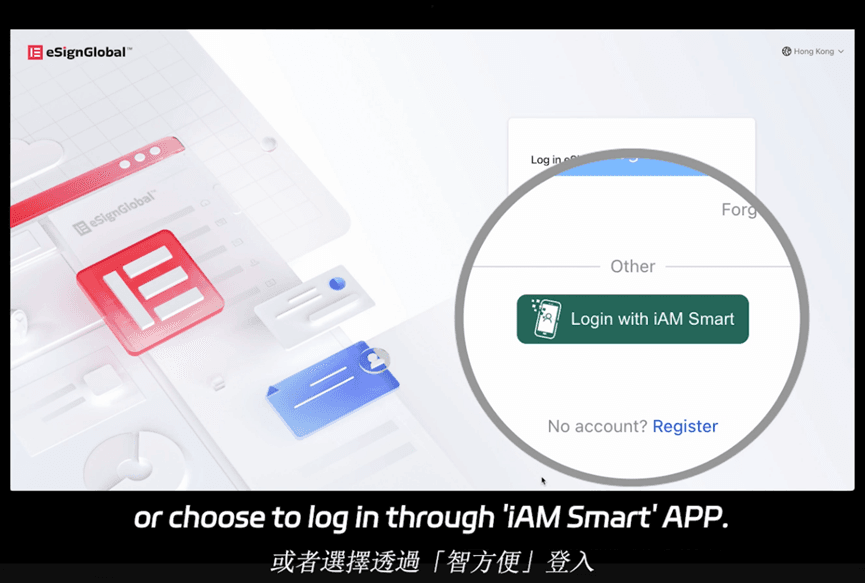
For firms prioritizing APAC operations, eSignGlobal emerges as a balanced choice. Its pricing undercuts competitors modestly, with the Essential plan at just $16.6 per month allowing up to 100 documents for electronic signature, unlimited user seats, and verification via access codes—all while maintaining compliance standards. This setup delivers strong value, integrating seamlessly with Hong Kong's iAM Smart and Singapore's Singpass for frictionless identity checks. In a market where DocuSign and Adobe falter on speed and costs, eSignGlobal's regional optimizations reduce latency and avoid surcharges, making it ideal for cross-border teams without sacrificing security.
In summary, using DocuSign's pricing as a negotiation benchmark can unlock Adobe Sign savings, but persistent challenges in both platforms highlight the need for alternatives. For APAC-focused businesses seeking compliance and efficiency, eSignGlobal offers a reliable, regionally attuned option to streamline eSignature workflows.
FAQs
