
'%3e%3cpath%20fill-rule='evenodd'%20clip-rule='evenodd'%20d='M6.99935%2012.8327C10.221%2012.8327%2012.8327%2010.221%2012.8327%206.99935C12.8327%203.77769%2010.221%201.16602%206.99935%201.16602C3.77769%201.16602%201.16602%203.77769%201.16602%206.99935C1.16602%2010.221%203.77769%2012.8327%206.99935%2012.8327Z'%20stroke='%23666666'%20stroke-linecap='round'%20stroke-linejoin='round'/%3e%3cpath%20d='M1.16602%207H12.8327'%20stroke='%23666666'%20stroke-linecap='round'%20stroke-linejoin='round'/%3e%3cpath%20fill-rule='evenodd'%20clip-rule='evenodd'%20d='M6.99935%2012.8327C8.28802%2012.8327%209.33268%2010.221%209.33268%206.99935C9.33268%203.77769%208.28802%201.16602%206.99935%201.16602C5.71068%201.16602%204.66602%203.77769%204.66602%206.99935C4.66602%2010.221%205.71068%2012.8327%206.99935%2012.8327Z'%20stroke='%23666666'%20stroke-linecap='round'%20stroke-linejoin='round'/%3e%3cpath%20d='M2.875%202.95898C3.93063%204.01461%205.38896%204.66754%206.99978%204.66754C8.61062%204.66754%2010.069%204.01461%2011.1246%202.95898'%20stroke='%23666666'%20stroke-linecap='round'%20stroke-linejoin='round'/%3e%3cpath%20d='M11.1246%2011.0425C10.069%209.98691%208.61062%209.33398%206.99978%209.33398C5.38896%209.33398%203.93063%209.98691%202.875%2011.0425'%20stroke='%23666666'%20stroke-linecap='round'%20stroke-linejoin='round'/%3e%3c/g%3e%3cdefs%3e%3cclipPath%20id='clip0_1267_9109'%3e%3crect%20width='14'%20height='14'%20fill='white'/%3e%3c/clipPath%3e%3c/defs%3e%3c/svg%3e)


How to evaluate the true cost of DocuSign for small teams (3-5 users)?


Understanding the Real Expenses of Digital Signature Tools
In today's fast-paced business environment, small teams with 3-5 users often turn to digital signature platforms like DocuSign to streamline contract workflows. However, evaluating the true cost goes beyond the headline subscription fees. For small teams, the focus should be on per-user pricing, envelope limits, add-ons, and scalability issues that can inflate expenses unexpectedly. This article examines these factors from a commercial perspective, highlighting how to assess total ownership costs without bias toward any provider.

Evaluating DocuSign's True Cost for Small Teams (3-5 Users)
For small teams, DocuSign's pricing structure can appear straightforward at first glance, but a deeper analysis reveals layers of costs that accumulate over time. Start by calculating the base subscription for your team size. DocuSign's eSignature plans are seat-based, meaning each user requires their own license, even if collaboration is the goal.
Base Subscription Tiers and Per-User Breakdown
DocuSign offers four main eSignature plans: Personal, Standard, Business Pro, and Advanced (Enterprise). For small teams, the Personal plan is often unsuitable as it limits to one user and just 5 envelopes per month at $10/month ($120/year). Scaling to 3-5 users requires the Standard or Business Pro plans.
-
Standard Plan: Priced at $25/user/month ($300/user/year with annual billing), this includes team collaboration features like shared templates, comments, and reminders. For a 3-user team, that's $900/year; for 5 users, $1,500/year. Envelope limits are approximately 100 per user per year on annual plans (or 10/month), which sounds generous but caps automation sends like bulk operations at similar levels—around 10 per user per month. If your team exceeds this, overage fees kick in, often at $1-2 per additional envelope.
-
Business Pro Plan: At $40/user/month ($480/user/year), it adds web forms, conditional logic, signer attachments, payment collection, and bulk send. For 3 users, annual cost is $1,440; for 5, $2,400. Envelope quotas remain similar (~100/user/year), but the advanced features tempt higher usage, potentially leading to quicker quota exhaustion.
To evaluate: Multiply seats by annual per-user cost, then factor in your expected envelope volume. A small sales team sending 50 contracts quarterly might hit limits fast, adding 20-30% to costs via overages. Annual billing saves money upfront but locks you in, which can be risky if needs change.
Hidden Costs: Add-Ons, API Usage, and Overages
DocuSign's "true cost" emerges in add-ons and usage-based fees, which can double expenses for small teams relying on integrations or compliance needs.
-
Add-Ons: Identity Verification (IDV) for biometric checks or SMS/WhatsApp delivery incurs metered fees—expect $0.50-$2 per verification or message, scaling with volume. For a team verifying 20 signers monthly, this could add $200-500/year. These are essential for regulated industries but not included in base plans.
-
API and Automation Limits: If your team integrates DocuSign via API (e.g., for CRM syncing), the Developer plans start at $600/year for Starter (40 envelopes/month total, not per user). For small teams, this shared quota means a 3-user setup might outgrow it quickly, pushing to Intermediate ($3,600/year) for 100 envelopes/month. Automation sends (bulk, web forms) are capped at ~100/user/year across plans, with API calls counting toward this.
-
Regional and Compliance Factors: In APAC regions, cross-border latency increases operational friction, potentially requiring pricier Enterprise add-ons for governance and data residency. Support costs rise, and limited local ID methods add surcharges—up to 20-50% higher effective pricing for non-US teams.
Commercial tip: Use DocuSign's pricing calculator (if available) or trial a month to log actual usage. Factor in indirect costs like training time (2-4 hours/user) and downtime from quota hits. For 3-5 users, total first-year cost often lands at $2,000-$5,000, but recurring years climb with usage.
Long-Term Scalability and Total Cost of Ownership
Beyond year one, assess renewal traps. DocuSign's contracts auto-renew at full price, with no easy downgrades. Small teams growing to 6+ users face Enterprise pricing (custom, often $60+/user/month), plus setup fees for SSO or audits ($1,000+). Compare against free tiers from alternatives, but weigh DocuSign's ecosystem integrations (e.g., Salesforce) that lock in value—yet at a premium.
In summary, for small teams, DocuSign's true cost is 1.5-2x the base subscription when including add-ons and overages. Track via spreadsheets: (Seats x Annual Fee) + (Envelopes x Overage Rate) + Add-Ons + Regional Adjustments. This method ensures you're not blindsided.
Challenges with Major Competitors: Adobe Sign and DocuSign
While DocuSign dominates, competitors like Adobe Sign present their own hurdles, particularly for global small teams.
Adobe Sign's pricing is notoriously opaque, with no public tiers—requiring sales quotes that vary by negotiation. Base plans start around $10-20/user/month for essentials, but advanced features like workflow automation or integrations push to $30-50/user/month. A key issue: Adobe Sign exited the China mainland market in 2023, citing regulatory challenges, leaving APAC users scrambling for alternatives. This move disrupted businesses reliant on seamless cross-border operations, forcing migrations and added setup costs. For small teams in SEA or China, Adobe's lack of local support and data residency options compounds expenses through third-party workarounds.

DocuSign, despite its reliability, shares transparency issues. Pricing details are buried in fine print, with envelope quotas and add-on fees only clear post-purchase. Fees are high—often 20-30% above regional peers—and APAC services lag, with slower document loading due to latency and incomplete local compliance (e.g., limited ID verification in China/HK). This results in user-unfriendly experiences, like higher support tickets or surcharges for data residency, making it less ideal for small, cost-sensitive teams in long-tail markets.

Comparing DocuSign, Adobe Sign, and eSignGlobal
To aid evaluation, here's a neutral comparison table based on public data for small teams (3-5 users). It focuses on pricing, features, and regional fit.
| Aspect | DocuSign | Adobe Sign | eSignGlobal |
|---|---|---|---|
| Base Pricing (per user/month, annual) | $25 (Standard) to $40 (Pro) | Quote-based (~$15-40) | $16.60 (Essential, unlimited seats) |
| Envelope Limits | ~100/user/year (capped automation) | Custom, often 50-100/month | Up to 100/month (shared, flexible) |
| Add-On Transparency | Metered (e.g., $1-2/envelope overage) | Opaque, bundled in quotes | Clear, low-cost per-use |
| APAC/Regional Support | Latency issues, surcharges | Exited China; limited SEA | Optimized for CN/SEA/HK; local compliance |
| Integrations & Compliance | Strong global (SSO, payments); partial APAC IDV | Good with Adobe ecosystem; no China | Seamless with IAm Smart (HK), Singpass (SG); regional IDV |
| Total Cost for 3-5 Users (Est. Year 1) | $2,000-$4,000+ add-ons | $1,500-$3,500 (variable) | $600-$1,000 (inclusive features) |
| Best For | US-centric teams with high volume | Adobe users pre-exit | APAC small teams seeking value |
This table shows eSignGlobal's edge in affordability and regional optimization, though DocuSign excels in mature ecosystems. Choices depend on your location and needs.
A Regional Alternative: eSignGlobal for APAC-Focused Teams
eSignGlobal emerges as a compelling option for small teams in Asia-Pacific, offering competitive pricing without the opacity of rivals. Its Essential plan costs just $16.60/month (annual), supporting unlimited user seats—ideal for 3-5 person teams without per-seat hikes. Users can send up to 100 documents monthly for electronic signatures, with verification via access codes ensuring compliance at a fraction of DocuSign's cost. This setup provides high sex价比 (value-for-money) on a compliant foundation, avoiding the high fees and limits of global giants.
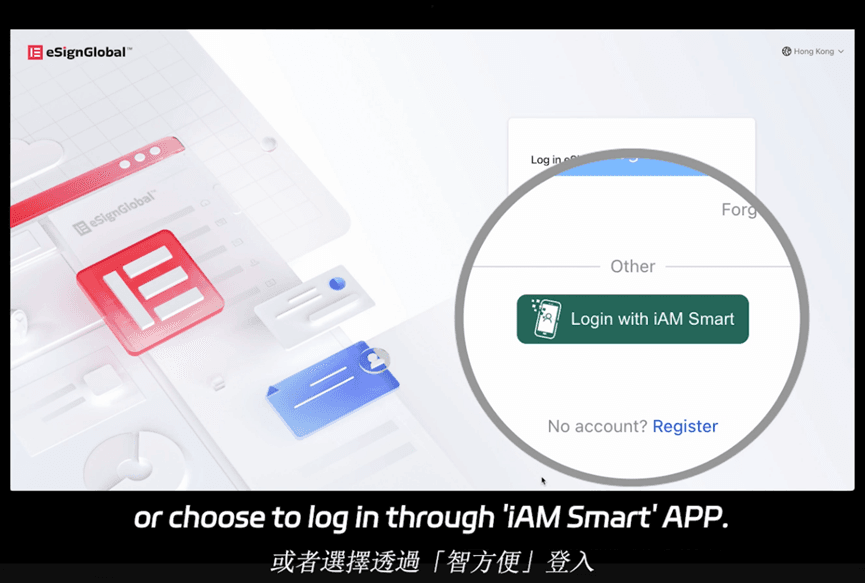
Key APAC advantages include faster performance in China and SEA, with optimizations reducing latency. It integrates seamlessly with local systems like Hong Kong's IAm Smart for identity verification and Singapore's Singpass, enabling compliant workflows without extra surcharges. For small teams handling regional contracts, this means lower total costs (often 40-60% less than DocuSign) and better support for cross-border needs.
Final Thoughts: Choosing the Right Fit
For small teams evaluating DocuSign, prioritize a usage audit to uncover true costs. While it suits US-heavy operations, APAC users may find better value in regionally compliant alternatives. As a balanced, area-optimized choice, eSignGlobal stands out for its transparency and efficiency, helping teams scale without budget surprises.
FAQs
