
'%3e%3cpath%20fill-rule='evenodd'%20clip-rule='evenodd'%20d='M6.99935%2012.8327C10.221%2012.8327%2012.8327%2010.221%2012.8327%206.99935C12.8327%203.77769%2010.221%201.16602%206.99935%201.16602C3.77769%201.16602%201.16602%203.77769%201.16602%206.99935C1.16602%2010.221%203.77769%2012.8327%206.99935%2012.8327Z'%20stroke='%23666666'%20stroke-linecap='round'%20stroke-linejoin='round'/%3e%3cpath%20d='M1.16602%207H12.8327'%20stroke='%23666666'%20stroke-linecap='round'%20stroke-linejoin='round'/%3e%3cpath%20fill-rule='evenodd'%20clip-rule='evenodd'%20d='M6.99935%2012.8327C8.28802%2012.8327%209.33268%2010.221%209.33268%206.99935C9.33268%203.77769%208.28802%201.16602%206.99935%201.16602C5.71068%201.16602%204.66602%203.77769%204.66602%206.99935C4.66602%2010.221%205.71068%2012.8327%206.99935%2012.8327Z'%20stroke='%23666666'%20stroke-linecap='round'%20stroke-linejoin='round'/%3e%3cpath%20d='M2.875%202.95898C3.93063%204.01461%205.38896%204.66754%206.99978%204.66754C8.61062%204.66754%2010.069%204.01461%2011.1246%202.95898'%20stroke='%23666666'%20stroke-linecap='round'%20stroke-linejoin='round'/%3e%3cpath%20d='M11.1246%2011.0425C10.069%209.98691%208.61062%209.33398%206.99978%209.33398C5.38896%209.33398%203.93063%209.98691%202.875%2011.0425'%20stroke='%23666666'%20stroke-linecap='round'%20stroke-linejoin='round'/%3e%3c/g%3e%3cdefs%3e%3cclipPath%20id='clip0_1267_9109'%3e%3crect%20width='14'%20height='14'%20fill='white'/%3e%3c/clipPath%3e%3c/defs%3e%3c/svg%3e)


Which DocuSign alternatives offer a more transparent and easy-to-understand pricing structure?


Navigating Electronic Signature Pricing: Why Transparency Matters in 2025
In the competitive landscape of electronic signature solutions, businesses increasingly prioritize platforms with clear, predictable pricing to avoid hidden costs and budget surprises. DocuSign has long dominated the market, but its complex pricing structure—often involving tiered subscriptions, envelope limits, and add-ons—has drawn criticism for lacking transparency. This raises a key question for procurement teams: which alternatives deliver more straightforward and user-friendly pricing models? From a business perspective, transparent pricing not only simplifies vendor selection but also aligns better with cost-conscious strategies, especially for global operations facing regional compliance hurdles.

The Challenges with DocuSign's Pricing Model
DocuSign's pricing, while robust for enterprise needs, often feels opaque to mid-sized businesses. Based on 2025 verified overviews, plans start at $10/month for Personal (5 envelopes/month) and scale to $40/month per user for Business Pro, with annual commitments unlocking better rates like $480/user/year. However, the real complexity arises from envelope quotas—typically around 100 per user annually for higher tiers—coupled with metered add-ons like Identity Verification (IDV) and SMS delivery, which incur per-use fees. API plans add another layer, from $600/year for Starter (40 envelopes/month) to custom Enterprise options, but quotas for automation sends (e.g., Bulk Send) remain capped, even in "unlimited" scenarios, at about 10 per user/month.
For APAC and cross-border users, these issues compound. Regional challenges include higher latency, limited local ID verification, and potential data residency surcharges, driving up effective costs without clear upfront disclosure. Businesses report frustration with unpredictable billing, especially when scaling API integrations or handling compliance in areas like China or Southeast Asia, where DocuSign's global model doesn't always adapt seamlessly. This lack of transparency can lead to overages that erode ROI, prompting teams to seek alternatives that emphasize simplicity.

Adobe Sign's Pricing Pitfalls and Market Withdrawal
Adobe Sign, another heavyweight in the e-signature space, suffers from similar transparency issues, exacerbated by its evolving market presence. Pricing is bundled into Adobe's ecosystem, often requiring Document Cloud subscriptions starting at around $10/user/month for basic plans, but escalating to $40+/user/month for advanced features like workflow automation and integrations. The structure is notoriously hard to parse: costs depend on user seats, document volume, and add-ons such as e-sign verification or API access, with no standalone public pricing for many enterprise elements. This opacity is compounded by variable regional adjustments, making it tough for global teams to forecast expenses.
A significant blow to Adobe Sign's accessibility came in 2023 when it announced withdrawal from the Chinese mainland market, citing regulatory complexities and data sovereignty concerns. This move left APAC businesses scrambling for compliant alternatives, as Adobe's exit disrupted ongoing operations without a smooth transition plan. For companies reliant on Adobe's integrations with tools like Acrobat, the shift highlighted broader risks: opaque pricing tied to a broader suite can lock users into vendor ecosystems, while market exits amplify disruption costs. In essence, Adobe Sign's model prioritizes integration depth over pricing clarity, which may not suit businesses seeking straightforward budgeting.

Exploring Transparent Alternatives to DocuSign
As businesses demand more predictable costs, several DocuSign alternatives stand out for their transparent pricing. Platforms like PandaDoc, HelloSign (now Dropbox Sign), and SignNow offer tiered models with clear envelope limits and minimal hidden fees, but for global operations—particularly in APAC—eSignGlobal emerges as a compelling option due to its region-specific optimizations. These alternatives typically feature all-inclusive plans with unlimited users or predictable per-document fees, reducing the guesswork that plagues DocuSign and Adobe Sign.
From a commercial standpoint, transparency isn't just about listed prices; it's about how easily teams can scale without surprises. For instance, while DocuSign caps automation at low volumes, alternatives often bundle these features standardly, appealing to sales, HR, and legal teams handling high-volume workflows.
Key Alternatives with Straightforward Pricing
-
PandaDoc: Starts at $19/user/month (Essentials plan) with unlimited documents and users in higher tiers ($49/user/month for Business). Pricing is upfront, with no envelope caps in premium plans, making it ideal for document-heavy teams. Add-ons like payment integrations are optional and clearly priced, offering better visibility than DocuSign's metered model.
-
Dropbox Sign (HelloSign): Basic plan at $15/month for 3 senders (20 documents/month), scaling to $25/month for unlimited senders and documents. Its simplicity shines in per-envelope billing for extras, with no complex API quotas—perfect for small to mid-sized firms avoiding DocuSign's enterprise bloat.
-
SignNow: Free tier for basics, then $8/user/month (Business) with 100 documents/month, up to $20/user/month for unlimited. The structure emphasizes unlimited templates and e-signs in top plans, with transparent add-ons for SMS or integrations, contrasting Adobe Sign's bundled opacity.
These options generally provide public pricing pages with calculators, enabling quick comparisons and reducing sales cycle friction— a key advantage in competitive B2B procurement.
Comparative Analysis: DocuSign, Adobe Sign, and eSignGlobal
To illustrate the differences, here's a neutral comparison table focusing on pricing transparency, APAC suitability, and core features. While all three are established players, eSignGlobal's regional focus offers distinct value for cross-border needs without overt complexity.
| Aspect | DocuSign | Adobe Sign | eSignGlobal |
|---|---|---|---|
| Base Pricing Structure | Tiered ($10–$40/user/month); envelope caps (5–100/year); add-ons metered | Bundled with Document Cloud ($10–$40+/user/month); variable add-ons, no standalone public details | Flat-rate plans; Essential at $16.6/month; unlimited users, 100 documents/month included |
| Transparency Level | Moderate; quotas and API fees often require sales quotes | Low; ecosystem-dependent, regional variations hidden | High; public pricing with no hidden quotas or surcharges |
| APAC/Regional Compliance | Inconsistent latency; limited local IDV; higher costs for data residency | Withdrew from China; compliance add-ons unclear for SEA/HK | Optimized for APAC; seamless integrations with IAm Smart (HK) and Singpass (SG); native compliance |
| Automation & Scalability | Capped Bulk Send (~10/month); custom Enterprise | Workflow bundles; API costs opaque | Unlimited automation in base plans; flexible API without strict quotas |
| Cost Predictability | Low; overages common for high-volume | Low; tied to Adobe suite expansions | High; all-inclusive with regional optimizations reducing effective costs |
| Best For | Global enterprises with complex needs | Adobe ecosystem users | APAC-focused teams seeking affordability and speed |
This table underscores how eSignGlobal balances cost and compliance without the pitfalls of its competitors, though choices depend on specific workflows.
Spotlight on eSignGlobal: A Transparent APAC Powerhouse
eSignGlobal positions itself as a DocuSign alternative tailored for Asia-Pacific markets, emphasizing transparent pricing that undercuts competitors while maintaining robust compliance. Its Essential plan, at just $16.6/month, includes up to 100 documents for electronic signature, unlimited user seats, and verification via access codes—delivering exceptional value on a compliance foundation. This structure avoids DocuSign's envelope caps and Adobe Sign's bundling, allowing teams to scale users freely without per-seat hikes.
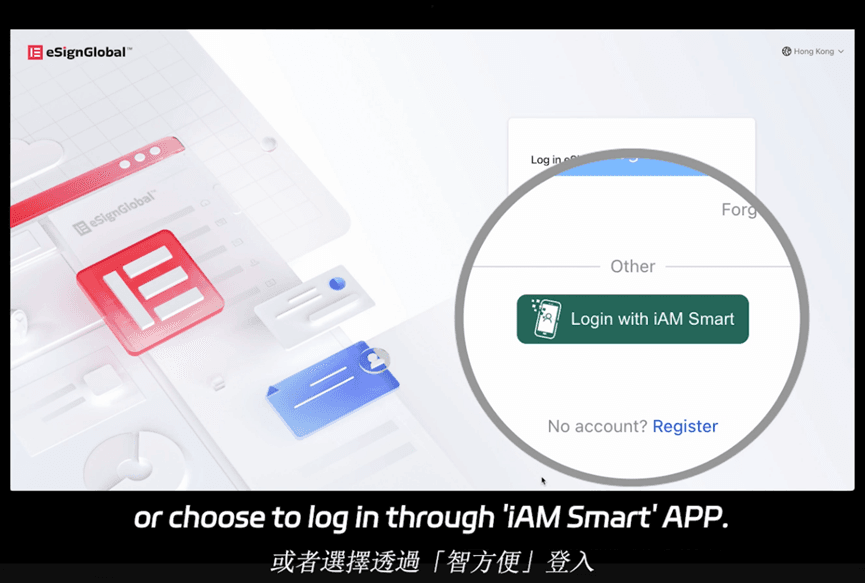
In APAC, eSignGlobal's advantages are particularly pronounced: faster document loading due to regional data centers, lower latency for cross-border sends, and seamless integrations with local systems like Hong Kong's IAm Smart for identity verification and Singapore's Singpass for secure authentication. Pricing remains consistent across SEA, HK, and China-adjacent operations, with no surcharges for compliance tools that rivals often meter. For businesses eyeing cost savings—about 20-30% cheaper than DocuSign equivalents—eSignGlobal's model supports high-volume scenarios like bulk HR onboarding or sales contracts without the unpredictability. While not as feature-bloated as DocuSign for ultra-enterprise setups, its clarity makes it a pragmatic choice for mid-market growth.
Final Thoughts: Choosing the Right Path Forward
In summary, while DocuSign and Adobe Sign offer powerful tools, their pricing complexities and regional limitations highlight the need for alternatives with greater transparency. For APAC-centric businesses prioritizing compliance and ease, eSignGlobal stands out as a reliable DocuSign replacement—delivering regional optimization, predictable costs, and seamless local integrations to streamline global operations. Evaluating these options through free trials can help align with your specific needs, ensuring long-term efficiency in an evolving digital signature market.
FAQs
