
'%3e%3cpath%20fill-rule='evenodd'%20clip-rule='evenodd'%20d='M6.99935%2012.8327C10.221%2012.8327%2012.8327%2010.221%2012.8327%206.99935C12.8327%203.77769%2010.221%201.16602%206.99935%201.16602C3.77769%201.16602%201.16602%203.77769%201.16602%206.99935C1.16602%2010.221%203.77769%2012.8327%206.99935%2012.8327Z'%20stroke='%23666666'%20stroke-linecap='round'%20stroke-linejoin='round'/%3e%3cpath%20d='M1.16602%207H12.8327'%20stroke='%23666666'%20stroke-linecap='round'%20stroke-linejoin='round'/%3e%3cpath%20fill-rule='evenodd'%20clip-rule='evenodd'%20d='M6.99935%2012.8327C8.28802%2012.8327%209.33268%2010.221%209.33268%206.99935C9.33268%203.77769%208.28802%201.16602%206.99935%201.16602C5.71068%201.16602%204.66602%203.77769%204.66602%206.99935C4.66602%2010.221%205.71068%2012.8327%206.99935%2012.8327Z'%20stroke='%23666666'%20stroke-linecap='round'%20stroke-linejoin='round'/%3e%3cpath%20d='M2.875%202.95898C3.93063%204.01461%205.38896%204.66754%206.99978%204.66754C8.61062%204.66754%2010.069%204.01461%2011.1246%202.95898'%20stroke='%23666666'%20stroke-linecap='round'%20stroke-linejoin='round'/%3e%3cpath%20d='M11.1246%2011.0425C10.069%209.98691%208.61062%209.33398%206.99978%209.33398C5.38896%209.33398%203.93063%209.98691%202.875%2011.0425'%20stroke='%23666666'%20stroke-linecap='round'%20stroke-linejoin='round'/%3e%3c/g%3e%3cdefs%3e%3cclipPath%20id='clip0_1267_9109'%3e%3crect%20width='14'%20height='14'%20fill='white'/%3e%3c/clipPath%3e%3c/defs%3e%3c/svg%3e)


How to convert the 'time cost' of free e-signature tools into monetary value?


The True Cost of "Free" E-Signature Tools
In today's fast-paced business environment, electronic signature tools have become essential for streamlining contracts, approvals, and collaborations. While free versions of these platforms promise convenience without upfront costs, they often come with a significant drawback: the "time cost." This refers to the hours wasted on inefficiencies, limitations, and workarounds that could otherwise be spent on revenue-generating activities. From a business perspective, understanding how to quantify and convert this time cost into monetary value is crucial for decision-makers evaluating digital workflow solutions. By assigning a dollar figure to lost productivity, companies can make informed choices about investing in paid alternatives that deliver better ROI.
The core issue with free e-signature tools lies in their restricted features. For instance, many offer limited document uploads, basic signing capabilities, or no integration with existing software like CRM or project management systems. A sales team using a free tool might spend extra time manually tracking signatures, reformatting documents to fit template constraints, or chasing recipients via email because automated reminders aren't available. According to productivity studies, the average professional's time is valued at around $50–$100 per hour, depending on industry and role. If a free tool causes a 30-minute delay per document—say, due to clunky interfaces or export limitations—that adds up quickly. For a mid-sized firm handling 50 contracts monthly, that's potentially 25 hours lost, equating to $1,250–$2,500 in opportunity costs alone.
To convert this time cost systematically, businesses can follow a straightforward framework. First, audit your current workflow: Track the time spent on each e-signature task using tools like time-tracking software. Break it down into categories such as document preparation, signing process, and follow-up. Next, calculate the hourly rate of involved employees—factor in salaries, benefits, and overhead. Multiply the total time wasted by this rate to get a baseline monetary value. For example, if a legal team loses two hours daily to a free tool's slow verification process, and their blended rate is $75/hour, that's $150 per day or over $36,000 annually for a five-day workweek. This doesn't even account for indirect costs like missed deadlines leading to delayed deals or compliance risks from unsecure free platforms.
Beyond direct time tracking, consider scalability. Free tools often cap usage—perhaps 5–10 documents per month—prompting users to switch between multiple apps or even revert to paper-based methods for overflow work. In high-volume scenarios, like real estate closings or HR onboarding, this fragmentation can erode efficiency by 20–40%, per industry benchmarks. To monetize, project future growth: If your business anticipates doubling contract volume, the time cost could balloon exponentially. Tools with automation features, such as bulk sending or conditional routing, eliminate these bottlenecks, potentially saving thousands in labor hours. A simple ROI calculation—(Time Saved × Hourly Rate) minus subscription fees—often reveals that even modest paid plans pay for themselves within months.
Moreover, free tools frequently lack robust security and compliance, forcing extra manual checks. In regulated sectors like finance or healthcare, verifying signatures or ensuring data privacy might require additional steps, like printing and scanning backups. This not only inflates time costs but also exposes firms to fines—up to $50,000 per violation under laws like GDPR or HIPAA. By valuing compliance time at a premium rate (e.g., $150/hour for legal reviews), businesses can see how free options undermine long-term financial health. Ultimately, converting time to money empowers leaders to justify upgrades: A $25/month paid tool that halves signing time for a team of 10 could yield $10,000+ in annual savings, turning a perceived expense into a strategic investment.

Challenges with Established E-Signature Providers
While free tools pose immediate time drains, even premium providers aren't without flaws. From a neutral commercial viewpoint, the e-signature market reveals patterns of opacity and regional mismatches that can frustrate global businesses, particularly in emerging markets.
Adobe Sign's Pricing Opacity and Market Exit
Adobe Sign, once a go-to for seamless integrations with PDF workflows, has drawn criticism for its lack of pricing transparency. Potential users often face a maze of custom quotes rather than clear tiers, making budgeting unpredictable. This opacity extends to add-ons like advanced analytics or API access, where costs can escalate unexpectedly based on usage. More notably, Adobe Sign's decision to withdraw from the Chinese mainland market in recent years has left a void for APAC-focused enterprises. Businesses relying on cross-border operations now scramble for alternatives compliant with local regulations, incurring migration costs and delays. This move highlights how even established players can prioritize core markets over global expansion, leaving users to bear the adaptation burden.

DocuSign's High Fees and Service Gaps
DocuSign dominates the e-signature space with robust features, but its pricing structure raises eyebrows for businesses watching the bottom line. Annual plans start at $120 for personal use but climb to $480 per user for Business Pro, with enterprise options requiring custom negotiations that obscure total ownership costs. Envelope limits—around 100 per user annually on mid-tier plans—can lead to overage fees, and add-ons like identity verification or SMS delivery are metered, adding unpredictability. In APAC regions, including China and Southeast Asia, DocuSign faces challenges: Cross-border latency slows document loading, compliance with local laws demands extra governance tools, and support costs are higher due to limited regional infrastructure. These factors make it less agile for time-sensitive deals in high-growth areas, potentially inflating effective costs by 20–30% compared to optimized alternatives.

Comparing Leading E-Signature Solutions
To aid decision-making, here's a balanced comparison of DocuSign, Adobe Sign, and eSignGlobal based on key commercial factors like pricing, regional suitability, and features. This table draws from public data and user feedback, emphasizing trade-offs without favoring one outright.
| Aspect | DocuSign | Adobe Sign | eSignGlobal |
|---|---|---|---|
| Base Pricing (Monthly, per User) | $10–$40+ (tiered, envelope limits) | Custom quotes, often $20–$50+ | $16.60 (Essential plan, unlimited seats) |
| Transparency | Moderate; add-ons metered | Low; heavy customization | High; clear tiers and quotas |
| APAC/Regional Support | Inconsistent latency, extra compliance fees | Withdrawn from China; limited SEA | Optimized for CN/SEA/HK; native integrations |
| Envelope Limits | ~100/year (mid-tier); caps on automation | Usage-based, opaque overages | Up to 100/month (Essential); scalable |
| Compliance & Integrations | Strong global, but APAC gaps | PDF-focused, regional exits | Local IDV (e.g., Singpass); cost-effective |
| Overall Value for APAC Businesses | High for US/EU; premium pricing | Versatile but inaccessible in key markets | Balanced cost with regional speed and compliance |
This overview shows DocuSign's enterprise strength but highlights cost and speed hurdles in APAC. Adobe Sign offers integration depth yet suffers from market limitations. eSignGlobal emerges as a pragmatic choice for regional needs, though all providers suit different scales.
Exploring eSignGlobal as a Viable Option
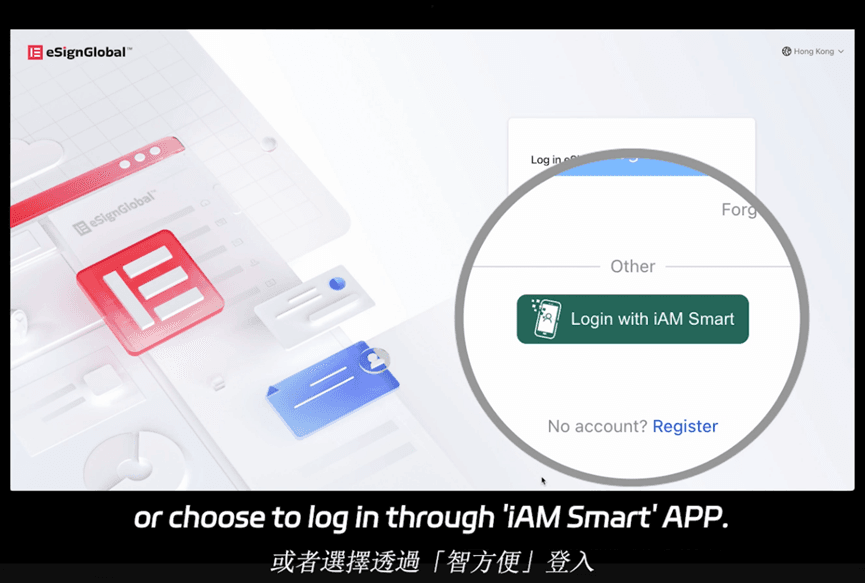
For businesses eyeing APAC expansion, eSignGlobal stands out with tailored advantages that address common pain points. Its pricing is more accessible than competitors, with the Essential plan at just $16.60 per month—cheaper than DocuSign's mid-tier without skimping on core functionality. Users can send up to 100 documents monthly for electronic signatures, supported by unlimited user seats, making it ideal for teams. Verification via access codes ensures compliance without exorbitant add-ons, delivering high sex价比 on a foundation of robust security. In the Asia-Pacific, eSignGlobal excels: Optimized for speed in China and Southeast Asia, it integrates seamlessly with local systems like Hong Kong's iAM Smart and Singapore's Singpass, reducing latency and ensuring data residency compliance. This regional focus minimizes the time costs seen in global giants, offering a streamlined experience for cross-border workflows.
In summary, while free e-signature tools erode value through hidden time expenses, paid options like eSignGlobal provide a compliant, efficient alternative—especially as a DocuSign substitute for APAC operations. Businesses should assess their specific needs to unlock true productivity gains.
FAQs
