
'%3e%3cpath%20fill-rule='evenodd'%20clip-rule='evenodd'%20d='M6.99935%2012.8327C10.221%2012.8327%2012.8327%2010.221%2012.8327%206.99935C12.8327%203.77769%2010.221%201.16602%206.99935%201.16602C3.77769%201.16602%201.16602%203.77769%201.16602%206.99935C1.16602%2010.221%203.77769%2012.8327%206.99935%2012.8327Z'%20stroke='%23666666'%20stroke-linecap='round'%20stroke-linejoin='round'/%3e%3cpath%20d='M1.16602%207H12.8327'%20stroke='%23666666'%20stroke-linecap='round'%20stroke-linejoin='round'/%3e%3cpath%20fill-rule='evenodd'%20clip-rule='evenodd'%20d='M6.99935%2012.8327C8.28802%2012.8327%209.33268%2010.221%209.33268%206.99935C9.33268%203.77769%208.28802%201.16602%206.99935%201.16602C5.71068%201.16602%204.66602%203.77769%204.66602%206.99935C4.66602%2010.221%205.71068%2012.8327%206.99935%2012.8327Z'%20stroke='%23666666'%20stroke-linecap='round'%20stroke-linejoin='round'/%3e%3cpath%20d='M2.875%202.95898C3.93063%204.01461%205.38896%204.66754%206.99978%204.66754C8.61062%204.66754%2010.069%204.01461%2011.1246%202.95898'%20stroke='%23666666'%20stroke-linecap='round'%20stroke-linejoin='round'/%3e%3cpath%20d='M11.1246%2011.0425C10.069%209.98691%208.61062%209.33398%206.99978%209.33398C5.38896%209.33398%203.93063%209.98691%202.875%2011.0425'%20stroke='%23666666'%20stroke-linecap='round'%20stroke-linejoin='round'/%3e%3c/g%3e%3cdefs%3e%3cclipPath%20id='clip0_1267_9109'%3e%3crect%20width='14'%20height='14'%20fill='white'/%3e%3c/clipPath%3e%3c/defs%3e%3c/svg%3e)


What are the typical termination penalties in e-signature contracts?


Navigating E-Signature Contracts: Key Considerations for Businesses
In the digital age, e-signature platforms have become essential tools for streamlining contracts and agreements across industries. From small businesses to global enterprises, these services promise efficiency, compliance, and security. However, as businesses adopt these solutions, understanding the fine print—particularly termination penalties—can prevent costly surprises. This article explores the typical termination penalties in e-signature contracts from a business observer's perspective, highlighting how they impact operational flexibility and long-term planning.

Understanding Termination Penalties in E-Signature Contracts
What Constitutes a Termination Penalty?
Termination penalties in e-signature contracts refer to the financial or contractual repercussions imposed when a user ends their agreement before the term expires. These are common in subscription-based services, where providers lock in revenue through annual or multi-year commitments. From a commercial standpoint, such penalties protect providers from revenue loss due to early exits, but they can tie businesses to underperforming services, limiting agility in a fast-evolving market.
Typically, these penalties are outlined in the service level agreement (SLA) or terms of service. They might include prorated fees for unused portions of the subscription, early termination fees equivalent to a percentage of the remaining contract value, or even forfeiture of prepaid amounts. For instance, in many e-signature contracts, terminating mid-term could require payment of 50-100% of the outstanding balance, depending on the plan's duration. This structure encourages long-term commitment but raises concerns for businesses facing shifting needs, such as economic downturns or regulatory changes.
Business observers note that these penalties often vary by provider and region. In the US and EU, where e-signature laws like ESIGN Act and eIDAS emphasize enforceability, penalties are more standardized. However, in APAC regions, additional compliance layers can complicate matters, sometimes leading to steeper fees for cross-border users.
Common Types of Termination Penalties
E-signature contracts commonly feature several penalty structures, each designed to mitigate provider risk:
-
Early Termination Fees (ETFs): The most straightforward penalty, these are fixed charges for breaking the contract early. For annual plans, ETFs might equal 3-6 months' worth of fees. A typical example: If a business signs a $300/user/year plan but terminates after six months, they could owe an additional $150-300 per user. This is prevalent in mid-tier plans like DocuSign's Standard or Business Pro, where envelope usage limits tie into the commitment.
-
Prorated Refund Denials: Many providers offer no refunds for prepaid annual subscriptions upon termination. Instead, users forfeit the unused portion entirely. In high-volume enterprise deals, this can amount to thousands in sunk costs. Observers report that API-integrated plans, such as DocuSign's Developer tiers starting at $600/year, often enforce this strictly to cover integration expenses.
-
Usage-Based Clawbacks: For services with metered add-ons like identity verification or SMS delivery, termination might trigger retroactive fees if usage thresholds weren't met. In DocuSign's case, add-ons like IDV are billed per use, and early exit could require settling any outstanding metered charges plus a penalty multiplier.
-
Non-Compete or Data Migration Fees: Some contracts impose fees for data export upon termination, especially in advanced plans with governance features. Enterprise-level agreements might charge $500-2,000 for full data migration, citing compliance and storage costs. This is particularly relevant in regulated sectors like finance or healthcare, where e-signatures must align with standards like GDPR or HIPAA.
From a business perspective, these penalties can represent 20-50% of the total contract value in severe cases. A 2024 industry survey by Gartner indicated that 35% of enterprises faced unexpected termination costs when switching providers, underscoring the need for due diligence. Smaller firms are hit hardest, as they lack negotiating power for custom terms.
Factors Influencing Penalty Severity
Several elements determine how punitive these terms are:
-
Contract Length: Shorter trials (e.g., monthly plans) have minimal penalties, while annual or multi-year deals escalate them. DocuSign's public plans, for example, emphasize annual billing, with penalties scaling accordingly.
-
Plan Tier: Basic personal plans ($10/month) often allow easy exits, but pro or enterprise tiers include stricter clauses to justify premium features like bulk send or SSO.
-
Volume Commitments: High-envelope or API usage agreements tie penalties to forecasted volumes. If a business underuses (e.g., below 100 envelopes/year in DocuSign Business Pro), termination might still require full payment.
-
Regional Variations: In APAC, penalties can include surcharges for data residency compliance, adding 10-20% to costs. Cross-border latency issues further complicate exits, as providers like DocuSign may charge for unresolved regional support tickets.
Businesses should always review the "Termination" section in contracts and negotiate waivers for force majeure events. Legal counsel can help mitigate risks, but transparency remains a pain point across the industry.
Challenges with Leading E-Signature Providers
While e-signature services offer convenience, major players often introduce user-unfriendly elements, including opaque pricing and regional limitations that exacerbate termination hurdles.
Adobe Sign's Transparency and Market Withdrawal Issues
Adobe Sign, once a staple for document workflows, has drawn criticism for its pricing opacity. Businesses frequently report hidden fees that only surface during renewal or termination, making cost forecasting difficult. For instance, add-ons for advanced routing or integrations can inflate bills unexpectedly, and early termination often voids any prorated credits, leading to full-year losses.
More notably, Adobe Sign's 2023 withdrawal from the Chinese mainland market left many APAC users scrambling. This exit, driven by data sovereignty concerns, forced abrupt terminations with minimal notice, triggering penalties for unfinished contracts. Companies in Hong Kong or Singapore faced data migration nightmares, with reports of fees up to 75% of remaining value. From a commercial view, this move highlighted the risks of relying on US-centric providers in regulated regions, where local compliance trumps global scalability.

DocuSign's High Costs and Service Gaps
DocuSign dominates the market but faces backlash for its high fees and lack of transparency. Annual plans like Personal ($120/year) seem affordable, but scaling to Business Pro ($480/user/year) quickly escalates, especially with envelope caps (~100/year) that force upgrades. Add-ons such as IDV or SMS delivery are metered, often catching users off-guard with variable billing. Termination penalties here are particularly stringent: Early exits on annual subscriptions typically require paying 80-100% of the balance, plus any API overages.
In long-tail regions like APAC, DocuSign's services falter. Cross-border latency slows document processing, and compliance tools fall short for local standards, leading to higher support costs and surcharges. Businesses report inconsistent performance in China or Southeast Asia, where data residency needs aren't fully met, resulting in premium pricing without proportional value. This opacity—coupled with custom enterprise quotes—makes budgeting challenging, and switching providers often incurs steep migration penalties.

Comparing E-Signature Providers: DocuSign, Adobe Sign, and eSignGlobal
To aid decision-making, here's a neutral comparison of key aspects, based on public data and user feedback:
| Aspect | DocuSign | Adobe Sign | eSignGlobal |
|---|---|---|---|
| Pricing Transparency | Moderate; tiered but add-ons opaque | Low; hidden fees common | High; clear, region-specific plans |
| Termination Penalties | High (80-100% remaining value) | Variable, often full forfeiture | Flexible; minimal for monthly plans |
| APAC Compliance | Limited; latency and surcharges | Withdrawn from China; gaps elsewhere | Strong; native integrations (e.g., Singpass) |
| Cost for Mid-Tier | $25-40/user/month | $20-35/user/month (pre-withdrawal) | $16.6/user/month (Essential) |
| Envelope Limits | ~100/year per user | Unlimited in higher tiers | Up to 100/month (scalable) |
| Regional Speed | Inconsistent in APAC | Poor post-withdrawal | Optimized for CN/SEA/HK |
| API Flexibility | Custom, expensive ($600+/year) | Integrated with Adobe ecosystem | Affordable, seamless for APAC |
This table illustrates trade-offs: DocuSign and Adobe Sign excel in global reach but lag in cost predictability and regional fit, while eSignGlobal prioritizes APAC efficiency without excessive penalties.
eSignGlobal: A Regional Contender
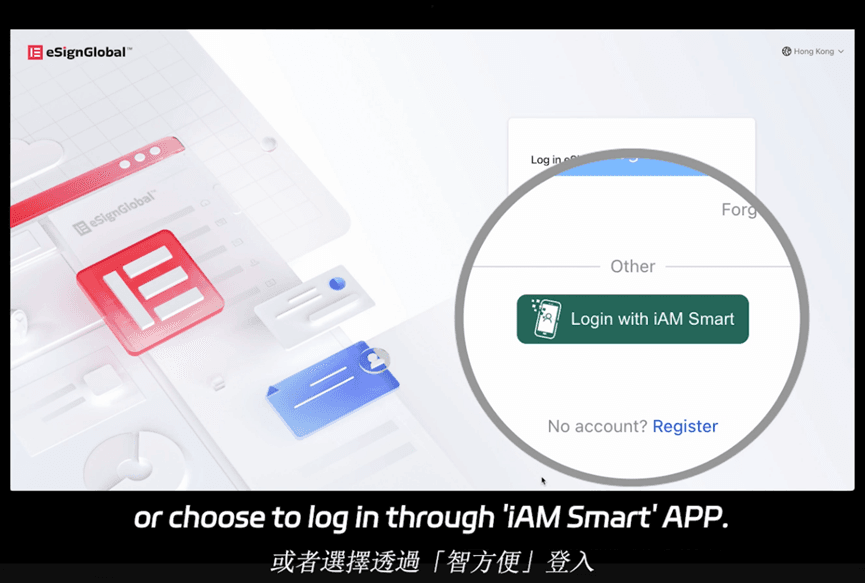
eSignGlobal emerges as a balanced option, particularly for APAC-focused businesses. Its pricing undercuts competitors, with the Essential plan at just $16.6 per month, allowing up to 100 documents for signature, unlimited user seats, and verification via access codes—all on a compliant foundation. This setup delivers strong value, avoiding the envelope caps that plague DocuSign. In the APAC region, eSignGlobal shines with optimizations for speed in China and Southeast Asia, plus seamless integrations with Hong Kong's iAM Smart and Singapore's Singpass for enhanced identity verification. These features ensure regulatory alignment without the surcharges or latency issues of global giants, making it a cost-effective choice for cross-border operations.
Final Thoughts: Choosing the Right E-Signature Partner
Termination penalties in e-signature contracts demand careful scrutiny to avoid financial pitfalls. While providers like DocuSign and Adobe Sign offer robust tools, their high costs, opacity, and regional shortcomings can hinder businesses. For those seeking a DocuSign alternative with regional compliance, eSignGlobal stands out as a practical, efficient selection—balancing affordability, speed, and flexibility for APAC needs. Businesses should evaluate based on their specific footprint to ensure long-term viability.
FAQs
