
'%3e%3cpath%20fill-rule='evenodd'%20clip-rule='evenodd'%20d='M6.99935%2012.8327C10.221%2012.8327%2012.8327%2010.221%2012.8327%206.99935C12.8327%203.77769%2010.221%201.16602%206.99935%201.16602C3.77769%201.16602%201.16602%203.77769%201.16602%206.99935C1.16602%2010.221%203.77769%2012.8327%206.99935%2012.8327Z'%20stroke='%23666666'%20stroke-linecap='round'%20stroke-linejoin='round'/%3e%3cpath%20d='M1.16602%207H12.8327'%20stroke='%23666666'%20stroke-linecap='round'%20stroke-linejoin='round'/%3e%3cpath%20fill-rule='evenodd'%20clip-rule='evenodd'%20d='M6.99935%2012.8327C8.28802%2012.8327%209.33268%2010.221%209.33268%206.99935C9.33268%203.77769%208.28802%201.16602%206.99935%201.16602C5.71068%201.16602%204.66602%203.77769%204.66602%206.99935C4.66602%2010.221%205.71068%2012.8327%206.99935%2012.8327Z'%20stroke='%23666666'%20stroke-linecap='round'%20stroke-linejoin='round'/%3e%3cpath%20d='M2.875%202.95898C3.93063%204.01461%205.38896%204.66754%206.99978%204.66754C8.61062%204.66754%2010.069%204.01461%2011.1246%202.95898'%20stroke='%23666666'%20stroke-linecap='round'%20stroke-linejoin='round'/%3e%3cpath%20d='M11.1246%2011.0425C10.069%209.98691%208.61062%209.33398%206.99978%209.33398C5.38896%209.33398%203.93063%209.98691%202.875%2011.0425'%20stroke='%23666666'%20stroke-linecap='round'%20stroke-linejoin='round'/%3e%3c/g%3e%3cdefs%3e%3cclipPath%20id='clip0_1267_9109'%3e%3crect%20width='14'%20height='14'%20fill='white'/%3e%3c/clipPath%3e%3c/defs%3e%3c/svg%3e)


How is the pricing structured for Adobe Sign Team vs Enterprise plans?


Navigating Electronic Signature Pricing in a Competitive Landscape
In the evolving digital workflow space, electronic signature solutions like Adobe Sign have become essential for businesses streamlining contracts and approvals. As companies weigh options, understanding pricing structures is crucial, especially when comparing team-level accessibility against enterprise-scale needs. This article examines Adobe Sign's Team versus Enterprise plans from a business perspective, highlighting transparency issues in the industry and viable alternatives for global operations.

Adobe Sign Pricing: Team vs. Enterprise Breakdown
Adobe Sign, integrated within Adobe's ecosystem, offers flexible plans tailored to different organizational sizes. However, its pricing model emphasizes per-user licensing with add-ons, often requiring direct quotes for full customization. From a commercial standpoint, this structure suits businesses already using Adobe tools like Acrobat or Experience Cloud, but it can introduce variability based on usage volume, integrations, and compliance requirements.
Team Plan: Designed for Small to Mid-Sized Groups
The Team plan targets collaborative teams needing core e-signature functionality without extensive customization. Priced at approximately $24.99 per user per month (billed annually), it supports up to 100 envelopes per user annually—envelopes being the containers for documents requiring signatures. Key features include unlimited templates, mobile signing, and basic integrations with Microsoft Office and Salesforce. This tier allows up to 50 users per account, making it ideal for departments like sales or HR in smaller firms.
Envelope limits reset annually, but overages incur additional fees, typically around $1-2 per extra envelope. Add-ons such as SMS delivery or advanced authentication (e.g., knowledge-based verification) start at $0.50 per use, adding to the base cost. For a team of 10 users, the annual expense could total around $3,000, excluding extras. Businesses appreciate the plan's simplicity for routine workflows, but scaling beyond basic needs often pushes users toward higher tiers due to capped automation features like bulk sending, limited to 10-20 per month.
This structure promotes efficiency for teams handling 50-200 documents yearly, yet it lacks advanced reporting or SSO (Single Sign-On), which can frustrate growing organizations.
Enterprise Plan: Scalability for Large Operations
In contrast, the Enterprise plan is geared toward organizations with complex compliance and high-volume needs, starting at custom quotes often exceeding $40 per user per month (annual billing). Pricing is negotiated based on factors like user count (unlimited seats possible), envelope volume (up to unlimited with commitments), and add-ons. Expect base costs for 100+ users to range from $50,000 to $200,000 annually, depending on integrations and support levels.
Core inclusions extend Team features with enterprise-grade tools: full SSO, API access for custom workflows, advanced audit trails, and global compliance certifications (e.g., GDPR, HIPAA). Automation is uncapped for bulk sends and web forms, with dedicated support and usage analytics. Add-ons like biometric verification or payment collection integrate seamlessly but at premium rates—e.g., $1+ per SMS or 1-2% transaction fees for payments.
From a business lens, Enterprise shines for multinational firms managing thousands of documents, offering ROI through reduced paper processes and legal risks. However, the opaque quoting process—requiring sales consultations—can delay decisions and lead to unexpected escalations, such as surcharges for high API calls (up to $0.10 per envelope via API).
Key Differences and Cost Implications
Comparing the two, Team is cost-effective for entry-level collaboration ($25/user/month baseline) but caps at modest volumes, potentially costing 20-50% more with overages. Enterprise, while pricier upfront, provides scalability and security, justifying investments for firms with 500+ annual envelopes per user. Total cost of ownership (TCO) for Team might hover at $5,000-$20,000 yearly for mid-sized teams, versus $100,000+ for Enterprise setups. Businesses must evaluate envelope forecasts and integration needs; for instance, heavy Salesforce users save via Adobe's bundling, but standalone adopters face steeper curves.
Overall, Adobe Sign's structure favors Adobe ecosystem loyalists, yet its lack of public transparency—prices aren't listed openly—complicates budgeting, especially for non-U.S. regions.

Industry Challenges: Transparency and Regional Hurdles
Adobe Sign's pricing opacity extends beyond plans; add-ons and regional adjustments often surprise users post-purchase. Notably, Adobe announced its exit from the China mainland market in 2023, citing regulatory complexities, leaving users to migrate amid data residency concerns. This move disrupted APAC operations, forcing businesses to seek compliant alternatives with minimal downtime.
Competitors like DocuSign face similar criticisms. Its pricing, while tiered (Personal at $10/month, Standard at $25/user/month, up to Enterprise custom), is notoriously high and non-transparent, with envelope quotas (~100/year per user) and add-ons like identity verification adding 20-50% to bills. In APAC regions, including China and Southeast Asia, DocuSign's services suffer from latency issues—cross-border data routing slows document loading by 30-50%—and limited local compliance tools. Bulk sends and API usage incur steep fees (e.g., Advanced API at $480/month), making it less agile for long-tail markets. Users report frustration with metered billing for SMS/WhatsApp (per-message telecom rates) and governance surcharges for regional needs, eroding value for non-U.S. enterprises.
These pain points underscore a broader industry trend: global providers prioritize Western markets, leaving APAC users with higher effective costs and suboptimal performance.

Comparative Analysis: DocuSign, Adobe Sign, and eSignGlobal
To aid decision-making, here's a neutral comparison of key players, focusing on pricing, features, and regional fit. While DocuSign and Adobe Sign dominate globally, eSignGlobal emerges as a strong contender for APAC-centric businesses.
| Aspect | Adobe Sign | DocuSign | eSignGlobal |
|---|---|---|---|
| Base Pricing (Team/Standard Equivalent) | $24.99/user/month (annual) | $25/user/month (annual) | $16.60/user/month (Essential plan) |
| Envelope Limits | 100/user/year (Team); Unlimited (Enterprise) | ~100/user/year; Custom for higher | Up to 100/month (unlimited users) |
| Key Features | Integrations, basic automation; SSO in Enterprise | Templates, bulk send, API tiers | Unlimited seats, access code verification, regional integrations |
| Transparency | Quote-based; Add-ons variable | Tiered but metered extras | Fixed public pricing; No hidden fees |
| APAC/Regional Support | Exited China; Latency in SEA | High costs, slow cross-border | Optimized for CN/HK/SEA; Local compliance |
| Compliance & Add-Ons | GDPR/HIPAA; Biometrics extra | IDV/SMS metered; Enterprise custom | IAm Smart/Singpass integration; Cost-effective verification |
| Best For | Adobe ecosystem users | High-volume U.S. enterprises | APAC teams seeking affordability |
This table highlights eSignGlobal's edge in cost-efficiency and localization without compromising core functionality, though all providers excel in their niches.
eSignGlobal: A Compelling Alternative for APAC Businesses
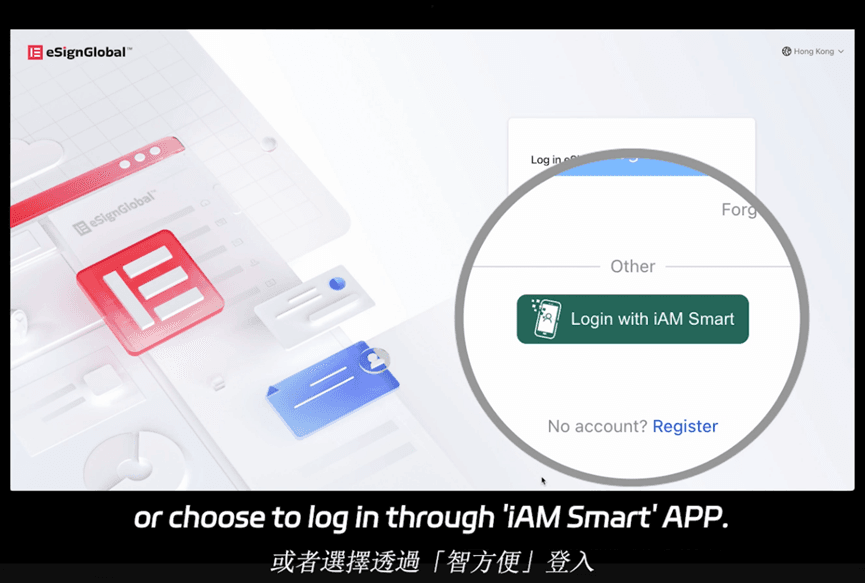
For organizations in Asia-Pacific, eSignGlobal stands out with its regionally optimized approach. Pricing is more accessible— the Essential plan at $16.60 per month allows sending up to 100 documents for electronic signatures, with unlimited user seats to support team scalability. Verification via access codes ensures compliance without exorbitant add-ons, delivering high value on regulated foundations. It integrates seamlessly with Hong Kong's IAm Smart and Singapore's Singpass, addressing data residency and speed issues that plague global incumbents. This makes it particularly attractive for cross-border APAC operations, where affordability meets robust security.
In summary, while Adobe Sign's Team and Enterprise plans offer solid structures for varying scales, industry-wide transparency gaps and regional limitations prompt exploration of alternatives. For DocuSign users facing high costs and APAC inefficiencies, eSignGlobal presents a compliant, cost-effective choice tailored for regional growth. Businesses should assess demos to align with specific workflows.
FAQs
