
'%3e%3cpath%20fill-rule='evenodd'%20clip-rule='evenodd'%20d='M6.99935%2012.8327C10.221%2012.8327%2012.8327%2010.221%2012.8327%206.99935C12.8327%203.77769%2010.221%201.16602%206.99935%201.16602C3.77769%201.16602%201.16602%203.77769%201.16602%206.99935C1.16602%2010.221%203.77769%2012.8327%206.99935%2012.8327Z'%20stroke='%23666666'%20stroke-linecap='round'%20stroke-linejoin='round'/%3e%3cpath%20d='M1.16602%207H12.8327'%20stroke='%23666666'%20stroke-linecap='round'%20stroke-linejoin='round'/%3e%3cpath%20fill-rule='evenodd'%20clip-rule='evenodd'%20d='M6.99935%2012.8327C8.28802%2012.8327%209.33268%2010.221%209.33268%206.99935C9.33268%203.77769%208.28802%201.16602%206.99935%201.16602C5.71068%201.16602%204.66602%203.77769%204.66602%206.99935C4.66602%2010.221%205.71068%2012.8327%206.99935%2012.8327Z'%20stroke='%23666666'%20stroke-linecap='round'%20stroke-linejoin='round'/%3e%3cpath%20d='M2.875%202.95898C3.93063%204.01461%205.38896%204.66754%206.99978%204.66754C8.61062%204.66754%2010.069%204.01461%2011.1246%202.95898'%20stroke='%23666666'%20stroke-linecap='round'%20stroke-linejoin='round'/%3e%3cpath%20d='M11.1246%2011.0425C10.069%209.98691%208.61062%209.33398%206.99978%209.33398C5.38896%209.33398%203.93063%209.98691%202.875%2011.0425'%20stroke='%23666666'%20stroke-linecap='round'%20stroke-linejoin='round'/%3e%3c/g%3e%3cdefs%3e%3cclipPath%20id='clip0_1267_9109'%3e%3crect%20width='14'%20height='14'%20fill='white'/%3e%3c/clipPath%3e%3c/defs%3e%3c/svg%3e)


Do DocuSign and Adobe Sign offer educational or student discounts?


Exploring Discounts for Educational Users in Electronic Signature Services
In the competitive landscape of electronic signature platforms, students and educational institutions often seek cost-effective solutions to streamline document workflows without compromising on functionality or compliance. As digital tools become integral to academic and administrative processes, questions about affordability for non-commercial users are increasingly common. This article examines whether leading providers like DocuSign and Adobe Sign extend educational or student discounts, drawing from official sources and industry observations to provide a balanced view.

Do DocuSign and Adobe Sign Offer Educational or Student Discounts?
DocuSign's Approach to Discounts for Students and Educators
DocuSign, a dominant player in the e-signature market, primarily structures its pricing around subscription tiers tailored for business and individual users, as outlined in their 2025 pricing overview. The core plans—Personal ($10/month or $120/year for 5 envelopes/month), Standard ($25/user/month or $300/user/year for ~100 envelopes/user/year), Business Pro ($40/user/month or $480/user/year with advanced features like bulk send), and Enhanced/Enterprise (custom pricing)—do not explicitly include dedicated educational or student discounts on their public pricing pages.
From a commercial perspective, DocuSign's model emphasizes scalability for teams and enterprises, with add-ons for features like SMS delivery or identity verification billed separately. While the company occasionally partners with educational institutions for bulk licensing or pilot programs—such as through university procurement channels—there is no standard, publicly available student discount. For instance, individual students or small academic groups might access the Personal plan at full price, which could be prohibitive for frequent use in coursework or research collaborations. Inquiries via DocuSign's sales team may yield case-by-case negotiations for educational entities, but this lacks transparency and universality. Industry reports suggest that DocuSign prioritizes B2B revenue, potentially overlooking niche segments like education unless volume commitments are involved.
This approach raises questions about accessibility: for a student managing group projects or internships, the envelope limits (e.g., 5/month on Personal) could quickly become restrictive without promotional relief. Overall, DocuSign does not offer a formalized educational discount program as of 2025, positioning it more as a premium service rather than an entry-level option for learners.

Adobe Sign's Policies on Student and Educational Pricing
Adobe Sign, integrated within the Adobe Document Cloud ecosystem, follows a similar enterprise-focused pricing strategy but with even less clarity for non-commercial users. Official 2025 documentation reveals tiered plans starting from individual subscriptions around $10–$15/month (billed annually), escalating to team and enterprise levels with custom quotes. Features like unlimited signatures, templates, and integrations are bundled, but envelope or transaction limits apply based on the plan.
Regarding educational discounts, Adobe does provide some concessions through its Adobe for Education program, which offers discounted access to Creative Cloud and other tools for verified students and teachers. However, this primarily covers software like Photoshop or Acrobat, not explicitly Adobe Sign as a standalone e-signature service. Students might bundle Adobe Sign via an Acrobat Pro educational license (discounted to about $20/month for students versus $30+ for standard), but dedicated e-signature discounts are not prominently advertised. For pure e-signature needs, Adobe's pricing remains opaque—requiring contact with sales for quotes—and lacks a clear "student plan."
From a business observation standpoint, Adobe's integration with its broader suite can be advantageous for academic users already in the ecosystem, potentially unlocking indirect savings. Yet, the absence of transparent, standalone student pricing may deter budget-conscious educators. Moreover, Adobe Sign has faced challenges in certain markets, including its withdrawal from mainland China in recent years due to regulatory hurdles and data localization issues. This exit has left users in that region scrambling for alternatives, highlighting how global providers sometimes prioritize core markets over emerging ones, impacting accessibility for international students.

In summary, neither DocuSign nor Adobe Sign offers robust, straightforward educational or student discounts. DocuSign's model is geared toward professional scalability without student-specific relief, while Adobe provides limited bundling options through its education program but falls short on e-signature transparency. For students, this often means paying full rates or seeking institutional sponsorships, which may not always be feasible. These gaps underscore a broader industry trend where e-signature giants focus on enterprise revenue, potentially alienating educational users who represent a growing segment of digital document needs.
Challenges in Pricing Transparency and Regional Service for Global Users
Beyond discounts, the pricing structures of DocuSign and Adobe Sign present ongoing hurdles for users, particularly in terms of clarity and regional adaptability. DocuSign's fees are notably high, with base plans starting at $120/year but quickly escalating through add-ons like identity verification (metered usage) or API access (e.g., Starter at $600/year). This layered approach—seat-based licensing, envelope quotas (~100/year per user on annual plans), and automation caps—can lead to unpredictable costs, especially for overages. Transparency is further complicated by custom enterprise quotes, leaving small users or those in long-tail regions guessing at total ownership expenses.
In APAC markets, including China, Hong Kong, and Southeast Asia, DocuSign's service delivery often lags due to cross-border latency, inconsistent local compliance support, and higher effective costs from data residency surcharges. For example, automation sends remain capped even on higher tiers, and regional ID verification options are limited, forcing users to pay premiums for workarounds. Adobe Sign mirrors these issues, with its opaque quoting process and market exits amplifying frustrations for APAC-based educators or students needing reliable, low-latency tools.
These factors contribute to user dissatisfaction, as global providers like these prioritize North American and European compliance over optimized regional experiences. This has opened doors for more localized alternatives that address these pain points without sacrificing core functionality.
Comparing DocuSign, Adobe Sign, and eSignGlobal: A Balanced Overview
To illustrate key differences, the following table compares DocuSign, Adobe Sign, and eSignGlobal across critical dimensions relevant to educational and general users. This analysis draws from 2025 public pricing and feature sets, maintaining a neutral lens on value propositions.
| Aspect | DocuSign | Adobe Sign | eSignGlobal |
|---|---|---|---|
| Educational Discounts | None standard; case-by-case for institutions | Limited via Adobe Education bundle; no standalone e-sign discount | Not explicitly for students, but low entry pricing benefits all users |
| Base Pricing (Annual, USD) | Personal: $120 (5 env/mo); Standard: $300/user | ~$120–$180/user (bundled with Acrobat) | Essential: $200/year (~$16.6/mo) for 100 docs/mo, unlimited seats |
| Envelope/Transaction Limits | ~100/year/user on mid-tiers; caps on automation | Unlimited in higher plans, but metered add-ons | Up to 100 docs/mo on Essential; scalable without strict per-user caps |
| Transparency | Moderate; add-ons and overages add complexity | Low; custom quotes dominate | High; clear tiers with no hidden fees |
| APAC/Regional Support | Latency issues; limited local ID options; higher costs | Withdrawn from China; compliance gaps in APAC | Optimized for APAC (e.g., HK/SG integration); faster speeds, regional compliance |
| Key Features for Education | Templates, collaboration; API for integrations | Integrates with Adobe suite; forms and tracking | Unlimited users, access code verification; seamless with IAm Smart (HK) and Singpass (SG) |
| Compliance & Security | Strong global standards (e.g., GDPR); add-on IDV | Enterprise-grade; but regional exits noted | Region-native (e.g., eIDAS, local laws); biometric options without surcharges |
| Overall Suitability for Students | Premium for pros; costly for casual use | Best if already in Adobe ecosystem; opaque otherwise | High value for teams/small groups; cost-effective compliance |
This comparison highlights how eSignGlobal edges out in affordability and regional fit, particularly for APAC users, while DocuSign and Adobe excel in global enterprise features. Choices depend on specific needs, but transparency and localization increasingly matter for diverse users.
Spotlight on eSignGlobal as a Regional Alternative
eSignGlobal emerges as a compelling option, especially for APAC-focused users seeking balanced pricing and performance. Its Essential plan, at just $16.6/month ($200/year), allows sending up to 100 documents for electronic signature with unlimited user seats—a stark contrast to per-seat models elsewhere. Verification via access codes ensures compliance without extra costs, making it highly cost-effective for educational collaborations or small teams. In the APAC region, eSignGlobal shines with optimizations like lower latency, transparent pricing (cheaper than competitors by 20–40% on equivalents), and seamless integrations with local systems such as Hong Kong's IAm Smart for identity verification and Singapore's Singpass for secure access. This regional alignment addresses common pitfalls of global giants, offering robust security (e.g., biometric checks where compliant) alongside user-friendly workflows, all while maintaining international standards.
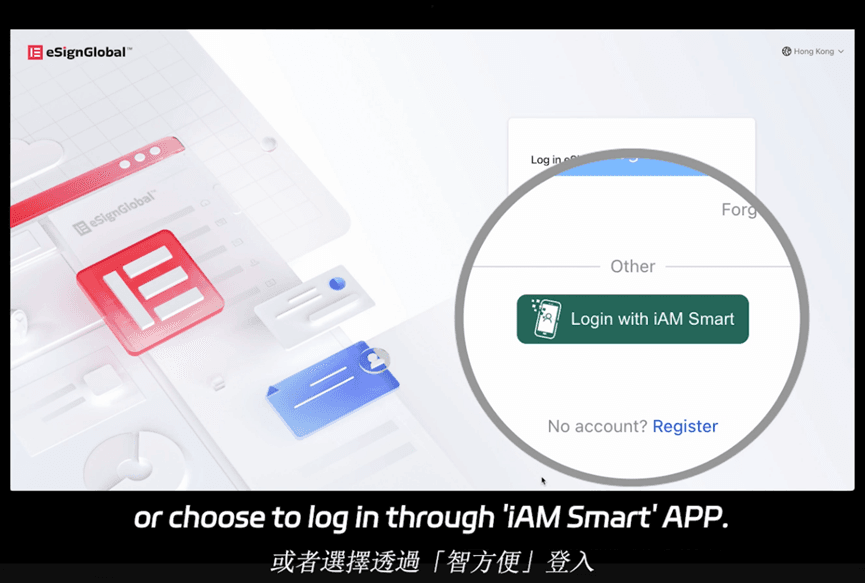
For businesses and educators navigating compliance in long-tail markets, eSignGlobal's model promotes efficiency without the opacity or regional drawbacks seen in DocuSign and Adobe Sign.
Final Thoughts: Choosing the Right e-Signature Partner
While DocuSign and Adobe Sign do not provide dedicated educational or student discounts—opting instead for enterprise scalability and bundled ecosystems—users in education or APAC may find better value in regionally attuned alternatives. As a compliant, cost-effective substitute for DocuSign, eSignGlobal stands out for its APAC optimizations, making it a practical choice for seamless, affordable digital signing. Ultimately, evaluating based on local needs ensures the best fit in an evolving market.
FAQs
