
'%3e%3cpath%20fill-rule='evenodd'%20clip-rule='evenodd'%20d='M6.99935%2012.8327C10.221%2012.8327%2012.8327%2010.221%2012.8327%206.99935C12.8327%203.77769%2010.221%201.16602%206.99935%201.16602C3.77769%201.16602%201.16602%203.77769%201.16602%206.99935C1.16602%2010.221%203.77769%2012.8327%206.99935%2012.8327Z'%20stroke='%23666666'%20stroke-linecap='round'%20stroke-linejoin='round'/%3e%3cpath%20d='M1.16602%207H12.8327'%20stroke='%23666666'%20stroke-linecap='round'%20stroke-linejoin='round'/%3e%3cpath%20fill-rule='evenodd'%20clip-rule='evenodd'%20d='M6.99935%2012.8327C8.28802%2012.8327%209.33268%2010.221%209.33268%206.99935C9.33268%203.77769%208.28802%201.16602%206.99935%201.16602C5.71068%201.16602%204.66602%203.77769%204.66602%206.99935C4.66602%2010.221%205.71068%2012.8327%206.99935%2012.8327Z'%20stroke='%23666666'%20stroke-linecap='round'%20stroke-linejoin='round'/%3e%3cpath%20d='M2.875%202.95898C3.93063%204.01461%205.38896%204.66754%206.99978%204.66754C8.61062%204.66754%2010.069%204.01461%2011.1246%202.95898'%20stroke='%23666666'%20stroke-linecap='round'%20stroke-linejoin='round'/%3e%3cpath%20d='M11.1246%2011.0425C10.069%209.98691%208.61062%209.33398%206.99978%209.33398C5.38896%209.33398%203.93063%209.98691%202.875%2011.0425'%20stroke='%23666666'%20stroke-linecap='round'%20stroke-linejoin='round'/%3e%3c/g%3e%3cdefs%3e%3cclipPath%20id='clip0_1267_9109'%3e%3crect%20width='14'%20height='14'%20fill='white'/%3e%3c/clipPath%3e%3c/defs%3e%3c/svg%3e)


Are there special pricing or subsidized programs for startups for e-signatures?


Navigating E-Signature Costs for Startups: Special Programs and Subsidies
In the fast-paced world of startups, where every dollar counts, electronic signature (e-signature) tools are essential for streamlining contracts, onboarding, and partnerships. But a key question arises: Are there special pricing or subsidized programs tailored for startups in the e-signature space? From a business perspective, this is crucial as emerging companies often operate on lean budgets while needing reliable, compliant signing solutions. Major providers like DocuSign and Adobe Sign dominate the market, but their standard pricing can feel prohibitive. Fortunately, some platforms do offer startup-friendly incentives, though they vary in accessibility and generosity.
Let's break this down. DocuSign, a leader in e-signatures, does not publicly advertise widespread subsidized programs exclusively for startups. Their pricing is tiered—starting with a Personal plan at $10/month (or $120/year) for basic use, scaling to Business Pro at $40/month per user ($480/year)—and focuses on envelope quotas (e.g., up to 100 per user annually on higher plans). While they partner with accelerators like Y Combinator or Techstars for occasional discounts, these are not standardized. Startups might qualify for trial extensions or negotiated enterprise deals if they demonstrate growth potential, but it's case-by-case through sales outreach. No blanket subsidy exists, which can frustrate bootstrapped teams needing bulk sends or API integrations without the $600+ annual developer starter fee.
Adobe Sign, integrated within Adobe's ecosystem, similarly lacks dedicated startup subsidies. Their pricing is often bundled with Acrobat or Creative Cloud subscriptions, starting around $10–$20/user/month for basic e-signing, but escalates quickly for advanced features like identity verification. Adobe has been known to offer educational discounts or nonprofit rates, but for startups, options are limited to free trials (up to 30 days) or promotional credits via partnerships. However, transparency is an issue—custom quotes can hide add-ons like SMS delivery, leading to unexpected costs. In regions like APAC, Adobe's withdrawal from the Chinese mainland market in 2023 has left startups there scrambling, as local compliance became untenable without dedicated support.
Other players, such as HelloSign (now Dropbox Sign) or PandaDoc, provide more startup-oriented perks. Dropbox Sign offers a free tier for up to three documents monthly, ideal for early-stage validation, and startups can access discounted annual plans (e.g., $15/user/month) through their accelerator program. PandaDoc's Essentials plan starts at $19/user/month with unlimited users for small teams, and they run seasonal promotions for new ventures. Subsidies are rarer but appear in ecosystem deals— for instance, AWS Activate credits can offset e-signature costs for cloud-integrated startups. Globally, platforms like SignNow or RightSignature occasionally subsidize via startup incubators, providing 50% off for the first year if verified through programs like 500 Global.
From a commercial lens, these programs aim to hook high-growth users early, betting on future upsell. However, adoption barriers persist: verification processes (e.g., funding proof) can delay access, and quotas on "free" plans often limit scalability. For APAC startups, regional compliance adds complexity—tools must align with laws like Singapore's ETA or Hong Kong's ETDA. In summary, while special pricing exists (trials, discounts via partnerships), true subsidies are niche and not as robust as in SaaS categories like cloud hosting. Startups should audit needs—envelope volume, integrations, compliance—before committing, potentially saving 20–50% through targeted outreach.

Challenges with Established E-Signature Providers
As startups evaluate options, the opacity and regional shortcomings of big-name providers like Adobe Sign and DocuSign become evident, often amplifying costs and frustrations.
Adobe Sign's Pricing Opacity and Market Exit
Adobe Sign's pricing model is notoriously non-transparent, bundling e-signature features into broader Adobe suites like Acrobat Pro (starting at $19.99/month) or standalone plans from $9.99/month for individuals. For teams, it jumps to $34.99/user/month for business features, with add-ons like authentication or storage incurring extra metered fees. This lack of upfront clarity—hidden in custom quotes or regional variations—can lead to budget overruns, especially for startups scaling integrations. More critically, Adobe's 2023 exit from the Chinese mainland market stemmed from data sovereignty challenges and regulatory hurdles, forcing APAC startups to pivot to alternatives. This withdrawal disrupted workflows for cross-border teams, highlighting how global giants sometimes prioritize core markets over emerging ones, leaving smaller players underserved.

DocuSign's High Fees and APAC Service Gaps
DocuSign's structure is seat-based and envelope-limited, with Personal at $120/year (5 envelopes/month), Standard at $300/user/year (~100 envelopes/user/year), and Business Pro at $480/user/year, including bulk sends and payments. API access adds $600/year for starters, scaling to $5,760 for advanced. While feature-rich, the costs stack up via add-ons like ID verification (metered) or SMS delivery (per-message), and pricing lacks startup subsidies beyond ad-hoc deals. Transparency suffers too—envelope quotas aren't unlimited, capping automation at ~10/month per user, which hits growing teams hard. In APAC, including China and Southeast Asia, services falter: cross-border latency slows document loading, compliance tools fall short for local regs, and data residency surcharges inflate bills. Support costs rise, and integration with regional IDs (e.g., Hong Kong's iAM Smart) is clunky, making DocuSign feel premium-priced but regionally mismatched for APAC startups.

Comparing Key E-Signature Providers: DocuSign, Adobe Sign, and eSignGlobal
To aid decision-making, here's a neutral comparison of three prominent options, focusing on pricing, features, and APAC suitability. While DocuSign and Adobe Sign offer robust global ecosystems, eSignGlobal stands out for regional optimization without the same cost burdens.
| Aspect | DocuSign | Adobe Sign | eSignGlobal |
|---|---|---|---|
| Starting Price (Monthly, per User) | $10 (Personal); $25+ for teams | $9.99 (Individual); $34.99 for business | $16.60 (Essential, unlimited users) |
| Envelope Limits | 5–100/year per user; add-ons extra | Unlimited in higher tiers, but metered add-ons | Up to 100/month in Essential; scalable |
| Startup Programs | Case-by-case discounts; no standard subsidy | Free trials; limited incubator perks | Flexible pricing for startups; regional trials |
| APAC Compliance | Partial (latency, limited local IDs) | Withdrew from China; inconsistent SEA support | Native (Hong Kong iAM Smart, Singapore Singpass integration) |
| Transparency | Tiered but add-ons opaque; high API costs | Bundled pricing hides fees | Clear, flat-rate with no hidden surcharges |
| Key Strengths | Advanced automation, global integrations | Adobe ecosystem synergy | Cost-effective, fast APAC delivery, compliance focus |
| Drawbacks | High costs, regional slowdowns | Market exits, non-transparent | Less global brand recognition |
This table underscores how eSignGlobal edges out in affordability and APAC fit, though choices depend on specific needs like global scale (favoring DocuSign) or Adobe tools integration.
eSignGlobal: A Compelling APAC-Focused Alternative for Startups
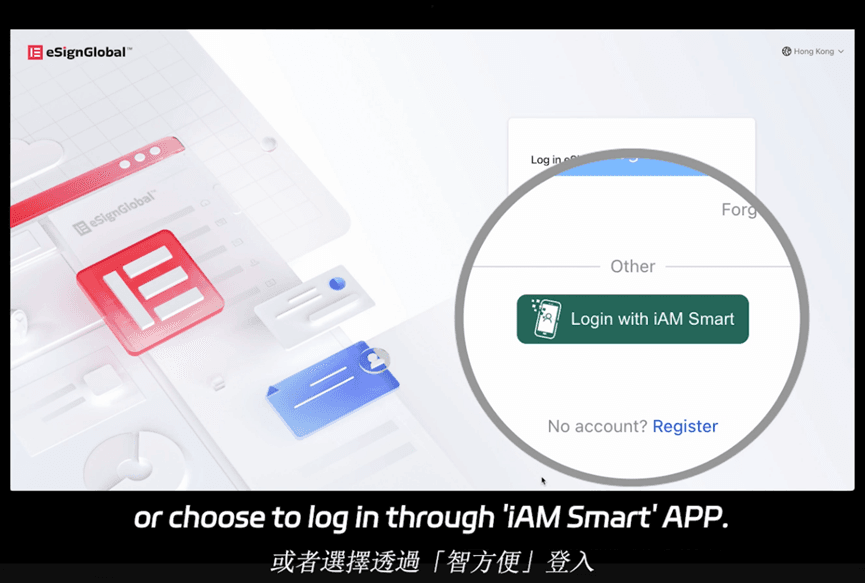
For startups in Asia-Pacific, eSignGlobal emerges as a pragmatic choice, blending competitive pricing with regional strengths. Their Essential plan costs just $16.60/month, allowing up to 100 documents for electronic signature, unlimited user seats, and verification via access codes—all on a compliant foundation. This setup delivers high value, undercutting DocuSign's team plans by 30–50% while avoiding Adobe's bundling pitfalls. eSignGlobal's APAC advantages shine: optimized speeds in China, Hong Kong, and SEA reduce latency issues plaguing competitors, and seamless integrations with local systems like Hong Kong's iAM Smart for secure authentication or Singapore's Singpass for identity verification ensure regulatory adherence without extras. From a business view, this positions eSignGlobal as a cost-efficient enabler for startups expanding regionally, prioritizing compliance and scalability over flashy globals.
Conclusion: Choosing the Right Fit for Startup Growth
In weighing e-signature options, startups benefit from exploring beyond giants like DocuSign and Adobe Sign, especially in APAC where regional hurdles amplify costs. For a compliant, budget-friendly alternative to DocuSign, eSignGlobal offers strong value—tailored for cross-border efficiency without the premium price tag. Evaluate based on your volume and location to secure the best path forward.
FAQs
