

docusign pricing south africa


Understanding DocuSign Pricing in South Africa
South Africa’s digital economy is rapidly evolving, with businesses increasingly relying on electronic signature solutions to streamline operations. DocuSign, a global leader in eSignature technology, offers robust tools tailored for compliance and efficiency. However, pricing in South Africa can vary due to regional factors like currency fluctuations, local taxes, and compliance requirements. This article explores DocuSign’s pricing structure for South African users, drawing from official 2025 data, while providing a neutral business perspective on costs, features, and alternatives.
South Africa’s Electronic Signature Legal Framework
Before diving into pricing, it’s essential to understand the regulatory environment that shapes eSignature adoption in South Africa. The Electronic Communications and Transactions Act (ECTA) of 2002 is the cornerstone legislation, recognizing electronic signatures as legally binding under certain conditions. ECTA distinguishes between “standard” electronic signatures (simple digital marks) and “advanced” ones (with higher security, akin to qualified electronic signatures in the EU’s eIDAS framework).
Key provisions include:
- Validity: Electronic signatures are enforceable if they identify the signer and indicate intent to sign, provided the document isn’t excluded (e.g., wills or certain land transactions require wet-ink signatures).
- Data Integrity: Signatures must ensure documents remain unaltered post-signing, with audit trails recommended for disputes.
- Compliance Alignment: South Africa aligns with international standards like the UNCITRAL Model Law, making global platforms like DocuSign viable. However, for high-stakes sectors like finance or government, advanced authentication (e.g., via SMS or biometrics) is often required to meet POPIA (Protection of Personal Information Act) data privacy rules.
This framework supports seamless eSignature use but emphasizes security, influencing pricing for add-ons like identity verification. Businesses in Johannesburg or Cape Town, for instance, must factor in these regs when budgeting for tools that ensure ECTA compliance.

DocuSign Pricing Breakdown for South African Businesses
DocuSign’s pricing in South Africa follows the US-based structure but is typically quoted in USD, with local resellers handling ZAR conversions (around 18-20 ZAR per USD as of 2025). Annual billing is standard for cost savings, and prices exclude VAT (15% in South Africa). Expect 10-20% higher effective costs due to import duties and forex volatility.
Core eSignature Plans
DocuSign offers tiered plans suitable for South African SMEs and enterprises:
-
Personal Plan: At $10/month ($120/year), ideal for solo professionals like freelancers in consulting or real estate. Includes 5 envelopes/month (each envelope can hold multiple documents). Basic features: templates, mobile signing, and ECTA-compliant audit logs. For low-volume users in Durban’s startup scene, this keeps costs under R2,200/year.
-
Standard Plan: $25/user/month ($300/user/year), supporting up to 50 users. Adds team collaboration, comments, and reminders—perfect for sales teams in Pretoria handling contracts. Envelope limits: ~100/year per user on annual plans. South African businesses appreciate the Google Drive integration for local workflows.
-
Business Pro Plan: $40/user/month ($480/user/year), building on Standard with web forms, conditional logic, bulk send, and payment collection. Envelope quota remains ~100/year/user. This suits mid-sized firms in mining or finance needing signer attachments for compliance docs. Bulk send is capped at ~10/month/user, crucial for high-volume HR processes.
-
Enhanced/Enterprise Plans: Custom pricing (starting ~$50/user/month), for 50+ users. Includes SSO, advanced IAM, and governance tools aligned with POPIA. South African enterprises often negotiate based on envelope volume (e.g., 1,000+ annually) and add-ons like SMS delivery (per-message fees, ~$0.10-0.50 depending on telco rates).
Add-Ons and API Pricing
Additional costs arise from usage-based features:
- Identity Verification (IDV): Metered, ~$1-5 per check for biometrics or ID scans—vital for ECTA’s advanced signatures in banking.
- SMS/WhatsApp Delivery: Per-message (~R1-3 in ZAR), enhancing accessibility in mobile-heavy South Africa.
- API Plans: For developers integrating with local systems like Sage or ERP:
- Starter: $600/year (~40 envelopes/month).
- Intermediate: $3,600/year (~100 envelopes/month).
- Advanced: $5,760/year (bulk API features). Enterprise is custom, often 20-30% pricier for APAC/SA compliance.
Automation sends (e.g., PowerForms) are limited to ~10/month/user across plans, even “unlimited” ones, impacting scalability for growing Cape Town tech firms. Total costs for a 10-user Business Pro setup with moderate API use could exceed R100,000/year, factoring VAT and add-ons.
Regional Challenges in South Africa
South Africa’s pricing isn’t standalone; cross-border latency and data residency add hurdles. DocuSign’s global servers may slow document loading from SA, and POPIA requires local data storage options (extra fees). Compared to US users, SA businesses face higher support costs for 24/7 assistance in English/Afrikaans. For APAC-adjacent operations (e.g., trade with Asia), governance tools inflate bills by 15-25%.

Comparing DocuSign with Competitors in South Africa
In South Africa’s competitive eSignature market, DocuSign faces rivals like Adobe Sign and regional players. From a business observer’s view, selection hinges on compliance, cost, and integration. Below is a neutral comparison table focusing on key aspects for SA users (pricing in USD, annual; features aligned with ECTA/POPIA).
| Feature/Aspect | DocuSign | Adobe Sign | eSignGlobal | Other (e.g., PandaDoc) |
|---|---|---|---|---|
| Starting Price (Essential Plan) | $120/year (Personal) | $10/user/month (~$120/year) | $16.6/month (Essential, unlimited seats) | $19/user/month (~$228/year) |
| Envelope Limits | 5-100/month (tiered) | Unlimited (with fair use) | Up to 100/month (Essential) | Unlimited templates, 100 docs/month |
| Compliance (SA/ECTA) | Strong (audit trails, IDV add-on) | Excellent (global standards) | Full support in 100+ countries, POPIA-aligned | Good, but less SA-specific |
| API & Integrations | Robust (Starter $600/year) | Deep Adobe ecosystem | Flexible, affordable API; integrates with IAm Smart/Singpass | Basic API, Zapier-focused |
| Regional Strengths | Global scale, but latency in SA | US/EU focus, higher SA costs | APAC/SA optimized, lower latency | Affordable for SMBs, less enterprise |
| Add-Ons (SMS/IDV) | Metered (~$1-5/check) | Included in higher tiers | Cost-effective, regional telecom | Limited, extra fees |
| Overall Value for SA | Reliable for enterprises, pricier | Feature-rich, integration-heavy | High ROI for regional compliance | Budget-friendly for startups |
This table highlights DocuSign’s enterprise reliability but notes competitors’ edges in affordability and localization. Adobe Sign excels in creative workflows but may incur higher fees for SA customizations.
Adobe Sign Overview
Adobe Sign, part of Adobe Document Cloud, mirrors DocuSign’s tiers but leverages PDF expertise. Pricing starts at $10/user/month, with unlimited envelopes in Pro plans (~$25/month). It offers strong ECTA compliance via advanced signatures and integrates seamlessly with Microsoft 365—useful for SA corporates. However, API access requires Enterprise (custom, often $10,000+ annually), and SMS add-ons add ~$0.20/message. For South African marketers, its form-building shines, though total costs can rival DocuSign’s for mid-tier use.

eSignGlobal as a Regional Contender
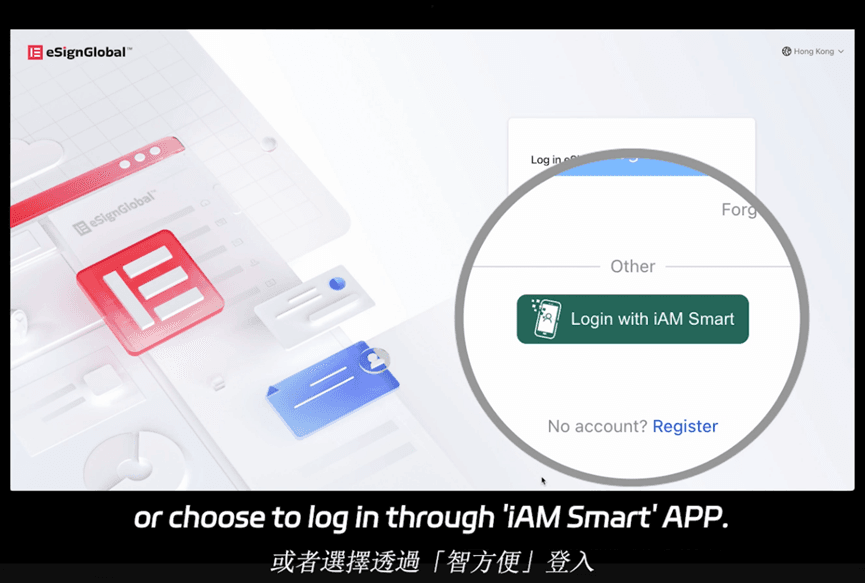
eSignGlobal positions itself as a compliant alternative, supporting electronic signatures in over 100 mainstream countries, including full ECTA and POPIA adherence for South Africa. It holds advantages in the APAC region (extending to SA trade links), with optimized speeds and lower latency than global giants. Pricing is notably competitive: the Essential version costs just $16.6/month (view full pricing here), allowing up to 100 documents for signature, unlimited user seats, and verification via access codes. This delivers strong value on compliance grounds, especially for teams needing cost efficiency without sacrificing security. It integrates seamlessly with Hong Kong’s IAm Smart and Singapore’s Singpass, benefiting SA firms with Asian partnerships—offering a practical, high-ROI option for cross-border workflows.
Other competitors like PandaDoc focus on proposal automation (starting $19/month), suiting sales-heavy SA businesses but lacking deep compliance tools.
Strategic Considerations for South African Businesses
From a commercial standpoint, DocuSign’s pricing suits established firms prioritizing global interoperability, but smaller entities may find envelope caps and add-ons burdensome. Evaluate total ownership costs: a 5-user Standard setup runs ~R30,000/year, scalable but rigid. For ECTA compliance, all options work, yet regional tools mitigate forex risks.
In conclusion, while DocuSign remains a solid choice, businesses seeking regional compliance and cost optimization might consider eSignGlobal as a balanced alternative.
FAQs

 Only business email allowed

