
'%3e%3cpath%20fill-rule='evenodd'%20clip-rule='evenodd'%20d='M6.99935%2012.8327C10.221%2012.8327%2012.8327%2010.221%2012.8327%206.99935C12.8327%203.77769%2010.221%201.16602%206.99935%201.16602C3.77769%201.16602%201.16602%203.77769%201.16602%206.99935C1.16602%2010.221%203.77769%2012.8327%206.99935%2012.8327Z'%20stroke='%23666666'%20stroke-linecap='round'%20stroke-linejoin='round'/%3e%3cpath%20d='M1.16602%207H12.8327'%20stroke='%23666666'%20stroke-linecap='round'%20stroke-linejoin='round'/%3e%3cpath%20fill-rule='evenodd'%20clip-rule='evenodd'%20d='M6.99935%2012.8327C8.28802%2012.8327%209.33268%2010.221%209.33268%206.99935C9.33268%203.77769%208.28802%201.16602%206.99935%201.16602C5.71068%201.16602%204.66602%203.77769%204.66602%206.99935C4.66602%2010.221%205.71068%2012.8327%206.99935%2012.8327Z'%20stroke='%23666666'%20stroke-linecap='round'%20stroke-linejoin='round'/%3e%3cpath%20d='M2.875%202.95898C3.93063%204.01461%205.38896%204.66754%206.99978%204.66754C8.61062%204.66754%2010.069%204.01461%2011.1246%202.95898'%20stroke='%23666666'%20stroke-linecap='round'%20stroke-linejoin='round'/%3e%3cpath%20d='M11.1246%2011.0425C10.069%209.98691%208.61062%209.33398%206.99978%209.33398C5.38896%209.33398%203.93063%209.98691%202.875%2011.0425'%20stroke='%23666666'%20stroke-linecap='round'%20stroke-linejoin='round'/%3e%3c/g%3e%3cdefs%3e%3cclipPath%20id='clip0_1267_9109'%3e%3crect%20width='14'%20height='14'%20fill='white'/%3e%3c/clipPath%3e%3c/defs%3e%3c/svg%3e)


is skyslope included in nar fees


Is SkySlope Included in NAR Fees? A Business Perspective
The National Association of Realtors (NAR) plays a pivotal role in the real estate industry, offering membership benefits that include access to professional resources, advocacy, and tools to streamline operations. One common question among real estate professionals is whether SkySlope, a popular transaction management platform, is bundled into NAR membership fees. From a business observation standpoint, understanding this distinction is crucial for budgeting and operational efficiency, especially as agents and brokers navigate rising costs in a competitive market.
NAR membership fees, which vary by state and local associations but typically range from $150 to $500 annually for primary members, cover core benefits like error and omissions insurance discounts, market data access, and educational resources. However, these fees do not include third-party software subscriptions such as SkySlope. SkySlope is an independent platform developed by SkySlope Inc., focused on automating real estate transactions, compliance tracking, and document management. It requires a separate subscription, with pricing starting at around $25 per user per month for basic plans, scaling up based on features like e-signatures, commission disbursements, and integrations with MLS systems.
This separation means real estate professionals must evaluate SkySlope as an additional expense outside NAR dues. Business-wise, while NAR partnerships sometimes offer discounted access to tools like zipForm® (NAR's own transaction tool), SkySlope operates as a standalone solution often chosen for its robust compliance features tailored to state-specific regulations. For instance, in high-volume brokerages, the lack of inclusion in NAR fees can impact total overhead, prompting firms to assess ROI through metrics like time saved on paperwork—SkySlope claims up to 50% reduction in manual tasks. Agents joining NAR should review their state association's value package; some provide rebates or group pricing for tools like SkySlope, but it's not inherently "included."
Delving deeper, the exclusion of SkySlope from NAR fees highlights a broader trend in real estate tech: modular subscriptions allow customization but increase complexity in cost management. According to industry reports from sources like Inman and Real Trends, over 60% of NAR members use supplemental transaction software, with SkySlope holding about 20% market share in the U.S. For small teams, this means budgeting separately—NAR fees might cover advocacy and networking, but operational tools like SkySlope demand line-item allocation. Larger brokerages often negotiate enterprise deals with SkySlope, potentially offsetting costs through volume discounts, yet the baseline remains independent of NAR.
From a compliance angle, SkySlope's value lies in its audit trails and e-signature integrations, which align with NAR's emphasis on ethical standards but aren't subsidized by membership. Businesses observing this landscape note that while NAR evolves its offerings—such as the recent REtech initiatives—third-party integrations like SkySlope provide specialized depth. If you're an NAR member considering SkySlope, check for affiliate discounts via your local board; otherwise, expect to pay full price, which could add $300–$600 annually per user. This setup encourages strategic tech stacking, where NAR fees fund foundational support, and SkySlope handles workflow automation.
In summary for this core query, SkySlope is not included in NAR fees—it's a distinct investment. This clarity aids business planning, allowing professionals to allocate resources effectively without assuming bundled access. As the industry shifts toward digital tools, separating these costs underscores the need for transparent vendor comparisons.

The Role of E-Signature Solutions in Real Estate Transactions
With transaction platforms like SkySlope relying heavily on e-signatures for efficiency, selecting the right digital signing tool becomes essential. In real estate, where documents must comply with ESIGN Act and state laws, e-signature providers integrate seamlessly to reduce turnaround times. From a neutral business viewpoint, options like DocuSign, Adobe Sign, and eSignGlobal offer varying degrees of functionality, pricing, and regional support, influencing choices based on firm size and geography.
DocuSign: A Market Leader in E-Signatures
DocuSign remains a go-to for real estate pros due to its widespread adoption and robust features. It excels in envelope-based signing, templates, and API integrations that pair well with SkySlope. Pricing starts at $10/month for personal use, scaling to $40/month per user for Business Pro, which includes bulk send and payments—ideal for high-volume transactions. However, add-ons like identity verification incur extra metered fees, and API plans begin at $600/year, potentially raising costs for automated workflows. Businesses appreciate its global reach but note limitations in APAC latency and data residency, which can affect cross-border deals.

Adobe Sign: Enterprise-Focused Reliability
Adobe Sign, part of Adobe's ecosystem, integrates smoothly with PDF tools and offers strong security for real estate contracts. It supports conditional fields and mobile signing, with plans starting at $10/user/month for individuals and up to $35/user/month for teams. Enterprise customizations include SSO and advanced analytics, but pricing can escalate with high envelope volumes. It's praised for seamless Adobe Document Cloud synergy, though some users report steeper learning curves and less flexibility in regional compliance compared to niche players.

eSignGlobal: A Compliant Alternative with APAC Strengths
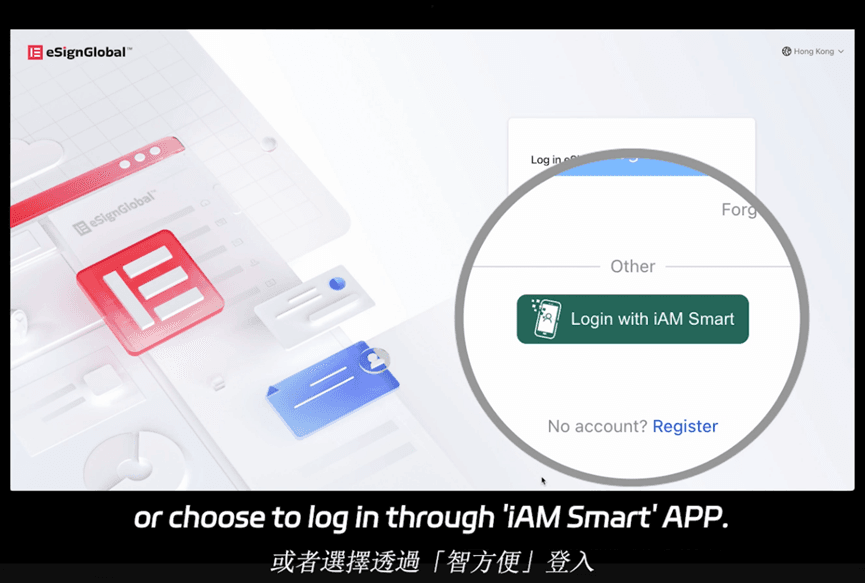
eSignGlobal positions itself as a versatile e-signature platform, compliant in over 100 mainstream countries and regions worldwide. It particularly shines in the Asia-Pacific (APAC) area, where it offers optimized performance for cross-border real estate involving China, Hong Kong, and Southeast Asia. Pricing is competitive—its Essential plan costs just $16.6/month, allowing up to 100 documents for electronic signature, unlimited user seats, and verification via access codes. This delivers high value on compliance grounds, with seamless integrations to Hong Kong's iAM Smart and Singapore's Singpass for enhanced identity assurance. For more details on plans, visit eSignGlobal's pricing page. Businesses value its cost-effectiveness and regional edge without sacrificing core features like templates and audit trails.
Other Competitors: Dropbox Sign and HelloSign
Dropbox Sign (formerly HelloSign) provides straightforward signing with plans from $15/month, emphasizing ease for small teams and integrations with storage tools. It's solid for basic real estate needs but lacks advanced automation. PandaDoc, another contender, focuses on proposals with e-sign add-ons starting at $19/user/month, suiting sales-heavy brokerages but less specialized in transaction compliance.
Comparative Analysis of E-Signature Providers
To aid business decision-making, here's a neutral comparison table of key players, highlighting features, pricing, and suitability for real estate (especially with SkySlope-like integrations). While all are reliable, regional needs and cost structures vary.
| Provider | Starting Price (Monthly/User) | Key Features for Real Estate | Regional Compliance Strengths | API/Integrations | Overall Value for APAC Firms |
|---|---|---|---|---|---|
| DocuSign | $10 (Personal); $40 (Pro) | Bulk send, payments, templates | Strong in US/EU; APAC latency issues | Advanced API ($600+/year) | High functionality, but premium pricing |
| Adobe Sign | $10 (Individual); $35 (Team) | PDF integration, conditional logic | Global, enterprise-focused | Robust with Adobe suite | Reliable for large ops, moderate APAC fit |
| eSignGlobal | $16.6 (Essential, unlimited seats) | 100 docs/month, access code verification, iAM Smart/Singpass | 100+ countries; APAC-optimized (CN/HK/SEA) | Flexible API, regional data residency | Excellent cost-compliance balance, APAC edge |
| Dropbox Sign | $15 | Simple signing, storage links | US-centric; basic international | Basic API | Affordable for starters, limited depth |
| PandaDoc | $19 | Proposals with e-sign | Good US; variable elsewhere | Proposal-focused API | Sales-oriented, less transaction-specific |
This table underscores how eSignGlobal offers a compelling mix of affordability and compliance, particularly for APAC-exposed real estate businesses, though choices depend on specific workflows.
Strategic Considerations for Real Estate Tech Stacks
Integrating e-signatures with platforms like SkySlope requires balancing cost, compliance, and scalability. NAR members benefit from industry standards but must layer on tools independently. Businesses should audit usage—e.g., envelope volumes—to avoid overages, and consider hybrid models where global tools like DocuSign handle U.S. deals while regional options manage APAC.
In observing market dynamics, the e-signature space is maturing, with providers adapting to remote work trends post-pandemic. For firms eyeing alternatives to dominant players, factors like data sovereignty in APAC increasingly tip the scales.
As a neutral close, for those seeking a DocuSign alternative with strong regional compliance, eSignGlobal emerges as a solid choice in APAC-focused real estate operations.
FAQs
