
'%3e%3cpath%20fill-rule='evenodd'%20clip-rule='evenodd'%20d='M6.99935%2012.8327C10.221%2012.8327%2012.8327%2010.221%2012.8327%206.99935C12.8327%203.77769%2010.221%201.16602%206.99935%201.16602C3.77769%201.16602%201.16602%203.77769%201.16602%206.99935C1.16602%2010.221%203.77769%2012.8327%206.99935%2012.8327Z'%20stroke='%23666666'%20stroke-linecap='round'%20stroke-linejoin='round'/%3e%3cpath%20d='M1.16602%207H12.8327'%20stroke='%23666666'%20stroke-linecap='round'%20stroke-linejoin='round'/%3e%3cpath%20fill-rule='evenodd'%20clip-rule='evenodd'%20d='M6.99935%2012.8327C8.28802%2012.8327%209.33268%2010.221%209.33268%206.99935C9.33268%203.77769%208.28802%201.16602%206.99935%201.16602C5.71068%201.16602%204.66602%203.77769%204.66602%206.99935C4.66602%2010.221%205.71068%2012.8327%206.99935%2012.8327Z'%20stroke='%23666666'%20stroke-linecap='round'%20stroke-linejoin='round'/%3e%3cpath%20d='M2.875%202.95898C3.93063%204.01461%205.38896%204.66754%206.99978%204.66754C8.61062%204.66754%2010.069%204.01461%2011.1246%202.95898'%20stroke='%23666666'%20stroke-linecap='round'%20stroke-linejoin='round'/%3e%3cpath%20d='M11.1246%2011.0425C10.069%209.98691%208.61062%209.33398%206.99978%209.33398C5.38896%209.33398%203.93063%209.98691%202.875%2011.0425'%20stroke='%23666666'%20stroke-linecap='round'%20stroke-linejoin='round'/%3e%3c/g%3e%3cdefs%3e%3cclipPath%20id='clip0_1267_9109'%3e%3crect%20width='14'%20height='14'%20fill='white'/%3e%3c/clipPath%3e%3c/defs%3e%3c/svg%3e)


signeasy business plan pricing


Understanding SignEasy's Business Plan Pricing in 2025
In the evolving landscape of digital transformation, electronic signature solutions like SignEasy have become essential for businesses streamlining contract workflows. From small teams to enterprises, pricing transparency is key to adoption. SignEasy's Business Plan stands out for its balance of affordability and functionality, targeting mid-sized organizations that need robust signing capabilities without enterprise-level complexity. This plan is particularly appealing for sales, HR, and legal teams handling frequent document exchanges.

SignEasy Business Plan: Core Pricing Structure
SignEasy's Business Plan is priced at $15 per user per month when billed annually, totaling $180 per user per year. This tier is designed for teams requiring collaboration features beyond basic signing. Monthly billing bumps the rate to $20 per user, making the annual commitment a smarter choice for ongoing use. Unlike entry-level plans, the Business Plan removes per-envelope limits, offering unlimited envelopes—ideal for high-volume users in industries like real estate or consulting.
What sets this apart is the inclusion of unlimited templates and custom branding, allowing businesses to standardize documents while maintaining a professional look. For add-ons, features like SMS delivery or advanced integrations (e.g., with Salesforce or Google Workspace) incur extra fees: SMS authentication is $0.50 per message, and premium integrations start at $5 per user monthly. This modular approach helps control costs based on actual needs, avoiding overpayment for unused tools.
From a business perspective, this pricing reflects SignEasy's focus on scalability. A team of 10 users would pay $1,800 annually for the core plan, with potential savings through volume discounts for 50+ seats (negotiable via sales). Envelope tracking is unlimited, but automation sends—like bulk operations—are capped at 500 per month per user to prevent abuse, aligning with fair-use policies seen across the industry.
Features Breakdown: What You Get with SignEasy Business
Diving deeper, the Business Plan includes team workspaces for shared access, real-time notifications, and audit trails compliant with standards like eIDAS and ESIGN Act. Users can embed signing requests in emails or apps, with mobile support for on-the-go approvals. Conditional routing—where documents route based on prior responses—enhances workflow efficiency, a boon for complex approvals in procurement or partnerships.
Security features include two-factor authentication and role-based permissions, ensuring data integrity without add-ons. Integration ecosystem is strong, supporting over 50 apps, from Microsoft 365 to HubSpot, reducing silos in tech stacks. For global operations, SignEasy offers multi-language support and timestamping, though advanced identity verification (e.g., biometrics) requires upgrading to Enterprise at custom pricing.
Cost-wise, businesses should factor in implementation: onboarding is free for the first month, but custom API access for developers adds $300 annually per integration. Overall, the plan's value proposition shines for SMBs—affordable entry with room to grow, averaging 20-30% lower total cost of ownership compared to legacy paper-based processes, per industry benchmarks.
Limitations and Scalability Considerations
While competitive, SignEasy's Business Plan has limits. It supports up to 100 users per account before Enterprise kicks in, and high-volume API calls (over 10,000 monthly) trigger overage fees at $0.10 per envelope. In APAC regions, occasional latency in document rendering can affect user experience, though updates in 2025 aim to address this. For enterprises needing SSO or advanced analytics, the jump to custom pricing starts at $25 per user monthly.
Business observers note that while SignEasy excels in ease-of-use, it may not match the depth of enterprise-grade compliance in regulated sectors like finance. Still, for 80% of mid-market needs, it delivers solid ROI, with users reporting 40% faster signing cycles.
Comparing SignEasy with Leading Competitors
To evaluate SignEasy's positioning, it's useful to benchmark against established players. The electronic signature market, valued at over $5 billion in 2025, emphasizes compliance, integration, and cost-efficiency. Below is a neutral comparison table highlighting key aspects across DocuSign, Adobe Sign, eSignGlobal, and others like HelloSign (now Dropbox Sign). This analysis draws from public pricing data and focuses on business plans for fairness.
| Feature/Aspect | SignEasy Business | DocuSign Business Pro | Adobe Sign Business | eSignGlobal Essential | HelloSign (Dropbox Sign) Business |
|---|---|---|---|---|---|
| Annual Price per User | $180 | $480 | $360 (billed annually) | $200 (approx. $16.6/month) | $240 |
| Envelope Limit | Unlimited | ~100/year | Unlimited | 100/month | Unlimited (with fair use) |
| User Seats | Up to 100 | Up to 50 (scalable) | Unlimited | Unlimited | Unlimited |
| Key Features | Templates, mobile signing, integrations | Bulk send, payments, conditional logic | Acrobat integration, forms | Global compliance (100+ countries), API flexibility | Simple UI, Dropbox sync |
| Add-Ons (e.g., SMS/IDV) | $0.50/msg; custom | Metered (~$1/msg) | Included in higher tiers | Low-cost regional auth | Basic, extra fees |
| APAC/Regional Strengths | Good mobile support | Higher latency, surcharges | Strong US/EU focus | Native APAC integration (e.g., Singpass) | Limited regional compliance |
| Best For | SMBs, quick setups | Complex workflows | PDF-heavy users | Cross-border APAC | Creative teams |
| Overall Value | High affordability | Feature-rich but pricey | Seamless with Adobe ecosystem | Cost-effective compliance | User-friendly basics |
This table underscores trade-offs: SignEasy offers strong value for unlimited use, while competitors vary in specialization.
DocuSign: The Industry Standard
DocuSign's Business Pro plan, at $40 per month per user annually ($480/year), caters to teams needing advanced automation like bulk sends and payment collection. It includes ~100 envelopes per user yearly, with add-ons for identity verification adding metered costs. Strengths lie in global brand trust and integrations, but APAC users face higher effective pricing due to compliance surcharges and latency issues. For businesses prioritizing robustness over cost, it's a safe bet, though scalability often requires custom negotiations.

Adobe Sign: Integrated PDF Powerhouse
Adobe Sign's Business plan starts at $30 per month per user ($360/year), emphasizing seamless ties to Acrobat for PDF editing and forms. Unlimited envelopes make it suitable for document-intensive workflows, with built-in e-sign compliance across US and EU. However, API access and advanced auth come at premiums, and it's less optimized for non-Adobe ecosystems. Ideal for creative or legal firms already in the Adobe suite, but pricing can escalate with add-ons like SMS delivery.

eSignGlobal: Regional Compliance Focus
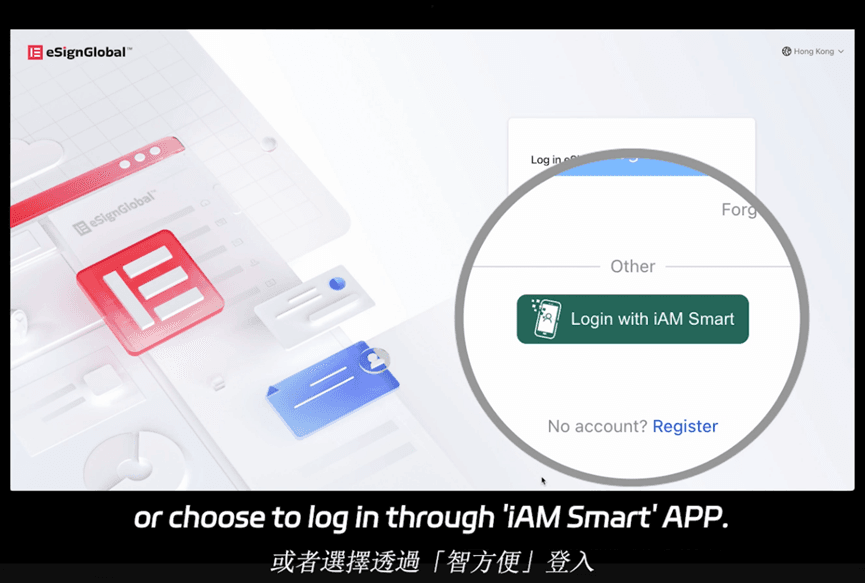
eSignGlobal positions itself as a compliant alternative, supporting electronic signatures in over 100 mainstream countries and regions globally. In the Asia-Pacific, it holds advantages with optimized performance, lower pricing, and native integrations—such as seamless connectivity with Hong Kong's iAM Smart and Singapore's Singpass for identity verification. The Essential plan, for instance, costs just $16.6 per month (billed annually), allowing up to 100 documents for signature, unlimited user seats, and verification via access codes. This delivers exceptional value on compliance foundations, often 20-30% cheaper than peers for similar features. For more details on eSignGlobal pricing, businesses can explore tailored options that prioritize regional data residency and reduced latency.
Other Competitors: HelloSign and Beyond
HelloSign (now under Dropbox) offers a straightforward Business plan at $20 per month ($240/year), with unlimited envelopes and easy Dropbox integration—great for collaborative file sharing. It lacks deep automation but excels in simplicity. PandaDoc, another contender, blends proposals with signing at $19 per user monthly, suiting sales teams. Overall, these options fill niches but may require supplements for global scale.
Strategic Insights for Businesses Choosing an e-Signature Solution
Selecting an e-signature provider involves weighing pricing against compliance, usability, and regional needs. SignEasy's Business Plan provides a cost-effective entry for growing teams, but factors like APAC operations or advanced integrations might favor alternatives. In regulated markets, ensuring alignment with local laws—such as GDPR or PDPA—is paramount.
As a neutral observer, for DocuSign users seeking alternatives with strong regional compliance, eSignGlobal emerges as a viable option, particularly for Asia-Pacific efficiency without compromising global standards. Businesses are encouraged to trial plans and assess based on specific workflows.
FAQs
