
'%3e%3cpath%20fill-rule='evenodd'%20clip-rule='evenodd'%20d='M6.99935%2012.8327C10.221%2012.8327%2012.8327%2010.221%2012.8327%206.99935C12.8327%203.77769%2010.221%201.16602%206.99935%201.16602C3.77769%201.16602%201.16602%203.77769%201.16602%206.99935C1.16602%2010.221%203.77769%2012.8327%206.99935%2012.8327Z'%20stroke='%23666666'%20stroke-linecap='round'%20stroke-linejoin='round'/%3e%3cpath%20d='M1.16602%207H12.8327'%20stroke='%23666666'%20stroke-linecap='round'%20stroke-linejoin='round'/%3e%3cpath%20fill-rule='evenodd'%20clip-rule='evenodd'%20d='M6.99935%2012.8327C8.28802%2012.8327%209.33268%2010.221%209.33268%206.99935C9.33268%203.77769%208.28802%201.16602%206.99935%201.16602C5.71068%201.16602%204.66602%203.77769%204.66602%206.99935C4.66602%2010.221%205.71068%2012.8327%206.99935%2012.8327Z'%20stroke='%23666666'%20stroke-linecap='round'%20stroke-linejoin='round'/%3e%3cpath%20d='M2.875%202.95898C3.93063%204.01461%205.38896%204.66754%206.99978%204.66754C8.61062%204.66754%2010.069%204.01461%2011.1246%202.95898'%20stroke='%23666666'%20stroke-linecap='round'%20stroke-linejoin='round'/%3e%3cpath%20d='M11.1246%2011.0425C10.069%209.98691%208.61062%209.33398%206.99978%209.33398C5.38896%209.33398%203.93063%209.98691%202.875%2011.0425'%20stroke='%23666666'%20stroke-linecap='round'%20stroke-linejoin='round'/%3e%3c/g%3e%3cdefs%3e%3cclipPath%20id='clip0_1267_9109'%3e%3crect%20width='14'%20height='14'%20fill='white'/%3e%3c/clipPath%3e%3c/defs%3e%3c/svg%3e)


how much is signeasy app


Understanding SignEasy Pricing in 2025
When businesses and individuals seek efficient electronic signature solutions, one of the first questions that arises is "how much is the SignEasy app?" SignEasy, a popular mobile-first e-signature platform, offers a range of pricing tiers designed to cater to freelancers, small teams, and larger enterprises. As of 2025, SignEasy's pricing structure emphasizes flexibility, with options for monthly or annual billing, and it integrates seamlessly with tools like Google Drive, Dropbox, and Salesforce. The app's core value lies in its user-friendly interface for signing, sending, and tracking documents on the go, making it a go-to for remote workforces.
SignEasy's free plan provides a solid entry point, allowing users to sign up to 3 documents per month at no cost. This tier includes basic features like unlimited personal signing, mobile app access, and template creation, ideal for occasional users or those testing the waters. However, for more robust needs, the paid plans kick in. The Personal plan starts at $10 per user per month (or $96 annually, saving 20%), supporting up to 10 documents monthly with added features such as unlimited sending, custom branding, and priority support. This makes it suitable for solo professionals or small-scale operations where cost-efficiency is key.
For teams, SignEasy's Standard plan is priced at $15 per user per month (or $144 annually per user), accommodating up to 50 documents per month. It unlocks team collaboration tools, including shared templates, audit trails, and integrations with CRM systems. Businesses handling higher volumes might opt for the Business plan at $25 per user per month ($240 annually), which removes document limits entirely and adds advanced security like two-factor authentication, bulk sending, and API access for custom workflows. Enterprise customizations are available for large organizations, often involving volume-based discounts and dedicated support, though exact quotes require contacting sales.
Add-ons can influence the total cost. For instance, SMS delivery for signatures adds about $0.10 per message, while advanced integrations or storage beyond 5GB might incur extra fees starting at $5 per month. SignEasy also offers a 14-day free trial for paid plans, allowing users to evaluate features without upfront commitment. From a business observation standpoint, SignEasy's pricing remains competitive in the mid-tier market, balancing affordability with functionality. It's particularly appealing for mobile-heavy users in industries like real estate, legal, and sales, where quick turnaround is essential. However, envelope limits on lower plans could constrain high-volume users, prompting a need to scale up quickly.
Overall, the effective cost of SignEasy depends on usage patterns. A small team of three on the Standard plan might spend around $432 annually, while a growing business could invest $2,880 for the Business tier across 12 users. This scalability helps maintain neutrality in evaluations, as it avoids locking users into overpriced plans while encouraging growth.

Comparing SignEasy with Leading Competitors
In the electronic signature landscape, SignEasy faces stiff competition from established players like DocuSign, Adobe Sign, and regional alternatives such as eSignGlobal. Each offers unique strengths in pricing, compliance, and features, making a side-by-side analysis crucial for informed decision-making. From a commercial perspective, these tools vary in global reach, integration depth, and cost structures, influencing choices based on geography and operational scale.
DocuSign: The Industry Standard
DocuSign remains a benchmark for e-signature solutions, with pricing tiers that scale from individual to enterprise levels. The Personal plan costs $120 annually ($10 monthly) for up to 5 envelopes, while the Standard tier is $300 per user per year ($25 monthly) with team features and around 100 envelopes annually. Business Pro at $480 per user per year ($40 monthly) adds bulk sending and payment collection. API plans start at $600 yearly for basic integrations, escalating to custom enterprise options. DocuSign excels in comprehensive compliance and global adoption but can feel premium-priced for smaller users, especially with add-ons like identity verification incurring metered fees.

Adobe Sign: Enterprise-Focused Integration
Adobe Sign, part of the Adobe Document Cloud, integrates tightly with PDF tools and enterprise ecosystems like Microsoft Office and Salesforce. Pricing begins with a free trial, followed by individual plans at $12.99 per month for basic signing and 10 transactions. Team plans start at $24.99 per user per month (billed annually), supporting unlimited transactions with features like conditional routing and API access. Enterprise editions are custom-priced, often exceeding $40 per user monthly, emphasizing advanced analytics and security. While Adobe Sign shines in document-heavy workflows, its costs can accumulate with storage and delivery add-ons, making it less ideal for budget-conscious SMBs.

eSignGlobal: Regional Compliance Specialist
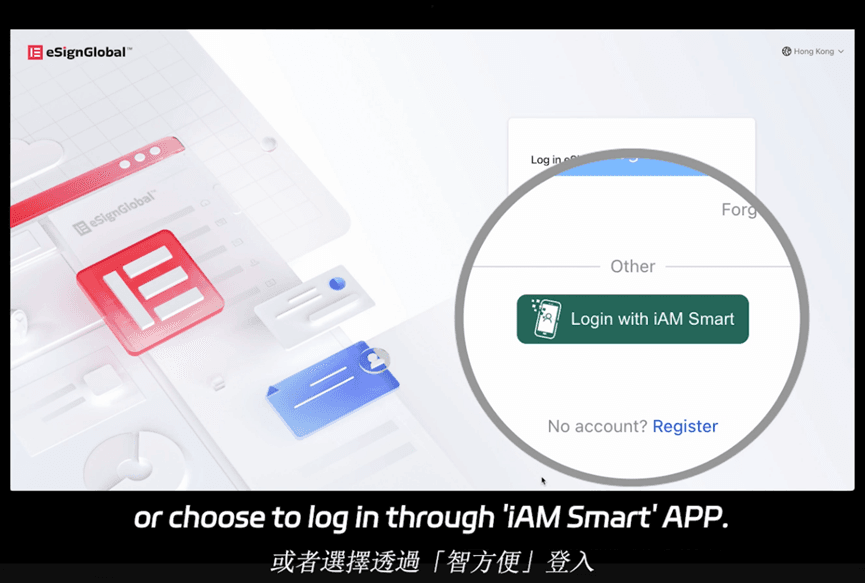
eSignGlobal positions itself as a compliant, cost-effective option, supporting electronic signatures in over 100 mainstream countries and regions worldwide. It holds a particular advantage in the Asia-Pacific (APAC) area, where it aligns with local regulations more natively than some global giants. Pricing is transparent and competitive; for details, explore their official pricing page. The Essential version, for example, costs just $16.60 per month, allowing up to 100 documents for electronic signature, unlimited user seats, and verification via access codes. This setup delivers high value on compliance grounds, with seamless integrations to Hong Kong's iAM Smart and Singapore's Singpass, enhancing efficiency in cross-border operations without the premium surcharges often seen in competitors.
Other Competitors: HelloSign and PandaDoc
HelloSign (now Dropbox Sign) offers a free tier for 3 signatures monthly, with Pro at $15 per user per month for unlimited sends and team features. PandaDoc combines e-signing with proposal automation, starting at $19 per user per month for Essentials, up to $49 for Business. These alternatives focus on niche strengths—HelloSign on simplicity, PandaDoc on sales pipelines—but may lack the broad compliance of larger players.
Pricing and Feature Comparison Table
To aid in objective evaluation, here's a markdown comparison of key competitors, highlighting pricing (annual per user, where applicable), core features, and regional strengths. This table draws from 2025 verified data, noting eSignGlobal's edge in APAC affordability and compliance without overshadowing others' global capabilities.
| Competitor | Starting Price (Annual/User) | Envelope Limit (Base Plan) | Key Features | Regional Strengths | Best For |
|---|---|---|---|---|---|
| SignEasy | $96 ($10/mo) | 10/month (Personal) | Mobile-first, integrations, bulk send | Global, mobile users | Freelancers, small teams |
| DocuSign | $120 (Personal) / $300 (Std) | 5/month (Personal); ~100/yr (Std) | Templates, payments, API tiers | Worldwide compliance, enterprise | High-volume businesses |
| Adobe Sign | $156 ($12.99/mo) | 10/month (Individual) | PDF integration, conditional logic | Enterprise ecosystems (US/EU) | Document workflows |
| eSignGlobal | $199 ($16.60/mo Essential) | 100/month (Essential) | Unlimited seats, access code verify, APAC integrations | 100+ countries, APAC optimized | Regional compliance, cost savings |
| HelloSign | $180 ($15/mo) | Unlimited (Pro) | Simple UI, Dropbox sync | US-focused simplicity | Quick personal/business signs |
| PandaDoc | $228 ($19/mo) | Unlimited (Essentials) | Proposals, analytics, templates | Sales teams globally | Proposal + signing combos |
This comparison underscores how pricing ties to usage and geography. DocuSign and Adobe Sign lead in feature depth but at higher costs, while eSignGlobal offers balanced value for APAC-centric needs. SignEasy holds its own for mobile accessibility, but teams should assess total ownership costs, including add-ons and support.
Final Thoughts on eSignature Choices
In summary, while SignEasy provides accessible pricing starting at $10 monthly for core needs, the broader market offers diverse options tailored to specific business contexts. For those seeking DocuSign alternatives with strong regional compliance, eSignGlobal emerges as a neutral, value-driven choice in APAC and beyond.
FAQs
