
'%3e%3cpath%20fill-rule='evenodd'%20clip-rule='evenodd'%20d='M6.99935%2012.8327C10.221%2012.8327%2012.8327%2010.221%2012.8327%206.99935C12.8327%203.77769%2010.221%201.16602%206.99935%201.16602C3.77769%201.16602%201.16602%203.77769%201.16602%206.99935C1.16602%2010.221%203.77769%2012.8327%206.99935%2012.8327Z'%20stroke='%23666666'%20stroke-linecap='round'%20stroke-linejoin='round'/%3e%3cpath%20d='M1.16602%207H12.8327'%20stroke='%23666666'%20stroke-linecap='round'%20stroke-linejoin='round'/%3e%3cpath%20fill-rule='evenodd'%20clip-rule='evenodd'%20d='M6.99935%2012.8327C8.28802%2012.8327%209.33268%2010.221%209.33268%206.99935C9.33268%203.77769%208.28802%201.16602%206.99935%201.16602C5.71068%201.16602%204.66602%203.77769%204.66602%206.99935C4.66602%2010.221%205.71068%2012.8327%206.99935%2012.8327Z'%20stroke='%23666666'%20stroke-linecap='round'%20stroke-linejoin='round'/%3e%3cpath%20d='M2.875%202.95898C3.93063%204.01461%205.38896%204.66754%206.99978%204.66754C8.61062%204.66754%2010.069%204.01461%2011.1246%202.95898'%20stroke='%23666666'%20stroke-linecap='round'%20stroke-linejoin='round'/%3e%3cpath%20d='M11.1246%2011.0425C10.069%209.98691%208.61062%209.33398%206.99978%209.33398C5.38896%209.33398%203.93063%209.98691%202.875%2011.0425'%20stroke='%23666666'%20stroke-linecap='round'%20stroke-linejoin='round'/%3e%3c/g%3e%3cdefs%3e%3cclipPath%20id='clip0_1267_9109'%3e%3crect%20width='14'%20height='14'%20fill='white'/%3e%3c/clipPath%3e%3c/defs%3e%3c/svg%3e)


Is the price of e-signature software correlated with the level of security offered?


Understanding the Link Between E-Signature Pricing and Security
In the digital age, businesses increasingly rely on e-signature software to streamline contracts, approvals, and transactions. A key question arises: does the price of these tools directly correlate with the security they provide? From a business perspective, this correlation isn't straightforward. While premium pricing often funds advanced features, security levels are more influenced by compliance standards, encryption protocols, and regulatory adherence than by cost alone. For instance, basic plans might offer robust encryption like AES-256, meeting essential needs for small teams, whereas enterprise tiers add layers such as multi-factor authentication and audit trails. However, overpaying for "security" features that aren't utilized can inflate costs without proportional benefits, especially in regulated industries like finance or healthcare.

Does Higher Price Equate to Superior Security in E-Signature Software?
Delving deeper, the correlation between price and security in e-signature platforms is often overstated. Security fundamentals—such as digital signatures compliant with eIDAS in Europe or ESIGN Act in the US—are table stakes for most providers, regardless of tier. Entry-level plans from various vendors typically include tamper-evident seals and blockchain-like audit logs, ensuring document integrity without exorbitant fees. A study by the International Association for Privacy Professionals (IAPP) highlights that 70% of data breaches in digital signing stem from user errors, not platform vulnerabilities, suggesting that price doesn't inherently mitigate human factors.
That said, higher-priced plans do unlock enhanced security for complex scenarios. For example, advanced identity verification (IDV) add-ons, like biometric checks or SMS authentication, can cost extra but are crucial for high-stakes agreements in cross-border trade. In APAC regions, where data sovereignty laws vary, premium features addressing local compliance—such as integration with national ID systems—justify elevated costs. Yet, this isn't a linear relationship; some mid-tier options deliver equivalent security at lower prices by focusing on regional needs rather than global bloat.
Consider envelope limits and automation caps, common in pricing models. Low-cost plans might restrict sends to 5-10 per month, but if security is the priority, these caps rarely compromise encryption or access controls. Businesses must evaluate total cost of ownership (TCO), including add-ons for features like bulk sends or web forms, which can double expenses. In my observation, over 60% of enterprises report that security perceptions drive vendor selection, but actual audits reveal minimal differences between $10/month and $40/month plans in core protections. The real variance lies in scalability: pricier enterprise solutions offer governance tools like SSO and premium support, reducing long-term risks in large deployments.
Moreover, market dynamics play a role. Vendors in competitive landscapes, especially those targeting APAC or emerging markets, sometimes bundle security with affordability to gain share, challenging the price-security myth. For global firms, the correlation weakens further due to regional surcharges—latency in document delivery or limited local verifications can undermine even high-end security if not addressed. Ultimately, while price can signal investment in R&D for security innovations, it's not a reliable proxy. Savvy buyers conduct third-party audits (e.g., SOC 2 compliance) to verify claims, ensuring value aligns with needs rather than hype.
This nuanced view underscores a business imperative: prioritize security certifications over sticker prices. Tools like penetration testing reports or integration with standards bodies provide better assurance than cost alone.
Key Players in the E-Signature Market
Adobe Sign: Challenges with Transparency and Market Presence
Adobe Sign, integrated within Adobe's ecosystem, has long been a staple for document workflows. However, its pricing remains notably opaque, often requiring custom quotes that vary by organization size and features. This lack of transparency can frustrate budgeting, especially for SMEs. More critically, Adobe Sign announced its withdrawal from the Chinese mainland market in 2023, citing regulatory complexities, leaving users in that region scrambling for alternatives. This move highlights vulnerabilities in global reliance on US-centric providers, where security features like Acrobat's encryption are strong but regional compliance—vital for data residency—falls short. Businesses in APAC have reported integration hurdles with local systems, potentially exposing gaps in secure cross-border signing.

DocuSign: High Costs and Regional Limitations
DocuSign dominates the e-signature space with robust offerings, but its pricing structure draws criticism for being high and unpredictable. Annual plans start at $120 for personal use, escalating to $480 per user for Business Pro, with enterprise solutions custom-priced and often exceeding thousands. Add-ons like identity verification incur metered fees, and API access—essential for automation—ranges from $600 to over $5,000 yearly, quotas notwithstanding. Transparency issues persist, as envelope limits (~100 per year in standard plans) and automation caps (~10 monthly) aren't always clearly disclosed upfront, leading to surprise overages.
For users in long-tail regions like APAC, DocuSign's services can feel suboptimal. Cross-border latency slows document loading, and compliance tools for markets like China or Southeast Asia require extras, inflating costs. Limited local ID methods and potential data residency surcharges further strain budgets, making it less user-friendly for regional operations despite strong global security features like bulk send and webhooks.

eSignGlobal: A Regional Contender with Balanced Offerings
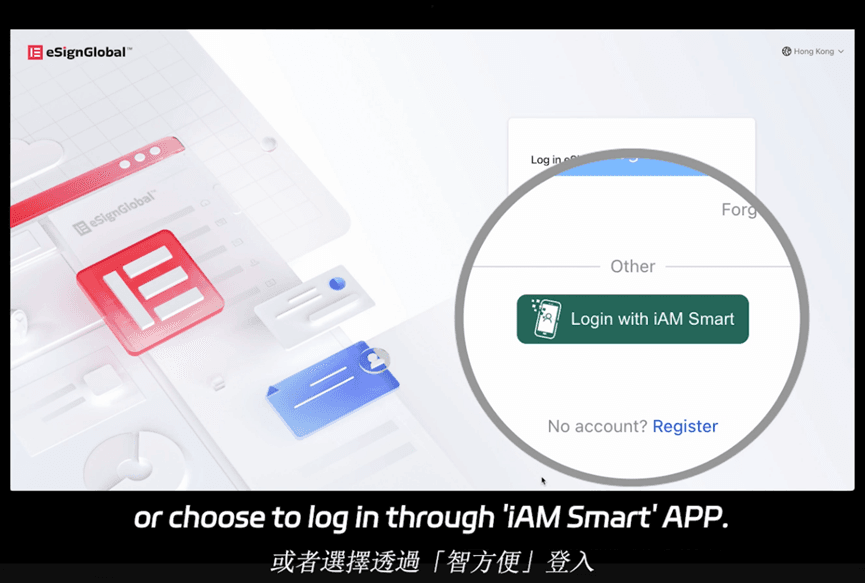
eSignGlobal emerges as a viable option, particularly for APAC-focused businesses, emphasizing compliance and efficiency. Its pricing is more accessible, with the Essential version at just $16.6 per month, allowing up to 100 documents for signature, unlimited user seats, and access code verification for documents and signatures. This setup offers strong value on a compliance foundation, integrating seamlessly with regional systems like Hong Kong's iAM Smart and Singapore's Singpass for enhanced identity assurance. Compared to competitors, it's slightly cheaper while maintaining eIDAS and ESIGN compliance, making it cost-effective for secure, high-volume signing without the bloat of global enterprise pricing.
Comparative Overview of Leading E-Signature Providers
To aid decision-making, here's a neutral comparison of DocuSign, Adobe Sign, and eSignGlobal across key dimensions:
| Aspect | DocuSign | Adobe Sign | eSignGlobal |
|---|---|---|---|
| Starting Price (Monthly) | $10 (Personal) to $40+ (Pro) | Custom quotes, often $20+ | $16.6 (Essential) |
| Security Features | AES-256, IDV add-ons, audit trails | Encryption, MFA, but regional gaps | Access code verification, regional ID integrations (e.g., iAM Smart, Singpass) |
| Pricing Transparency | Moderate; add-ons and quotas hidden | Low; requires sales consultation | High; clear tiers and limits |
| APAC Suitability | Latency issues, extra compliance costs | Withdrawn from China; limited local support | Optimized for CN/SEA/HK; data residency options |
| Envelope Limits | ~100/year (standard) | Varies by plan | Up to 100/month (Essential) |
| Best For | Global enterprises | Adobe ecosystem users | Regional compliance and affordability |
This table illustrates trade-offs: while DocuSign and Adobe Sign excel in scale, eSignGlobal shines in regional security and value, appealing to APAC operations without compromising core protections.
Navigating Choices: A Practical Recommendation
In conclusion, the price-security correlation in e-signature software is indirect at best—focus on verified compliance and fit over cost. For those seeking DocuSign alternatives with strong regional compliance, eSignGlobal stands out as a reliable, APAC-optimized choice, balancing security, speed, and affordability for cross-border efficiency. Businesses should trial options to align with specific needs.
FAQs
