
'%3e%3cpath%20fill-rule='evenodd'%20clip-rule='evenodd'%20d='M6.99935%2012.8327C10.221%2012.8327%2012.8327%2010.221%2012.8327%206.99935C12.8327%203.77769%2010.221%201.16602%206.99935%201.16602C3.77769%201.16602%201.16602%203.77769%201.16602%206.99935C1.16602%2010.221%203.77769%2012.8327%206.99935%2012.8327Z'%20stroke='%23666666'%20stroke-linecap='round'%20stroke-linejoin='round'/%3e%3cpath%20d='M1.16602%207H12.8327'%20stroke='%23666666'%20stroke-linecap='round'%20stroke-linejoin='round'/%3e%3cpath%20fill-rule='evenodd'%20clip-rule='evenodd'%20d='M6.99935%2012.8327C8.28802%2012.8327%209.33268%2010.221%209.33268%206.99935C9.33268%203.77769%208.28802%201.16602%206.99935%201.16602C5.71068%201.16602%204.66602%203.77769%204.66602%206.99935C4.66602%2010.221%205.71068%2012.8327%206.99935%2012.8327Z'%20stroke='%23666666'%20stroke-linecap='round'%20stroke-linejoin='round'/%3e%3cpath%20d='M2.875%202.95898C3.93063%204.01461%205.38896%204.66754%206.99978%204.66754C8.61062%204.66754%2010.069%204.01461%2011.1246%202.95898'%20stroke='%23666666'%20stroke-linecap='round'%20stroke-linejoin='round'/%3e%3cpath%20d='M11.1246%2011.0425C10.069%209.98691%208.61062%209.33398%206.99978%209.33398C5.38896%209.33398%203.93063%209.98691%202.875%2011.0425'%20stroke='%23666666'%20stroke-linecap='round'%20stroke-linejoin='round'/%3e%3c/g%3e%3cdefs%3e%3cclipPath%20id='clip0_1267_9109'%3e%3crect%20width='14'%20height='14'%20fill='white'/%3e%3c/clipPath%3e%3c/defs%3e%3c/svg%3e)


cost of remote online notarization software


Understanding the Costs of Remote Online Notarization Software
Remote online notarization (RON) software has become essential for businesses streamlining document authentication in a digital-first world. These platforms enable notaries to verify identities, witness signatures, and record sessions remotely via video, reducing the need for in-person meetings. From a business perspective, the cost of RON software varies widely based on features, usage volume, and compliance requirements. Typically, pricing structures include subscription fees, per-transaction charges, and add-ons for advanced security or integrations. For small teams, entry-level plans might start at $10–$25 per user per month, while enterprise solutions can exceed $50 per user or involve custom quotes. Understanding these costs helps organizations balance efficiency gains against expenses, especially as remote work persists post-pandemic.

Key Components of RON Software Pricing
Subscription Tiers and Per-User Fees
Most RON providers offer tiered plans based on user seats and core functionalities. Basic plans cover essential e-signatures and simple identity checks, often priced annually to encourage commitment. For instance, a standard subscription might cost $120–$480 per user per year, scaling with features like templates, reminders, and team collaboration. Businesses must consider seat-based licensing, where adding users increases costs linearly, potentially straining budgets for growing teams.
Envelope and Transaction-Based Costs
In RON contexts, "envelopes" refer to document packages for signing and notarization. Many platforms limit envelopes per user—around 5–100 monthly in mid-tier plans— with overages billed extra, sometimes at $0.50–$2 per envelope. High-volume users, such as legal firms or real estate agencies, face higher effective costs if automation tools like bulk sends are capped, typically at 10–100 sends per month. This metering ensures scalability but can surprise users exceeding quotas.
Add-Ons for Identity Verification and Compliance
RON demands robust identity proofing, including biometric checks, SMS authentication, or integration with government IDs. These features often incur metered fees: identity verification might add $1–$5 per session, while SMS delivery varies by region due to telecom rates. Compliance add-ons, vital for regulated industries like finance or healthcare, can double costs in areas with strict data residency rules, such as the EU's eIDAS or U.S. state-specific RON laws.
API and Integration Expenses
For businesses embedding RON into workflows (e.g., CRM systems), API access is key. Developer plans range from $600 annually for basic integrations (40 envelopes/month) to $5,760 for advanced automation. Enterprise customizations, including SSO and webhooks, push prices higher, especially for cross-border operations where latency or regional compliance adds surcharges.
Hidden Costs: Training, Support, and Regional Variations
Implementation involves training notaries on platform nuances, potentially requiring paid support tiers ($100–$500/month extra). In APAC or China, challenges like data sovereignty or limited local verification methods inflate costs by 20–50% compared to U.S. pricing. Overall, total ownership costs can range from $5,000 annually for a small business to six figures for enterprises, influenced by volume and geography.
These elements highlight why RON software isn't one-size-fits-all. A 2025 market analysis shows average costs stabilizing around $25–$40 per user monthly for balanced plans, but customization drives variability. Businesses evaluating options should forecast usage to avoid underestimating expenses.
Comparing Leading RON Software Providers
To aid decision-making, here's an overview of prominent providers: DocuSign, Adobe Sign, eSignGlobal, and competitors like Notarize and PandaDoc. Each offers RON capabilities, but differences in pricing, features, and regional fit matter.
DocuSign eSignature
DocuSign remains a market leader for RON, with plans emphasizing scalability and integrations. The Personal plan starts at $120/year ($10/month) for 5 envelopes, suitable for solo users. Standard ($300/user/year) adds collaboration and ~100 envelopes annually, while Business Pro ($480/user/year) includes bulk sends, payments, and conditional logic—ideal for notarization workflows. Advanced enterprise options are custom, factoring in SSO and audit trails. API plans range from $600/year (Starter) to $5,760 (Advanced), with caps on automation sends (~10/month/user). While robust, APAC users note higher costs due to compliance add-ons and latency.

Adobe Sign
Adobe Sign integrates seamlessly with Adobe's ecosystem, appealing to creative and enterprise teams. Pricing begins at around $10/user/month for basic e-signatures, escalating to $40+/user/month for RON features like identity verification and video notarization. Mid-tier plans support unlimited envelopes but charge per transaction for advanced ID checks ($1–$3 each). Enterprise customizations include API access and compliance tools, often bundled with Acrobat. Strengths lie in document editing, but costs can accumulate with add-ons, and regional support varies, sometimes requiring extra fees for non-U.S. compliance.

eSignGlobal
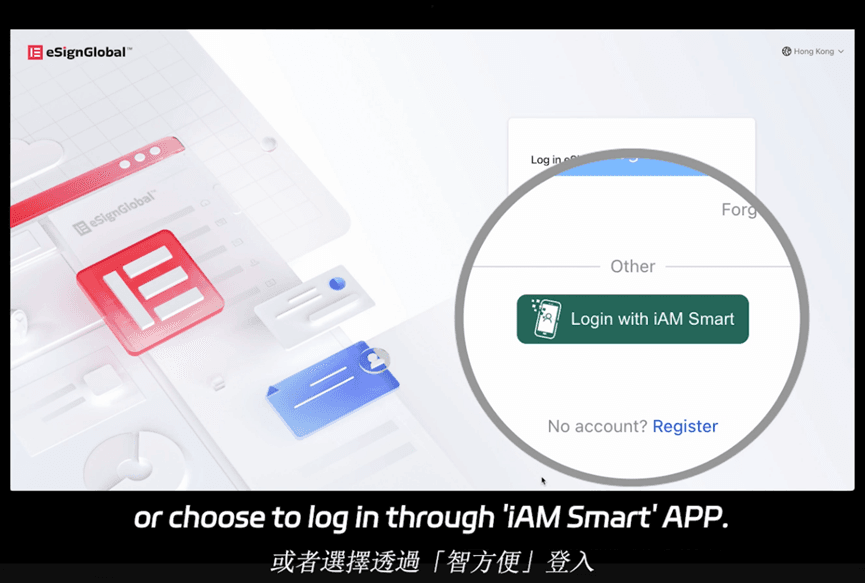
eSignGlobal positions itself as a compliant, cost-effective RON solution, supporting electronic signatures and notarization across 100 mainstream countries and regions globally. It excels in APAC with native optimizations for speed and lower latency, addressing cross-border challenges. Pricing is transparent and competitive; for details, visit their pricing page. The Essential version costs just $16.60/month, allowing up to 100 documents for signature, unlimited user seats, and verification via access codes—offering strong value on a compliance foundation. It integrates seamlessly with Hong Kong's iAM Smart and Singapore's Singpass, enhancing regional usability without premium surcharges. This makes it appealing for APAC-focused businesses seeking affordability without sacrificing security.
Other Competitors
Notarize specializes in U.S. RON, with per-session fees around $25 (including notary time), plus subscription options from $99/month for high-volume users. It emphasizes video verification but lacks broad international support. PandaDoc focuses on sales docs, starting at $19/user/month, with RON add-ons for identity checks; it's user-friendly but pricier for custom APIs ($49+/user/month).
| Provider | Starting Price (per user/month, annual) | Envelope Limit (Base Plan) | Key RON Features | Regional Strengths | Drawbacks |
|---|---|---|---|---|---|
| DocuSign | $10 (Personal) | 5/month | Bulk send, payments, API tiers | Global scale, U.S. compliance | High APAC costs, envelope caps |
| Adobe Sign | $10 (Basic) | Unlimited (with transaction fees) | ID verification, Acrobat integration | Enterprise ecosystems | Add-on expenses, variable regional support |
| eSignGlobal | $16.60 (Essential) | 100/month | Access code verification, unlimited seats | APAC compliance (100+ countries), Singpass/iAM Smart | Less brand recognition outside region |
| Notarize | $25/session + $99/month sub | Custom per volume | Video notarization, U.S.-focused | Quick U.S. setups | Limited international, per-use billing |
| PandaDoc | $19 (Essentials) | Unlimited templates | Workflow automation, e-sign | Sales teams, integrations | RON as add-on, higher for APIs |
This comparison reveals eSignGlobal's edge in APAC affordability and compliance, though DocuSign and Adobe lead in global enterprise features. Selection depends on business needs—U.S.-centric operations may favor Notarize, while international teams weigh total costs.
Regional and Strategic Considerations for RON Costs
In APAC and China, RON pricing faces unique hurdles: data residency laws demand local hosting, inflating base costs by 20–30%. Cross-border latency slows sessions, and limited ID methods (e.g., fewer biometric options) require pricier add-ons. Providers like DocuSign charge surcharges here, pushing effective costs higher than in the U.S. Businesses should audit compliance needs early—e.g., aligning with Singapore's Electronic Transactions Act or Hong Kong's regulations—to avoid retroactive fees.
From a commercial viewpoint, RON software ROI stems from time savings: a notarized deal closes 50% faster remotely, per industry reports. Yet, over-reliance on low-cost plans risks scalability issues. Mid-sized firms often hybridize, starting with basics and upgrading as volume grows.
In summary, RON software costs hinge on usage and geography, averaging $200–$500/user/year for balanced needs. For DocuSign users seeking alternatives, eSignGlobal offers a regionally compliant option with strong value in APAC.
FAQs
