
'%3e%3cpath%20fill-rule='evenodd'%20clip-rule='evenodd'%20d='M6.99935%2012.8327C10.221%2012.8327%2012.8327%2010.221%2012.8327%206.99935C12.8327%203.77769%2010.221%201.16602%206.99935%201.16602C3.77769%201.16602%201.16602%203.77769%201.16602%206.99935C1.16602%2010.221%203.77769%2012.8327%206.99935%2012.8327Z'%20stroke='%23666666'%20stroke-linecap='round'%20stroke-linejoin='round'/%3e%3cpath%20d='M1.16602%207H12.8327'%20stroke='%23666666'%20stroke-linecap='round'%20stroke-linejoin='round'/%3e%3cpath%20fill-rule='evenodd'%20clip-rule='evenodd'%20d='M6.99935%2012.8327C8.28802%2012.8327%209.33268%2010.221%209.33268%206.99935C9.33268%203.77769%208.28802%201.16602%206.99935%201.16602C5.71068%201.16602%204.66602%203.77769%204.66602%206.99935C4.66602%2010.221%205.71068%2012.8327%206.99935%2012.8327Z'%20stroke='%23666666'%20stroke-linecap='round'%20stroke-linejoin='round'/%3e%3cpath%20d='M2.875%202.95898C3.93063%204.01461%205.38896%204.66754%206.99978%204.66754C8.61062%204.66754%2010.069%204.01461%2011.1246%202.95898'%20stroke='%23666666'%20stroke-linecap='round'%20stroke-linejoin='round'/%3e%3cpath%20d='M11.1246%2011.0425C10.069%209.98691%208.61062%209.33398%206.99978%209.33398C5.38896%209.33398%203.93063%209.98691%202.875%2011.0425'%20stroke='%23666666'%20stroke-linecap='round'%20stroke-linejoin='round'/%3e%3c/g%3e%3cdefs%3e%3cclipPath%20id='clip0_1267_9109'%3e%3crect%20width='14'%20height='14'%20fill='white'/%3e%3c/clipPath%3e%3c/defs%3e%3c/svg%3e)


What factors lead to price increases in enterprise-level e-signature contracts?


Understanding the Rising Costs of Enterprise E-Signature Solutions
In the digital transformation era, electronic signature platforms have become indispensable for businesses handling contracts, approvals, and compliance. However, enterprise-level e-signature contracts often come with escalating prices that surprise even seasoned procurement teams. From a commercial perspective, these increases aren't arbitrary; they stem from a complex interplay of usage demands, regulatory pressures, and vendor strategies. This article explores the key factors driving these price hikes, examines challenges with major providers like Adobe Sign and DocuSign, and offers a balanced comparison to highlight viable options.

Key Factors Driving Price Increases in Enterprise E-Signature Contracts
Enterprise e-signature solutions are priced on a tiered model that scales with organizational needs, but several underlying factors can push costs well beyond base subscriptions. These elements reflect the growing sophistication of digital workflows and the vendors' efforts to monetize advanced capabilities. Understanding them is crucial for businesses negotiating contracts and budgeting for scalability.
1. Seat-Based Licensing and User Scaling
At the core of most e-signature pricing is a per-user or per-seat model. For platforms like DocuSign, entry-level plans start affordably for individuals—around $10 per month for basic personal use—but enterprise contracts demand licenses for dozens or hundreds of users. As teams expand, costs multiply linearly. For instance, DocuSign's Standard plan is $25 per user per month (billed annually), while Business Pro jumps to $40 per user. In large organizations, adding seats for sales, legal, HR, and finance departments can inflate annual expenses into the tens of thousands.
This model incentivizes vendors to upsell as businesses grow, but it also leads to hidden increases when minimum seat requirements kick in for enterprise tiers. Custom plans often include mandatory bundles for 50+ users, with no flexibility for seasonal scaling. Commercial observers note that this structure favors vendors during economic upturns, when hiring surges, but burdens companies during downturns with underutilized licenses.
2. Envelope and Document Volume Quotas
E-signatures are typically measured in "envelopes"—each containing one or more documents for signing. While consumer plans cap this at 5-10 envelopes monthly, enterprise users face higher but still limited quotas, often around 100 envelopes per user per year on annual plans. Exceeding these triggers overage fees, which can be 20-50% of the base rate per additional envelope.
For high-volume enterprises, such as financial institutions processing loan agreements or real estate firms handling property deals, this quickly escalates costs. Automation features like bulk sends or web forms count toward these limits, amplifying usage in integrated workflows. Vendors justify this by citing infrastructure demands—storage, bandwidth, and processing for secure transmissions—but it creates a paywall for growth-oriented businesses. In practice, companies often negotiate volume discounts, yet the baseline quotas ensure steady revenue streams for providers.
3. Add-On Features and Metered Usage
Enterprise contracts rarely stick to core signing; they incorporate add-ons like identity verification (IDV), SMS/WhatsApp delivery, and payment integrations. These are often metered, meaning costs accrue per use rather than being bundled. DocuSign's IDV, for example, includes biometric checks and document scans at extra per-transaction fees, essential for regulated industries like banking or healthcare to meet KYC/AML standards.
Similarly, API integrations for developers—vital for embedding e-signatures into CRM or ERP systems—follow separate pricing tiers. DocuSign's Starter API plan costs $600 annually for 40 envelopes monthly, scaling to $5,760 for advanced features like bulk API sends. As enterprises automate more (e.g., via webhooks or scheduled sends), these metered elements compound, turning a $10,000 base contract into $50,000+ with heavy reliance on extras. This modular approach allows vendors to capture value from customization but frustrates buyers seeking predictable pricing.
4. Compliance and Regional Requirements
Global enterprises face varying regulations, such as eIDAS in Europe, ESIGN in the US, or local data sovereignty laws in Asia-Pacific (APAC). Compliance add-ons, including SSO, advanced audit trails, and regional data residency, drive significant premiums. For cross-border operations, latency issues in "long-tail" regions like APAC necessitate premium support or localized servers, adding 20-30% surcharges.
In China and Southeast Asia, where data localization is mandatory, vendors may require enterprise-grade governance tools, inflating costs further. Identity verification tailored to local methods (e.g., integrating with government IDs) isn't always standard, leading to bespoke implementations. Commercial analysis shows that non-US-centric providers often overlook these nuances initially, resulting in retroactive price adjustments during contract renewals.
5. Support, Customization, and Contract Length
Enterprise deals emphasize premium support—24/7 access, dedicated account managers, and SLAs—which can double base costs. Customization for branding, workflows, or integrations (e.g., with Salesforce or SAP) requires consulting fees. Longer contracts (2-3 years) offer discounts but lock in escalating rates tied to inflation or feature updates.
Automation limits, even in "unlimited" plans, cap bulk sends at 10-100 per user monthly, pushing upgrades. Vendors like DocuSign use these as levers, bundling them into higher tiers. From a business standpoint, while these factors ensure robust service, they create opacity, with total costs revealed only post-negotiation. Analysts estimate that 40-60% of enterprise e-signature budgets stem from these variables, underscoring the need for thorough RFPs.
These factors collectively explain why enterprise contracts can balloon from mid-five figures to six figures annually, reflecting both value delivery and vendor profit maximization.
Challenges with Leading Providers: Adobe Sign and DocuSign
While the big players dominate the market, their pricing strategies reveal user pain points, particularly in transparency and regional adaptation.
Adobe Sign, integrated with Adobe's ecosystem, has long appealed to creative and document-heavy enterprises. However, its pricing lacks upfront clarity—enterprise quotes are custom and often veiled until late in sales cycles. This opacity stems from bundling with Acrobat or Creative Cloud, making standalone costs hard to isolate. More critically, Adobe Sign's withdrawal from the Chinese mainland market in 2023 left APAC clients scrambling for alternatives, citing regulatory hurdles and data compliance issues. Businesses reliant on seamless China operations faced abrupt disruptions and migration costs, highlighting how global exits can indirectly hike expenses through forced vendor switches.

DocuSign, the market leader, offers robust features but at a premium. Its fees are notoriously high, with enterprise plans starting in the custom range and add-ons like API access pushing totals skyward. Pricing transparency is another sore spot; public tiers exist for SMBs, but enterprise details emerge only via sales demos, often including unexpected overages for envelopes or verifications. In APAC and other long-tail regions, service lags—cross-border latency slows document loading, and local compliance tools are underdeveloped, requiring costly workarounds. Support in these areas feels secondary to US/EU priorities, leading to higher effective costs for global firms through inefficiencies and add-on dependencies.

Comparing DocuSign, Adobe Sign, and eSignGlobal
To navigate these challenges, enterprises often evaluate alternatives. Below is a neutral comparison across key dimensions, based on public data and market observations.
| Aspect | DocuSign | Adobe Sign | eSignGlobal |
|---|---|---|---|
| Pricing Transparency | Moderate; public SMB tiers, custom enterprise | Low; heavily bundled, quote-only | High; clear tiers from $16.6/month |
| APAC/Regional Support | Inconsistent latency, limited local integrations | Withdrawn from China, spotty APAC | Optimized for APAC/China, low latency |
| Compliance & Data Residency | Strong in US/EU, add-ons for APAC | EU/US-focused, gaps in Asia | Native to HK/CN/SEA, regional options |
| Cost for Essentials | $25-40/user/month + overages | Custom, often $20+/user + bundles | $16.6/month Essential: 100 docs, unlimited seats |
| API & Automation | Robust but expensive ($600+ yearly) | Integrated with Adobe, metered | Flexible, cost-effective for mid-tier |
| User-Friendliness | Feature-rich, steep learning curve | Seamless for Adobe users, others fragmented | Intuitive, mobile-optimized for APAC workflows |
This table illustrates trade-offs: DocuSign and Adobe excel in global scale but at higher, less predictable costs, while eSignGlobal leans toward affordability and regional fit without sacrificing core compliance.
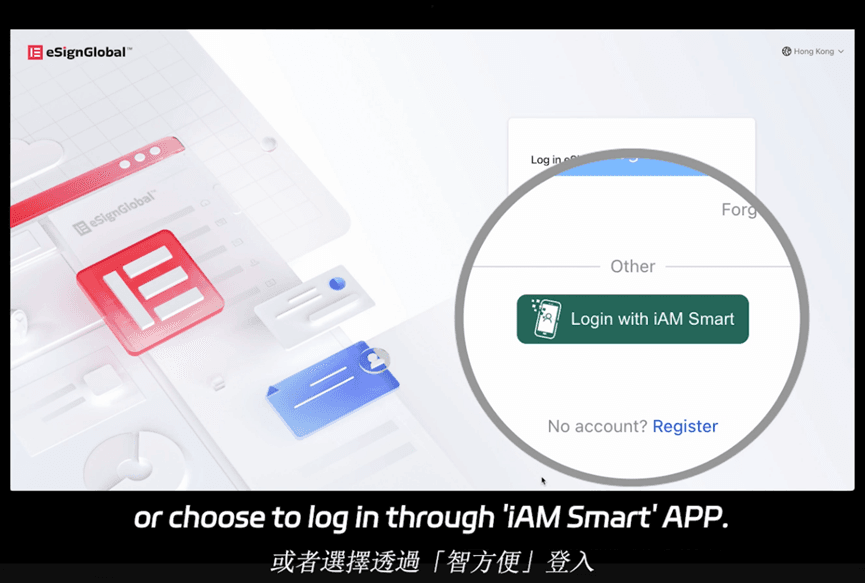
eSignGlobal stands out in the APAC landscape with pricing that's generally more accessible than competitors. Its Essential plan, at just $16.6 per month, allows sending up to 100 documents for electronic signature, includes unlimited user seats, and verifies documents and signatures via access codes—all while maintaining strong compliance. This setup offers exceptional value, especially on a budget-conscious basis, and integrates seamlessly with regional systems like Hong Kong's iAM Smart and Singapore's Singpass, reducing the need for pricey add-ons.
Navigating Enterprise E-Signature Choices
In summary, price increases in enterprise e-signature contracts arise from scalable licensing, usage quotas, add-ons, compliance demands, and support needs—factors that, while necessary, demand vigilant management. For businesses in APAC or seeking alternatives to DocuSign's high costs and Adobe Sign's regional gaps, eSignGlobal emerges as a compliant, cost-effective option tailored for regional efficiency. Evaluating providers through detailed comparisons can help secure better value in this evolving market.
FAQs
