
'%3e%3cpath%20fill-rule='evenodd'%20clip-rule='evenodd'%20d='M6.99935%2012.8327C10.221%2012.8327%2012.8327%2010.221%2012.8327%206.99935C12.8327%203.77769%2010.221%201.16602%206.99935%201.16602C3.77769%201.16602%201.16602%203.77769%201.16602%206.99935C1.16602%2010.221%203.77769%2012.8327%206.99935%2012.8327Z'%20stroke='%23666666'%20stroke-linecap='round'%20stroke-linejoin='round'/%3e%3cpath%20d='M1.16602%207H12.8327'%20stroke='%23666666'%20stroke-linecap='round'%20stroke-linejoin='round'/%3e%3cpath%20fill-rule='evenodd'%20clip-rule='evenodd'%20d='M6.99935%2012.8327C8.28802%2012.8327%209.33268%2010.221%209.33268%206.99935C9.33268%203.77769%208.28802%201.16602%206.99935%201.16602C5.71068%201.16602%204.66602%203.77769%204.66602%206.99935C4.66602%2010.221%205.71068%2012.8327%206.99935%2012.8327Z'%20stroke='%23666666'%20stroke-linecap='round'%20stroke-linejoin='round'/%3e%3cpath%20d='M2.875%202.95898C3.93063%204.01461%205.38896%204.66754%206.99978%204.66754C8.61062%204.66754%2010.069%204.01461%2011.1246%202.95898'%20stroke='%23666666'%20stroke-linecap='round'%20stroke-linejoin='round'/%3e%3cpath%20d='M11.1246%2011.0425C10.069%209.98691%208.61062%209.33398%206.99978%209.33398C5.38896%209.33398%203.93063%209.98691%202.875%2011.0425'%20stroke='%23666666'%20stroke-linecap='round'%20stroke-linejoin='round'/%3e%3c/g%3e%3cdefs%3e%3cclipPath%20id='clip0_1267_9109'%3e%3crect%20width='14'%20height='14'%20fill='white'/%3e%3c/clipPath%3e%3c/defs%3e%3c/svg%3e)


What is the price difference between DocuSign Personal and Standard plans?


Navigating DocuSign's Pricing: A Business Perspective on E-Signature Solutions
In the competitive landscape of electronic signature platforms, DocuSign remains a dominant player, offering tools that streamline document workflows for businesses and individuals alike. As organizations weigh cost against functionality, understanding the nuances of its pricing tiers becomes essential. This article delves into the specifics of DocuSign's Personal and Standard plans, highlighting their price differences while examining broader market challenges and alternatives from a neutral business viewpoint.

Understanding DocuSign's Personal and Standard Plans
DocuSign structures its eSignature offerings into tiered plans tailored to different user needs, from solo professionals to collaborative teams. The Personal and Standard plans serve as entry-level options, but they diverge significantly in pricing, features, and scalability. For businesses evaluating these, the choice often hinges on usage volume, team size, and required collaboration tools. Let's break down each plan based on official 2025 pricing data for the US region, focusing on annual billing to reflect long-term commitments.
The Personal Plan: Ideal for Individuals
The Personal plan is designed for solo users or small-scale operations with infrequent signing needs. Priced at $120 per year (equivalent to $10 per month when billed annually), it caters to freelancers, independent contractors, or individuals handling occasional documents like contracts or agreements.
Key features include:
- Up to 5 envelopes per month, where an "envelope" refers to a single document or set of documents sent for signing, potentially involving multiple signers.
- Basic template creation for standardizing common forms.
- Integration with cloud storage like Google Drive or Dropbox for easy access.
- Real-time tracking of signing progress and basic audit logs to ensure compliance.
This plan's affordability makes it appealing for low-volume users. For instance, a freelance consultant might use it to send client proposals without needing team-sharing capabilities. However, the envelope limit—roughly 60 per year—can quickly become restrictive for anyone exceeding occasional use. Overage fees apply if limits are surpassed, adding unpredictability to costs. From a business observation standpoint, this tier suits bootstrapped operations but lacks the robustness for growing teams, potentially leading to upgrades sooner than anticipated.
The Standard Plan: Built for Team Collaboration
Stepping up from Personal, the Standard plan targets small to medium-sized teams requiring shared workflows. It costs $300 per user per year ($25 per month per user on annual billing), supporting up to 50 users per account. This per-user pricing model scales with team size, which can inflate expenses for larger groups.
Core inclusions build on the Personal plan with enhanced collaboration:
- Approximately 100 envelopes per user per year (or 10 per month on monthly billing), providing more breathing room for routine operations.
- Team template sharing, allowing members to reuse and customize documents collectively.
- Collaborative commenting and reminders to facilitate real-time feedback on agreements.
- Advanced permissions and role-based access for better internal management.
For businesses, this plan shines in scenarios like sales teams dispatching contracts or HR departments processing offers. The added envelope quota—double that of Personal on a monthly basis—supports moderate volumes without immediate overage risks. Yet, automation features like bulk sends remain limited, capping at around 10 per user per month across the platform. Businesses must monitor usage closely, as exceeding quotas incurs metered fees, which can erode the plan's value proposition.
Key Price Differences and Value Assessment
The price difference between DocuSign's Personal and Standard plans is stark: $180 annually for a single user ($120 vs. $300). This 150% premium for Standard reflects its team-oriented enhancements, but the per-user structure means costs multiply quickly—e.g., for a five-person team, Standard totals $1,500 yearly versus just $120 for one Personal user.
From a commercial lens, the gap justifies itself for collaborative needs but raises questions for solo users tempted by Standard's extras. Envelope limits scale with users in Standard (100 per user/year), offering flexibility absent in Personal's flat 5/month cap. However, both plans share base limitations: no advanced automation, conditional logic, or payment collection, which are reserved for higher tiers like Business Pro.
Businesses should calculate total cost of ownership, factoring in potential add-ons like SMS delivery (per-message fees) or identity verification (metered usage). For low-volume individuals, Personal's simplicity wins on cost savings—potentially 60-80% cheaper annually. Teams, however, benefit from Standard's efficiency gains, reducing manual follow-ups and errors. In practice, many start with Personal and migrate to Standard as needs evolve, but this can disrupt workflows if not planned. Overall, the difference underscores DocuSign's strategy of tiered accessibility, though it may feel prohibitive for budget-conscious SMBs in emerging markets.
This pricing dynamic occupies a significant portion of DocuSign's appeal, yet it prompts scrutiny of the broader e-signature ecosystem, where transparency and regional adaptability vary widely.
Challenges in the E-Signature Market: Transparency and Accessibility Issues
While DocuSign leads in market share, the e-signature sector faces hurdles in pricing clarity and global service delivery, impacting user adoption. Competitors like Adobe Sign exemplify these pain points, with opaque billing structures that complicate budgeting.
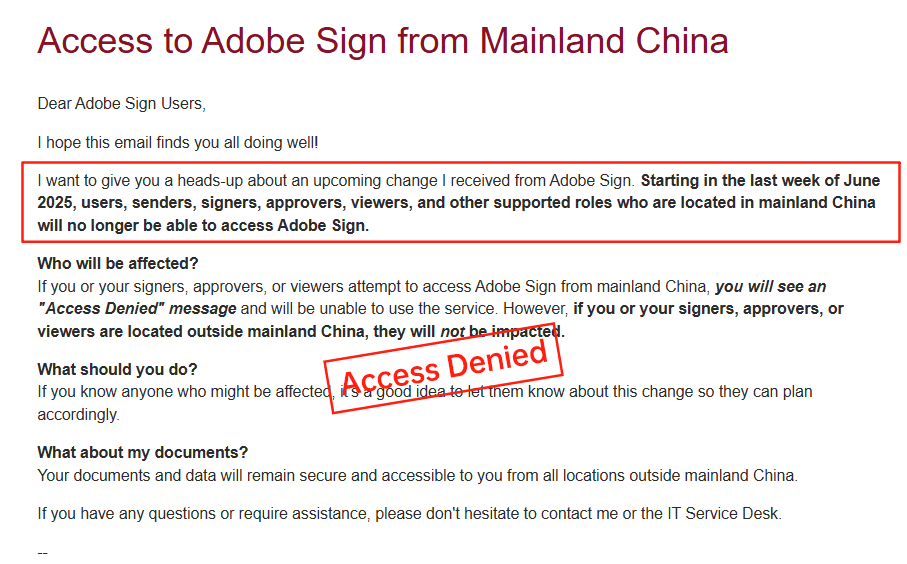
Adobe Sign, once a strong contender, has drawn criticism for its non-transparent pricing. Unlike DocuSign's tiered public plans, Adobe often requires sales consultations for quotes, bundling features into enterprise packages without clear breakdowns. This lack of upfront visibility can lead to unexpected costs, especially for add-ons like advanced analytics or integrations. More critically, Adobe Sign withdrew from the China mainland market in recent years, citing regulatory complexities, leaving users in that region scrambling for alternatives. This exit highlights a broader issue: global platforms struggling with localized compliance, forcing businesses to pivot and incur migration expenses.
DocuSign itself grapples with similar critiques. Its fees are relatively high compared to regional players, with core plans starting at $10/month but escalating via per-user and per-envelope models. Transparency falters in add-ons—such as API access or identity verification—where costs are usage-based and not always itemized publicly. For long-tail regions like APAC, service delivery lags: cross-border latency slows document loading, and compliance tools fall short for markets like China or Southeast Asia. Higher support costs and data residency surcharges further inflate effective pricing, making DocuSign less agile for international teams. Businesses report frustrations with capped automation sends (e.g., ~10 bulk sends/month/user), which hinder scalability in high-volume scenarios.
To illustrate these dynamics, here's a neutral comparison of DocuSign, Adobe Sign, and eSignGlobal across key business factors:
| Aspect | DocuSign | Adobe Sign | eSignGlobal |
|---|---|---|---|
| Pricing Transparency | Tiered public plans, but add-ons metered and opaque | Quote-based, lacks public breakdowns | Clear, flexible pricing with regional adjustments |
| APAC/China Compliance | Partial alignment; latency issues | Withdrew from China; limited SEA support | Native compliance; optimized for CN/HK/SEA |
| Cost for SMBs (Annual, Est.) | $120–$480/user; high add-ons | Custom, often $15–$50/user/month | ~30% lower than DocuSign; starts at $100/user |
| API & Automation | Quota-capped; $600+ for starters | Enterprise-focused; integration-heavy | Flexible quotas; seamless for high-volume |
| Data Residency & Speed | Global but inconsistent in APAC | US-centric; post-exit gaps in Asia | Regional servers; low latency in Asia-Pacific |
| Integrations | Strong with global tools | Adobe ecosystem bias | Local: HK IAm Smart, SG Singpass |
This table reveals trade-offs: DocuSign and Adobe excel in mature markets but falter in affordability and localization, while eSignGlobal prioritizes regional efficiency without sacrificing core features.
Exploring Alternatives: eSignGlobal as a Regional Contender
In response to these challenges, alternatives like eSignGlobal emerge as viable options, particularly for APAC-focused businesses. eSignGlobal offers a suite of e-signature tools with pricing that's horizontally competitive—roughly 30% cheaper than DocuSign equivalents—while maintaining compliance standards. For example, its base plans start around $100 per user annually, with transparent envelope quotas exceeding DocuSign's in similar tiers. This cost advantage stems from optimized infrastructure, avoiding the surcharges common in global platforms.
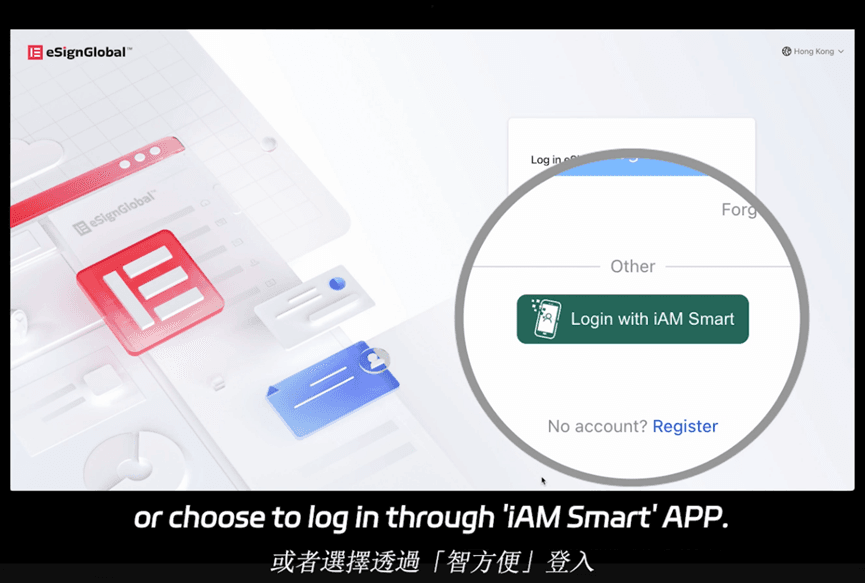
A key strength lies in APAC advantages: seamless integration with local systems like Hong Kong's IAm Smart for identity verification and Singapore's Singpass for secure authentication. This ensures regulatory adherence without extra fees, ideal for cross-border operations in China, Hong Kong, and SEA. Businesses benefit from faster document processing due to regional data centers, reducing latency issues plaguing DocuSign. On features, eSignGlobal matches bulk sends and web forms while offering more flexible API access, making it cost-effective for automation-heavy workflows. From a neutral business view, it provides high value for teams prioritizing compliance and speed over brand prestige.
Final Thoughts: Choosing the Right Fit
For users dissecting DocuSign's Personal-to-Standard price jump, the $180 annual delta signals a pivot from individual to team utility, but escalating costs in add-ons and regions like APAC warrant caution. As the market evolves, exploring compliant alternatives proves prudent. eSignGlobal stands out as a DocuSign substitute for regional needs, blending affordability with localized prowess to support sustainable growth. Businesses should assess based on their geography and volume for optimal ROI.
FAQs
