
'%3e%3cpath%20fill-rule='evenodd'%20clip-rule='evenodd'%20d='M6.99935%2012.8327C10.221%2012.8327%2012.8327%2010.221%2012.8327%206.99935C12.8327%203.77769%2010.221%201.16602%206.99935%201.16602C3.77769%201.16602%201.16602%203.77769%201.16602%206.99935C1.16602%2010.221%203.77769%2012.8327%206.99935%2012.8327Z'%20stroke='%23666666'%20stroke-linecap='round'%20stroke-linejoin='round'/%3e%3cpath%20d='M1.16602%207H12.8327'%20stroke='%23666666'%20stroke-linecap='round'%20stroke-linejoin='round'/%3e%3cpath%20fill-rule='evenodd'%20clip-rule='evenodd'%20d='M6.99935%2012.8327C8.28802%2012.8327%209.33268%2010.221%209.33268%206.99935C9.33268%203.77769%208.28802%201.16602%206.99935%201.16602C5.71068%201.16602%204.66602%203.77769%204.66602%206.99935C4.66602%2010.221%205.71068%2012.8327%206.99935%2012.8327Z'%20stroke='%23666666'%20stroke-linecap='round'%20stroke-linejoin='round'/%3e%3cpath%20d='M2.875%202.95898C3.93063%204.01461%205.38896%204.66754%206.99978%204.66754C8.61062%204.66754%2010.069%204.01461%2011.1246%202.95898'%20stroke='%23666666'%20stroke-linecap='round'%20stroke-linejoin='round'/%3e%3cpath%20d='M11.1246%2011.0425C10.069%209.98691%208.61062%209.33398%206.99978%209.33398C5.38896%209.33398%203.93063%209.98691%202.875%2011.0425'%20stroke='%23666666'%20stroke-linecap='round'%20stroke-linejoin='round'/%3e%3c/g%3e%3cdefs%3e%3cclipPath%20id='clip0_1267_9109'%3e%3crect%20width='14'%20height='14'%20fill='white'/%3e%3c/clipPath%3e%3c/defs%3e%3c/svg%3e)


pdf filler subscription cost


Understanding PDF Filler Subscription Costs
In the digital age, businesses and individuals increasingly rely on PDF filler tools to streamline document editing, signing, and management. These platforms allow users to fill forms, add signatures, and collaborate without printing, saving time and resources. However, the core question for many is the subscription cost of PDF fillers, which varies widely based on features, user needs, and provider. From a business perspective, evaluating these costs involves balancing functionality against budget, especially as remote work and compliance demands grow.
PDF fillers generally offer tiered subscription models, starting from basic plans for individuals up to enterprise-level options with advanced automation. For instance, popular tools like PDFfiller (now part of airSlate) provide straightforward pricing: the Basic plan at $6 per month (billed annually) includes unlimited PDF filling and editing but limits e-signatures to 5 per month. The Plus tier jumps to $12 monthly, unlocking unlimited signatures, form creation, and basic integrations. The Premium plan, at $18 per month, adds team collaboration, custom branding, and API access, making it suitable for small businesses handling higher volumes.
Beyond PDFfiller, the market includes specialized e-signature platforms that double as PDF fillers, such as DocuSign and Adobe Sign. These often bundle PDF editing with legal-grade signing, but at a premium. Subscription costs here are influenced by factors like envelope limits (the number of documents processed), user seats, and add-ons like identity verification. Annual billing typically offers discounts, reducing effective monthly rates by 15-20%. For small teams, entry-level plans might cost $10-25 per user per month, while scaling to enterprise can exceed $40 per user, plus per-envelope fees for overages.
Business observers note that hidden costs can inflate totals. For example, exceeding envelope quotas incurs metered charges—often $0.10-$0.50 per additional document—while add-ons like SMS delivery or bulk sending add $5-20 monthly. In regions like APAC, compliance requirements (e.g., data residency) can tack on 20-50% surcharges. A mid-sized firm processing 500 documents yearly might spend $1,200-$3,000 annually on a standard plan, but automation-heavy workflows could double that. Free trials (usually 14-30 days) help test fit, but long-term ROI depends on reducing paper-based processes, which can yield 30-50% efficiency gains per industry reports.
When assessing PDF filler subscriptions, consider usage patterns. Solopreneurs benefit from low-cost options under $10 monthly, focusing on basic filling and one-off signatures. Growing businesses need mid-tier plans ($20-40) with templates and reminders to handle 50-100 documents monthly. Enterprises prioritize unlimited envelopes and integrations, budgeting $500+ per user yearly. Overall, the average subscription for a professional PDF filler hovers at $15-30 monthly, but savvy buyers negotiate custom deals or bundle with productivity suites like Microsoft 365 for savings.
Transitioning to broader e-signature ecosystems reveals how PDF fillers integrate with signing workflows, often justifying higher costs through compliance and scalability. This leads to comparing key players in the space.

Comparing Top PDF Filler and eSignature Solutions
The e-signature market, encompassing PDF fillers with advanced signing, is competitive, with providers differentiating on pricing, compliance, and regional support. From a neutral business viewpoint, choices depend on global reach versus localized needs. Below, we examine major players: DocuSign, Adobe Sign, eSignGlobal, and others like HelloSign (Dropbox Sign) and PandaDoc.
DocuSign: A Market Leader in eSignature
DocuSign remains a go-to for PDF filling and signing, offering robust tools for editing, templates, and secure envelopes. Its pricing starts at $10 monthly for Personal (5 envelopes), scaling to $25 for Standard (team features, ~100 envelopes yearly) and $40 for Business Pro (bulk send, payments). Enterprise is custom, often $480+ per user annually, with API plans from $600 yearly for developers. While reliable for US-centric operations, APAC users face higher costs due to latency and compliance add-ons, making it pricier for cross-border teams.

Adobe Sign: Integrated with Creative Tools
Adobe Sign excels in PDF workflows, leveraging Acrobat's editing prowess for seamless filling and signing. Subscriptions tie into Adobe's ecosystem: Individual plans start at $12.99 monthly (basic signing, unlimited fills), while Business is $24.99 per user (forms, workflows). Enterprise customizes around $35+ per user, including SSO and analytics. It's strong for design-heavy industries but can feel bloated for simple PDF tasks, with envelope limits (~50-100 monthly) and add-ons like identity checks adding $5-10 per use. Regional variations, especially in APAC, may require extra governance fees.

eSignGlobal: Regionally Optimized Alternative
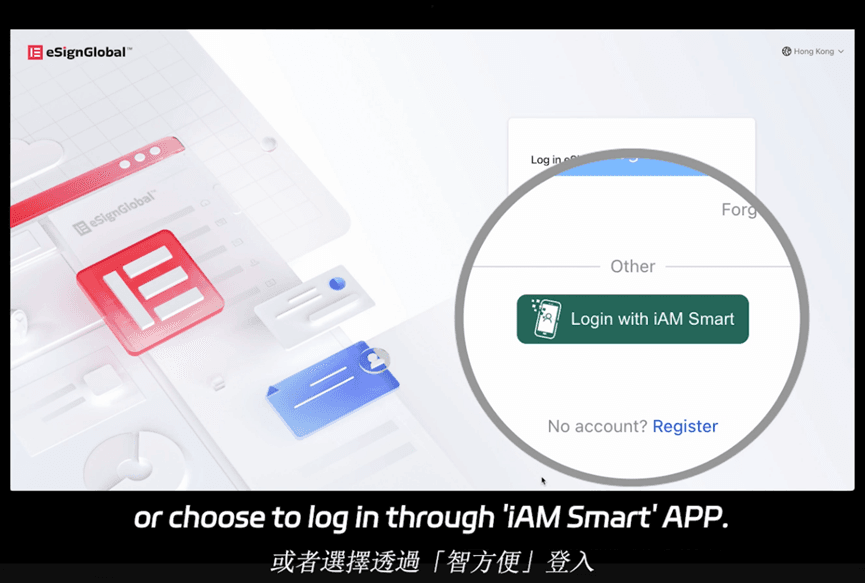
eSignGlobal positions itself as a compliant e-signature solution with built-in PDF filling, supporting global operations in 100 mainstream countries and regions. It shines in APAC, offering advantages like faster processing and native compliance without the premiums of Western giants. Pricing is transparent and competitive; for details, visit their pricing page. The Essential plan, at just $16.60 monthly, allows up to 100 documents for signature, unlimited user seats, and verification via access codes—delivering high value on compliance grounds. It integrates seamlessly with Hong Kong's iAM Smart and Singapore's Singpass, reducing setup friction for regional businesses. This makes it cost-effective for APAC teams, often 20-30% cheaper than competitors for similar features, while maintaining global standards.
Other Competitors: HelloSign and PandaDoc
HelloSign (now Dropbox Sign) offers simple PDF filling and signing at $15 monthly for Essentials (3 sends), up to $25 for Standard (unlimited). It's user-friendly but lacks deep automation. PandaDoc focuses on proposals with PDF tools, starting at $19 per user (up to 50 docs), scaling to $49 for Enterprise. Both are solid for SMBs but may lag in international compliance compared to specialized platforms.
Pricing and Feature Comparison Table
To aid decision-making, here's a markdown comparison of key aspects across providers (annual billing, per user unless noted; approximate US/APAC rates):
| Provider | Entry Plan Cost | Envelope Limit (Monthly) | Key Features | APAC Compliance | Strengths | Drawbacks |
|---|---|---|---|---|---|---|
| DocuSign | $120/year | 5-100 | Bulk send, API, payments | Partial (add-ons needed) | Global brand, integrations | High costs, latency in APAC |
| Adobe Sign | $156/year | Unlimited fills, 50 sigs | Acrobat integration, workflows | Moderate | Creative PDF tools | Ecosystem lock-in, fees |
| eSignGlobal | $200/year (Ess.) | 100 | Unlimited seats, access code verify, regional integrations | Strong (100 countries) | Cost-effective, APAC speed | Less known outside region |
| HelloSign | $180/year | 3- Unlimited | Simple UI, Dropbox sync | Basic | Ease of use | Limited advanced features |
| PandaDoc | $228/year | 50+ | Proposal templates, analytics | Basic | Sales-focused | Niche for non-sales use |
This table highlights trade-offs: Western leaders like DocuSign and Adobe offer broad ecosystems but at higher costs, while eSignGlobal provides balanced value for compliance-driven markets.
Final Thoughts on PDF Filler Subscriptions
Navigating PDF filler subscription costs requires aligning features with operational needs, from basic editing to enterprise signing. While global options dominate, regional nuances matter. For DocuSign alternatives emphasizing regional compliance, eSignGlobal emerges as a practical choice.
FAQs
