
'%3e%3cpath%20fill-rule='evenodd'%20clip-rule='evenodd'%20d='M6.99935%2012.8327C10.221%2012.8327%2012.8327%2010.221%2012.8327%206.99935C12.8327%203.77769%2010.221%201.16602%206.99935%201.16602C3.77769%201.16602%201.16602%203.77769%201.16602%206.99935C1.16602%2010.221%203.77769%2012.8327%206.99935%2012.8327Z'%20stroke='%23666666'%20stroke-linecap='round'%20stroke-linejoin='round'/%3e%3cpath%20d='M1.16602%207H12.8327'%20stroke='%23666666'%20stroke-linecap='round'%20stroke-linejoin='round'/%3e%3cpath%20fill-rule='evenodd'%20clip-rule='evenodd'%20d='M6.99935%2012.8327C8.28802%2012.8327%209.33268%2010.221%209.33268%206.99935C9.33268%203.77769%208.28802%201.16602%206.99935%201.16602C5.71068%201.16602%204.66602%203.77769%204.66602%206.99935C4.66602%2010.221%205.71068%2012.8327%206.99935%2012.8327Z'%20stroke='%23666666'%20stroke-linecap='round'%20stroke-linejoin='round'/%3e%3cpath%20d='M2.875%202.95898C3.93063%204.01461%205.38896%204.66754%206.99978%204.66754C8.61062%204.66754%2010.069%204.01461%2011.1246%202.95898'%20stroke='%23666666'%20stroke-linecap='round'%20stroke-linejoin='round'/%3e%3cpath%20d='M11.1246%2011.0425C10.069%209.98691%208.61062%209.33398%206.99978%209.33398C5.38896%209.33398%203.93063%209.98691%202.875%2011.0425'%20stroke='%23666666'%20stroke-linecap='round'%20stroke-linejoin='round'/%3e%3c/g%3e%3cdefs%3e%3cclipPath%20id='clip0_1267_9109'%3e%3crect%20width='14'%20height='14'%20fill='white'/%3e%3c/clipPath%3e%3c/defs%3e%3c/svg%3e)


How to compare the cost of an existing PDF editor with e-signature expenses?


Navigating the Hidden Costs of Digital Document Workflows
In today's fast-paced business environment, companies often rely on PDF editors for document creation and modification, while electronic signatures streamline approvals and contracts. However, as organizations scale, the true expense of maintaining separate tools for editing and signing can add up unexpectedly. From a commercial perspective, comparing these costs isn't just about sticker prices—it's about uncovering total value, efficiency gains, and long-term scalability. This analysis aims to guide businesses in evaluating whether integrating e-signature capabilities justifies the shift from a standalone PDF editor.

Understanding PDF Editors and E-Signature Solutions
PDF editors, such as Adobe Acrobat or smaller tools like Foxit PhantomPDF, primarily handle tasks like annotating, merging, and converting documents. Their costs typically follow a subscription model: basic plans might run $10–$20 per user per month, while premium versions with advanced features like OCR (optical character recognition) or collaboration tools can exceed $30 monthly. Businesses must factor in not just the base fee but also add-ons for storage, mobile access, or enterprise security, which can inflate annual expenses by 20–50% for growing teams.
E-signature platforms, on the other hand, focus on legally binding digital approvals, often including workflow automation, templates, and compliance features for regulations like eIDAS or ESIGN Act. Pricing here varies widely: entry-level plans start at $10–$25 per user per month, but enterprise tiers with API integrations or bulk sending can climb to $40+ per user, plus per-envelope fees for high-volume use. The key commercial insight is that while PDF editors optimize document prep, e-signatures reduce paper-based delays, potentially saving 30–50% in operational time according to industry benchmarks from Gartner.
Step-by-Step Guide to Comparing Costs
To make an apples-to-apples comparison between your existing PDF editor and e-signature expenses, follow this structured approach. This process helps businesses avoid common pitfalls like overlooking indirect costs or scalability issues, ensuring decisions align with ROI goals.
Step 1: Audit Your Current PDF Editor Expenses
Start by tallying all costs associated with your PDF tool over the past 12 months. Include subscription fees, any per-document charges for advanced editing, and ancillary expenses like cloud storage (e.g., $5–$10 per GB annually) or third-party plugins for redaction. For a team of 10 users on a mid-tier plan like Adobe Acrobat Pro ($239.88/year per user), the baseline could hit $2,400 annually, plus $500–$1,000 for extras. Quantify usage: How many documents do you edit monthly? If it's 500+, efficiency tools might already be embedded, but check for underutilized features that could overlap with e-signature needs, such as basic form filling.
Don't forget hidden costs: Training new hires (2–4 hours per user at $50/hour internal rate) or IT support for updates can add $1,000–$5,000 yearly for mid-sized firms. From a business observation standpoint, many companies discover 20–30% of PDF editor spend is redundant once e-signatures enter the mix, as signing workflows often include light editing capabilities.
Step 2: Define E-Signature Requirements and Baseline Costs
Identify what e-signature features your operations demand—basic signing, multi-party routing, or advanced audit trails? Map this against your PDF workflow: For instance, if your editor handles 200 documents monthly, estimate how many require signatures (say, 50%). Entry-level e-signature plans like those from DocuSign's Personal tier ($120/year for 5 envelopes/month) might suffice for solos, but teams need scalable options.
Calculate direct costs using public pricing: A standard plan at $25/user/month totals $3,000/year for 10 users, but watch for envelope limits (e.g., 100/year per user) that trigger overage fees of $0.50–$2 per extra. Include integration costs—if linking to your CRM or PDF tool, API setup could cost $1,000–$10,000 initially, per Forrester research on digital transformation. Commercially, this step reveals synergies: E-signatures can consolidate tools, potentially cutting total document management spend by 15–25% through reduced manual handling.
Step 3: Compute Total Cost of Ownership (TCO)
TCO goes beyond subscriptions to encompass the full lifecycle. For your PDF editor, add productivity losses from manual signing (e.g., printing/mailing at $5–$10 per document, or 2–3 days delay per contract). Industry data from IDC shows businesses lose $20–$50 per unsigned document in opportunity costs.
For e-signatures, factor in savings: Faster cycles (hours vs. days) boost cash flow, with ROI often hitting 200–300% within a year for sales teams. Use a simple formula: TCO = Direct Fees + Implementation + Maintenance - Efficiency Gains. Tools like Excel spreadsheets or free calculators from vendors can model this. For example, switching from a $20/month PDF editor to an integrated e-signature suite at $30/month might net savings if it eliminates 100 hours of admin time monthly (valued at $2,000+). Businesses should pilot for 3 months to validate, observing metrics like completion rates (aim for 90%+).
Step 4: Benchmark Against Alternatives and Scenarios
Compare pricing models: PDF editors often offer flat fees, while e-signatures blend subscriptions with usage-based billing, risking unpredictability. Scenario-plan for growth: If your team doubles, does the PDF tool scale linearly, or do e-signatures offer unlimited envelopes at a fixed rate? Review contracts for exit fees (5–10% of annual spend) and negotiate bundles—many providers discount 10–20% for combined editing/signing.
In commercial terms, this comparison highlights that standalone PDF tools shine for creative work but falter in compliance-heavy sectors like finance or legal, where e-signatures' audit features justify premiums. Aim for a 20–30% cost variance threshold before switching; beyond that, integration pays off.
Challenges with Major E-Signature Providers
While global leaders dominate, their pricing and service models can pose hurdles for businesses, especially in emerging markets.
Adobe Sign's Pricing Opacity and Market Shifts
Adobe Sign, integrated with Acrobat, appeals for its seamless PDF-to-signature flow, but its pricing lacks transparency. Costs are often bundled into Acrobat subscriptions ($20–$50/user/month), with add-ons like API access or SMS delivery hidden behind custom quotes, making forecasting difficult. More critically, Adobe announced its withdrawal from the Chinese mainland market in 2023, citing regulatory complexities, leaving APAC users scrambling for compliant alternatives. This move disrupts supply chains reliant on cross-border operations, forcing unexpected migrations and potential data sovereignty issues.

DocuSign's High Fees and Regional Limitations
DocuSign offers robust features across tiers, from Personal ($10/month) to Business Pro ($40/month/user), but expenses escalate quickly with add-ons like identity verification (metered at extra cost) or API plans starting at $600/year for limited envelopes. Pricing opacity arises from envelope quotas (~100/user/year) and custom enterprise deals, often leading to surprise bills for high-volume users. In long-tail regions like APAC, services suffer from latency in cross-border processing, inconsistent local compliance, and higher support costs due to data residency surcharges—challenges that can double effective expenses for SEA or China-focused firms.

Comparative Overview of Key Providers
To aid decision-making, here's a neutral comparison of DocuSign, Adobe Sign, and eSignGlobal based on pricing, features, and regional fit. While each has strengths, eSignGlobal stands out for cost-conscious APAC operations without compromising core functionality.
| Aspect | DocuSign | Adobe Sign | eSignGlobal |
|---|---|---|---|
| Base Pricing (per user/month) | $10–$40 (tiered, envelope limits) | $20–$50 (bundled with Acrobat) | $16.6 (Essential, unlimited seats) |
| Transparency | Moderate (custom add-ons) | Low (opaque bundles) | High (clear, flexible plans) |
| APAC Compliance | Limited (latency, surcharges) | Withdrawn from China | Native (HK/SG integrations) |
| Envelope Limits | ~100/year/user | Usage-based, variable | Up to 100/month (Essential) |
| Key Add-Ons | IDV, API ($600+/year) | SMS, integrations (custom) | Access code verification (included) |
| Scalability for SMBs | High cost for volume | Tied to Adobe ecosystem | Cost-effective, unlimited users |
eSignGlobal: A Strong Contender for APAC Businesses
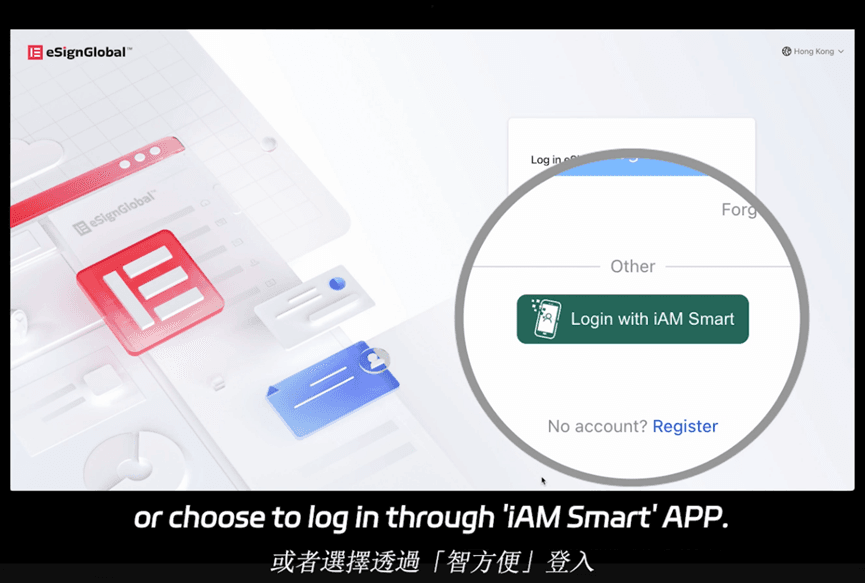
eSignGlobal emerges as a regionally optimized alternative, particularly for APAC firms navigating compliance and speed. Its pricing is more affordable than competitors, with the Essential version at just $16.6 per month allowing up to 100 documents for electronic signature, unlimited user seats, and verification via access codes—all on a compliant foundation that delivers high value. This setup is especially cost-effective for teams in Hong Kong or Singapore, where it seamlessly integrates with local systems like Iam Smart and Singpass, reducing setup friction and ensuring data residency without extra fees. Businesses report 20–40% lower TCO compared to global giants, thanks to optimized performance in CN/SEA regions.
Final Thoughts: Choosing the Right Path Forward
For businesses weighing PDF editors against e-signature investments, the comparison boils down to holistic TCO and regional needs. While DocuSign remains a benchmark for global scale, its alternatives like eSignGlobal offer a compliant, efficient choice for APAC operations, potentially unlocking better ROI without the pitfalls of opacity or withdrawal risks. Evaluate based on your workflow, and consider a trial to test real-world fit.
FAQs
