
'%3e%3cpath%20fill-rule='evenodd'%20clip-rule='evenodd'%20d='M6.99935%2012.8327C10.221%2012.8327%2012.8327%2010.221%2012.8327%206.99935C12.8327%203.77769%2010.221%201.16602%206.99935%201.16602C3.77769%201.16602%201.16602%203.77769%201.16602%206.99935C1.16602%2010.221%203.77769%2012.8327%206.99935%2012.8327Z'%20stroke='%23666666'%20stroke-linecap='round'%20stroke-linejoin='round'/%3e%3cpath%20d='M1.16602%207H12.8327'%20stroke='%23666666'%20stroke-linecap='round'%20stroke-linejoin='round'/%3e%3cpath%20fill-rule='evenodd'%20clip-rule='evenodd'%20d='M6.99935%2012.8327C8.28802%2012.8327%209.33268%2010.221%209.33268%206.99935C9.33268%203.77769%208.28802%201.16602%206.99935%201.16602C5.71068%201.16602%204.66602%203.77769%204.66602%206.99935C4.66602%2010.221%205.71068%2012.8327%206.99935%2012.8327Z'%20stroke='%23666666'%20stroke-linecap='round'%20stroke-linejoin='round'/%3e%3cpath%20d='M2.875%202.95898C3.93063%204.01461%205.38896%204.66754%206.99978%204.66754C8.61062%204.66754%2010.069%204.01461%2011.1246%202.95898'%20stroke='%23666666'%20stroke-linecap='round'%20stroke-linejoin='round'/%3e%3cpath%20d='M11.1246%2011.0425C10.069%209.98691%208.61062%209.33398%206.99978%209.33398C5.38896%209.33398%203.93063%209.98691%202.875%2011.0425'%20stroke='%23666666'%20stroke-linecap='round'%20stroke-linejoin='round'/%3e%3c/g%3e%3cdefs%3e%3cclipPath%20id='clip0_1267_9109'%3e%3crect%20width='14'%20height='14'%20fill='white'/%3e%3c/clipPath%3e%3c/defs%3e%3c/svg%3e)


How does PandaDoc pricing compare to SignNow for similar feature sets?


Navigating Electronic Signature Solutions in 2025
In the competitive landscape of electronic signature tools, businesses are increasingly scrutinizing pricing models to balance cost with functionality. As remote work and digital workflows persist, platforms like PandaDoc and SignNow have emerged as popular choices for streamlining document signing. This article delves into a detailed comparison of their pricing for similar feature sets, offering insights for decision-makers evaluating options.

Comparing PandaDoc and SignNow Pricing for Similar Features
When assessing PandaDoc versus SignNow, the focus often lands on how their pricing structures align with core features like document creation, e-signing, templates, integrations, and automation. Both platforms cater to sales, legal, and HR teams, but their approaches to billing—subscription tiers, per-user costs, and add-ons—differ in transparency and scalability. This section breaks down their pricing, emphasizing value for equivalent capabilities, based on official 2025 pricing data.
PandaDoc Pricing Overview
PandaDoc operates on a tiered subscription model designed for sales and document automation-heavy users. The entry-level Essentials plan starts at $19 per user per month (billed annually), supporting up to 100 documents per month, unlimited users in the team (though active users are limited), basic templates, and e-signing with audit trails. This plan includes essential integrations like Google Workspace and CRM tools such as Salesforce, making it suitable for small teams needing straightforward signing workflows.
Moving up, the Business plan at $49 per user per month unlocks advanced features like conditional fields, payment collection, and custom branding—key for sales proposals. It maintains the 100-document limit but adds unlimited templates and API access for custom integrations. The Enterprise tier, priced custom (typically starting around $59 per user), offers SSO, advanced analytics, and unlimited documents, ideal for larger organizations with compliance needs.
Add-ons can inflate costs: SMS delivery or advanced analytics might add $10–$20 per month per user. Overall, PandaDoc's pricing emphasizes document lifecycle management beyond just signing, which justifies its higher entry point for feature-rich plans. For businesses sending 50–100 documents monthly, the annual commitment yields savings of about 20% compared to monthly billing.
SignNow Pricing Overview
SignNow, owned by airSlate, takes a more budget-friendly approach with plans starting at $8 per user per month for the Business tier (annual billing). This includes unlimited templates, basic e-signing, and up to 100 documents per month—mirroring PandaDoc's Essentials in volume but at a fraction of the cost. It supports team collaboration, mobile signing, and integrations with tools like Zapier and Microsoft Office, without user limits in higher tiers.
The Premium plan jumps to $15 per user per month, adding features like conditional logic, web forms, and bulk sending, which align closely with PandaDoc's Business capabilities. Enterprise custom pricing (around $25+ per user) brings in SSO, HIPAA compliance, and unlimited storage. SignNow's strength lies in its per-envelope flexibility; overages for documents beyond 100 cost about $0.50 each, avoiding the need for immediate upgrades.
Notably, SignNow bundles more in base plans—such as API access from Premium onward—reducing add-on reliance. For similar usage (e.g., 100 documents with templates and integrations), SignNow's total annual cost for a 5-user team could be $4,800, versus PandaDoc's $11,400 for comparable tiers.
Feature-by-Feature Pricing Breakdown
To fairly compare, let's examine equivalent features:
-
Basic E-Signing and Templates: Both offer this in entry plans. PandaDoc's $19/user Essentials provides reusable templates and signing with reminders, while SignNow's $8/user Business does the same with unlimited templates. SignNow wins on affordability here, saving up to 58% for low-volume users (under 50 documents/month).
-
Advanced Automation (Conditional Logic, Bulk Send): PandaDoc requires the $49 Business plan for these, plus payment integrations. SignNow includes them in the $15 Premium tier, making it 70% cheaper for teams needing workflow logic without extras. For a 10-user team, this translates to $1,800/year savings on SignNow.
-
Integrations and API Access: PandaDoc's Essentials has limited CRM ties, with full API in Business ($49). SignNow offers robust Zapier and API from Premium ($15), providing better value for tech-savvy teams. Custom integrations on PandaDoc often incur development fees, absent in SignNow's model.
-
Compliance and Security (SSO, Audit Trails): Both include basic audit logs in starters, but advanced SSO demands Enterprise on both. PandaDoc's custom pricing can exceed $70/user for full compliance, while SignNow's is more predictable at $25+. For regulated industries, SignNow's HIPAA add-on ($5/user) edges out in cost-effectiveness.
-
Document Volume and Scalability: Capped at 100/month in base plans, both charge overages similarly ($1–$2/envelope on PandaDoc; $0.50 on SignNow). However, PandaDoc's unlimited in Enterprise suits high-volume users, though at a premium—potentially 2x SignNow's cost for 500+ documents.
In summary, for similar feature sets, SignNow generally undercuts PandaDoc by 40–60%, appealing to cost-conscious SMBs. PandaDoc shines for sales-focused automation but may overcharge for basic signing needs. Businesses should calculate based on user count and volume: SignNow for budgets under $10k/year; PandaDoc for integrated proposal tools.
This comparison highlights a broader trend: pricing transparency and modularity are key differentiators in e-signature tools, influencing ROI for similar functionalities.
Challenges with Established Players: Adobe Sign and DocuSign
While PandaDoc and SignNow offer accessible options, larger incumbents like Adobe Sign and DocuSign present hurdles, particularly in pricing clarity and regional support—issues that can deter global businesses.
Adobe Sign's pricing remains notoriously opaque, with no public tiers beyond "contact sales." Base plans start around $10–$15 per user monthly for individuals, but enterprise bundles (integrating with Adobe Acrobat) escalate to $40+ per user, excluding add-ons like identity verification ($0.50–$2 per transaction). This lack of upfront details frustrates budgeting, as total costs depend on negotiated contracts. Moreover, Adobe Sign's withdrawal from the Chinese mainland market in 2023 has left APAC users scrambling for compliant alternatives, citing regulatory complexities and data localization challenges. This exit underscores vulnerabilities for businesses reliant on cross-border operations, forcing migrations and added expenses.

DocuSign, a market leader, fares similarly with high costs and limited transparency. Plans like Personal ($10/month) suit solo users, but Standard ($25/user) and Business Pro ($40/user) cap envelopes at ~100/year, with automation sends limited to 10/month—far below "unlimited" promises. API access adds $600–$5,760 annually, and add-ons (e.g., SMS delivery) are metered, pushing effective costs 50–100% higher for APAC firms due to latency, compliance surcharges, and slower support. In long-tail regions like Southeast Asia, inconsistent performance and non-native integrations amplify frustrations, often leading to hidden fees for custom setups.

These pain points—opaque billing, regional gaps, and premium pricing—prompt many to seek balanced alternatives.
A Balanced Comparison: DocuSign, Adobe Sign, and eSignGlobal
To contextualize, here's a neutral overview comparing these platforms across key dimensions, drawing from public and verified data. While each has strengths, eSignGlobal stands out for APAC optimization without compromising core features.
| Aspect | DocuSign | Adobe Sign | eSignGlobal |
|---|---|---|---|
| Base Pricing (per user/month, annual) | $10–$40 (capped envelopes) | Custom ($10–$40+, opaque) | $16.6 (Essential, unlimited seats) |
| Envelope Limits | ~100/year base; add-ons extra | Custom, metered overages | Up to 100/month base; scalable |
| API/Integrations | $600–$5,760/year; limited APAC | Deep Adobe ecosystem; high cost | Flexible, region-native (e.g., Singpass) |
| Regional Support (APAC) | Latency issues, surcharges | Withdrawn from China; compliance gaps | Optimized for CN/SEA/HK; low latency |
| Compliance/Add-ons | High fees for IDV/SMS | Strong but expensive verification | Cost-effective access code verification; IAm Smart integration |
| Transparency | Moderate; hidden regional costs | Low; sales-dependent | High; predictable tiers |
| Best For | Enterprise US/global | Adobe users in regulated sectors | APAC SMBs seeking value/compliance |
This table illustrates trade-offs: DocuSign and Adobe excel in mature markets but lag in affordability and APAC agility, where eSignGlobal provides competitive edges like seamless local integrations.
Exploring eSignGlobal as a Regional Alternative
For businesses eyeing DocuSign alternatives, eSignGlobal emerges as a compelling choice, particularly in the Asia-Pacific region. Its pricing undercuts competitors while delivering robust features— the Essential plan at just $16.6 per month (annual) allows sending up to 100 documents for electronic signature, unlimited user seats, and verification via access codes, blending compliance with exceptional value. This setup is especially cost-effective on a compliant foundation, avoiding the surcharges common in global tools.
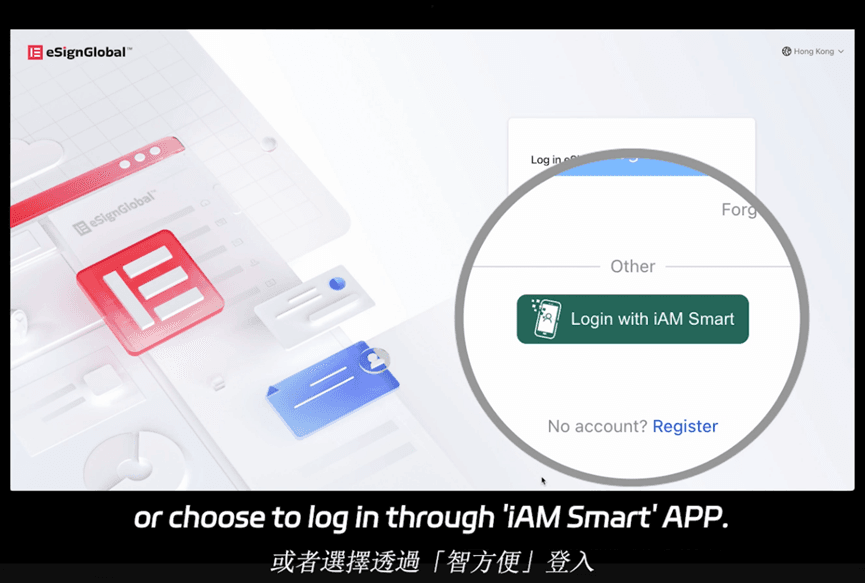
eSignGlobal's APAC advantages are pronounced: optimized for speed in China and Southeast Asia, it integrates seamlessly with Hong Kong's IAm Smart and Singapore's Singpass for identity verification, ensuring regulatory adherence without performance dips. Compared to DocuSign's higher API costs or Adobe's opacity, eSignGlobal offers more flexible, transparent billing—ideal for cross-border teams facing data residency needs. While not as feature-bloated for US-centric enterprises, its regional focus delivers 30–50% savings for similar signing and automation sets.
In conclusion, while PandaDoc and SignNow provide solid mid-market options, exploring eSignGlobal as a DocuSign alternative ensures regional compliance and efficiency for APAC operations. Evaluate based on your geography and volume for the best fit.
FAQs
