
'%3e%3cpath%20fill-rule='evenodd'%20clip-rule='evenodd'%20d='M6.99935%2012.8327C10.221%2012.8327%2012.8327%2010.221%2012.8327%206.99935C12.8327%203.77769%2010.221%201.16602%206.99935%201.16602C3.77769%201.16602%201.16602%203.77769%201.16602%206.99935C1.16602%2010.221%203.77769%2012.8327%206.99935%2012.8327Z'%20stroke='%23666666'%20stroke-linecap='round'%20stroke-linejoin='round'/%3e%3cpath%20d='M1.16602%207H12.8327'%20stroke='%23666666'%20stroke-linecap='round'%20stroke-linejoin='round'/%3e%3cpath%20fill-rule='evenodd'%20clip-rule='evenodd'%20d='M6.99935%2012.8327C8.28802%2012.8327%209.33268%2010.221%209.33268%206.99935C9.33268%203.77769%208.28802%201.16602%206.99935%201.16602C5.71068%201.16602%204.66602%203.77769%204.66602%206.99935C4.66602%2010.221%205.71068%2012.8327%206.99935%2012.8327Z'%20stroke='%23666666'%20stroke-linecap='round'%20stroke-linejoin='round'/%3e%3cpath%20d='M2.875%202.95898C3.93063%204.01461%205.38896%204.66754%206.99978%204.66754C8.61062%204.66754%2010.069%204.01461%2011.1246%202.95898'%20stroke='%23666666'%20stroke-linecap='round'%20stroke-linejoin='round'/%3e%3cpath%20d='M11.1246%2011.0425C10.069%209.98691%208.61062%209.33398%206.99978%209.33398C5.38896%209.33398%203.93063%209.98691%202.875%2011.0425'%20stroke='%23666666'%20stroke-linecap='round'%20stroke-linejoin='round'/%3e%3c/g%3e%3cdefs%3e%3cclipPath%20id='clip0_1267_9109'%3e%3crect%20width='14'%20height='14'%20fill='white'/%3e%3c/clipPath%3e%3c/defs%3e%3c/svg%3e)


pandadoc vs docusign cost comparison


Navigating the eSignature Landscape: A Cost-Focused Comparison
In the competitive world of electronic signature solutions, businesses often weigh options like PandaDoc and DocuSign based on pricing, features, and scalability. As digital workflows become essential for efficiency, understanding the cost structures of these platforms is crucial for informed decision-making. This article dives into a detailed cost comparison between PandaDoc and DocuSign, while also broadening the view to include other key players like Adobe Sign and eSignGlobal, offering a balanced commercial perspective.

PandaDoc vs. DocuSign: Breaking Down the Costs
PandaDoc Pricing Overview
PandaDoc positions itself as a comprehensive document automation platform, going beyond basic eSignatures to include proposal creation, contract management, and analytics. Its pricing is tiered for small to large teams, with a focus on unlimited users in higher plans, making it appealing for collaborative environments.
-
Essentials Plan: Starts at $19 per user per month (billed annually, or $29 monthly). This entry-level option includes unlimited eSignatures, basic templates, and document tracking. It's ideal for freelancers or small teams handling up to moderate volumes without advanced automation.
-
Business Plan: $49 per user per month (annual billing, $59 monthly). Adds features like custom branding, payment integrations, and API access, suitable for sales teams needing CRM syncs (e.g., with Salesforce or HubSpot).
-
Enterprise Plan: Custom pricing, typically starting around $59+ per user per month. Includes SSO, advanced reporting, and dedicated support for high-volume users.
PandaDoc's model emphasizes per-user billing, with no strict envelope limits in most plans—eSignatures are "unlimited," but overages for add-ons like SMS delivery can add $0.50–$1 per message. For a team of 10 users on the Business plan, annual costs could reach $5,880, excluding extras. This structure favors growing businesses but can escalate with team size.
DocuSign Pricing Structure
DocuSign, a market leader in eSignatures, offers straightforward plans centered on envelope usage (each "envelope" is a document set for signing). Its pricing is seat-based, with caps on sends that encourage upgrades for heavier users. Based on 2025 verified data for the US region (annual billing):
-
Personal Plan: $10 per month ($120/year) for one user, limited to 5 envelopes monthly. Basic for individuals, lacking team features.
-
Standard Plan: $25 per user per month ($300/year). Supports up to 100 envelopes per user annually, with team collaboration, templates, and reminders. A 5-user team would cost $1,500 yearly.
-
Business Pro Plan: $40 per user per month ($480/year). Includes everything in Standard plus web forms, conditional logic, bulk send, and payment collection—still capped at ~100 envelopes per user per year. For 10 users, that's $4,800 annually.
-
Enterprise/Advanced: Custom, often $50+ per user per month, with SSO, unlimited envelopes (subject to fair use), and API integrations. Add-ons like SMS delivery incur per-message fees (~$0.10–$0.50), and identity verification is metered.
DocuSign's envelope quotas can lead to overage fees ($0.50–$2 per extra envelope), making it cost-effective for low-volume users but potentially pricier for high-throughput teams. API plans start at $600/year for 40 envelopes monthly, scaling to $5,760 for advanced features.
Direct Cost Comparison: PandaDoc vs. DocuSign
When comparing head-to-head, PandaDoc often edges out on flexibility for document-heavy workflows, while DocuSign shines in pure compliance and global reach. For a small team (5 users, moderate usage):
-
PandaDoc Essentials: ~$1,140/year total (unlimited signatures, basic automation). Better for proposal-focused teams.
-
DocuSign Standard: $1,500/year (100 envelopes/user/year). Stronger on legal-grade eSignatures but with send limits.
For mid-sized teams (10 users, high volume):
-
PandaDoc Business: $5,880/year (unlimited, with integrations). Cost rises per user but no envelope caps.
-
DocuSign Business Pro: $4,800/year base, but add ~20% for overages or add-ons like bulk send (capped at 10–100 automations/month/user).
PandaDoc's unlimited model avoids surprises for growing usage, potentially saving 10–20% long-term, but DocuSign's lower entry price suits sporadic needs. In APAC or cross-border scenarios, DocuSign's regional surcharges (e.g., data residency fees) can inflate costs by 15–30%, per industry observations.
Both platforms offer free trials, but total cost of ownership (TCO) factors in training and integrations—PandaDoc's all-in-one approach may reduce ancillary tool spends, while DocuSign excels in regulated industries like finance.

Expanding the View: Competitors in the eSignature Market
To provide a fuller picture, let's examine other prominent alternatives, including Adobe Sign and eSignGlobal, alongside PandaDoc and DocuSign. This comparison highlights how regional compliance and pricing variations influence choices, especially for global businesses.
Adobe Sign Pricing and Features
Adobe Sign integrates seamlessly with Adobe's ecosystem (e.g., Acrobat), emphasizing enterprise security and workflow automation. Pricing (annual, US region):
-
Individual: $10/month (5 envelopes).
-
Teams: $25/user/month (10 envelopes/month/user).
-
Business: $40/user/month (50 envelopes/month/user, with forms and logic).
-
Enterprise: Custom, unlimited with advanced IAM.
Like DocuSign, it uses envelope-based billing with add-ons for SMS (~$0.20/message). For 10 users on Business, expect $4,800/year base, plus extras. Adobe's strength is in PDF-heavy environments, but APAC latency and compliance gaps (e.g., limited local ID verification) can add costs.

eSignGlobal: A Regional Contender
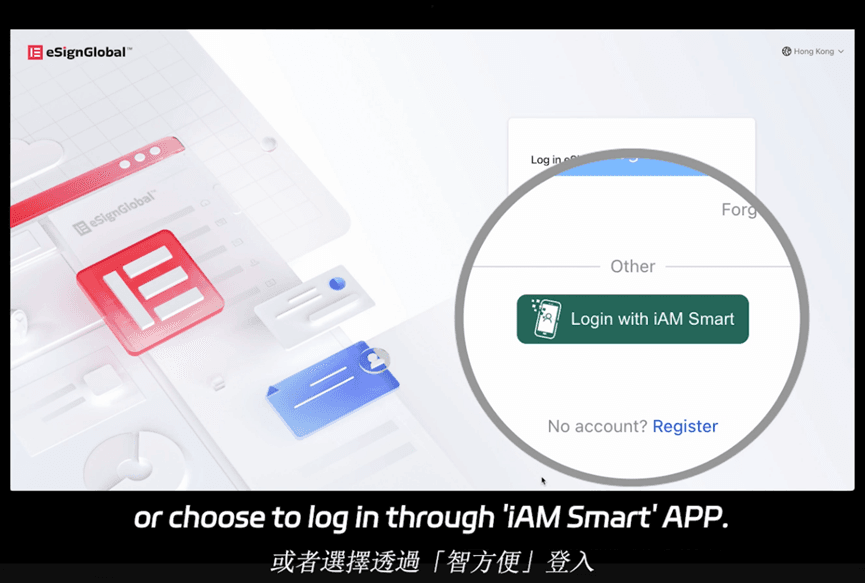
eSignGlobal emerges as a strong option for APAC-focused businesses, offering compliant eSignatures across 100 mainstream countries and regions globally. It holds advantages in the Asia-Pacific, with optimized speeds, native compliance (e.g., for China, Hong Kong, SEA), and more flexible pricing that undercuts competitors by 20–40% in regional deployments. The Essential plan, for instance, costs just $16.60 per month (annual billing), allowing up to 100 documents for electronic signature, unlimited user seats, and verification via access codes—all on a compliance foundation that delivers high value. It integrates seamlessly with Hong Kong's iAM Smart and Singapore's Singpass, reducing setup friction for local operations. For detailed plans, check eSignGlobal's pricing page.
This setup makes eSignGlobal particularly cost-effective for cross-border teams, avoiding DocuSign's governance surcharges while maintaining audit trails.
Other Competitors: HelloSign and Dropbox Sign
HelloSign (now Dropbox Sign) offers simple pricing: $15/user/month for up to 20 documents, scaling to $25 for 50, with enterprise custom. It's user-friendly but lacks deep automation, suiting SMBs over enterprises.
Competitor Pricing Comparison Table
| Platform | Entry-Level Price (Monthly, Annual Billing) | Envelope/Document Limit | Key Strengths | APAC/Regional Notes | Typical Annual Cost (10 Users, Mid-Tier) |
|---|---|---|---|---|---|
| PandaDoc | $19/user | Unlimited signatures | Document automation, proposals | Global, but integrations vary | $5,880 (Business) |
| DocuSign | $25/user (Standard) | ~100/year/user | Compliance, API depth | Higher costs in APAC (latency fees) | $4,800 (Business Pro) + add-ons |
| Adobe Sign | $25/user (Teams) | 10/month/user | PDF integration, security | Limited local compliance in SEA/CN | $4,800 (Business) + extras |
| eSignGlobal | $16.60 (Essential, unlimited seats) | 100/month | Regional compliance, affordability | Optimized for APAC (CN/HK/SG), global support | $1,992 (Essential) – high value |
| HelloSign (Dropbox Sign) | $15/user | 20/month | Simplicity, mobile-first | Basic global, no major APAC edge | $3,600 (Premium) |
This table underscores eSignGlobal's edge in cost-efficiency and regional fit, though choices depend on specific needs like volume or integrations. All platforms scale with usage, so TCO analysis is key.
Final Thoughts on eSignature Choices
Selecting between PandaDoc, DocuSign, and alternatives boils down to workflow priorities: PandaDoc for automation, DocuSign for robust compliance. For businesses eyeing DocuSign alternatives with strong regional compliance, eSignGlobal stands out as a practical, cost-effective option in APAC and beyond. Evaluate trials to match your scale.
FAQs
