
'%3e%3cpath%20fill-rule='evenodd'%20clip-rule='evenodd'%20d='M6.99935%2012.8327C10.221%2012.8327%2012.8327%2010.221%2012.8327%206.99935C12.8327%203.77769%2010.221%201.16602%206.99935%201.16602C3.77769%201.16602%201.16602%203.77769%201.16602%206.99935C1.16602%2010.221%203.77769%2012.8327%206.99935%2012.8327Z'%20stroke='%23666666'%20stroke-linecap='round'%20stroke-linejoin='round'/%3e%3cpath%20d='M1.16602%207H12.8327'%20stroke='%23666666'%20stroke-linecap='round'%20stroke-linejoin='round'/%3e%3cpath%20fill-rule='evenodd'%20clip-rule='evenodd'%20d='M6.99935%2012.8327C8.28802%2012.8327%209.33268%2010.221%209.33268%206.99935C9.33268%203.77769%208.28802%201.16602%206.99935%201.16602C5.71068%201.16602%204.66602%203.77769%204.66602%206.99935C4.66602%2010.221%205.71068%2012.8327%206.99935%2012.8327Z'%20stroke='%23666666'%20stroke-linecap='round'%20stroke-linejoin='round'/%3e%3cpath%20d='M2.875%202.95898C3.93063%204.01461%205.38896%204.66754%206.99978%204.66754C8.61062%204.66754%2010.069%204.01461%2011.1246%202.95898'%20stroke='%23666666'%20stroke-linecap='round'%20stroke-linejoin='round'/%3e%3cpath%20d='M11.1246%2011.0425C10.069%209.98691%208.61062%209.33398%206.99978%209.33398C5.38896%209.33398%203.93063%209.98691%202.875%2011.0425'%20stroke='%23666666'%20stroke-linecap='round'%20stroke-linejoin='round'/%3e%3c/g%3e%3cdefs%3e%3cclipPath%20id='clip0_1267_9109'%3e%3crect%20width='14'%20height='14'%20fill='white'/%3e%3c/clipPath%3e%3c/defs%3e%3c/svg%3e)


pandadoc pricing for small business


Understanding PandaDoc Pricing for Small Businesses
In the competitive landscape of document automation and e-signature solutions, small businesses often seek tools that balance affordability, functionality, and scalability. PandaDoc stands out as a popular choice for streamlining proposal creation, contract management, and electronic signing. From a business perspective, its pricing model is designed to cater to growing teams without overwhelming budgets, but understanding the tiers and hidden costs is crucial for making informed decisions. This article breaks down PandaDoc's pricing structure specifically for small businesses, evaluates its value, and compares it to key competitors like DocuSign, Adobe Sign, and eSignGlobal.

Breaking Down PandaDoc's Core Pricing Tiers
PandaDoc's pricing is tiered to accommodate different business sizes, with a focus on small enterprises that need robust document workflows without enterprise-level complexity. All plans are billed annually for the best rates, though monthly options exist at a premium. As of 2025, the structure emphasizes per-user licensing, envelope (document) limits, and add-ons for advanced features.
Essentials Plan: Entry-Level for Solo Entrepreneurs and Tiny Teams
The Essentials plan is the go-to for small businesses just starting with document automation. Priced at $19 per user per month (or $228 annually), it supports up to unlimited users but caps document sends at 100 per month across the account. This makes it ideal for freelancers, startups, or micro-teams handling proposals, quotes, and basic contracts.
Key features include:
- Drag-and-drop document builder for creating professional templates.
- Electronic signatures with basic tracking and reminders.
- Integration with CRM tools like HubSpot or Salesforce (limited to essentials).
- Mobile app access for on-the-go signing.
For a small business with 2-5 users, this plan totals around $456-$1,140 per year, offering solid value for low-volume needs. However, exceeding the 100-document limit incurs overage fees of $0.50 per additional envelope, which can add up during peak seasons like sales cycles. Businesses report that this tier shines in simplicity but may feel restrictive for teams needing custom branding or analytics.
Business Plan: Scaling for Growing Small Businesses
As small businesses expand, the Business plan at $49 per user per month ($588 annually) unlocks more collaboration tools. It removes the document cap (unlimited sends) and adds advanced analytics, custom workflows, and team permissions. This is particularly useful for sales-driven small firms managing client negotiations or HR processes.
Highlights include:
- Unlimited e-signatures and document storage.
- Advanced reporting on document performance (e.g., open rates, completion times).
- API access for basic integrations.
- Payment collection via Stripe or PayPal directly in documents.
Annual costs for a 5-user team hover at $2,940, making it a worthwhile step up for businesses sending 200+ documents monthly. Observers note that while the unlimited envelopes reduce surprise fees, storage limits (10GB base) might require upgrades, adding $10 per extra GB. This plan strikes a balance for small businesses transitioning from ad-hoc tools like Google Docs to professional automation.
Enterprise Plan: When Small Businesses Outgrow Standard Options
For small businesses with specialized needs, such as compliance-heavy industries, the Enterprise plan starts at $59 per user per month (custom quotes required, often $708+ annually). It includes SSO, advanced security, and dedicated support, but it's overkill for most under-50-employee operations.
Features like custom API endpoints and white-labeling appeal to niche small businesses, but pricing can escalate with add-ons. Total costs might reach $5,000+ yearly for a small team, prompting many to stick with Business unless regulatory demands intervene.
Factors Influencing Total Cost for Small Businesses
Beyond base pricing, small businesses must consider variables like user seats, add-ons, and usage patterns. PandaDoc charges extra for features such as SMS delivery ($0.10 per message), advanced templates ($10/month), or e-sign verification ($1 per check). Annual billing saves 17% compared to monthly, a smart move for cash-flow-conscious small firms.
From a commercial viewpoint, PandaDoc's model encourages upselling through freemium trials (14 days free), but small businesses should audit their document volume first. Tools like their pricing calculator help estimate costs, revealing that a 3-user Business plan with moderate add-ons averages $2,200 annually—competitive but not the cheapest. Integration depth is a strength, yet setup time can offset savings for non-tech-savvy teams.
In APAC regions, where data residency and latency matter, PandaDoc's global infrastructure performs adequately but may incur higher fees for localized compliance. Overall, for small businesses prioritizing ease of use in sales and marketing, PandaDoc delivers strong ROI, with users citing 30-50% faster deal closures.
Comparing PandaDoc to Key Competitors
To assess PandaDoc's fit, it's essential to benchmark against established players. The table below compares pricing, features, and suitability for small businesses (based on 2025 data, annual billing for 5 users, moderate usage). While PandaDoc excels in document creation, alternatives like DocuSign offer broader e-sign focus, Adobe Sign emphasizes enterprise security, and eSignGlobal provides regional advantages.
| Competitor | Starting Price (per user/month, annual) | Key Features for Small Businesses | Envelope Limit | Strengths | Weaknesses | Best For |
|---|---|---|---|---|---|---|
| PandaDoc | $19 (Essentials) | Document builder, basic e-sign, CRM integrations | 100/month (base) | Intuitive templates, sales-focused | Limited advanced security | Proposal-heavy small teams |
| DocuSign | $10 (Personal, 1 user); $25 (Standard) | Templates, reminders, bulk send (Pro) | 5-100/year per user | Established brand, wide integrations | Higher API costs, envelope caps | General e-sign needs |
| Adobe Sign | $10 (Individual); $25 (Teams) | Secure signing, Acrobat integration, forms | Unlimited (Teams) | Strong PDF handling, compliance | Steeper learning curve, add-on fees | PDF-centric workflows |
| eSignGlobal | $16.60 (Essential) | Unlimited seats, access code verification, regional compliance | 100/month | APAC-optimized, cost-effective | Less global brand recognition | Regional small businesses |
| HelloSign (Dropbox Sign) | $15 (Essentials) | Simple signing, templates, mobile | 20/month (base) | User-friendly, Dropbox sync | Basic analytics | Budget-conscious startups |
| SignNow | $8 (Business) | Unlimited templates, mobile app, payments | Unlimited | Affordable unlimited sends | Fewer enterprise features | Cost-sensitive teams |
This comparison highlights trade-offs: PandaDoc leads in collaborative editing, but eSignGlobal edges out on value for APAC-focused small businesses with its lower entry price and unlimited users.
DocuSign: A Reliable but Pricier Alternative
DocuSign remains a market leader for e-signatures, with plans starting at $120/year for Personal (5 envelopes/month) and scaling to $300/user/year for Standard. Business Pro at $480/user/year adds bulk sends and payments, suitable for small teams needing robust compliance. However, envelope limits (around 100/year/user) and add-ons like SMS can inflate costs for growing businesses.

Adobe Sign: Security-Focused for Professional Use
Adobe Sign integrates seamlessly with Adobe's ecosystem, pricing from $10/month for individuals to $25/user/month for Teams with unlimited envelopes. It excels in secure, compliant signing for industries like legal or finance, offering features like conditional fields and audit trails. For small businesses, it's a solid pick if PDF workflows dominate, though customization requires more effort.

eSignGlobal: A Strong Regional Contender
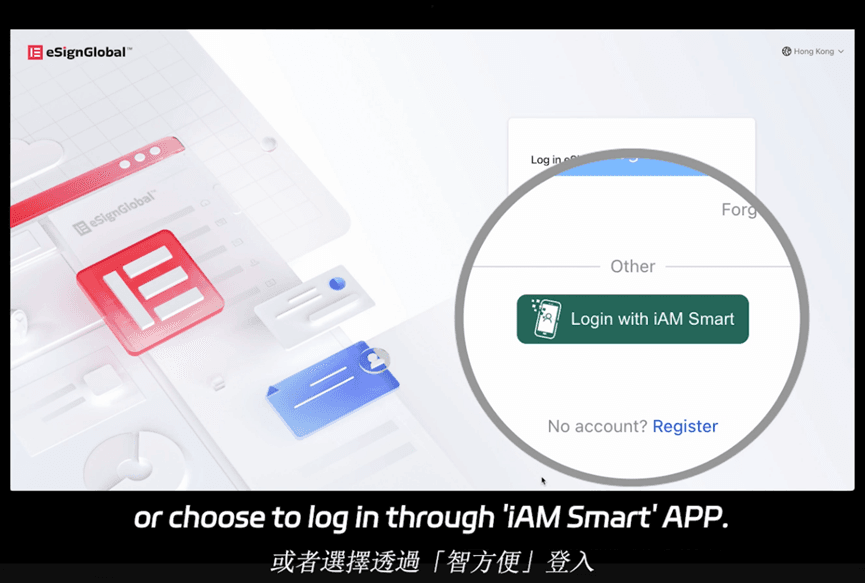
eSignGlobal provides compliant e-sign solutions across 100 mainstream countries, with a particular edge in the Asia-Pacific region due to optimized speed and local integrations. Its Essential plan, detailed on their pricing page, costs just $16.60/month, allowing up to 100 documents for electronic signature, unlimited user seats, and verification via access codes. This setup offers exceptional value on a compliance foundation, especially when seamlessly integrating with systems like Hong Kong's iAM Smart or Singapore's Singpass—ideal for cross-border small businesses facing regulatory hurdles.
Strategic Considerations for Small Businesses
Selecting an e-signature tool involves weighing costs against operational needs. PandaDoc's strength lies in its all-in-one document lifecycle management, potentially saving small businesses hours on manual tasks. Yet, for pure signing volume, competitors like SignNow offer cheaper unlimited options, while Adobe Sign bolsters security.
In regions with stringent data laws, such as APAC, latency and compliance can tip the scales. Businesses should trial multiple tools to match their workflow—PandaDoc's free trial is a low-risk start.
For DocuSign users seeking alternatives, eSignGlobal emerges as a regionally compliant choice, blending affordability with global reach to support efficient, borderless operations.
FAQs
